
Introduction
At Apple's 2026 fall product launch, Apple officially introduced the AirPods 5 series of true wireless noise-cancelling earbuds, available in a standard version and a version with a wireless charging case. A major highlight of this generation is that Active Noise Cancellation and a full suite of intelligent noise-control features now come standard across the lineup. The lineup also improves noise cancellation, audio quality, smart interaction, and battery life. Powered by Apple Intelligence, they also support live translation, delivering an excellent experience across a wide range of scenarios.
AirPods 5 featureApple's custom high-excursion drivers and a custom high-dynamic-range amplifier. Together with the H2 headphone chip, a redesigned multiport acoustic architecture, and next-generation Adaptive EQ, these components further enhance audio quality. The earbuds also support Personalized Spatial Audio with dynamic head tracking, with “Follow Head” and “Follow iPhone” modes for a more immersive listening experience.
AirPods 5 support Active Noise Cancellation, delivering up to 1.5 times the noise-cancelling performance of the previous generation. They also support Transparency mode, Adaptive Audio, and Conversation Awareness for intelligent noise control across different scenarios. In addition, AirPods 5 with Wireless Charging Case add swipe-based volume control for more convenient interaction. The case supports wireless charging, and its built-in speaker can emit a sound to help locate it. The earbuds feature higher-capacity batteries, offering up to 5 hours of listening with noise cancellation enabled and around 22 hours of total battery life. Below is our detailed teardown of the device.
52 AUDIO has previously disassembled a range of Apple products, including AirPods Pro 3, AirPods Pro 2 (USB-C), AirPods Pro, AirPods 4, AirPods 3, AirPods 2, AirPods, Beats Fit Pro, Beats Studio Buds, Beats Powerbeats Pro true wireless earbuds, AirPods Max over-ear noise-cancelling headphones, HomePod mini and HomePod smart speakers, as well as wired headphones such as 3.5 mm EarPods and Lightning EarPods.
Product Appearance
I. Unboxing the AirPods 5 (with Wireless Charging Case)
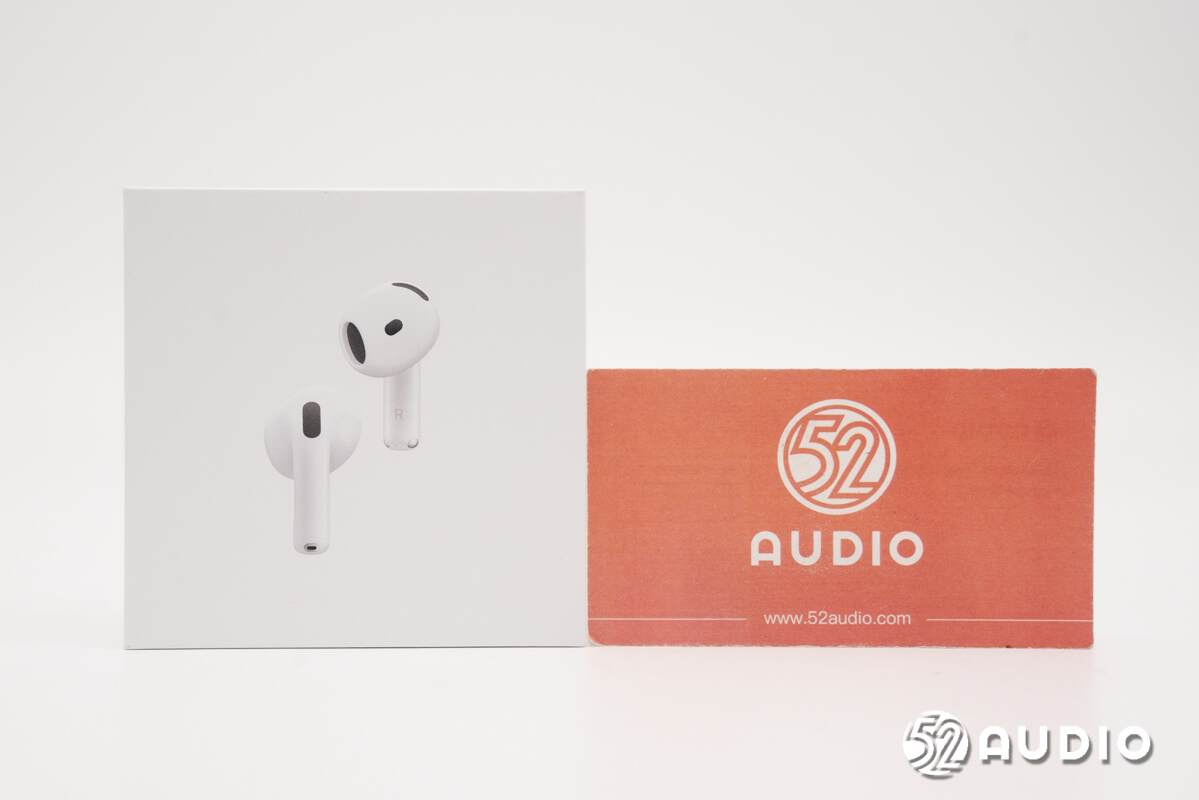
The AirPods 5 come in compact, minimalist packaging with a two-piece lid-and-base design. The lid features an image of the earbuds.
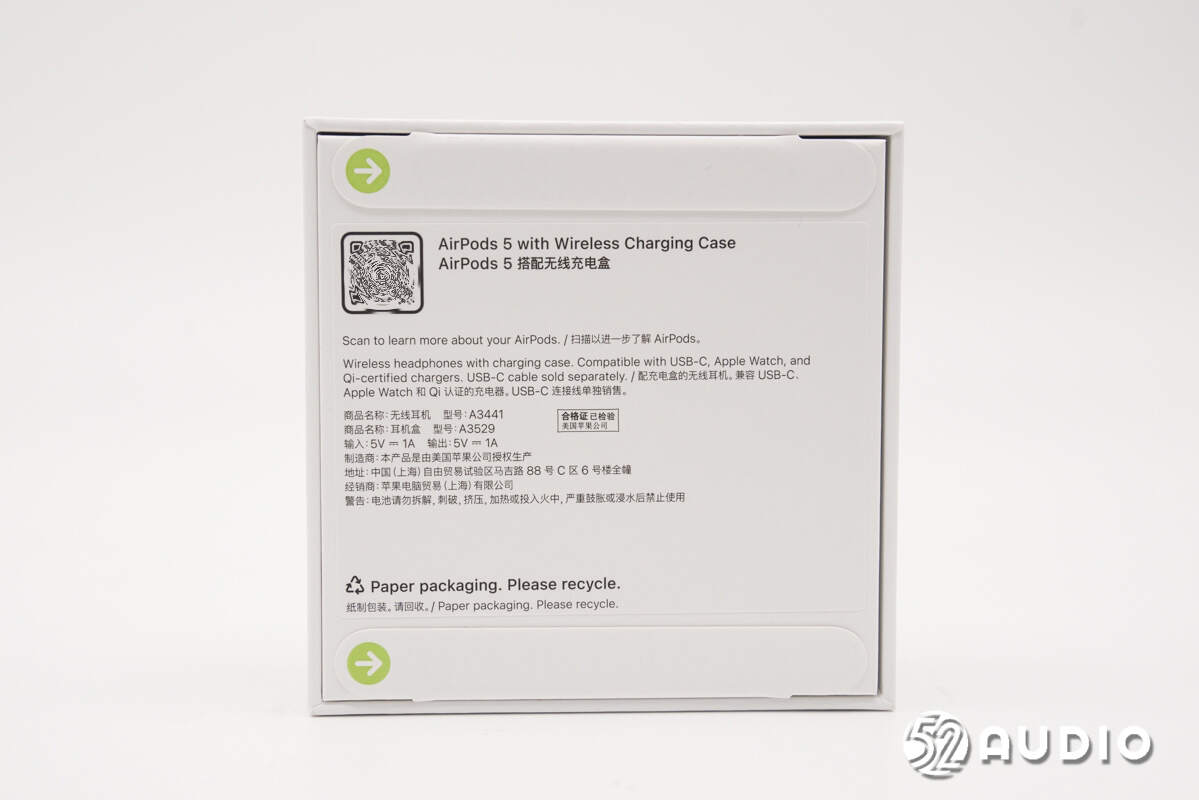
The back of the box lists the product name and specifications and includes a QR code for the electronic user manual. AirPods 5 with Wireless Charging Case are compatible with USB-C, Apple Watch, and Qi-certified chargers. The USB-C charging cable is sold separately. Product name: Wireless Headphones; model: A3441. Product name: Headphone Case; model: A3529. Input: 5 V ⎓ 1 A; Output: 5 V ⎓ 1 A. Manufacturing statement: Manufactured under license from Apple Inc., USA.
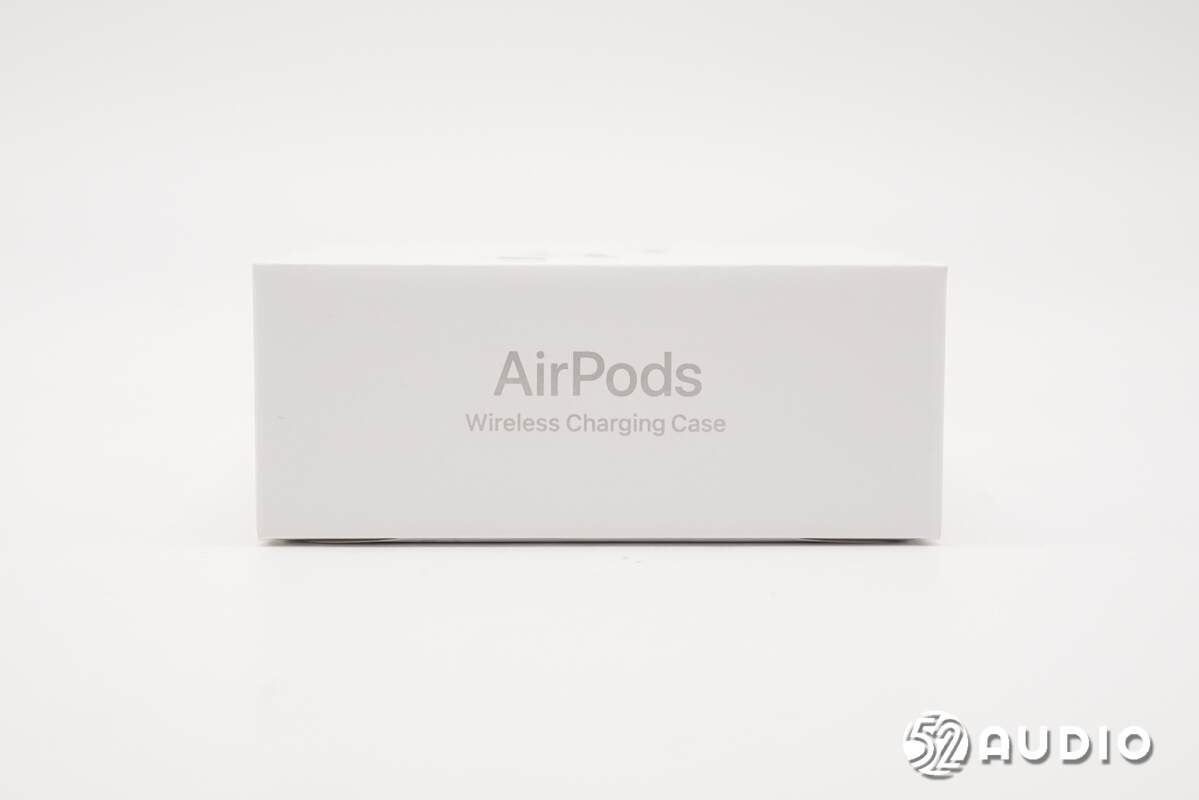
The front of the box displays the product name, “AirPods Wireless Charging Case.”
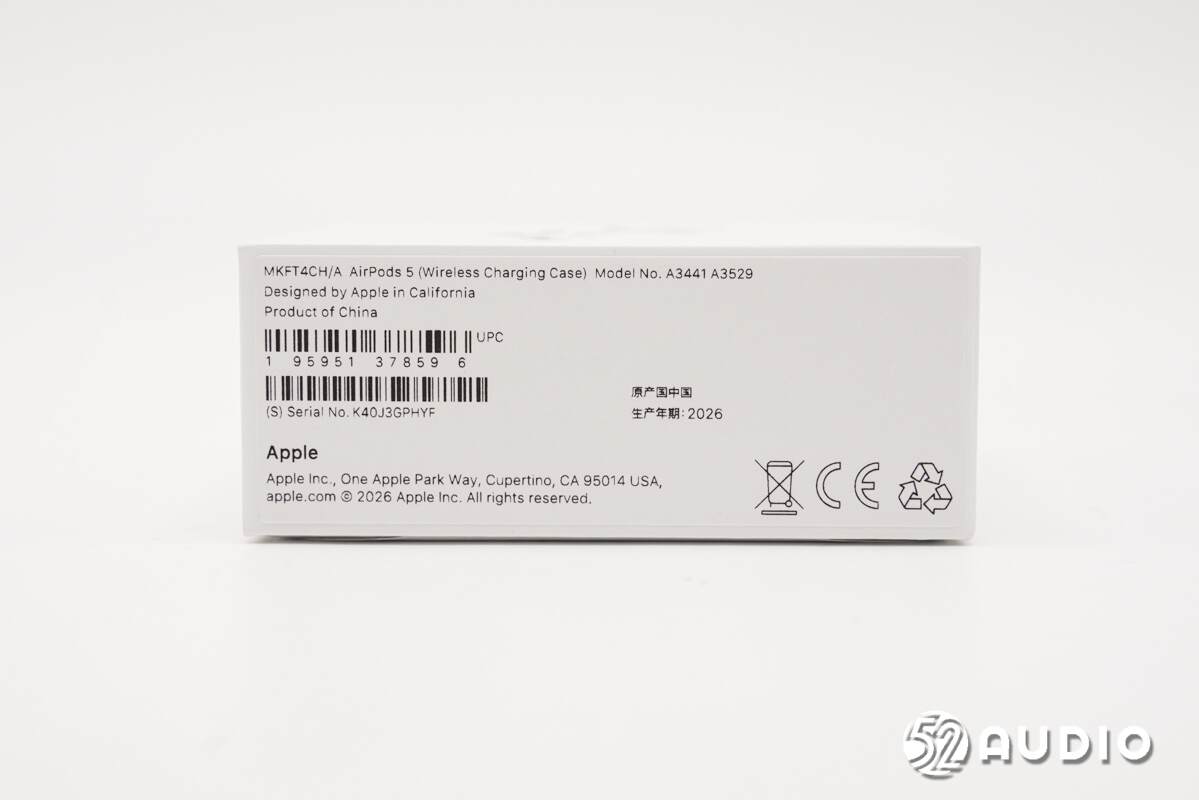
A factory label on the back of the box states: Designed by Apple in California. Made in China.
Apple logos are printed on both sides of the box.
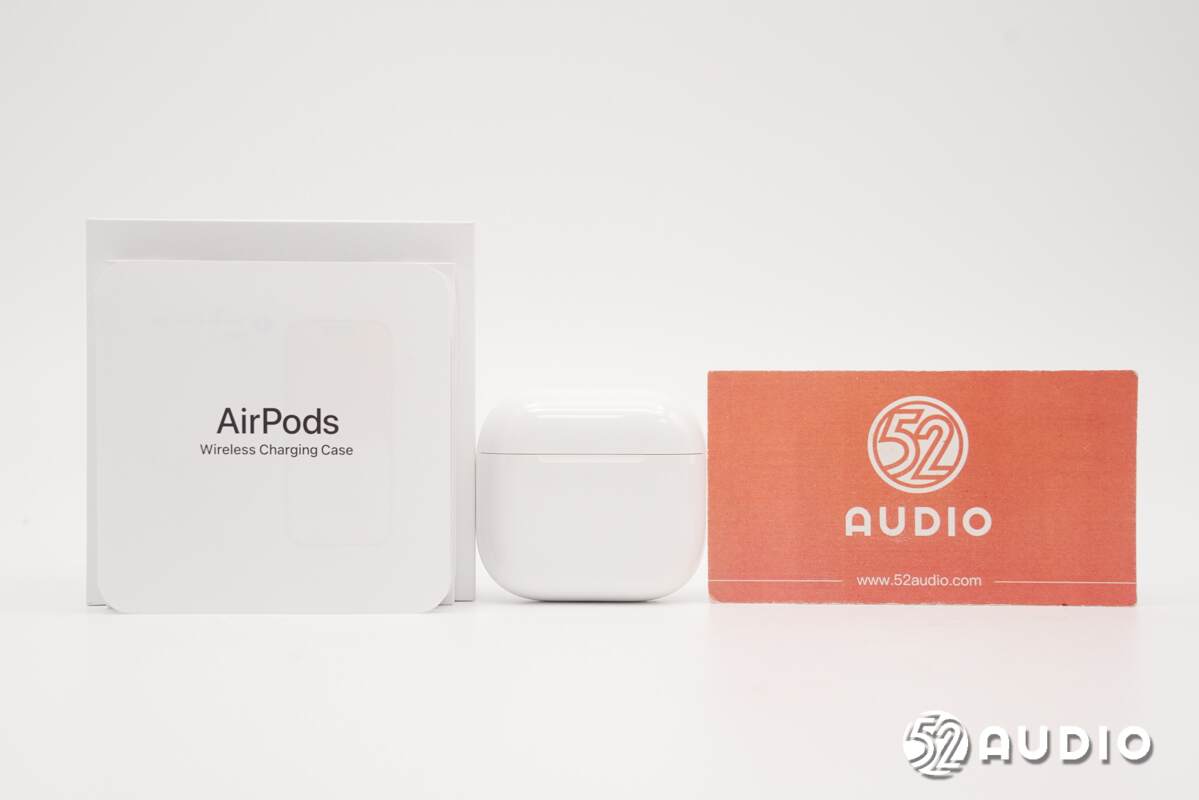
The box contains the earbuds and charging case, a quick-start guide, and safety and regulatory information.
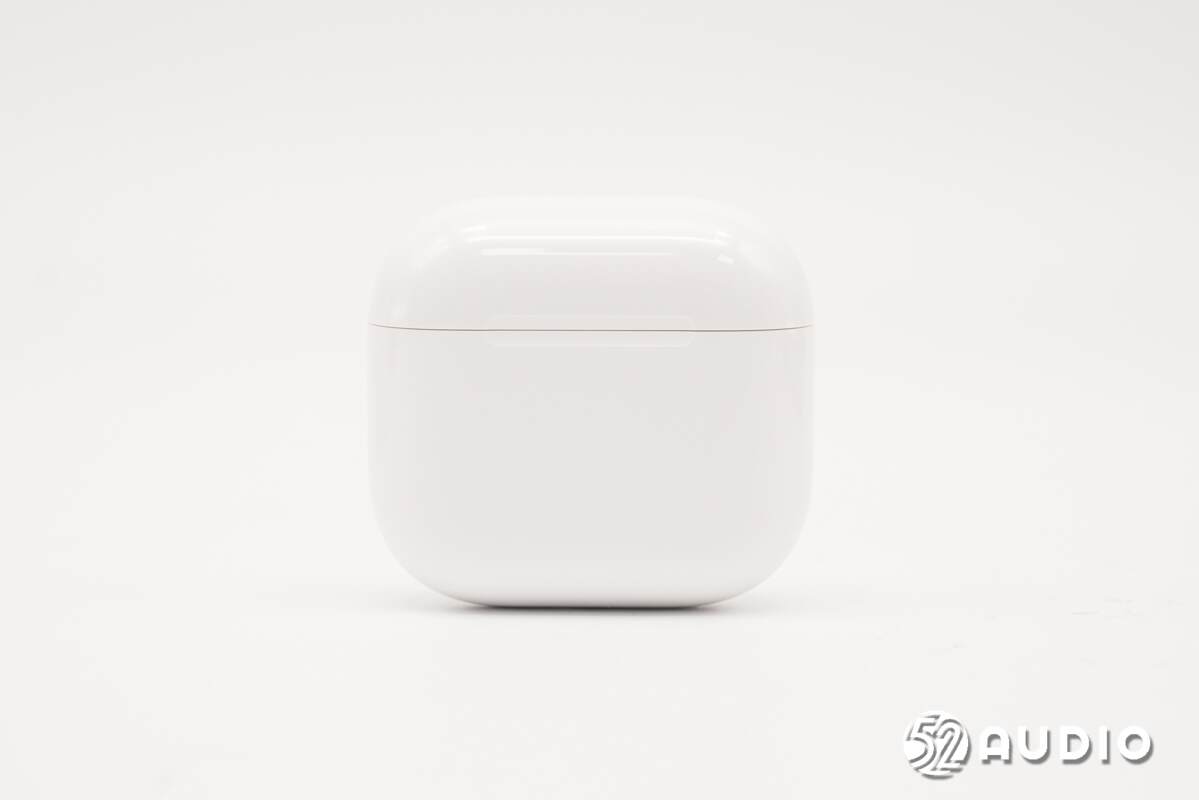
The AirPods 5 charging case retains the previous generation’s rounded-rectangle design. Its glossy, smooth finish and compact size make it easy to carry. The front edge where the lid opens is beveled, and a status indicator is positioned on the case.
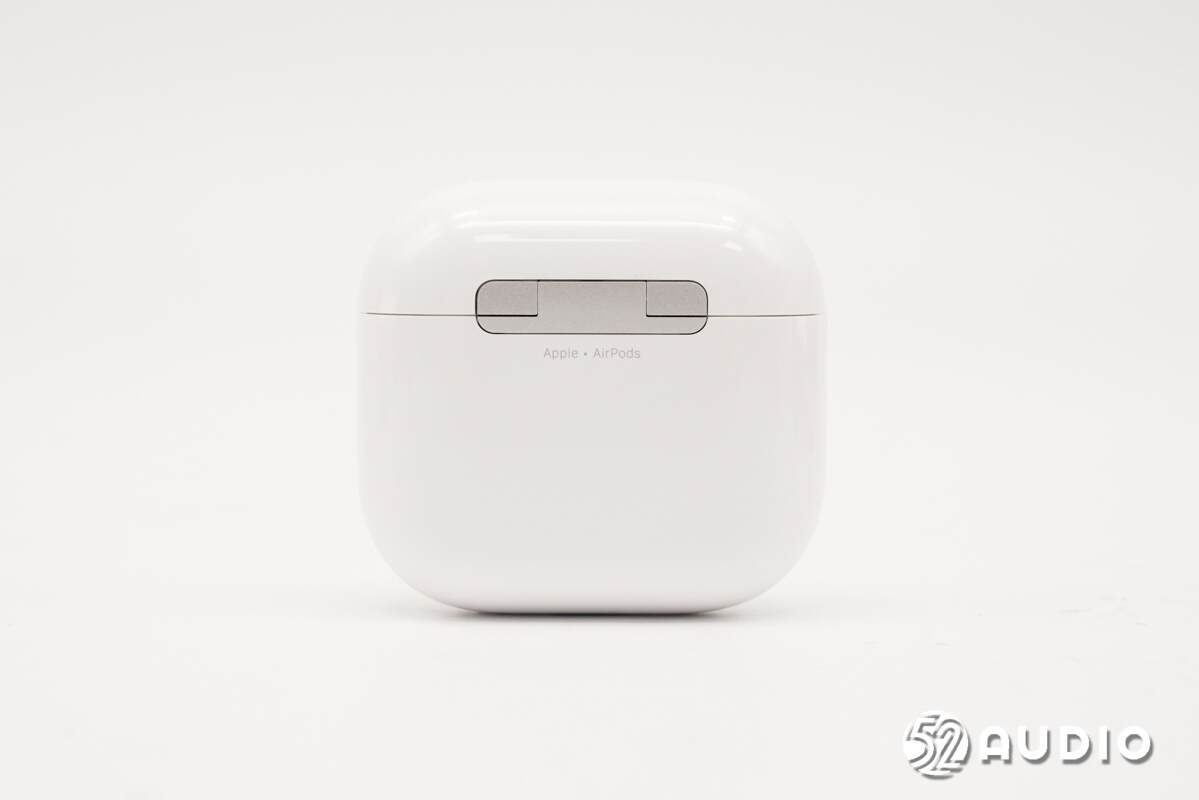
The back of the charging case features a silver metal hinge marked “Apple · AirPods.” The wireless charging receiver area is located on the back.
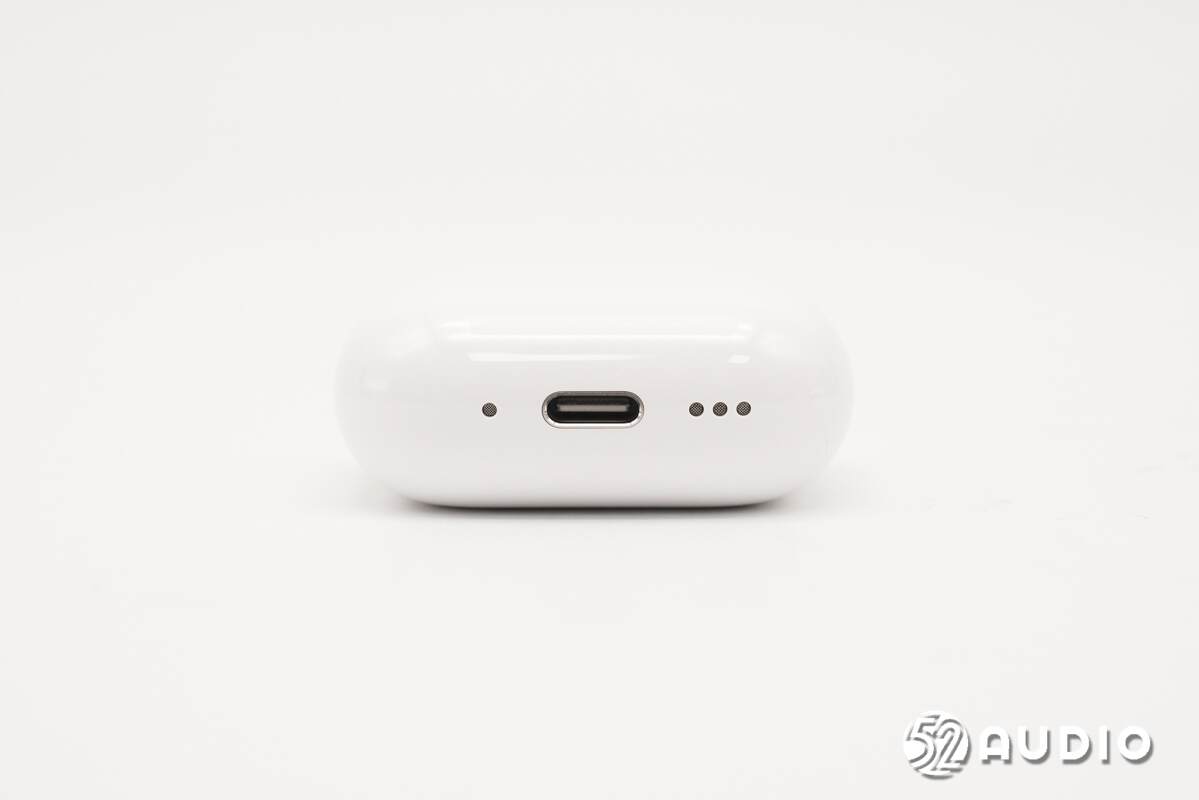
The bottom of the case features a pressure vent on the left, a USB-C charging port, and a speaker outlet on the right.
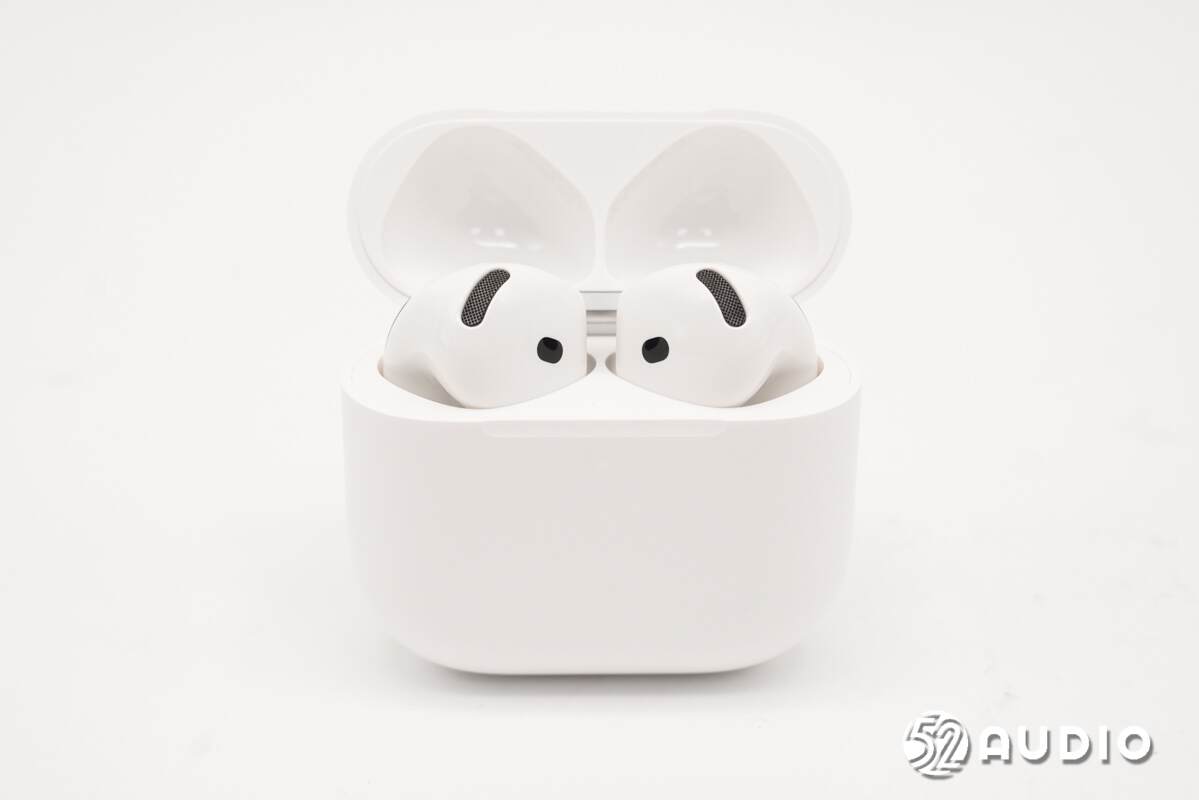
The earbuds inside the charging case are held in place magnetically when the lid is opened.
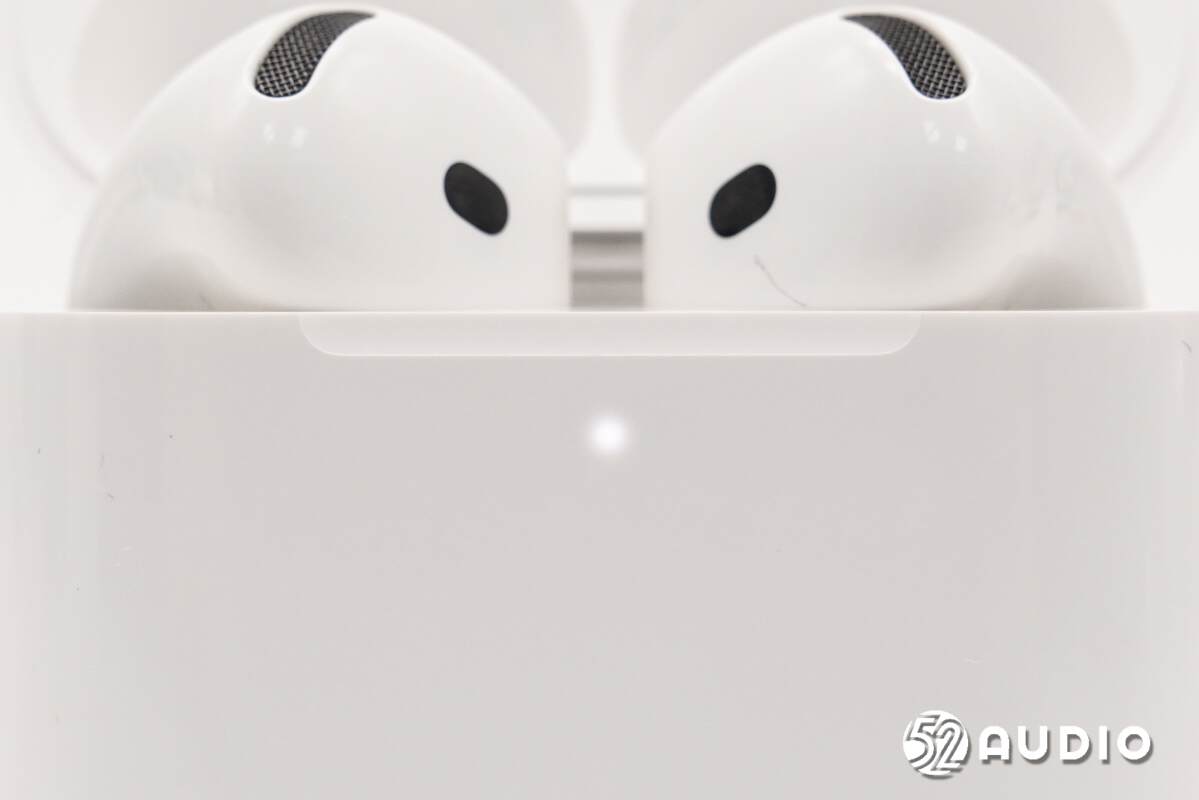
The charging case’s status light. Double-tap the case to enter pairing mode.
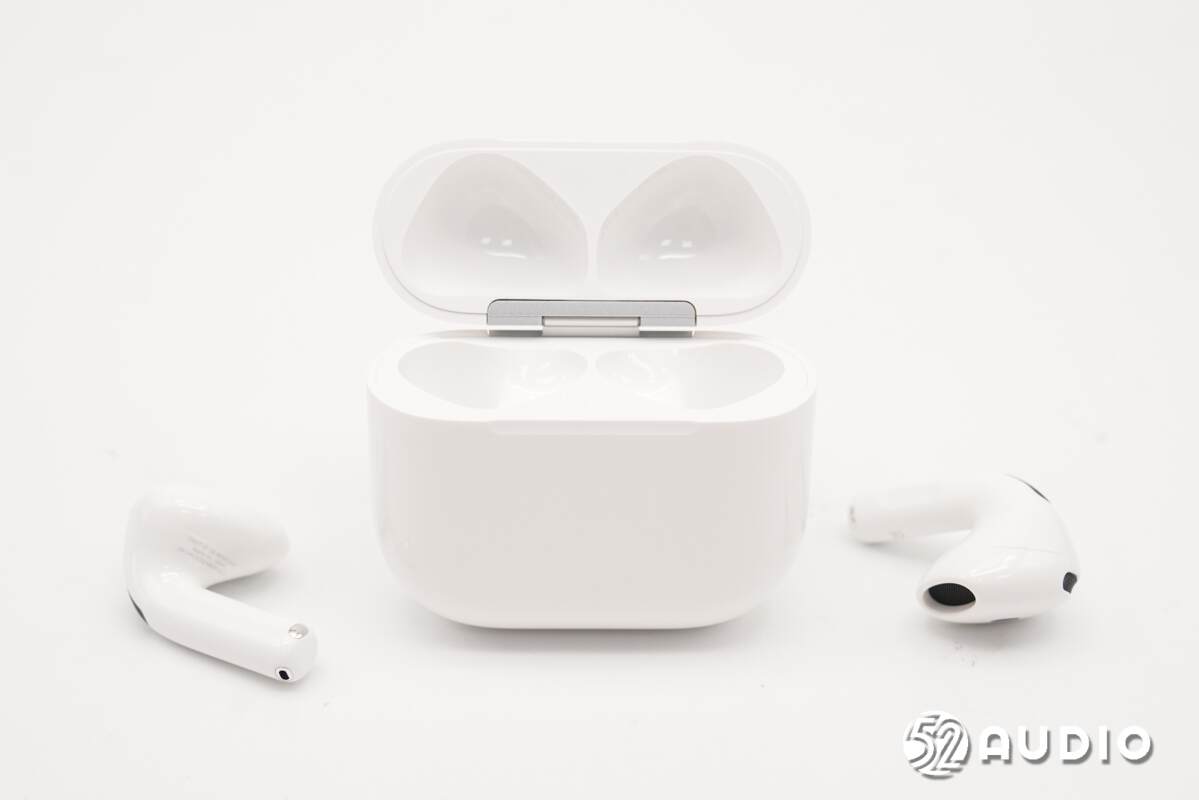
The earbuds have been removed, revealing the interior of the charging case.
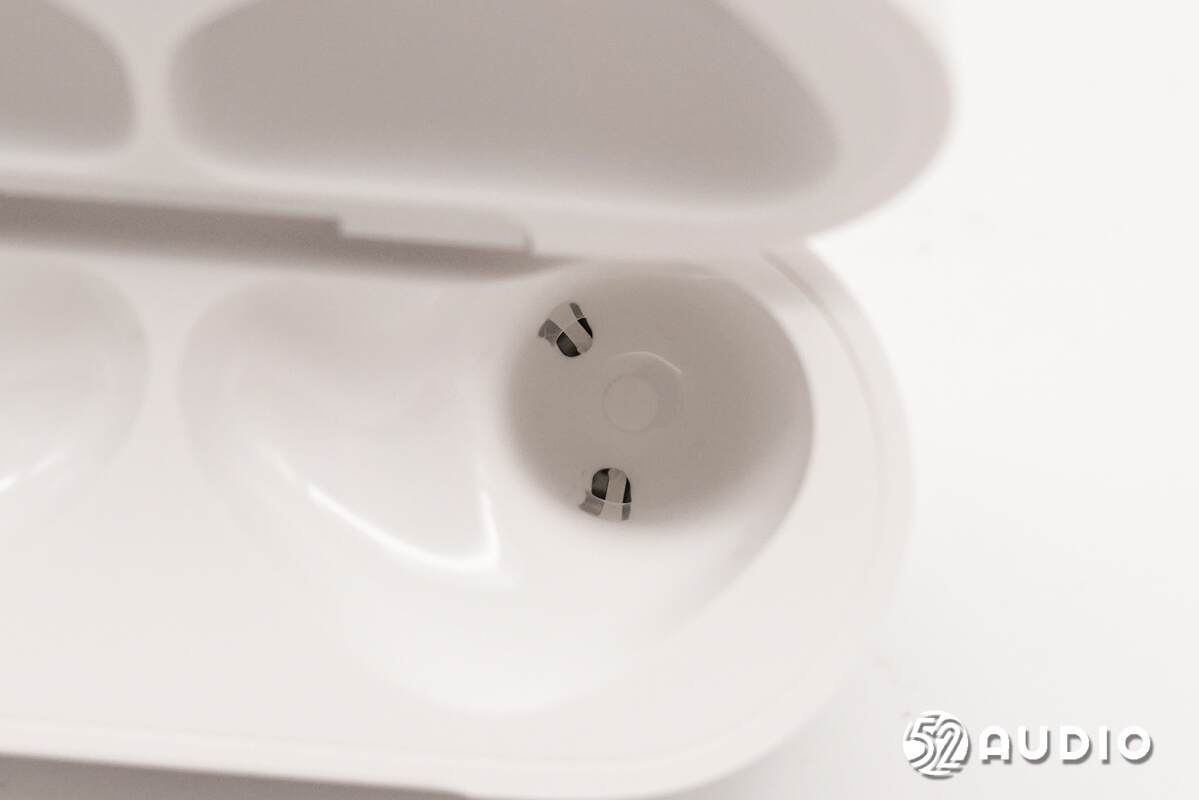
Metal spring contacts for charging the earbuds are located at the bottom of each earbud well.
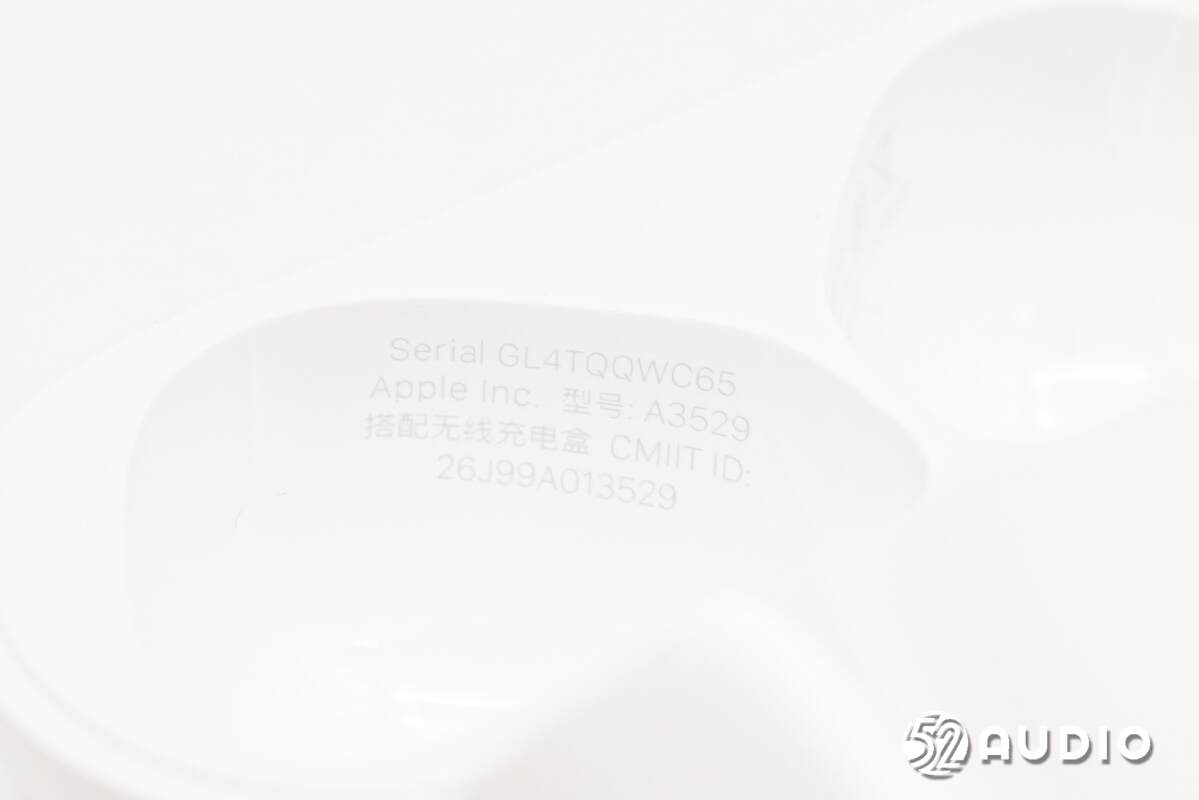
Product information printed on the inside of the lid: model: A3529, with Wireless Charging Case.
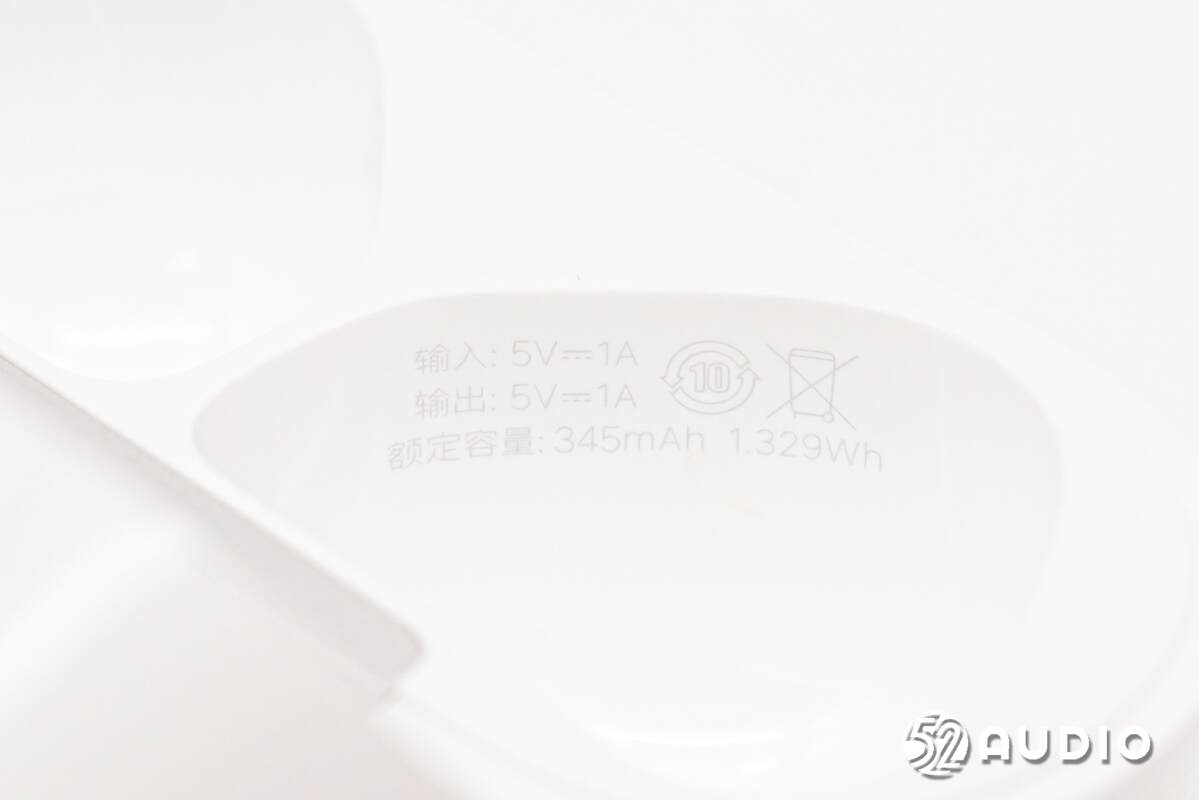
Input: 5 V ⎓ 1 A; Output: 5 V ⎓ 1 A; rated capacity: 345 mAh, 1.329 Wh.
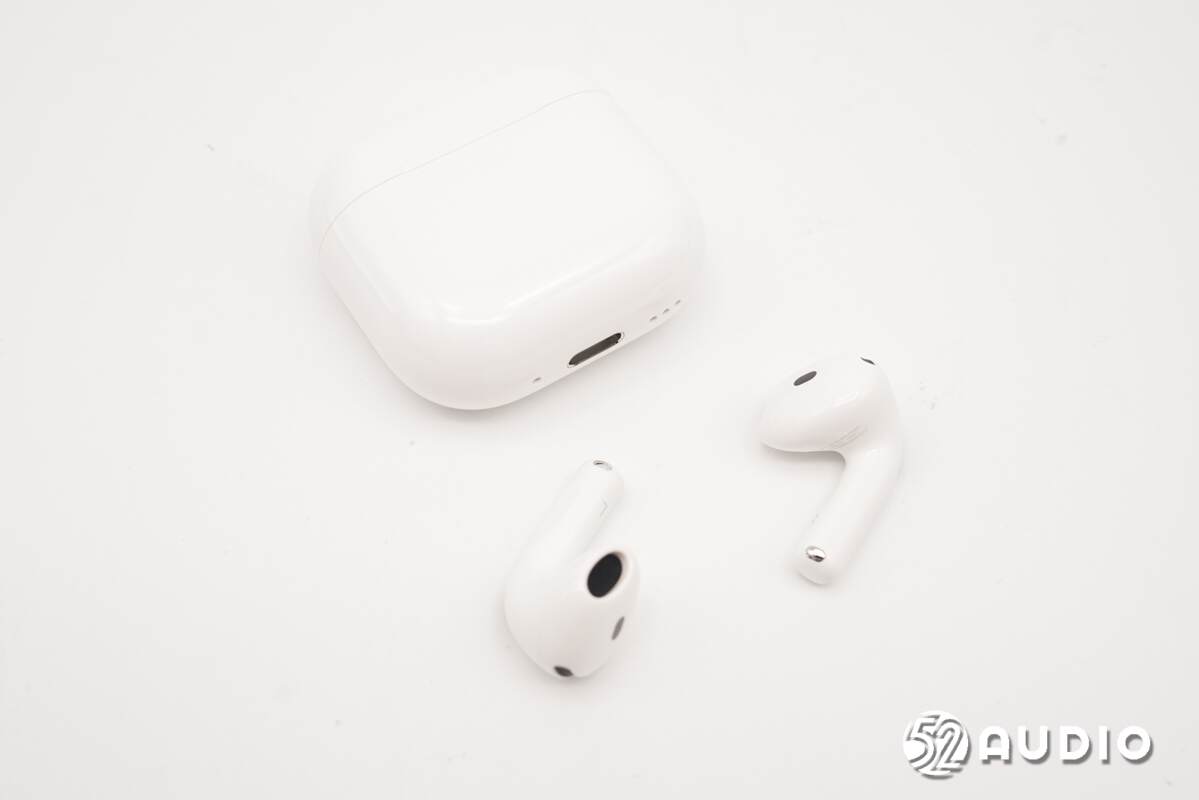
The AirPods 5 TWS earbuds. Their dimensions and weight are identical to those of the corresponding previous-generation model, but the protection rating has been upgraded to IP57 for dust and water resistance.
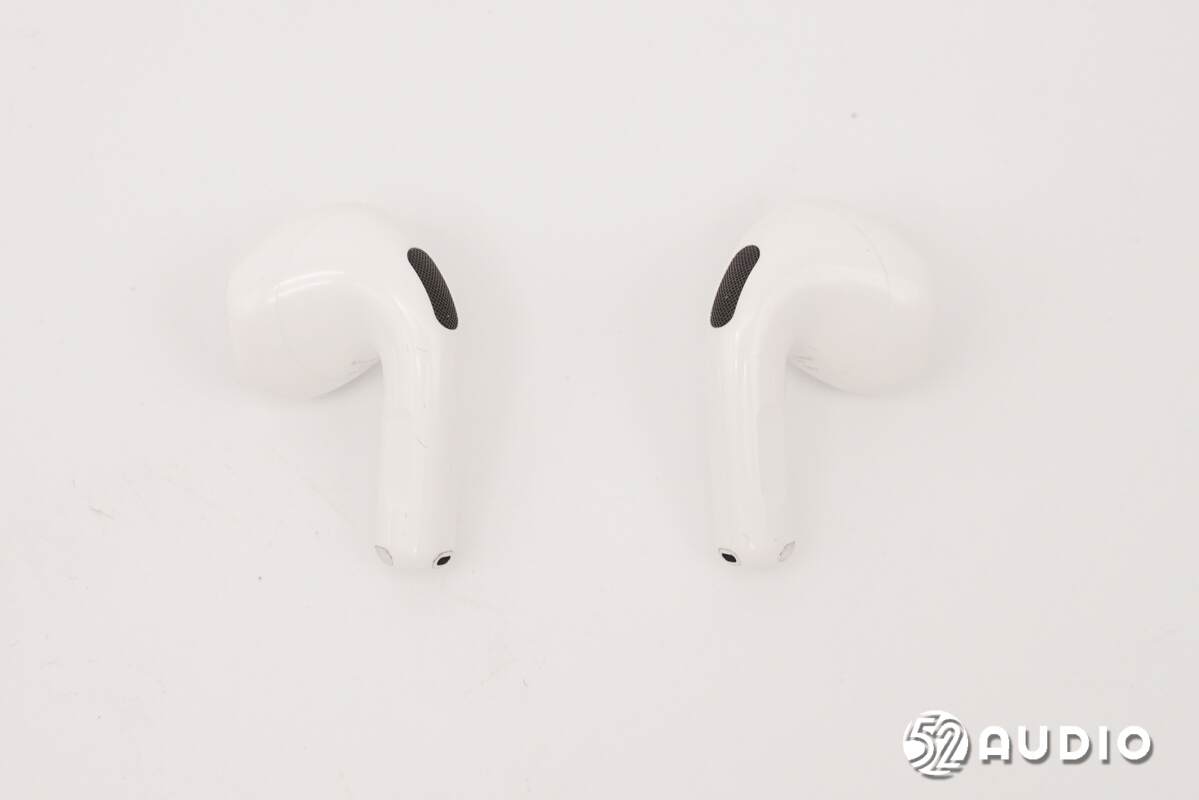
Exterior view of the earbuds. The stem and rear housing are designed as a single piece, with smooth, flowing lines and rounded edges. A large microphone opening for the feedforward ANC microphone is located near the top of the stem.
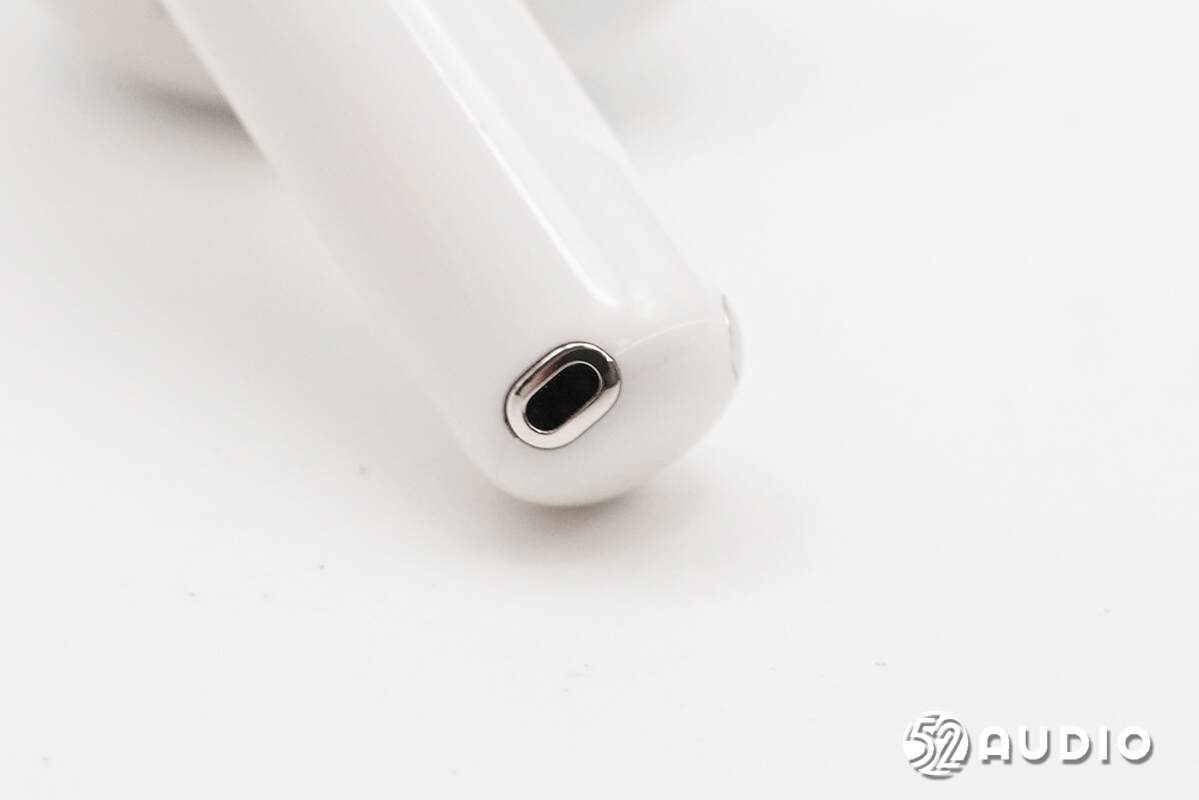
The voice-call microphone opening at the bottom of the stem.

Interior view of the earbuds. The earbud head is relatively flat and fits closely against the ear, helping achieve better noise cancellation.
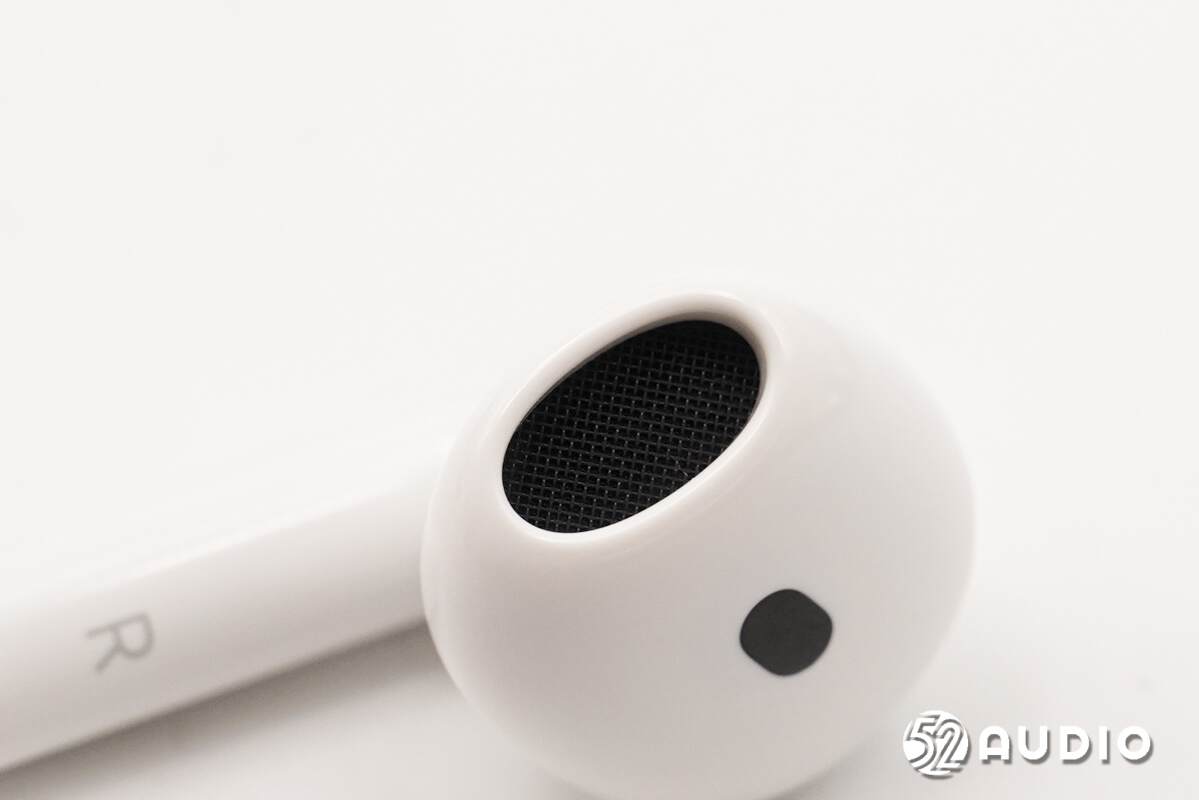
The earbud sound outlet, protected by a metal mesh.
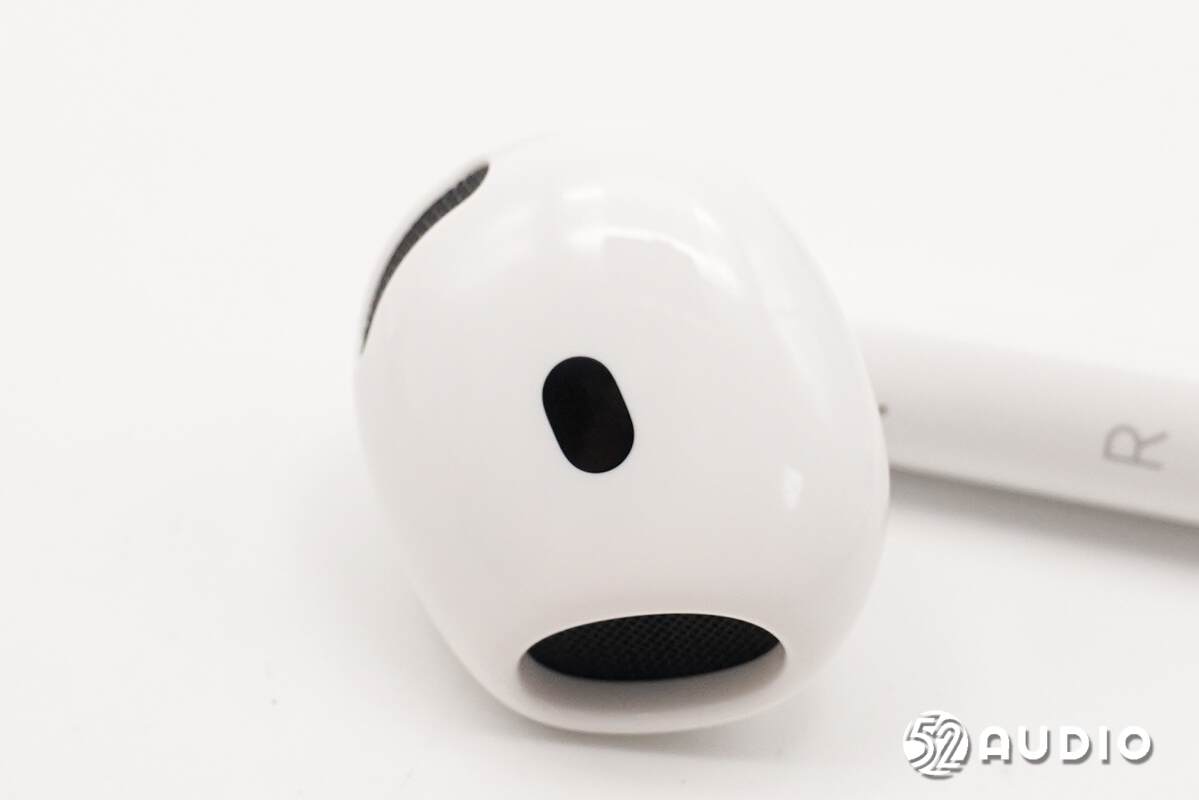
The optical in-ear detection sensor.
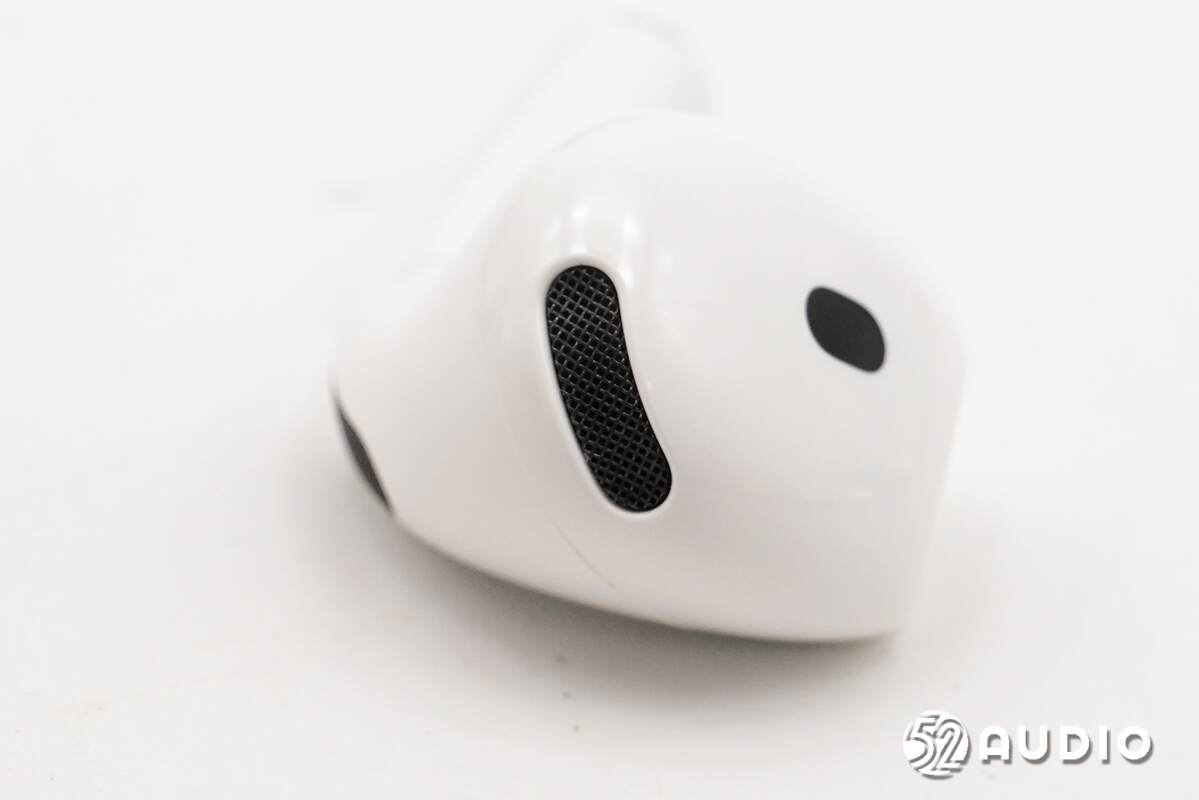
The acoustic tuning vent, which helps regulate airflow inside the housing and optimize audio performance.
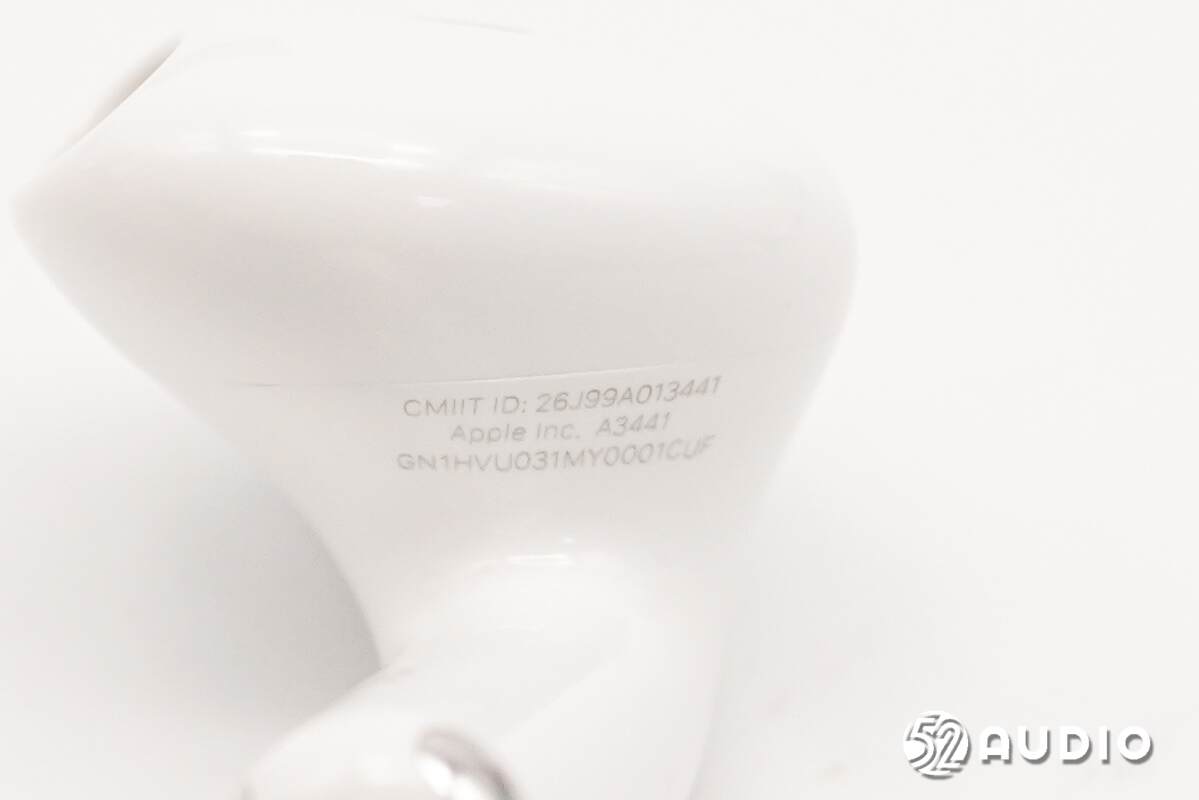
The ID and model information are printed on the bottom of the earbud head.
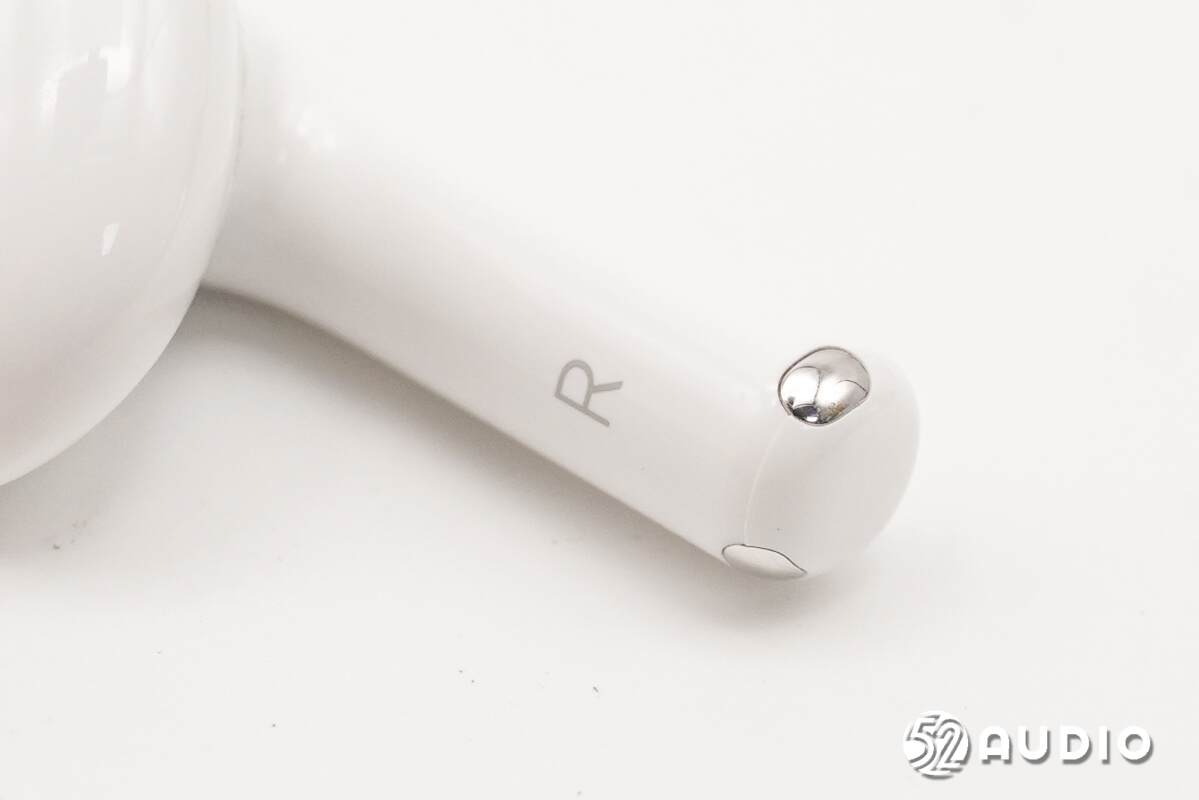
L/R markings are printed on the inner side of the stem, with charging contacts at the bottom.
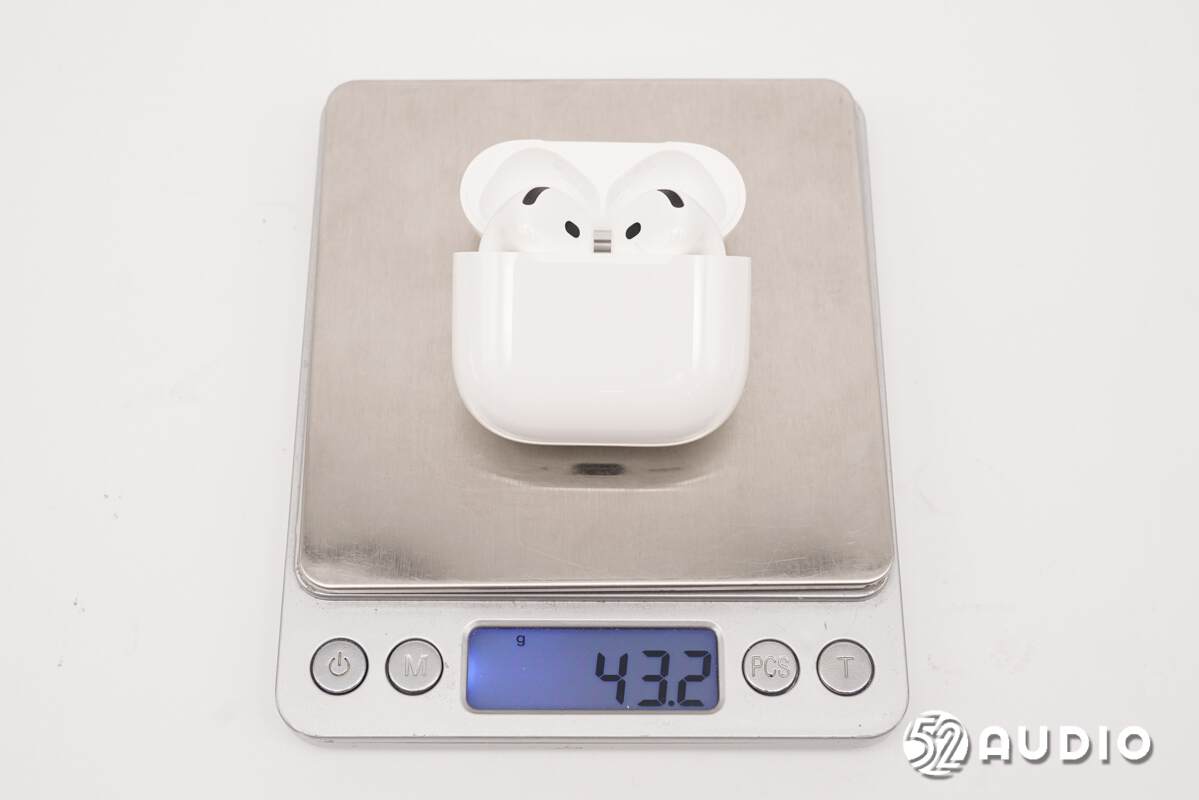
In tests conducted by 52 AUDIO, the Apple AirPods 5 with Wireless Charging Case weigh approximately 43.2g (1.523oz) in total, making them compact and portable.
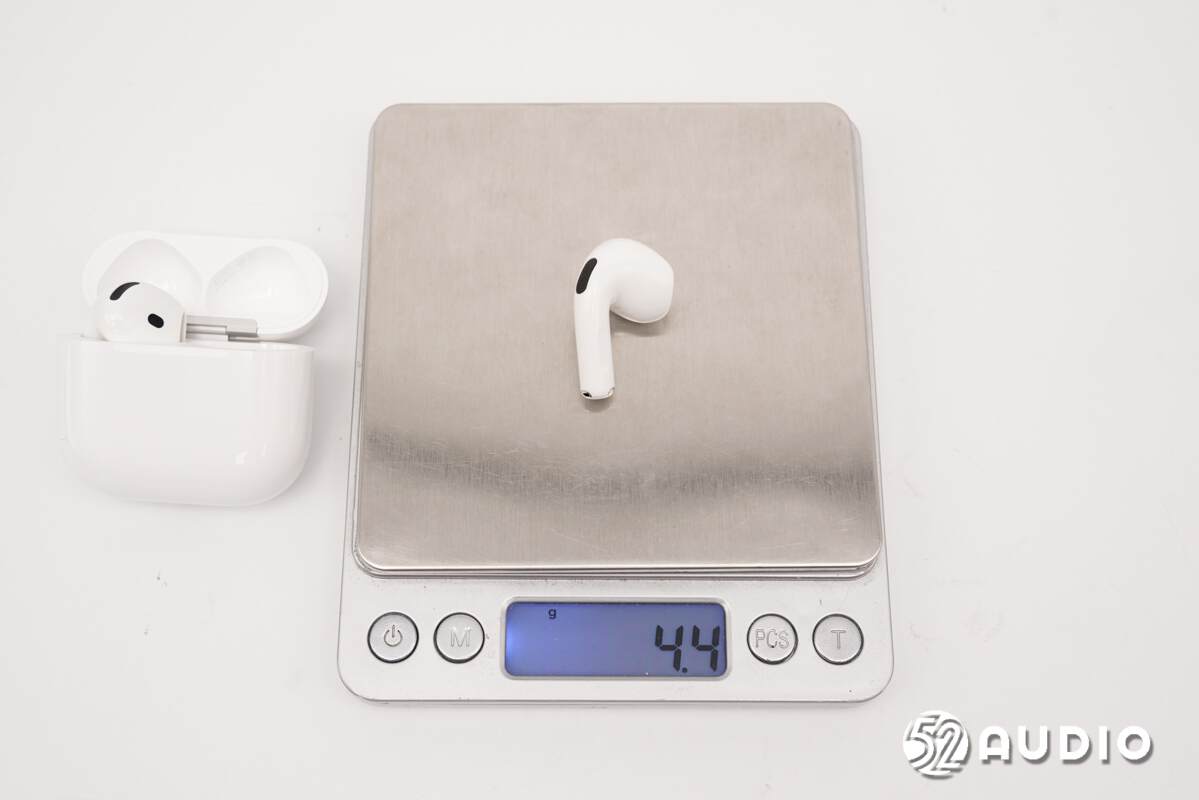
Each earbud weighs approximately 4.4g (0.155oz), providing a light and comfortable fit.
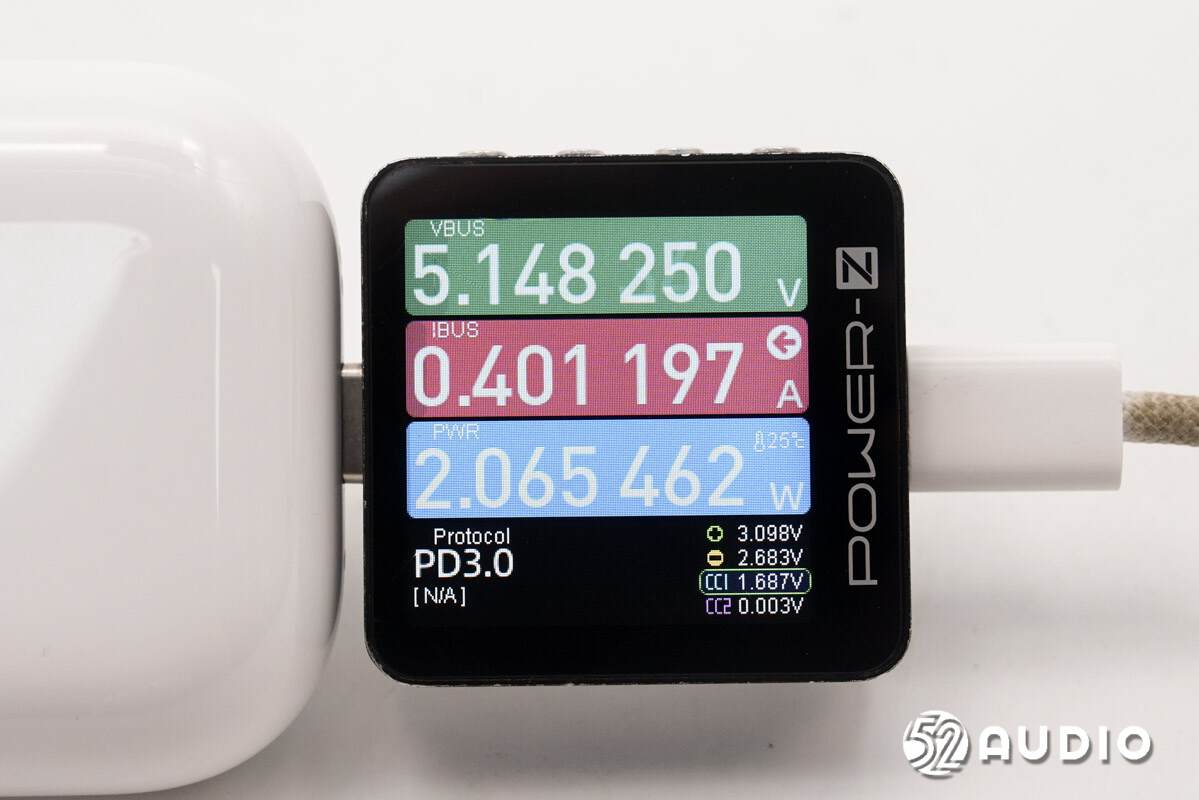
52 AUDIO used a CHARGERLAB POWER-Z KM003C tester to measure wired charging on the Apple AirPods 5 with Wireless Charging Case. The input power was approximately 2.07 W.
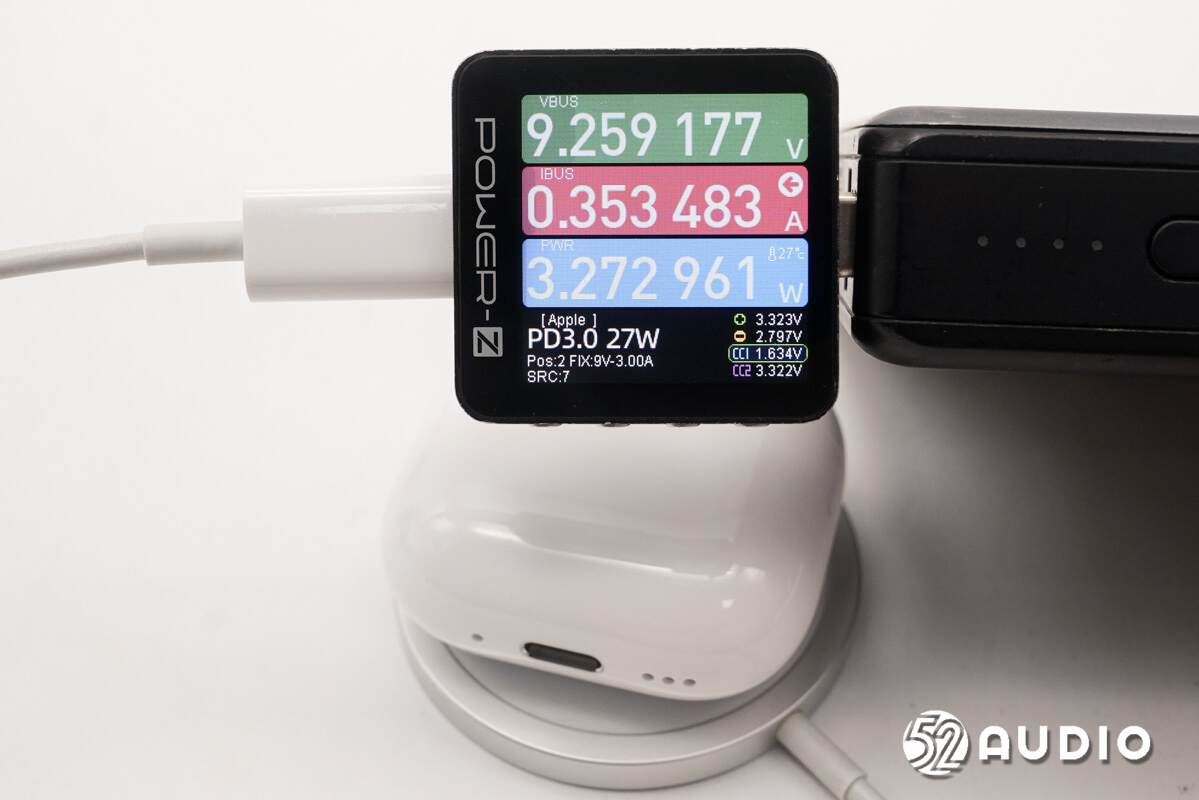
52 AUDIO used a CHARGERLAB POWER-Z KM003C tester to measure wireless charging on the AirPods 5 with Wireless Charging Case. The input power was approximately 3.27 W.
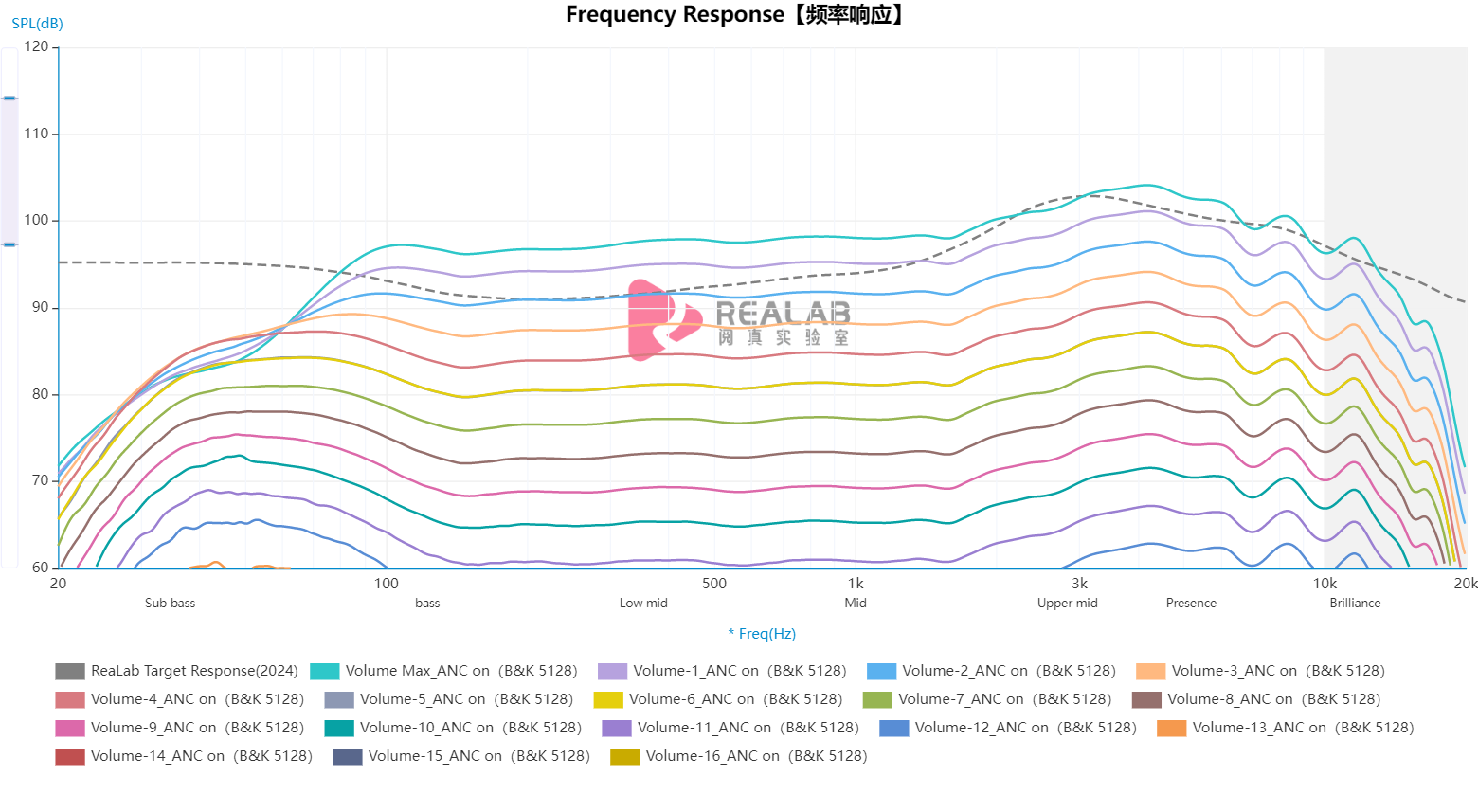
Frequency-response testing reveals a pronounced midrange dip and a distinctly V-shaped sound signature. Equal-loudness compensation further accentuates this issue at low to moderate listening volumes, making the earbuds less suitable for vocal-focused music.
ReaLab is dedicated to establishing a comprehensive and in-depth testing and evaluation system, analyzing product performance and providing consumers and the market with ongoing, useful reference reports. Its work aims to encourage product innovation, improve end-user experiences, and promote positive interaction between people and technology. For testing inquiries, contact Xiao Zhen at 18938830175 (also available on WeChat).
Teardown
The unboxing gave us a detailed look at the minimalist exterior design of the AirPods 5 with Wireless Charging Case. Next, let’s move on to the teardown and examine the internal structure and components.
Charging Case Teardown
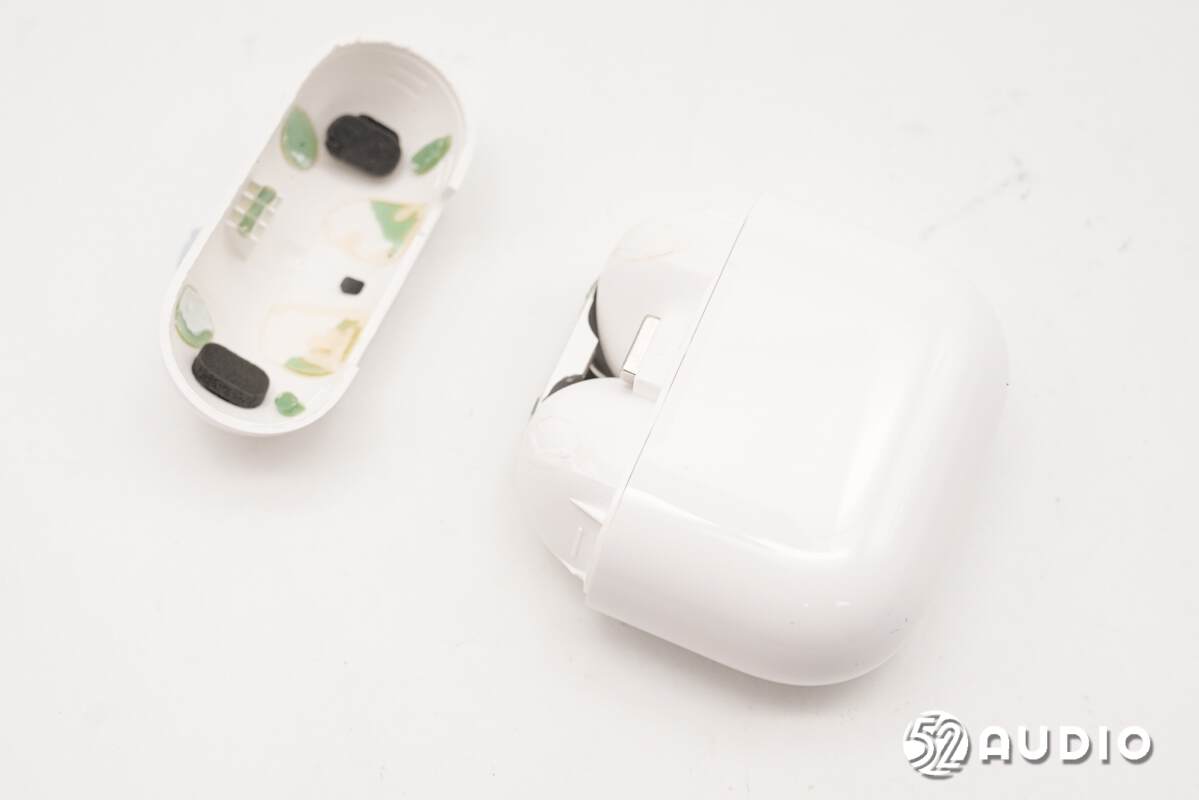
Heat the adhesive to soften it, then remove the outer shell of the charging-case lid.
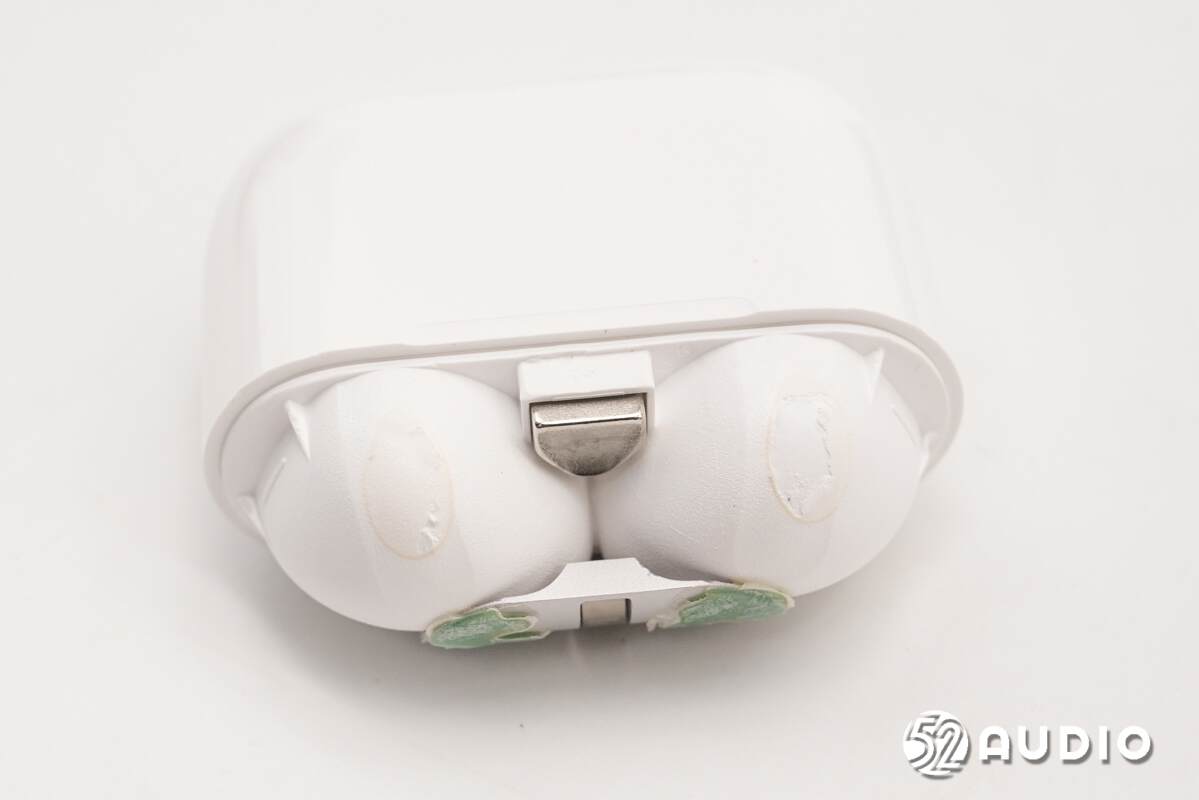
An irregularly shaped magnet beneath the shell secures the lid to the earbud compartment.
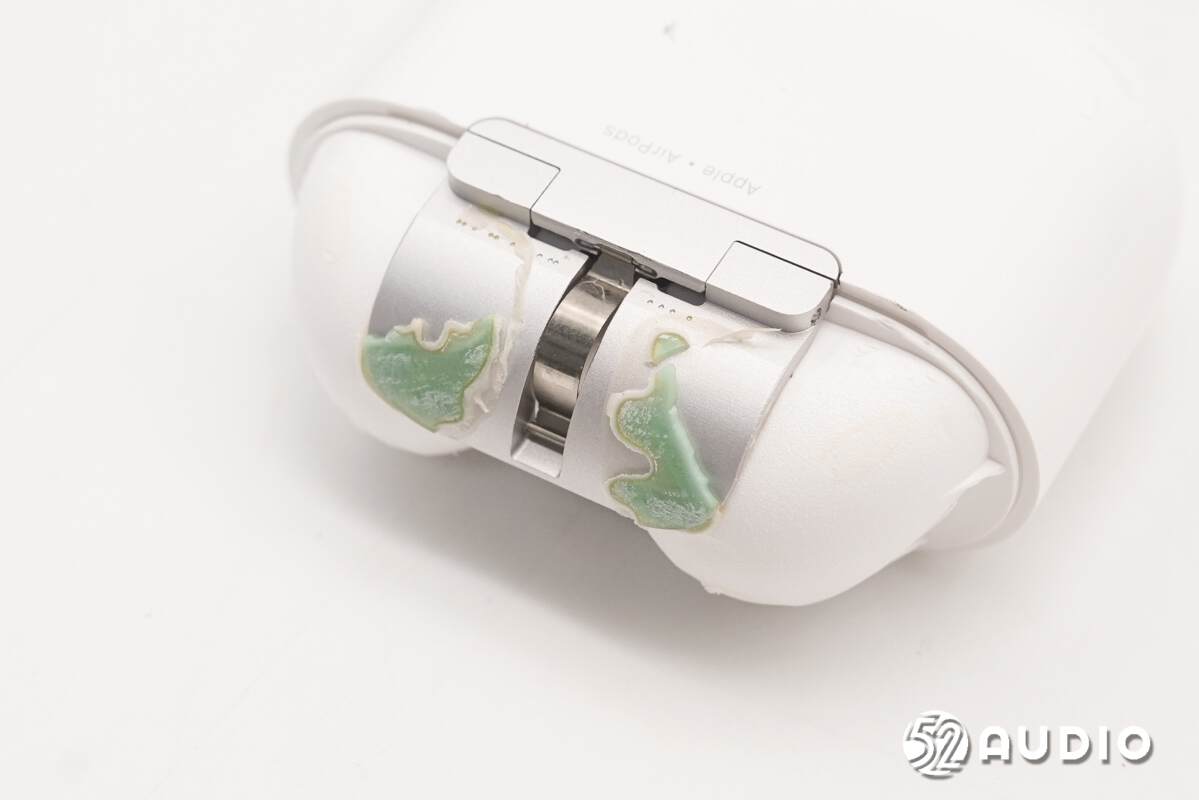
The metal hinge structure inside the charging-case lid.
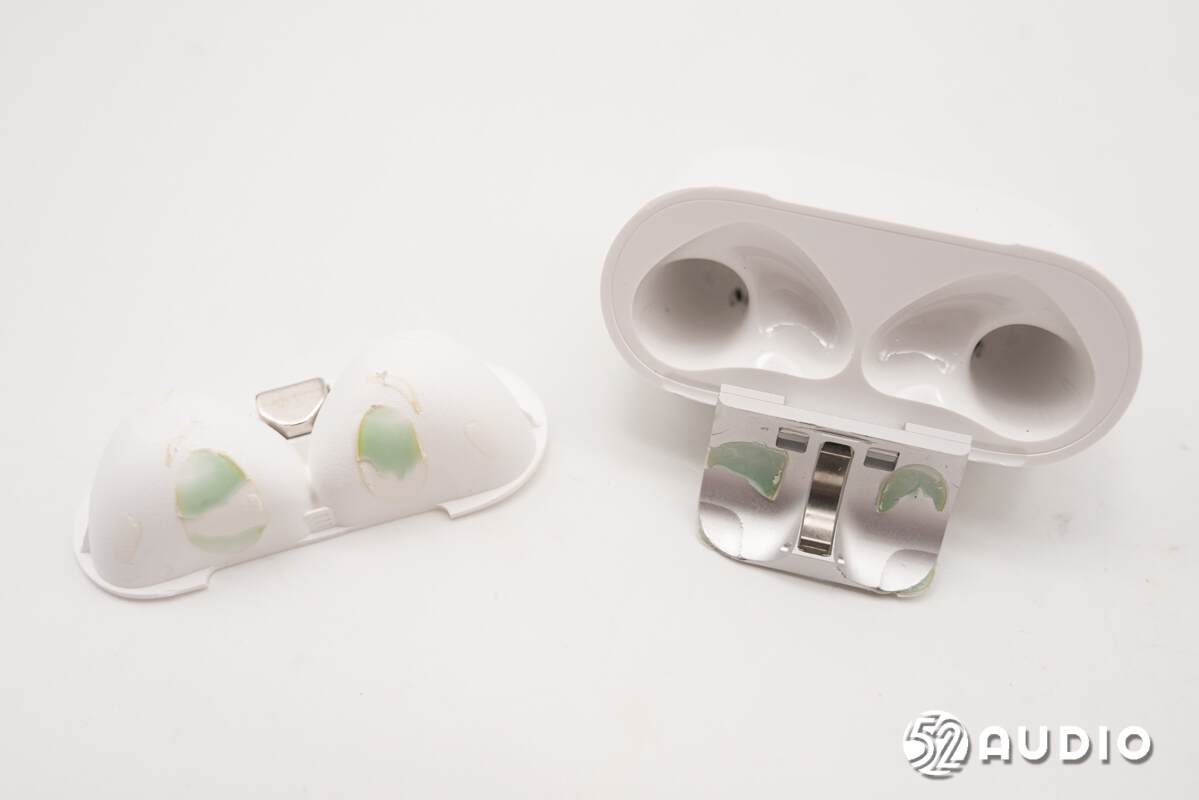
Remove the charging-case lid.
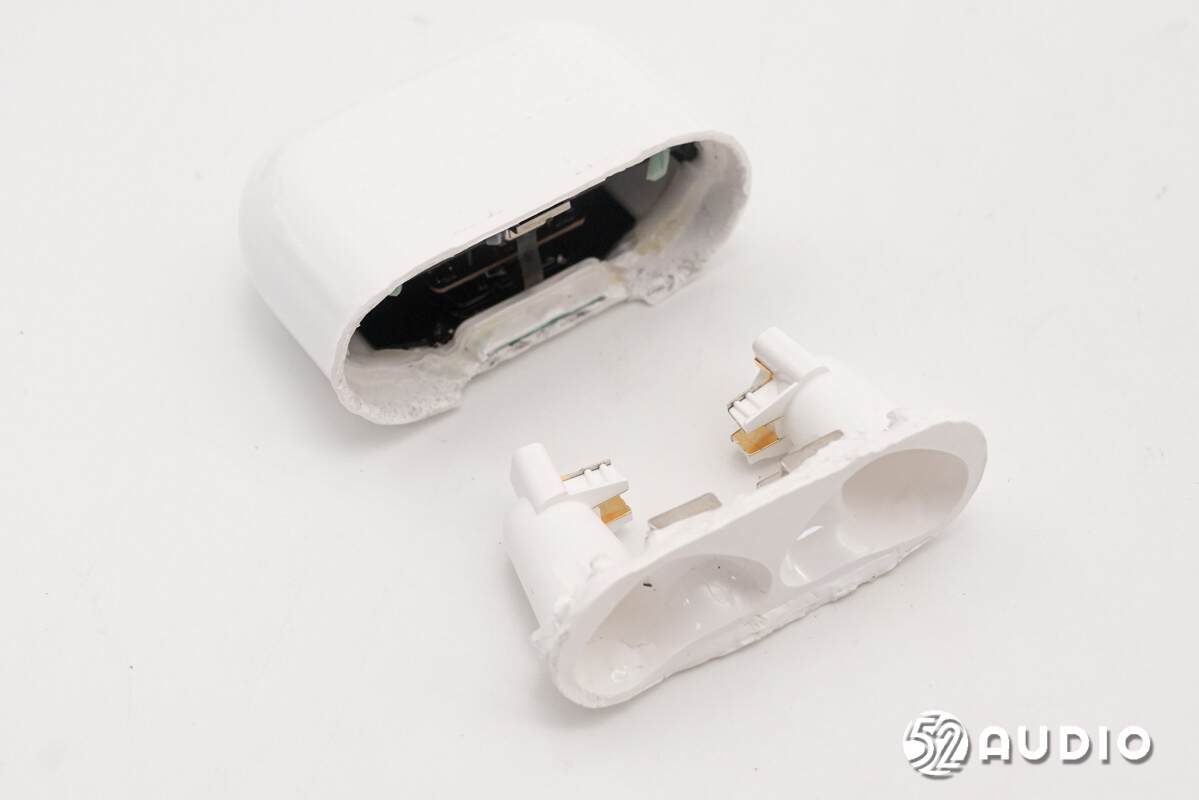
Remove the earbud compartment assembly.
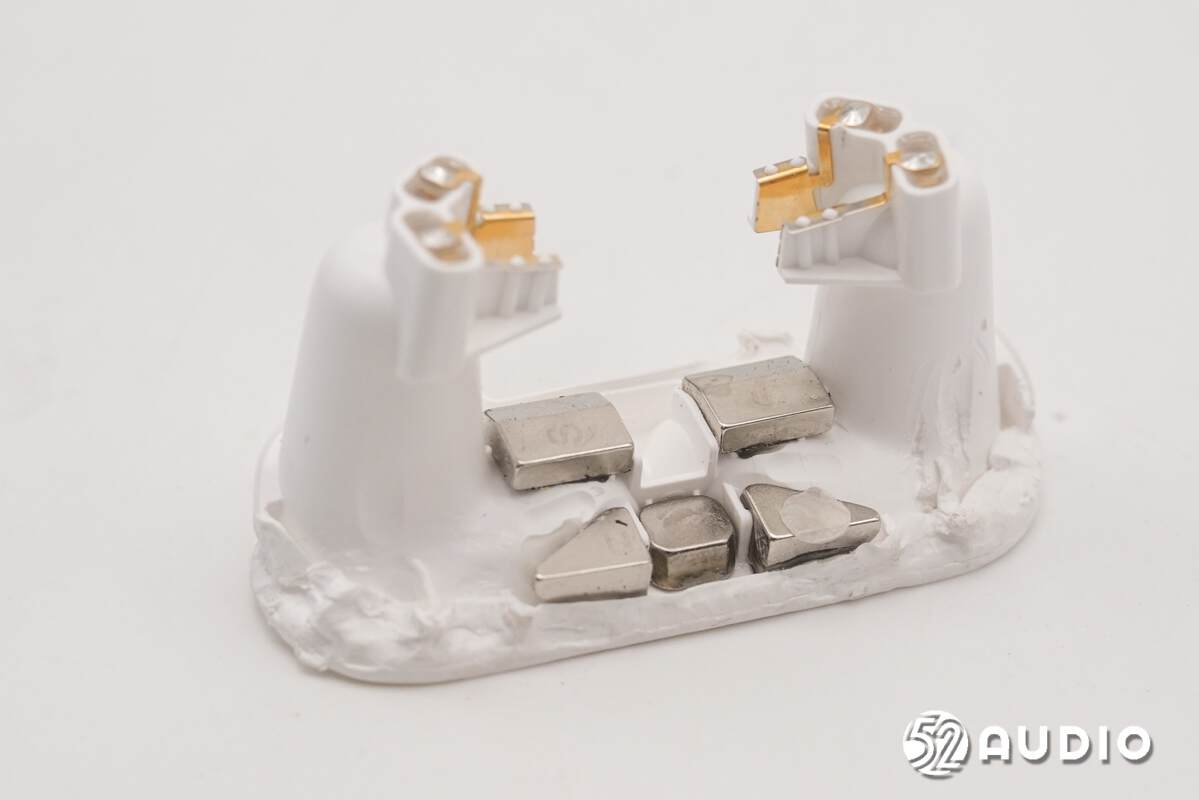
The bottom of the earbud compartment, showing the spring contacts used to charge the earbuds and multiple magnets that secure the earbuds and the charging-case lid.
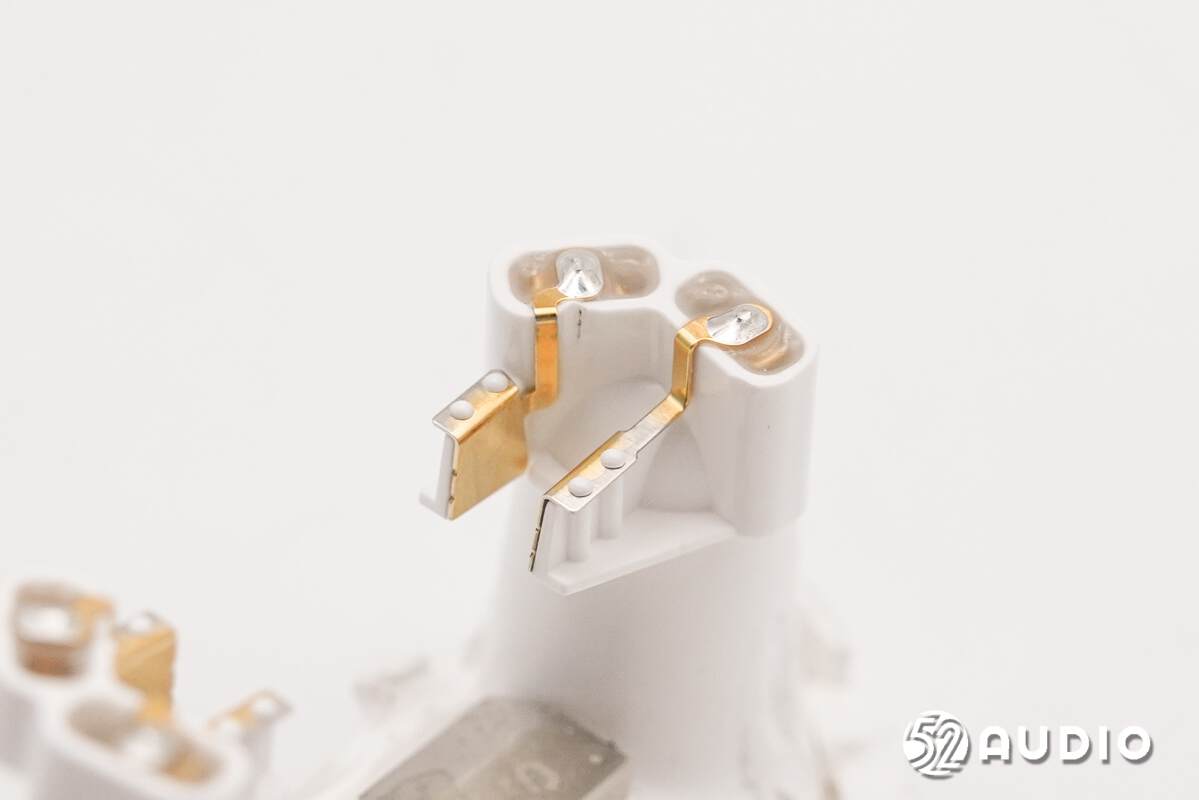
The metal spring contacts used to charge the earbuds. The spring contacts feature a wraparound design, with the mainboard positioned between them to establish the electrical connection.
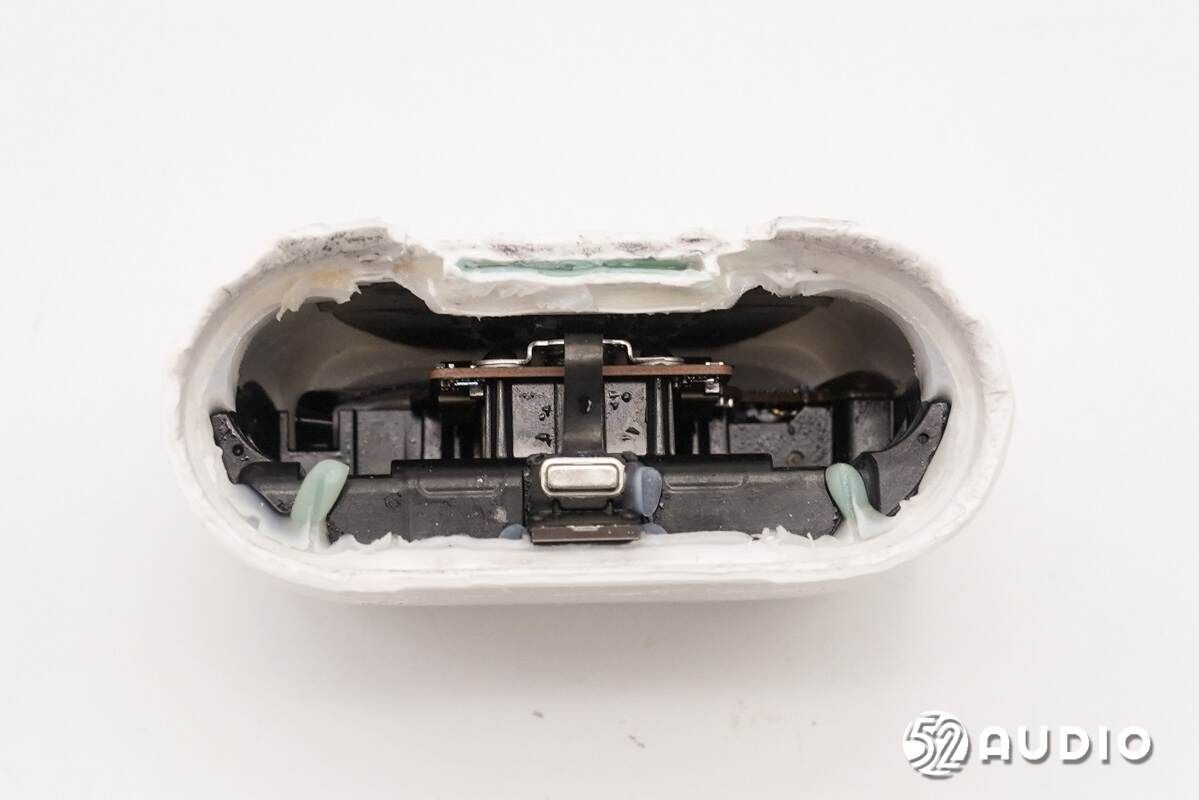
The internal housing, with a frame securing the components.
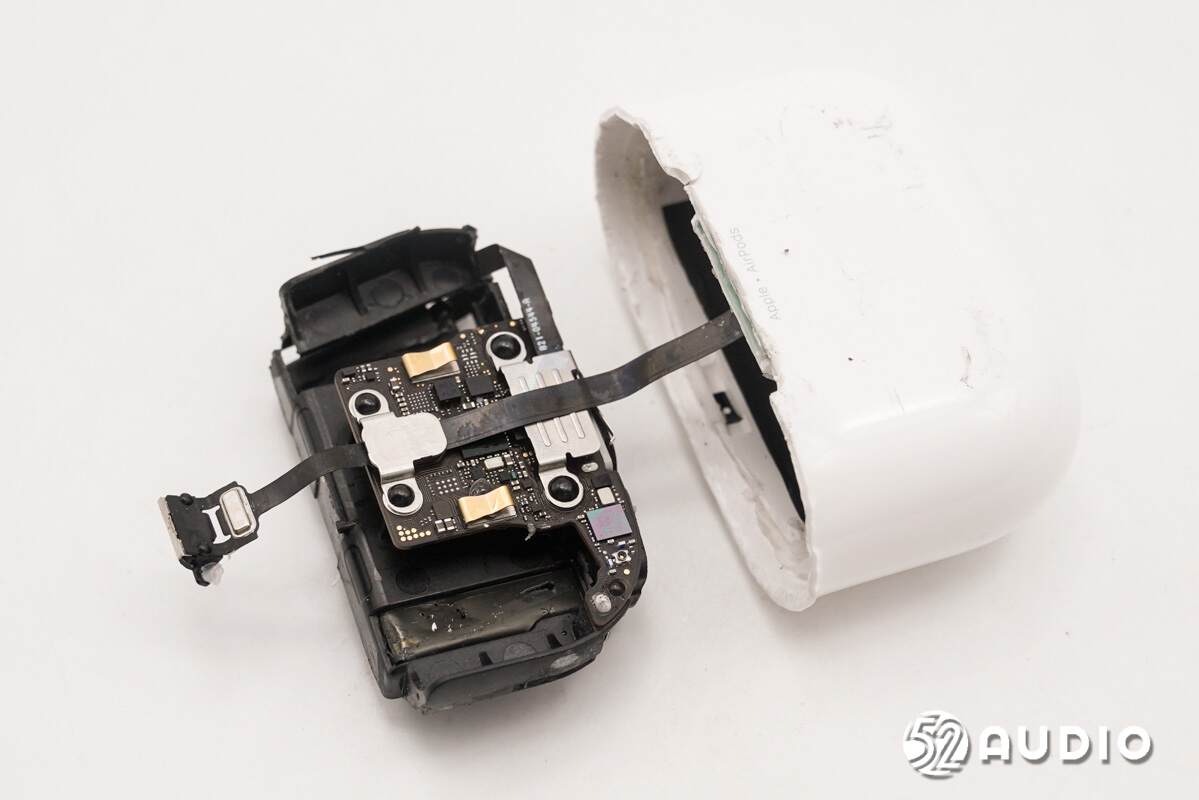
Remove the frame from inside the housing. The wireless charging receiver board connects to the mainboard via a flex cable and connector.
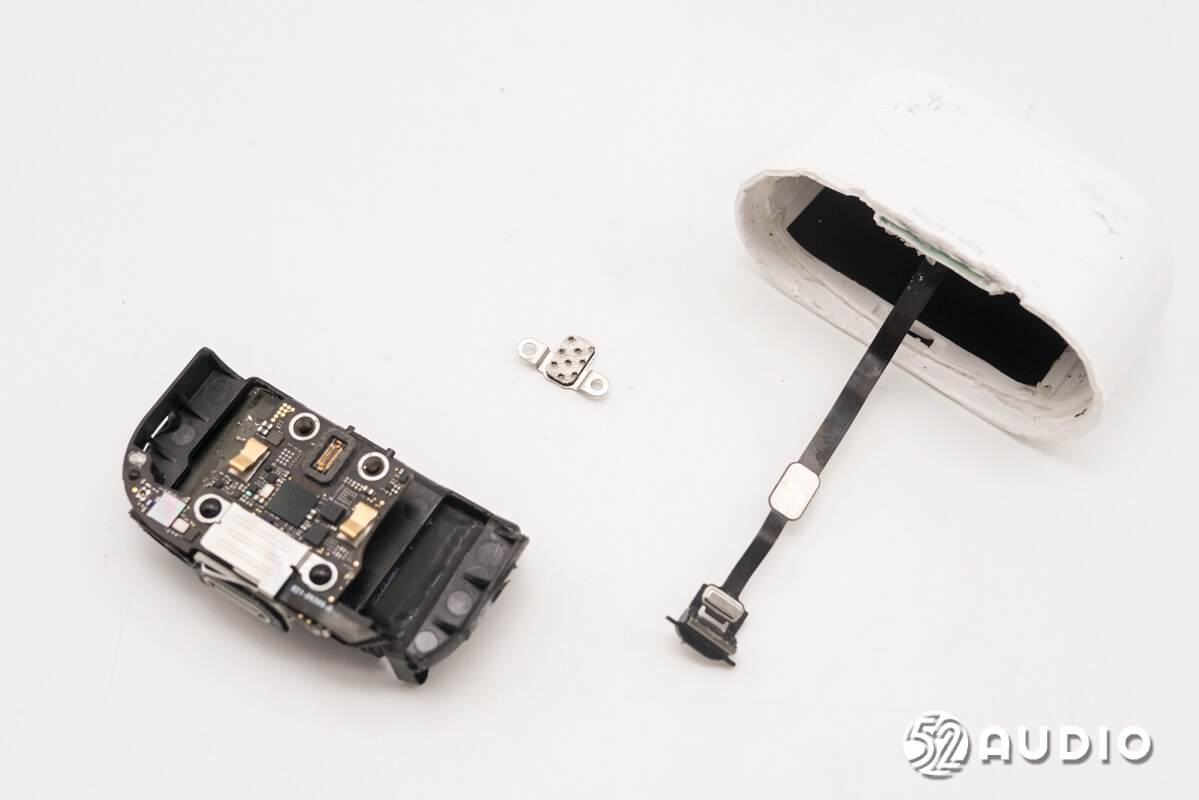
Remove the securing screws and retainers, then disconnect the connector.
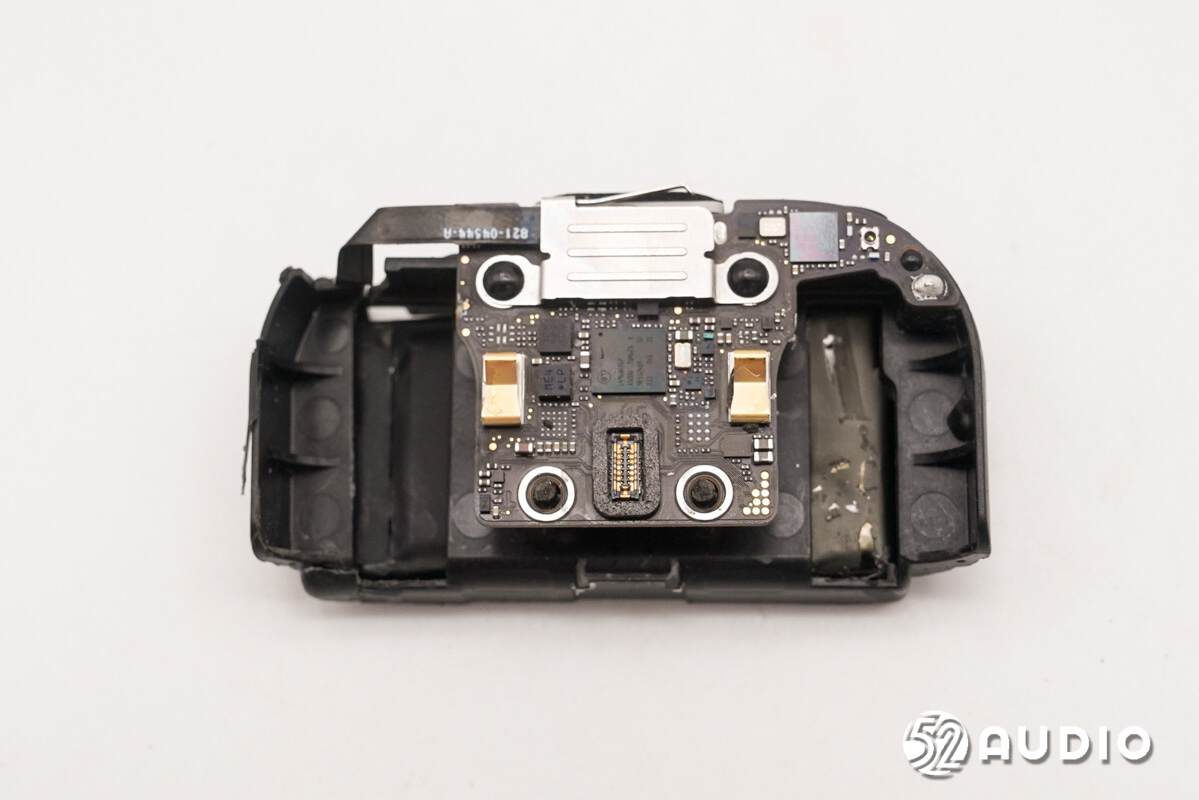
The mainboard assembly is secured to the frame by heat-staked posts.
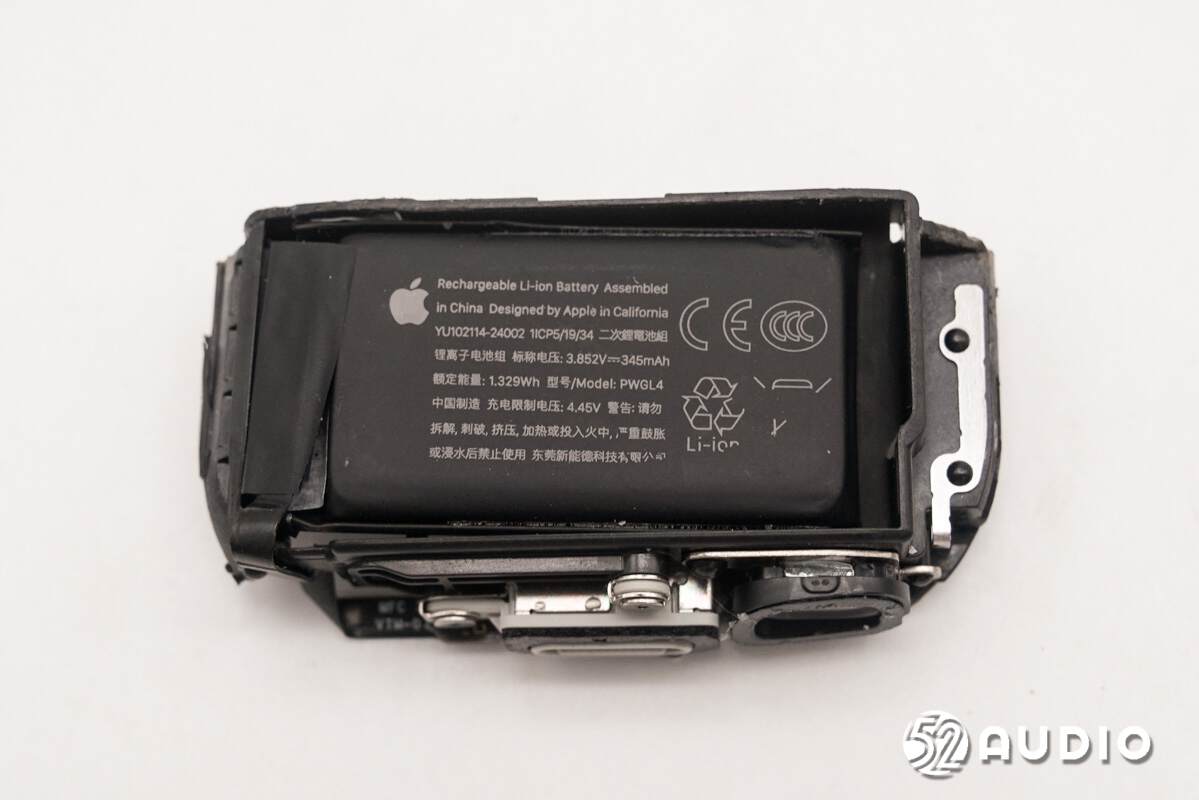
The battery assembly is located on the other side of the frame.
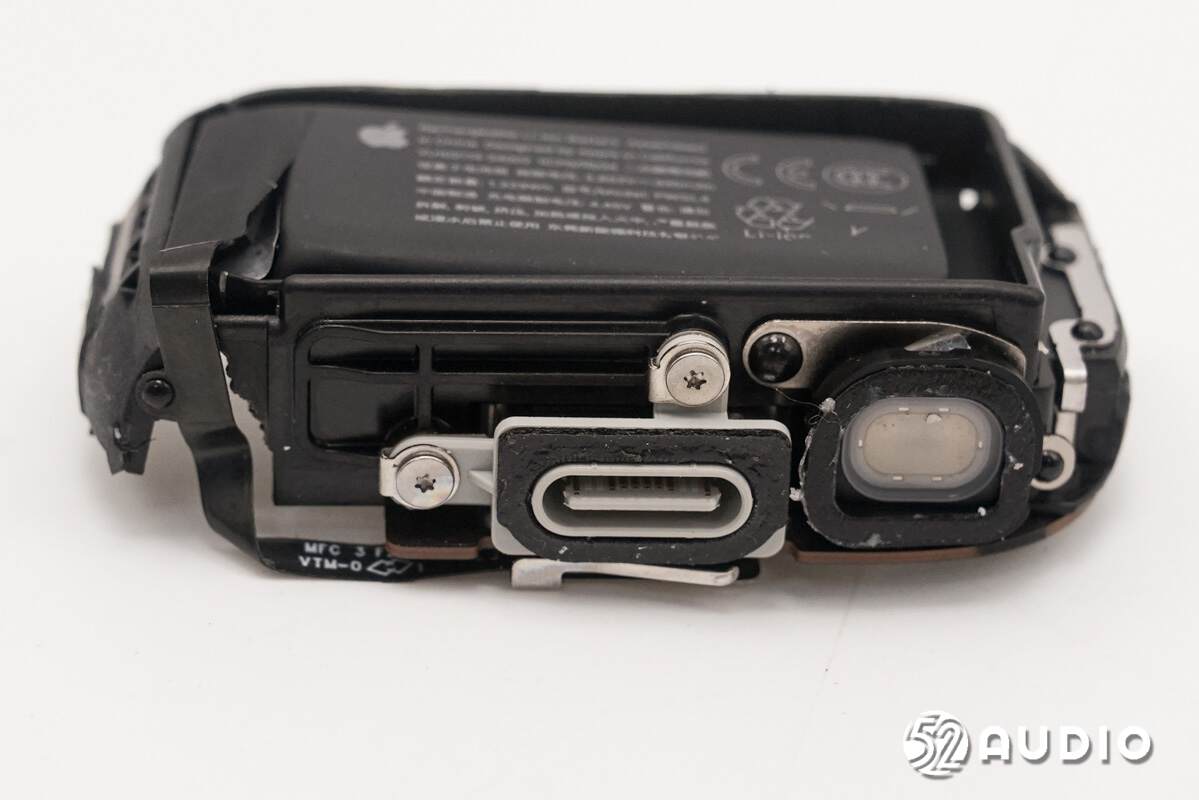
The USB-C charging port and speaker are located at the bottom of the frame.
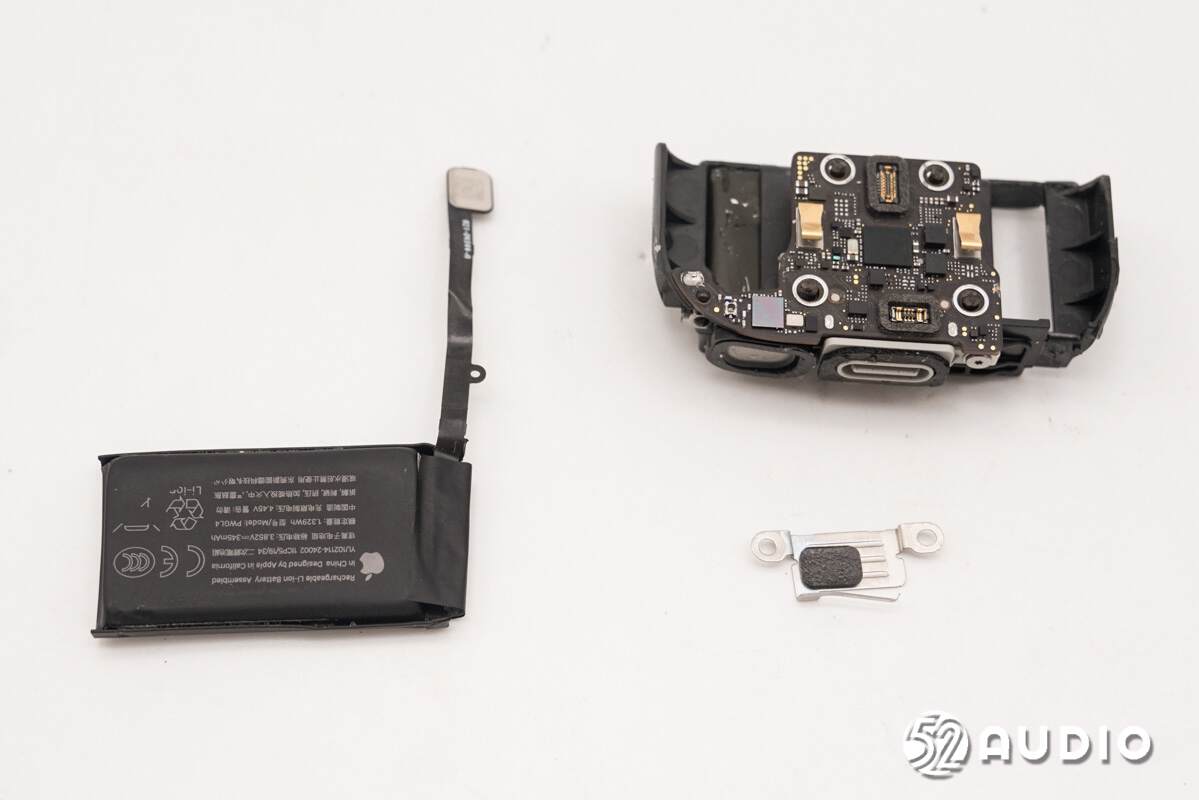
Disconnect the connector and remove the battery assembly.
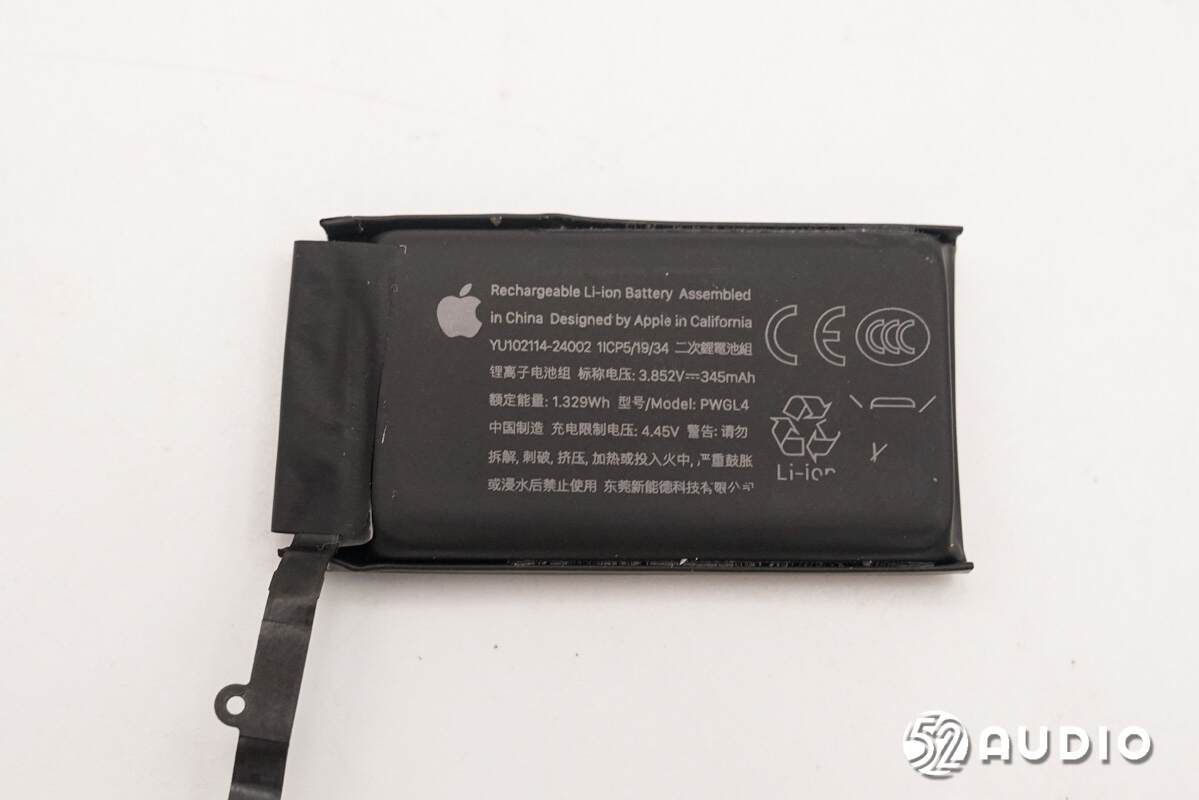
Information on the charging-case battery label: lithium-ion battery pack; model PWGL4; nominal voltage 3.852 V; rated capacity 345 mAh; rated energy 1.329 Wh; charge limit voltage 4.45 V; manufacturer: Dongguan NVT Technology Co., Ltd.
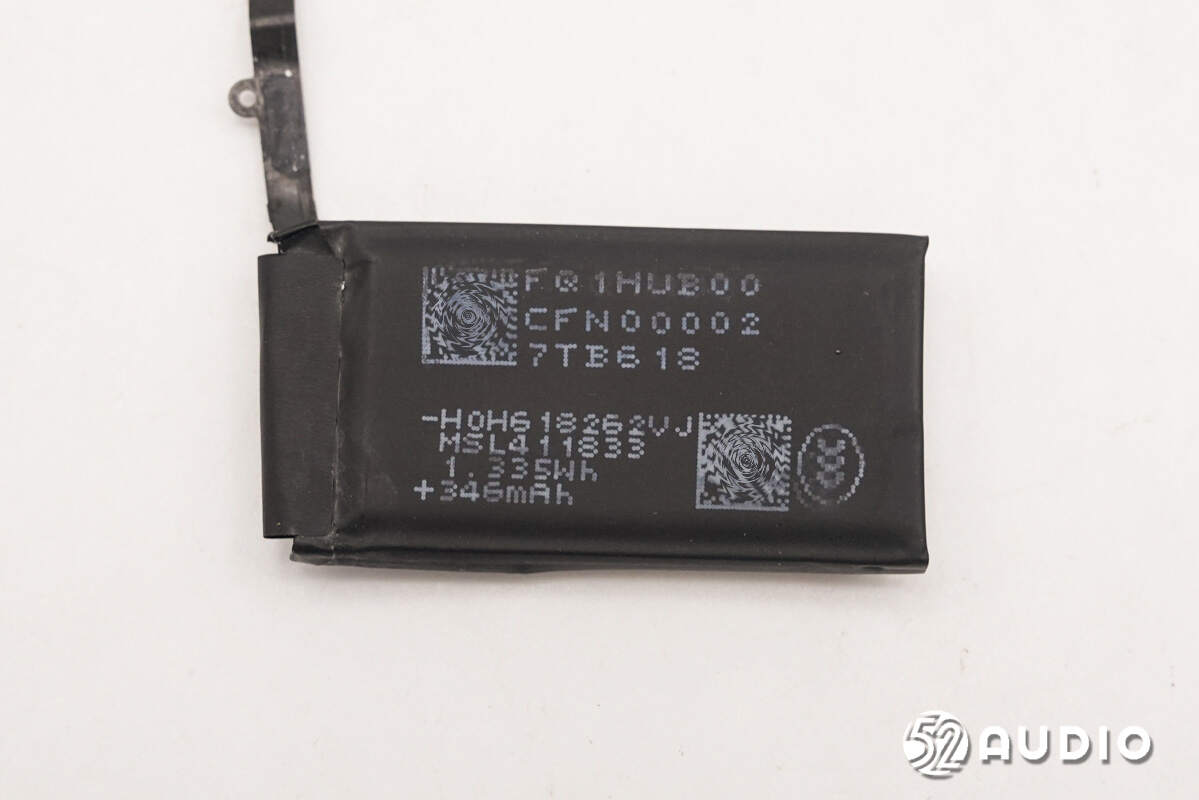
The markings printed on the back of the battery.
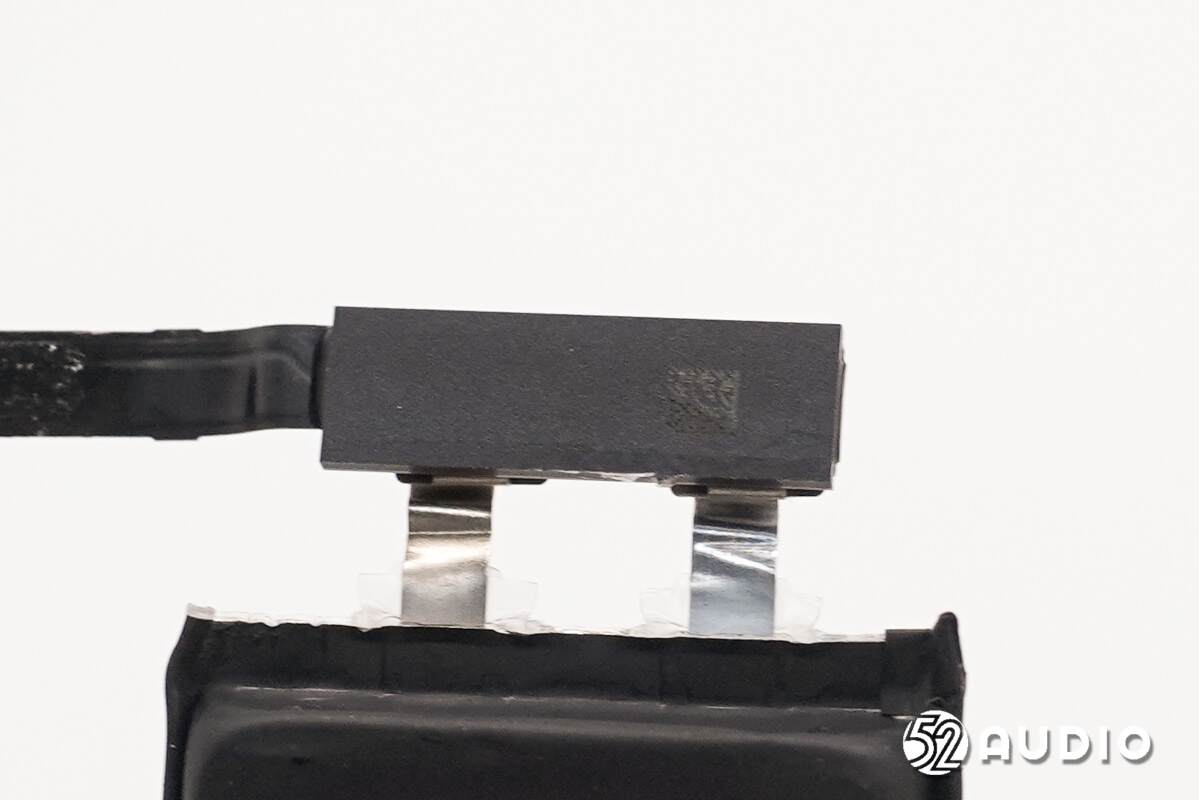
Removing the insulating protective layer reveals the integrated IC package on the front of the battery protection PCB.
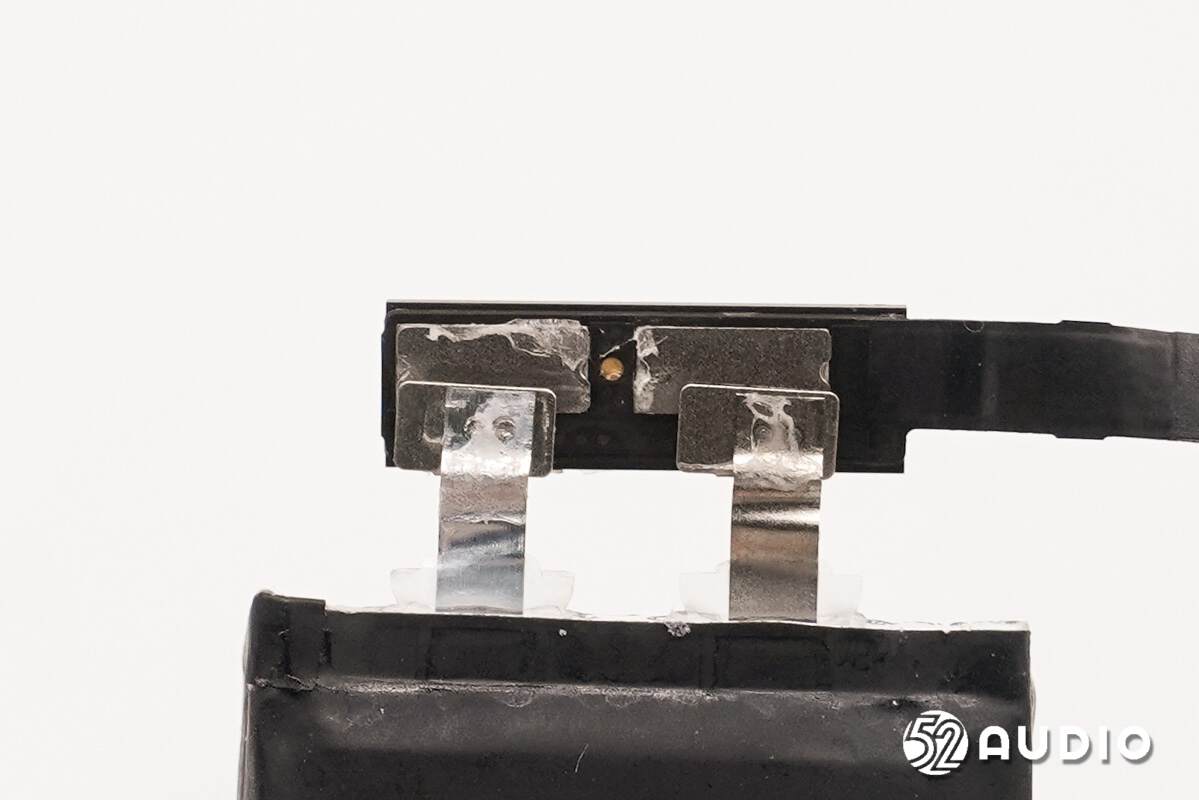
The back of the protection board is spot-welded to nickel strips connected to the battery’s positive and negative terminals.
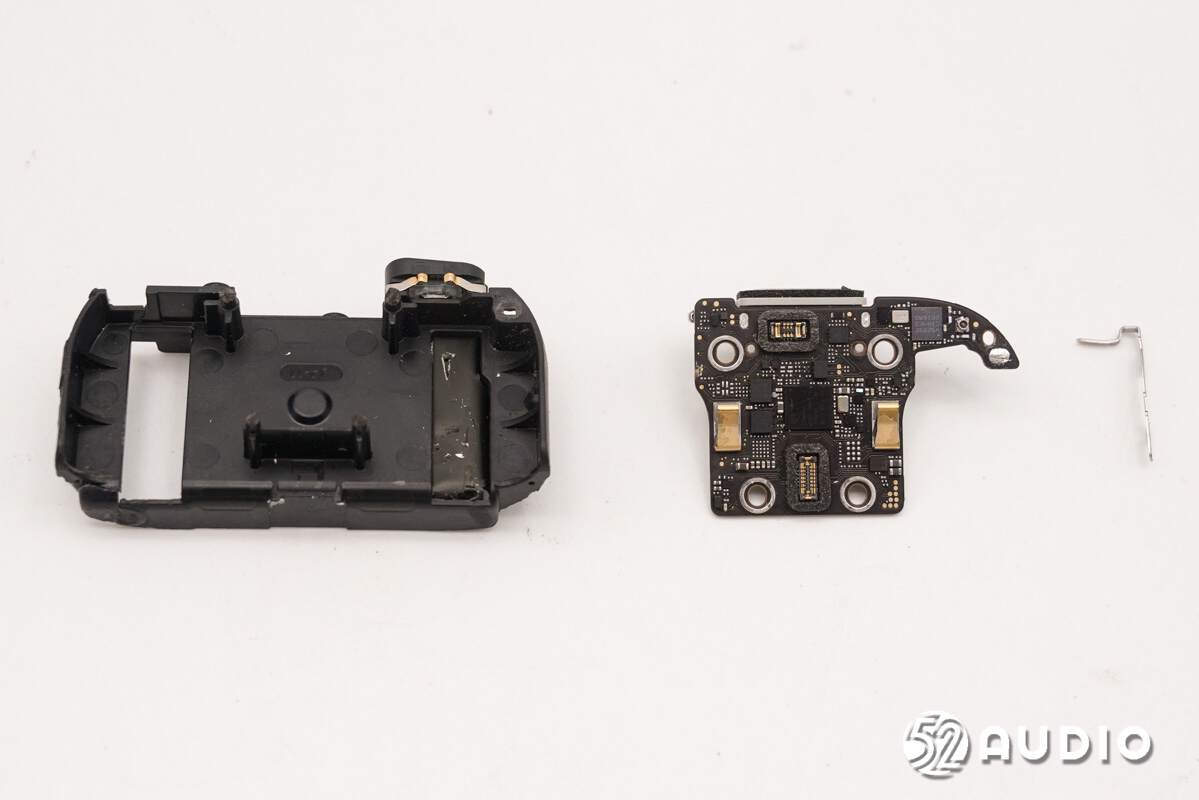
Remove the securing screws and take out the mainboard assembly.
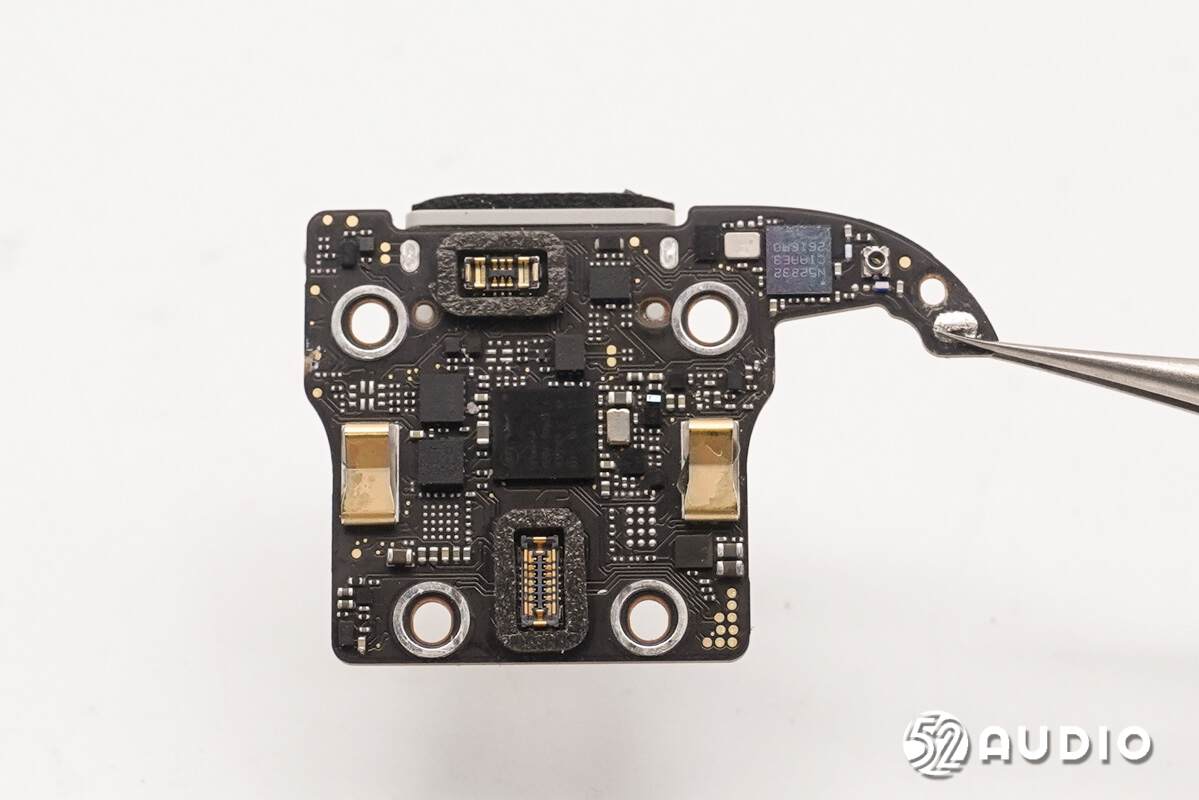
Circuitry on one side of the charging-case mainboard. Two metal spring contacts connect to the contacts in the earbud compartment to charge the earbuds.
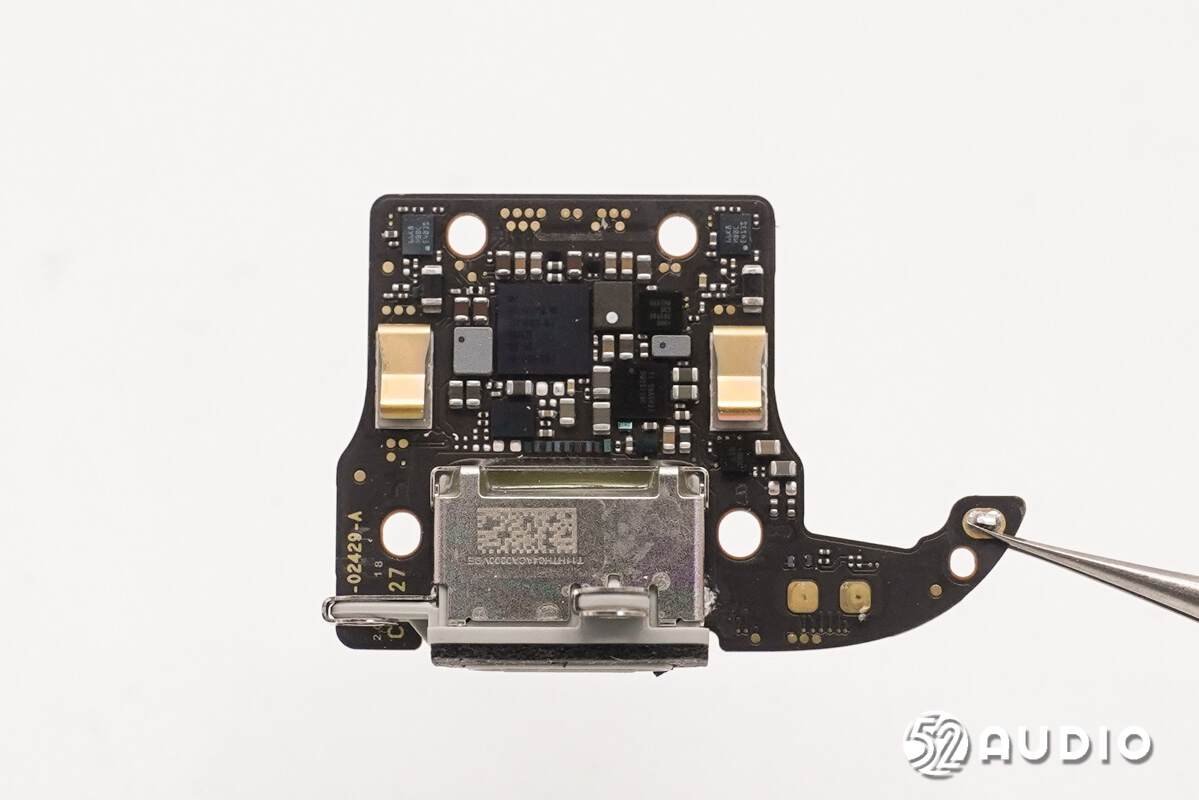
Circuitry on the other side of the charging-case mainboard, also featuring two metal spring contacts that connect to the contacts in the earbud compartment.
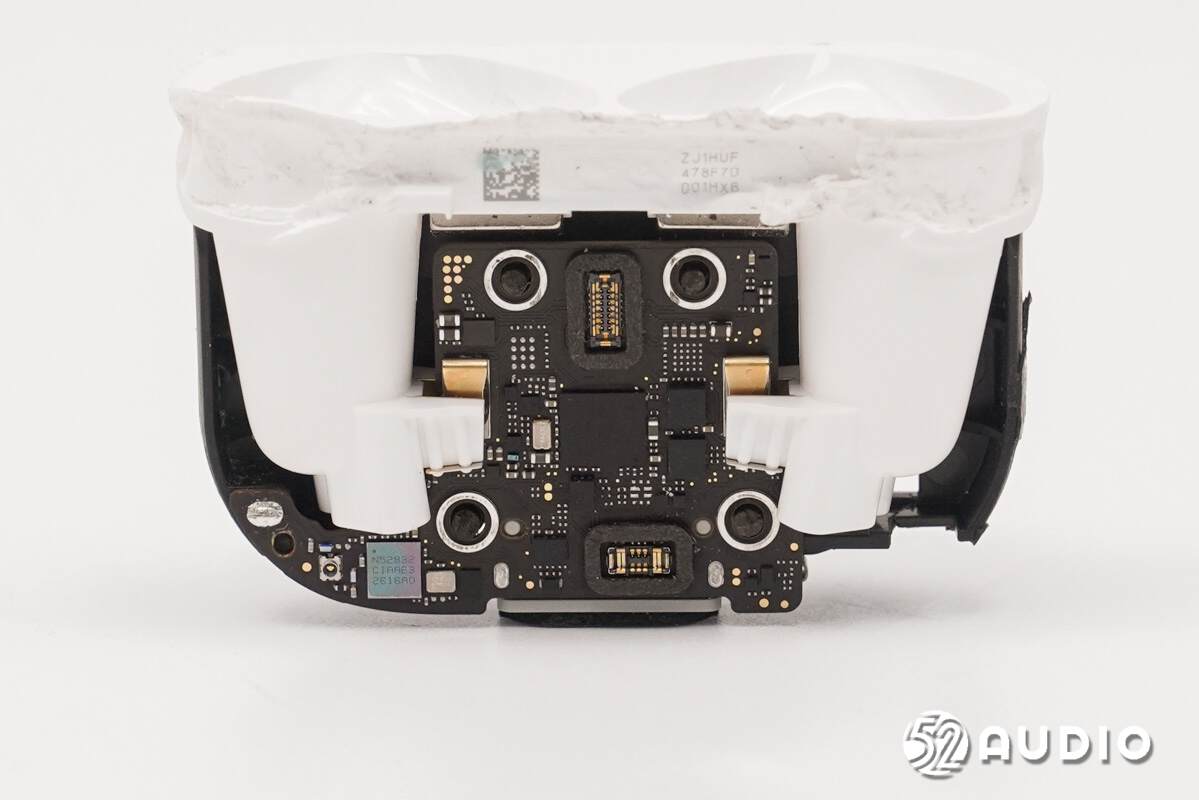
The connection between the mainboard and the metal spring contacts that charge the earbuds.
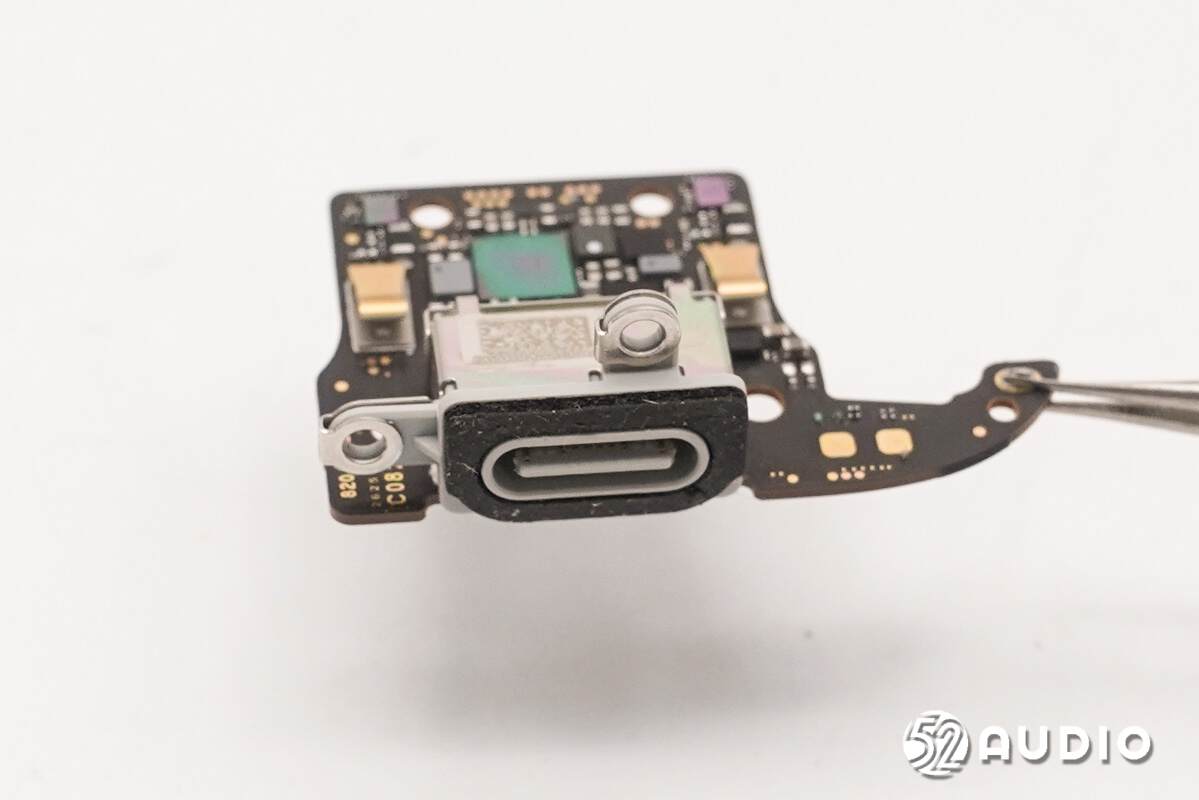
The USB-C receptacle, with a foam pad protecting the port.
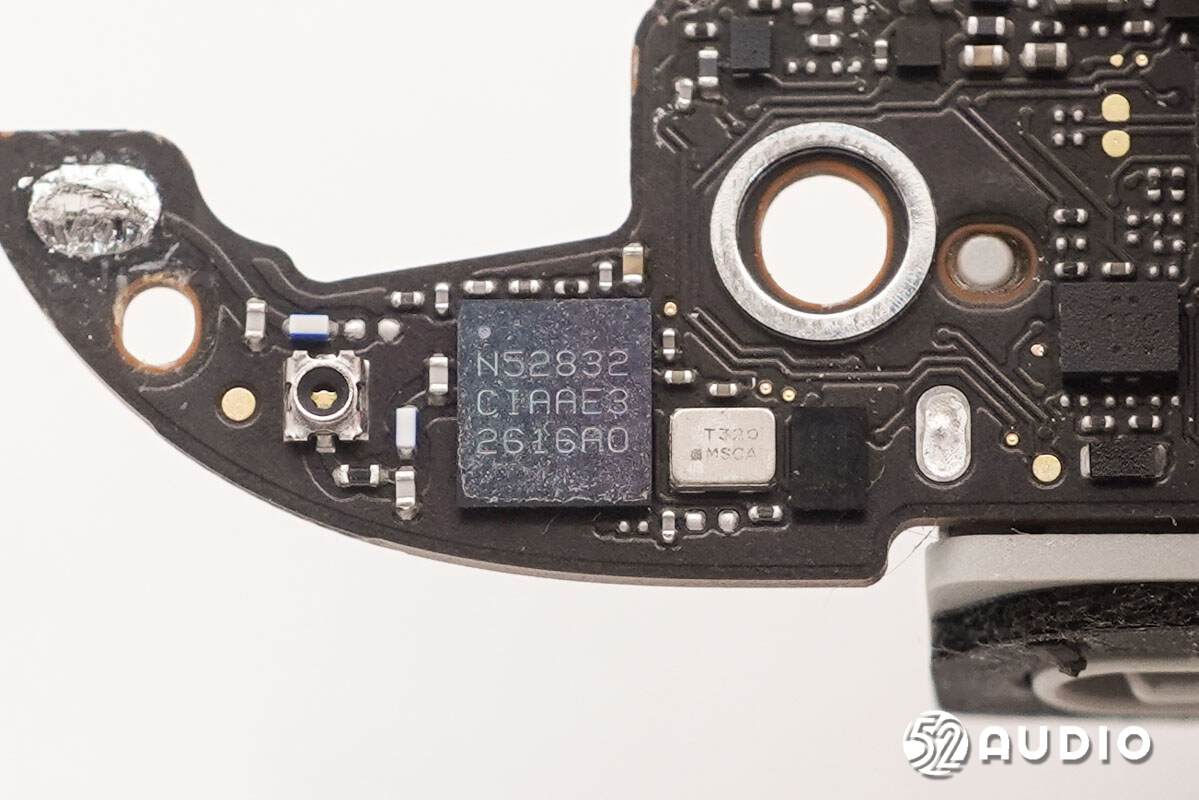
The Nordic nRF52832 multiprotocol general-purpose SoC supports Bluetooth 5.0, NFC, ANT, and proprietary 2.4 GHz protocols. At its core is a 64 MHz ARM Cortex-M4 CPU, which can handle demanding application and communication tasks quickly, allowing the CPU to continue processing other tasks or return to sleep mode to reduce power consumption. The nRF52832 and all SoCs in the nRF52 series are flash-based, making them well suited to device firmware upgrades (DFU).
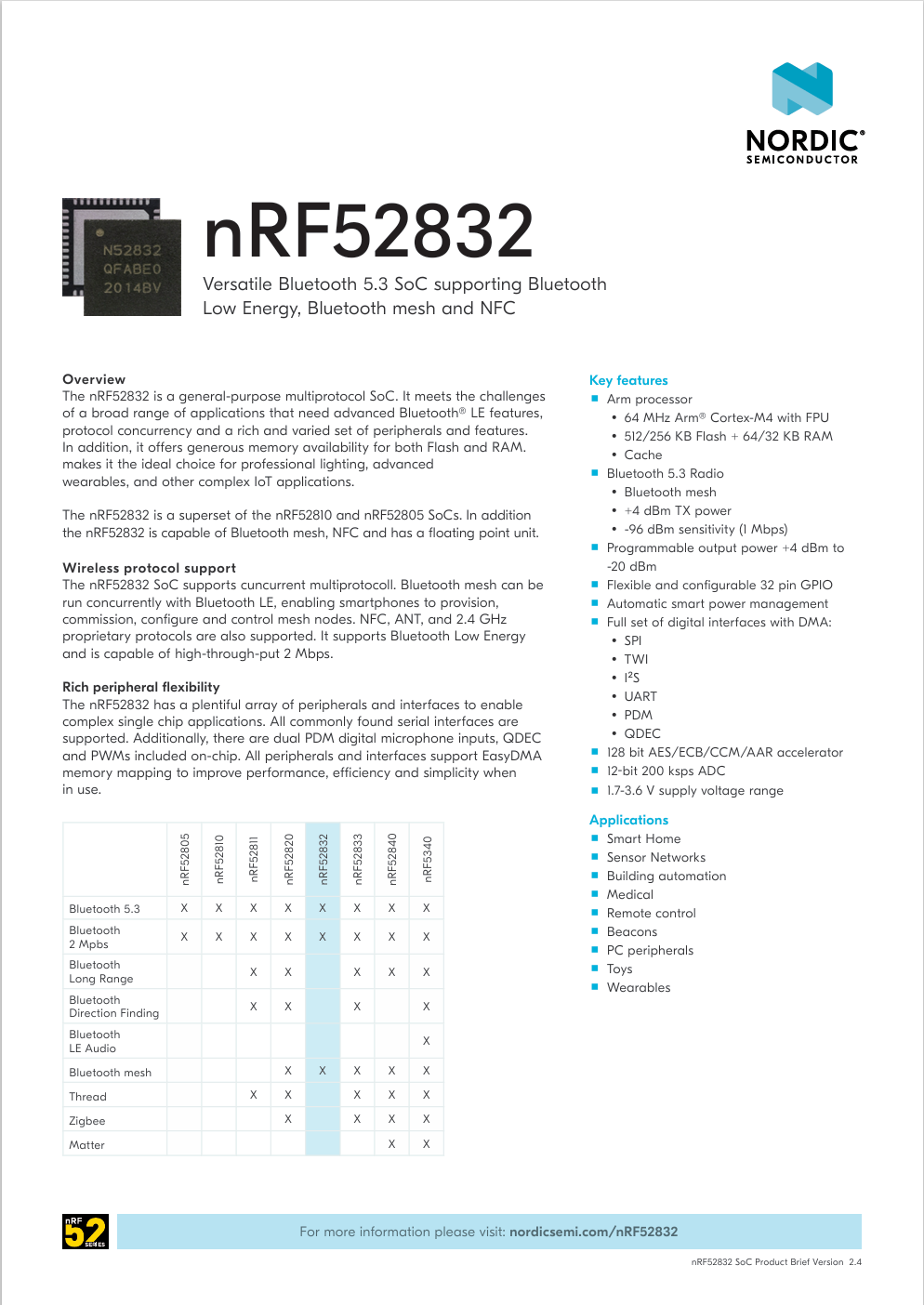
Nordic nRF52832 reference image.
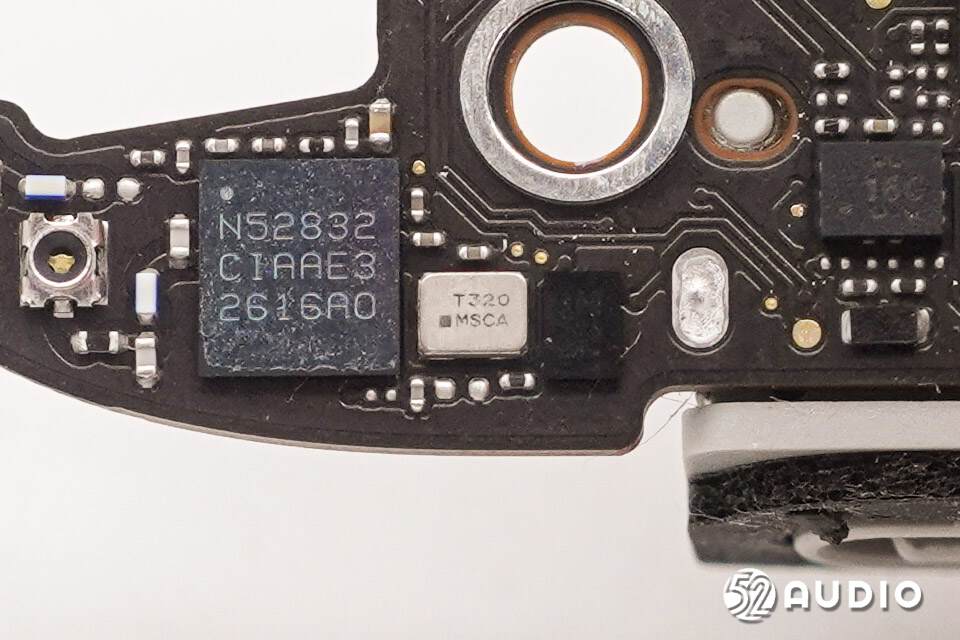
The crystal oscillator marked T320, which provides the clock signal.
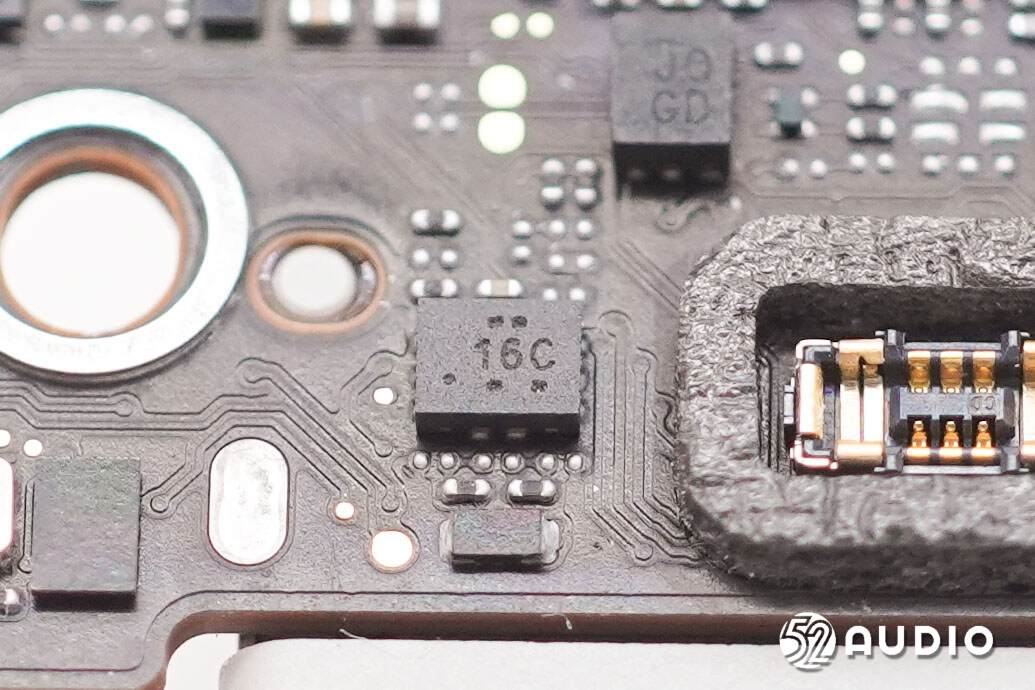
IC marked 16C.
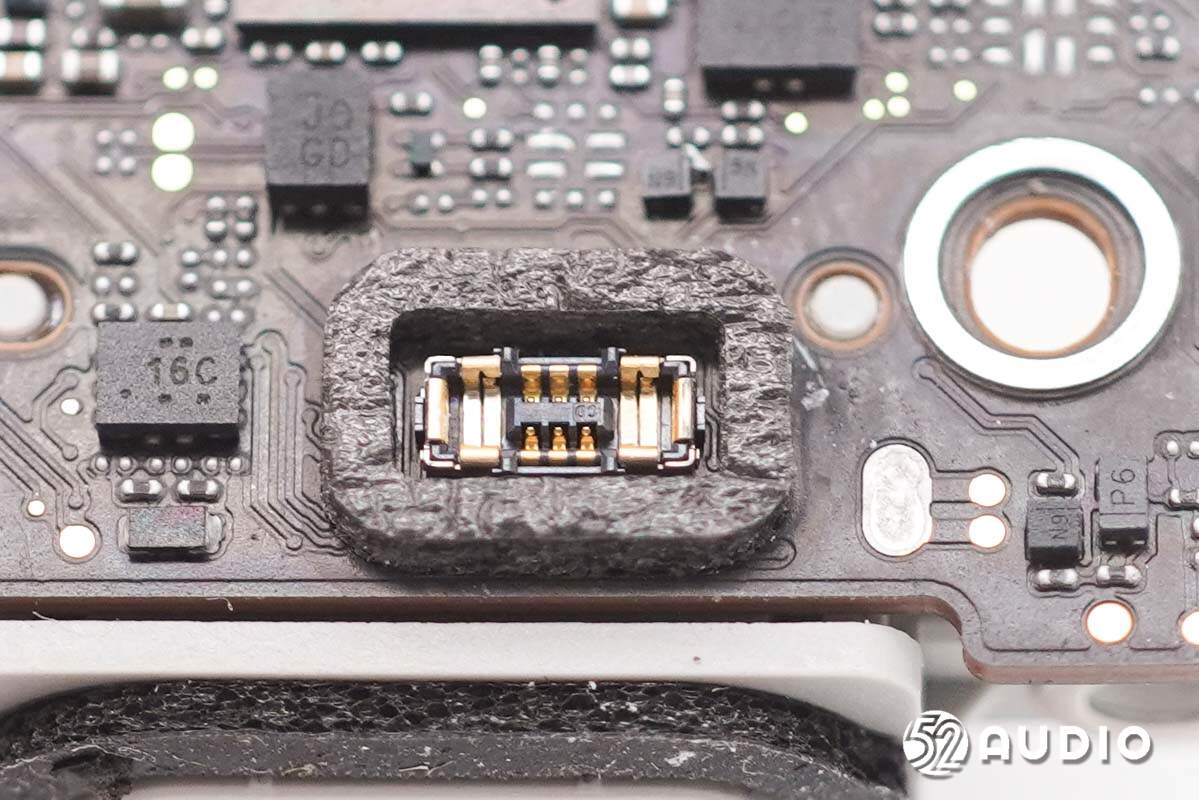
BTB connector receptacle for the battery flex cable.
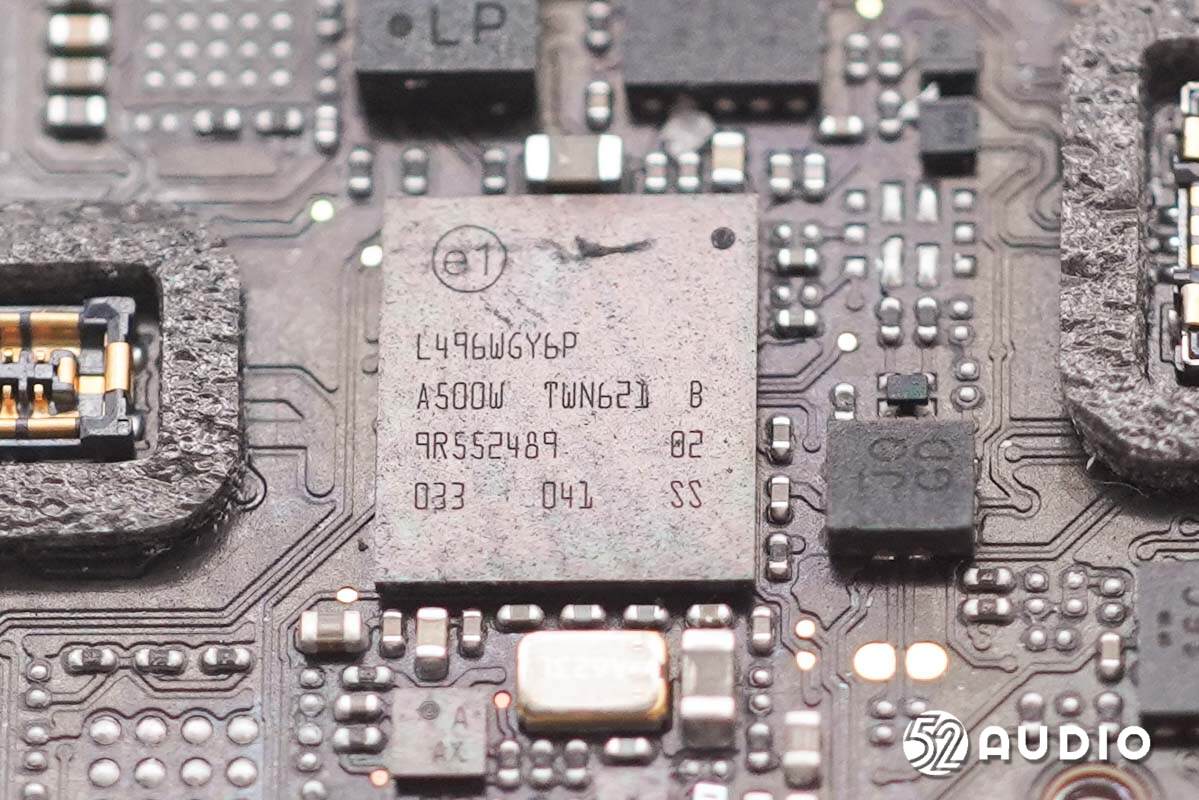
STMicroelectronics STM32L496WGY6P microcontroller. The STM32L496xx series is based on a high-performance 32-bit Arm Cortex-M4 RISC core operating at up to 80 MHz. The Cortex-M4 core features a single-precision floating-point unit (FPU) and supports all Arm single-precision data-processing instructions and data types. It also implements a complete set of DSP instructions and a memory protection unit (MPU) to enhance application security.
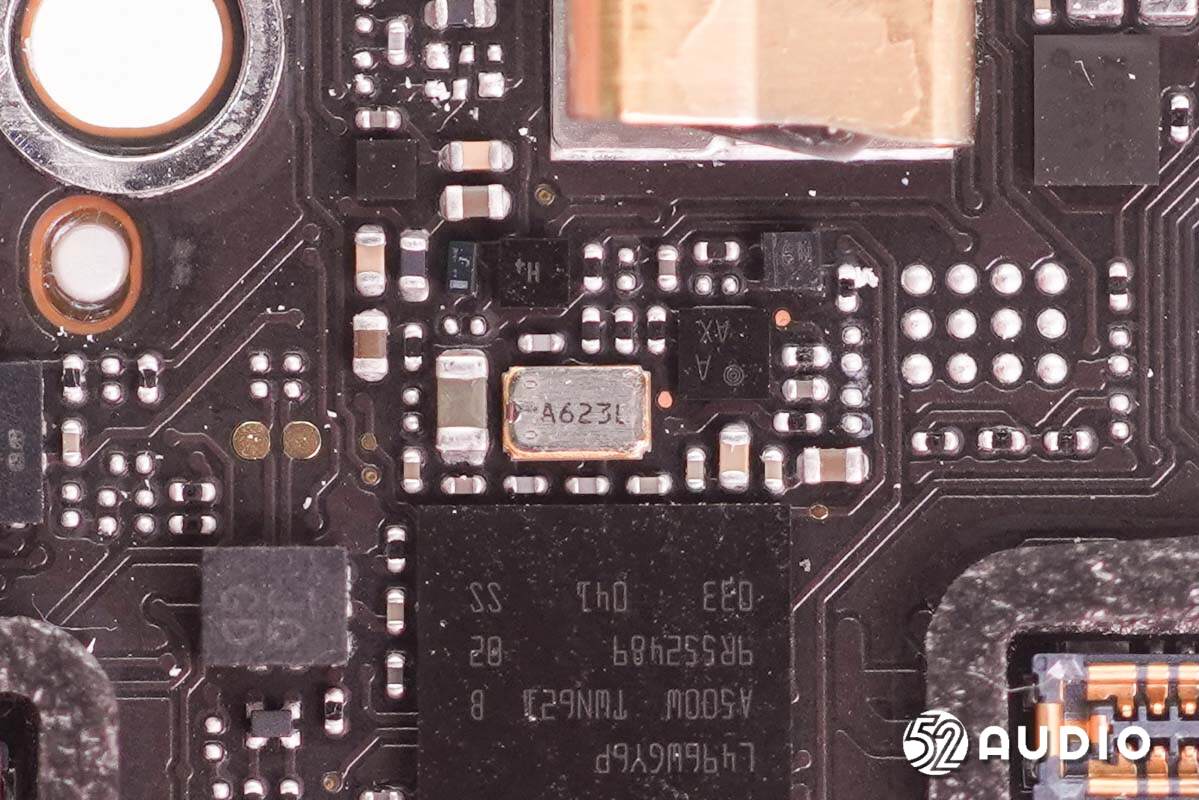
Crystal oscillator marked A623L.
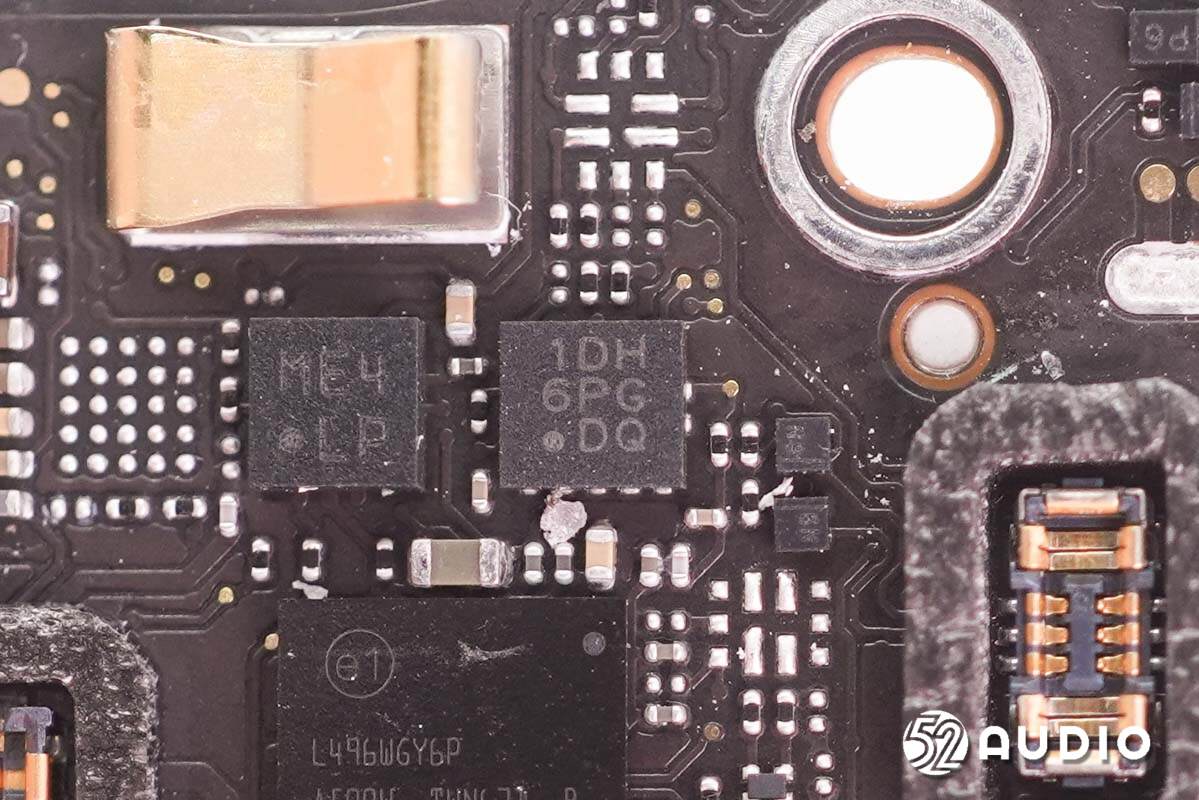
IC marked 1DH 6PG.
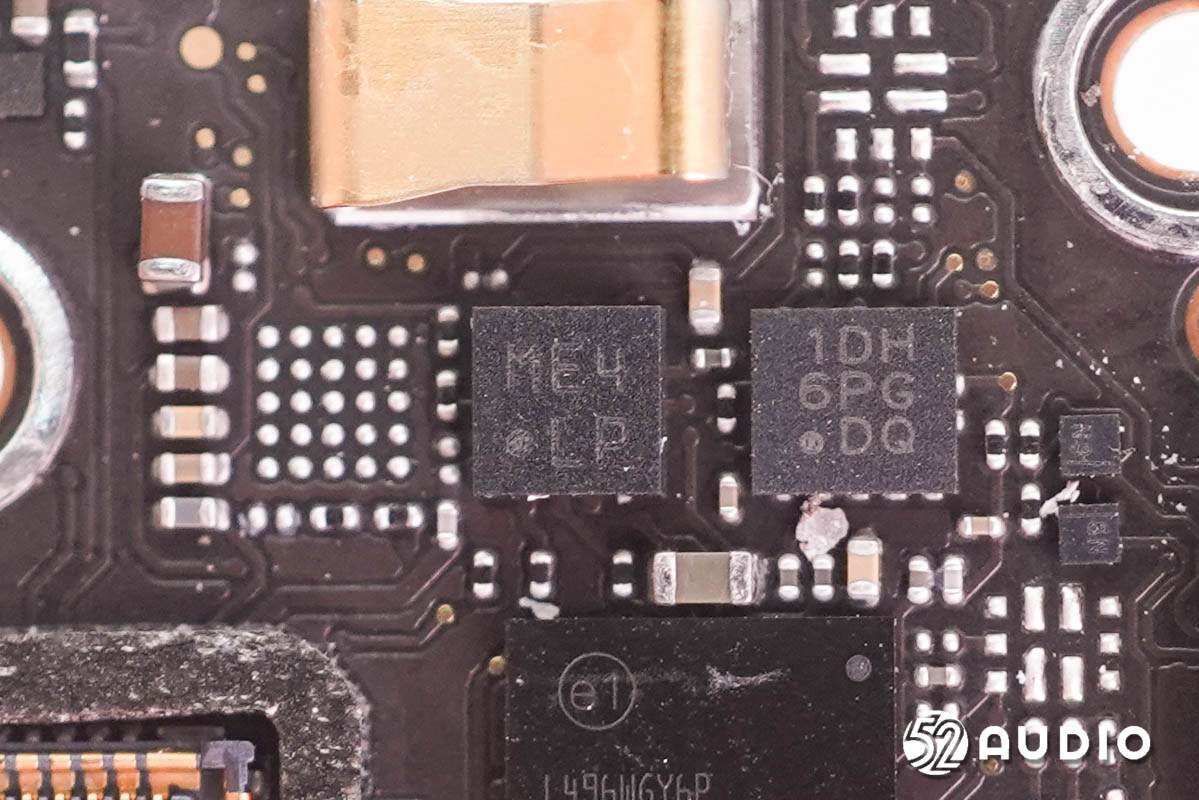
IC marked ME4.
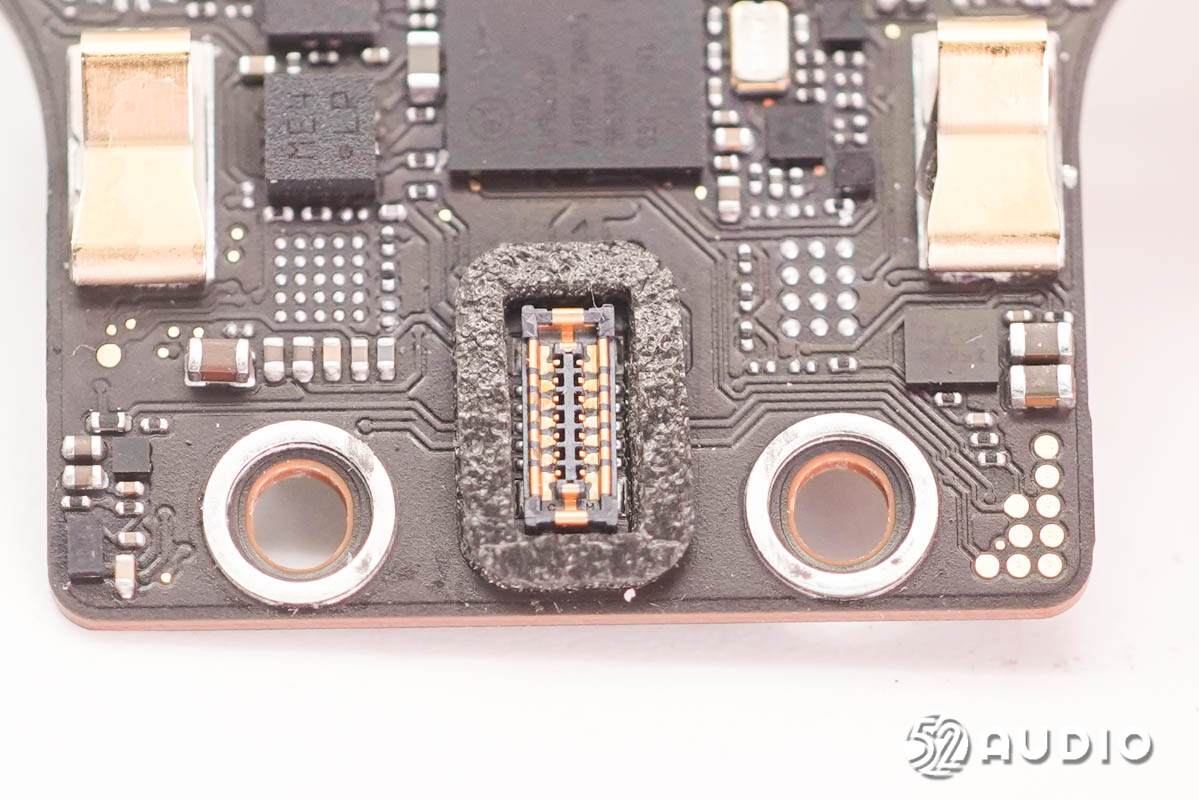
BTB connector receptacle for the wireless charging board.
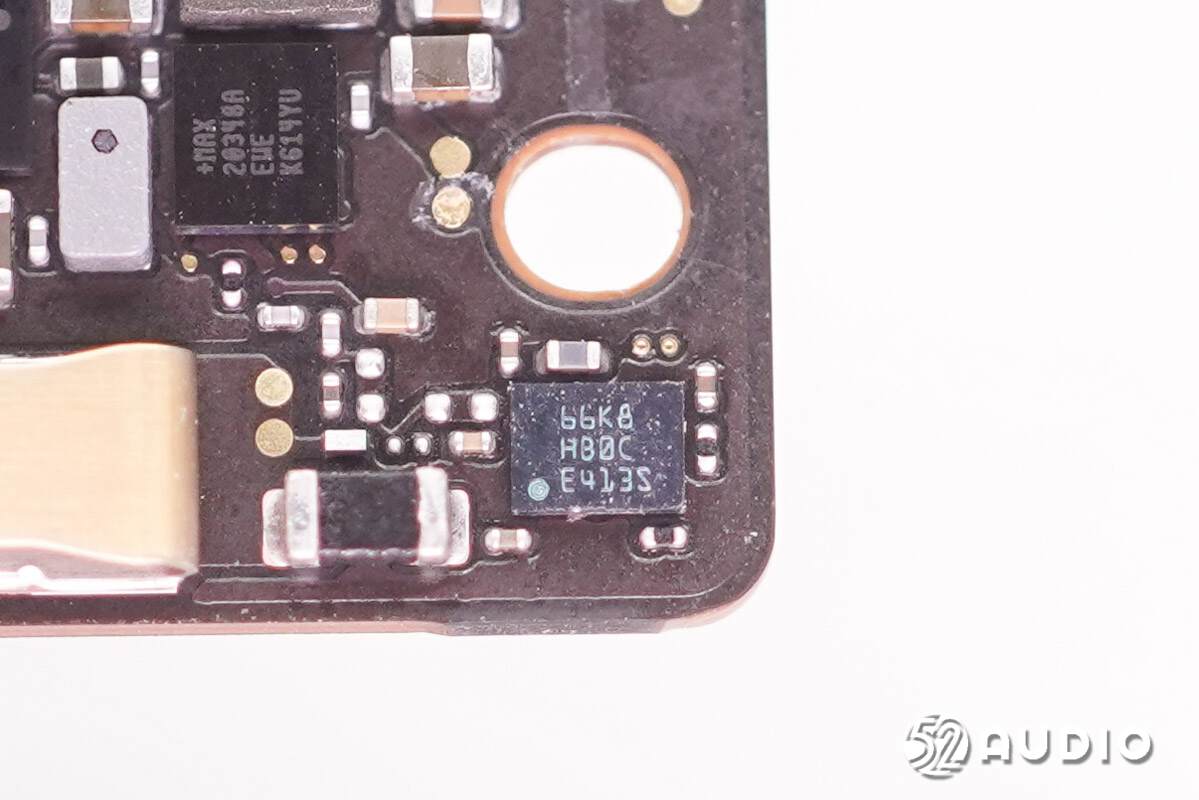
IC marked 66K8.
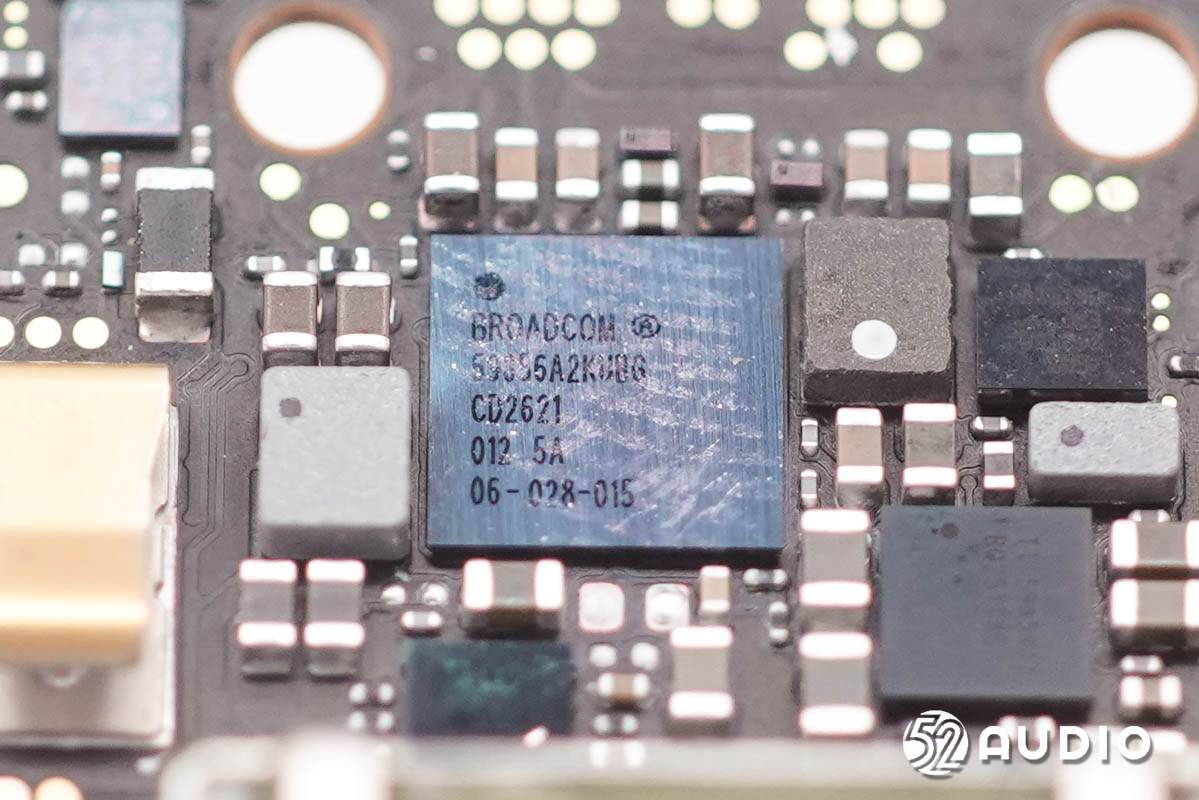
Broadcom 59356A2KUBG wireless charging management IC.
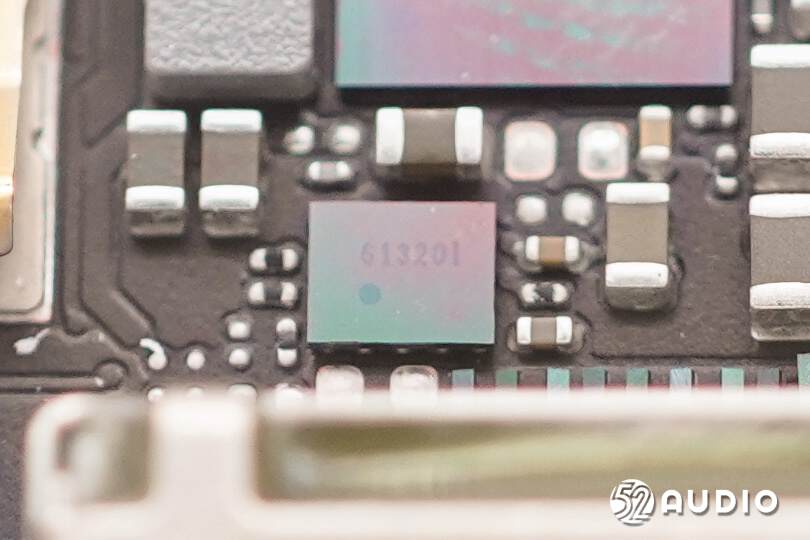
IC marked 61320I.
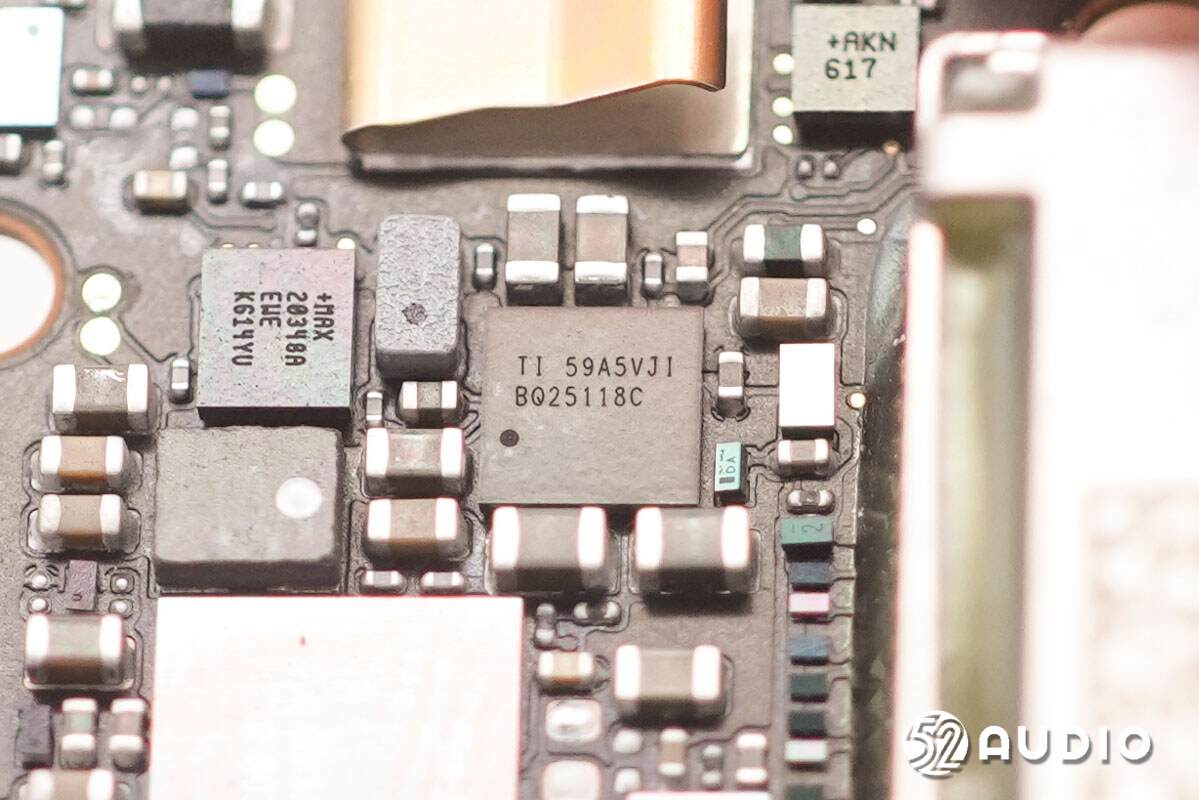
Texas Instruments BQ25118C charger.
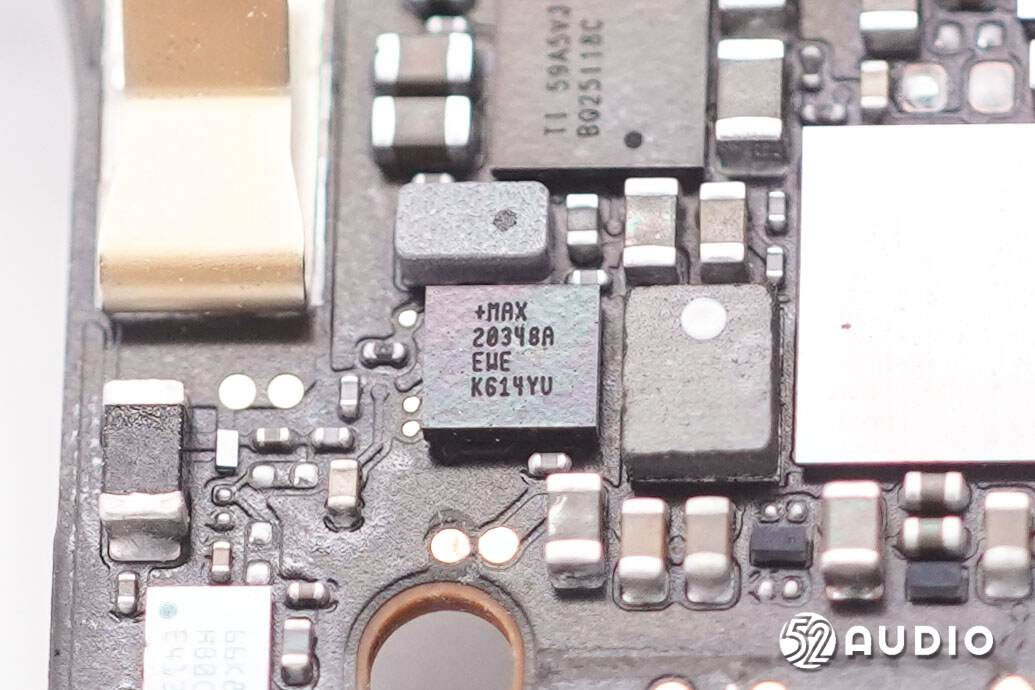
IC marked +MAX20348A.
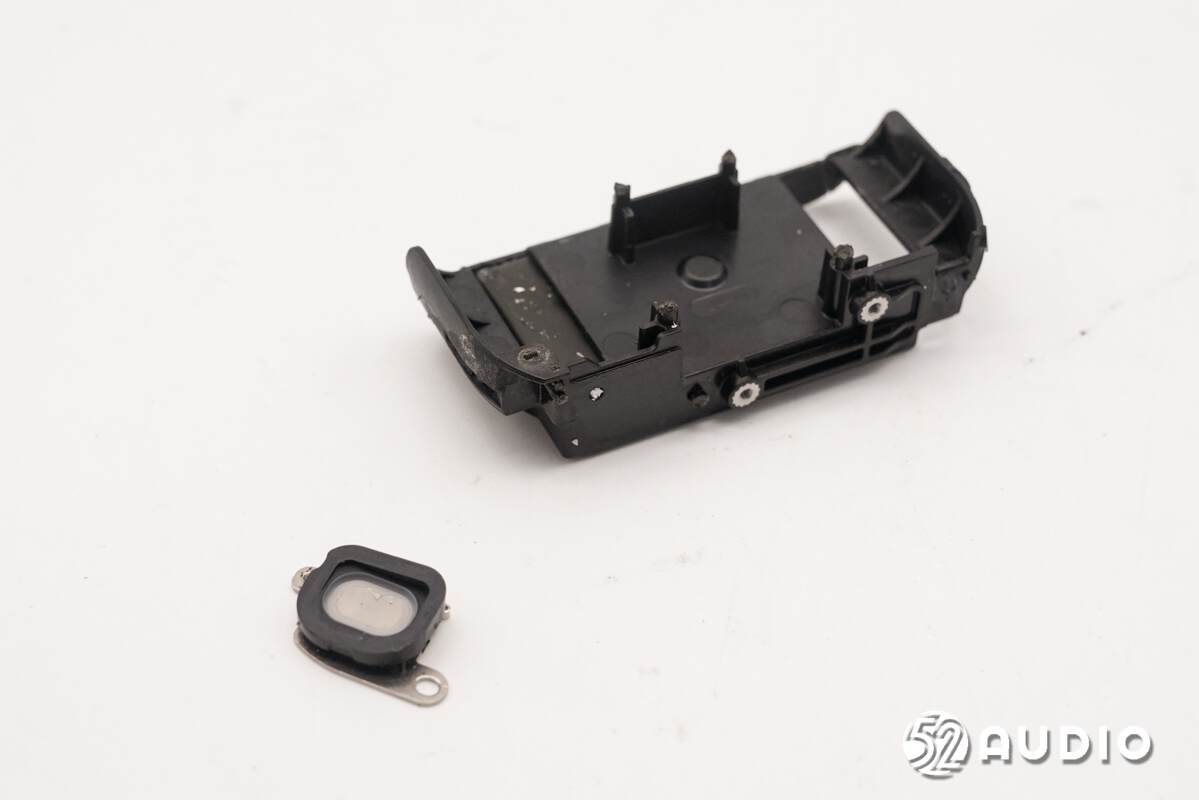
Remove the speaker from the frame.
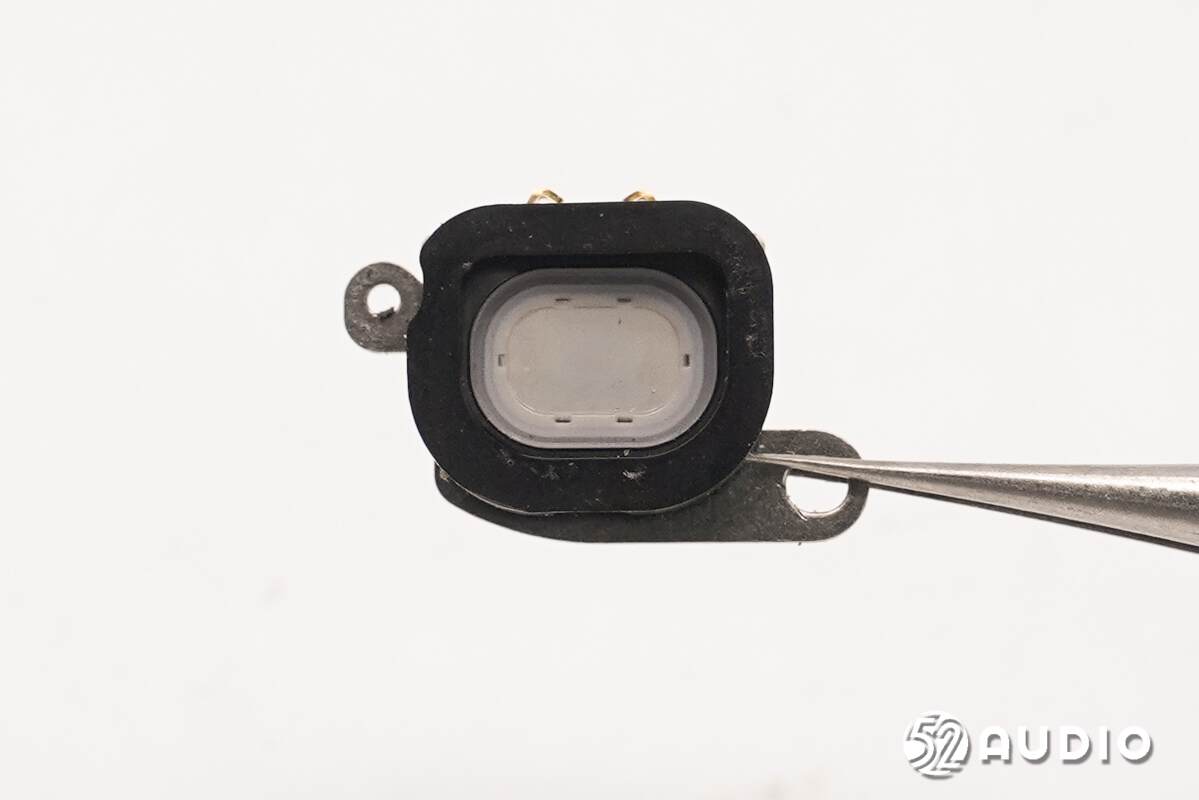
The front of the charging case’s built-in speaker.
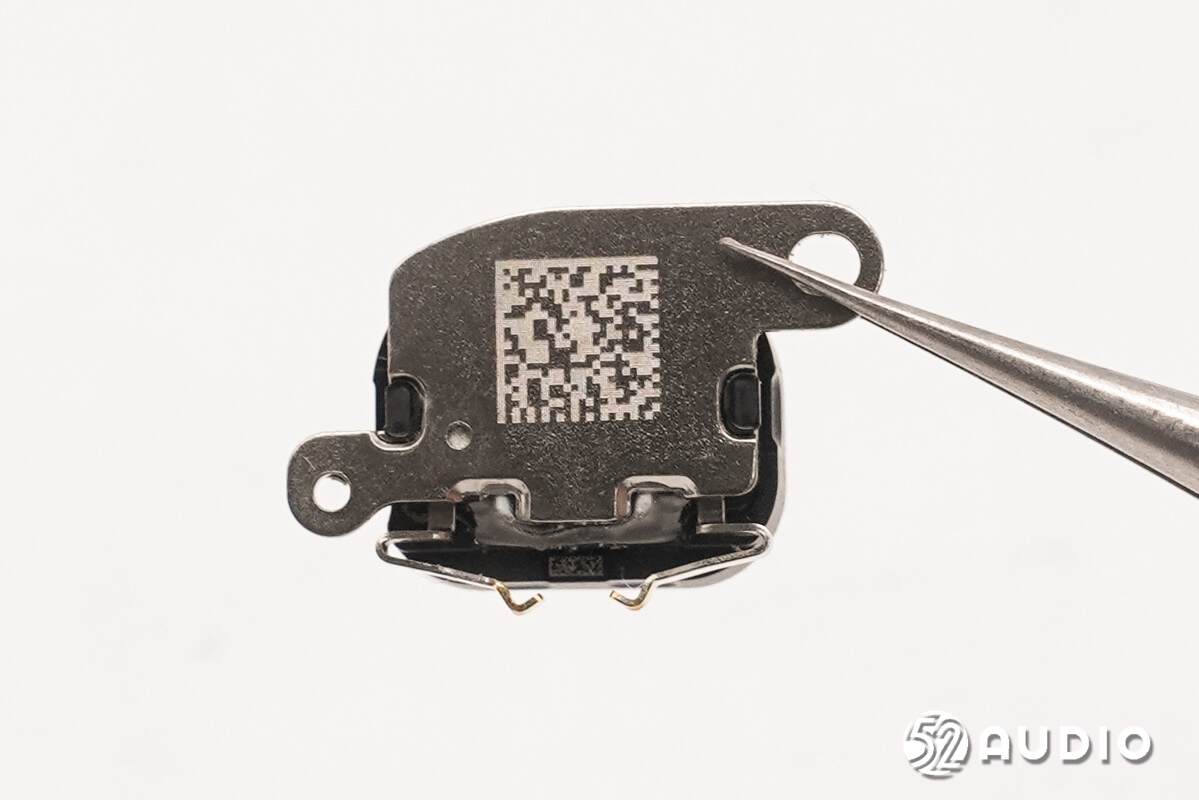
The back of the charging case’s built-in speaker, showing an engraved QR code.
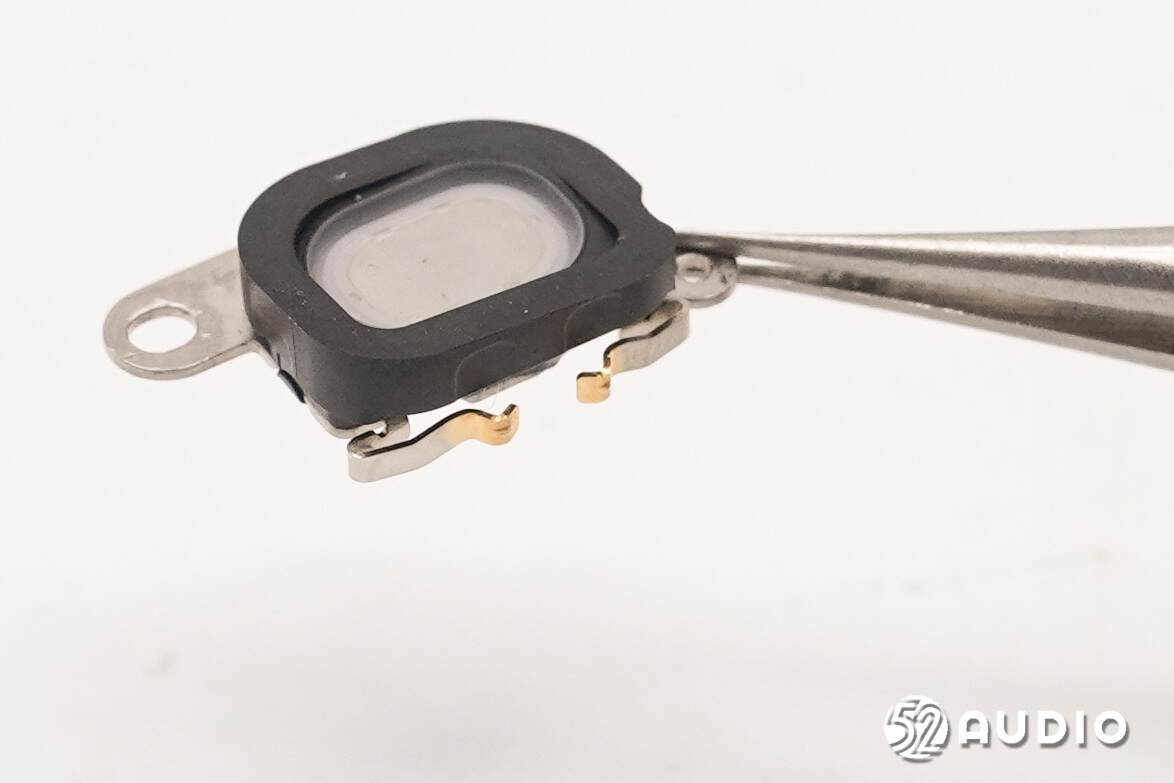
The built-in speaker connects to the mainboard through contacts on its side.
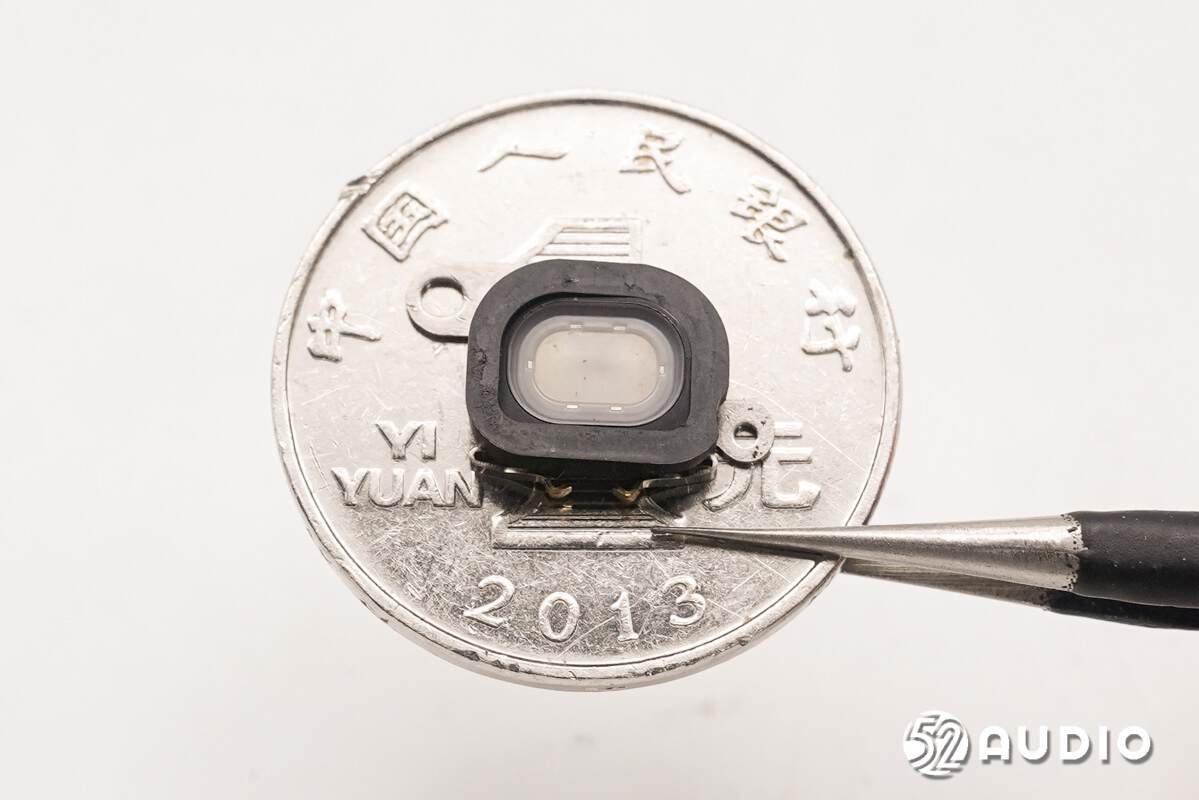
Size comparison between the built-in charging-case speaker and a one-yuan coin.
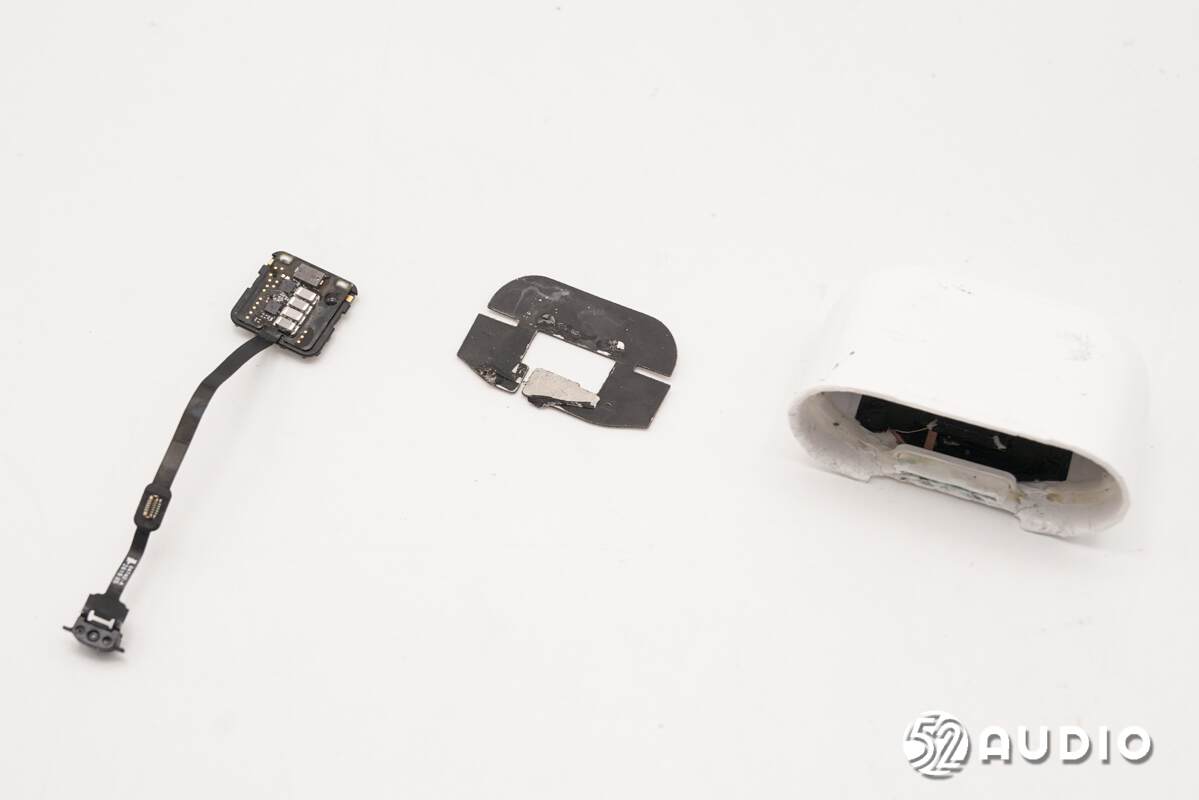
Remove the small board for the wireless charging receiver coil and the magnetic shielding sheet from inside the housing.
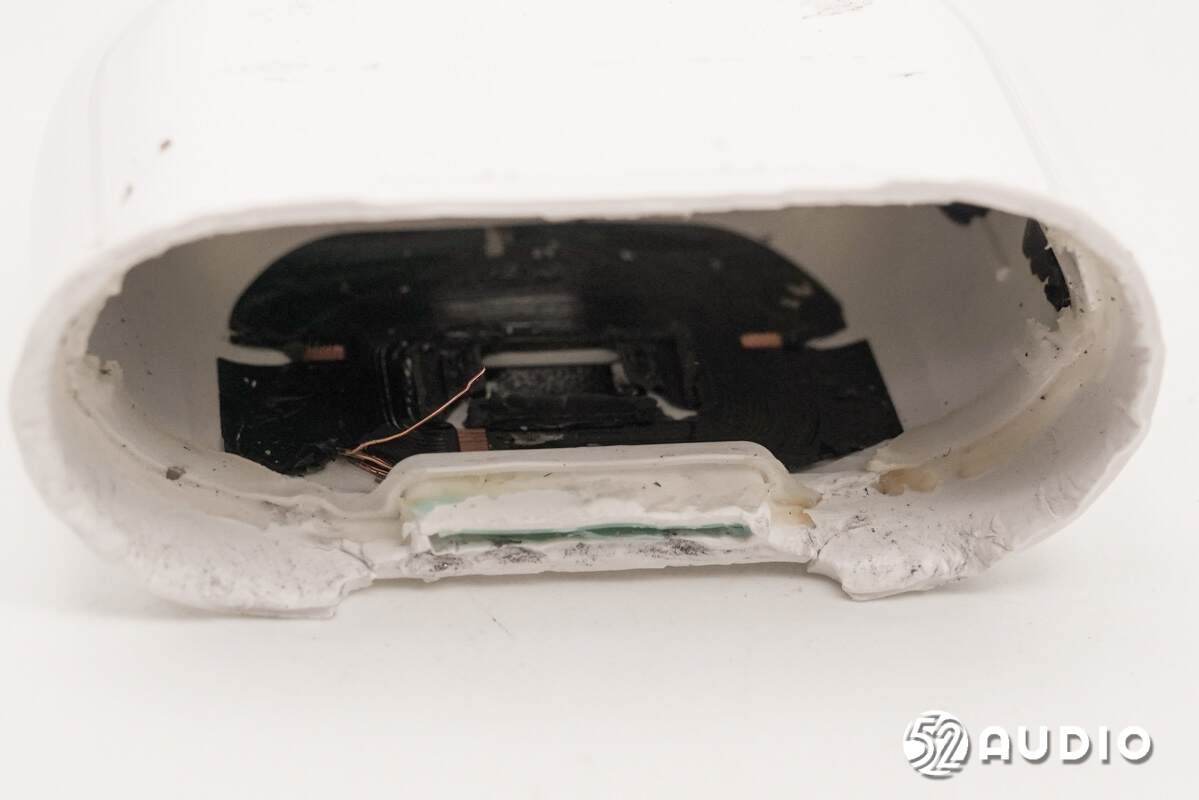
The wireless charging receiver coil is on the inner wall of the housing.
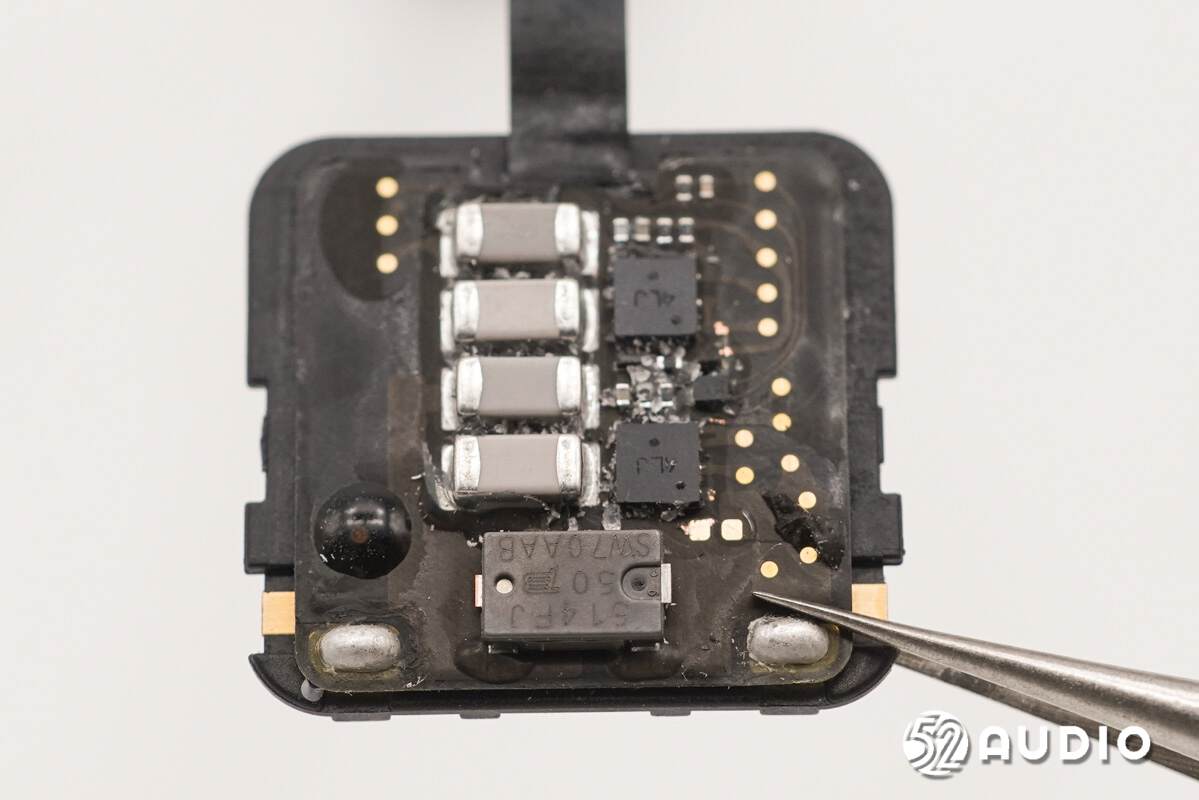
Circuitry on one side of the small board.
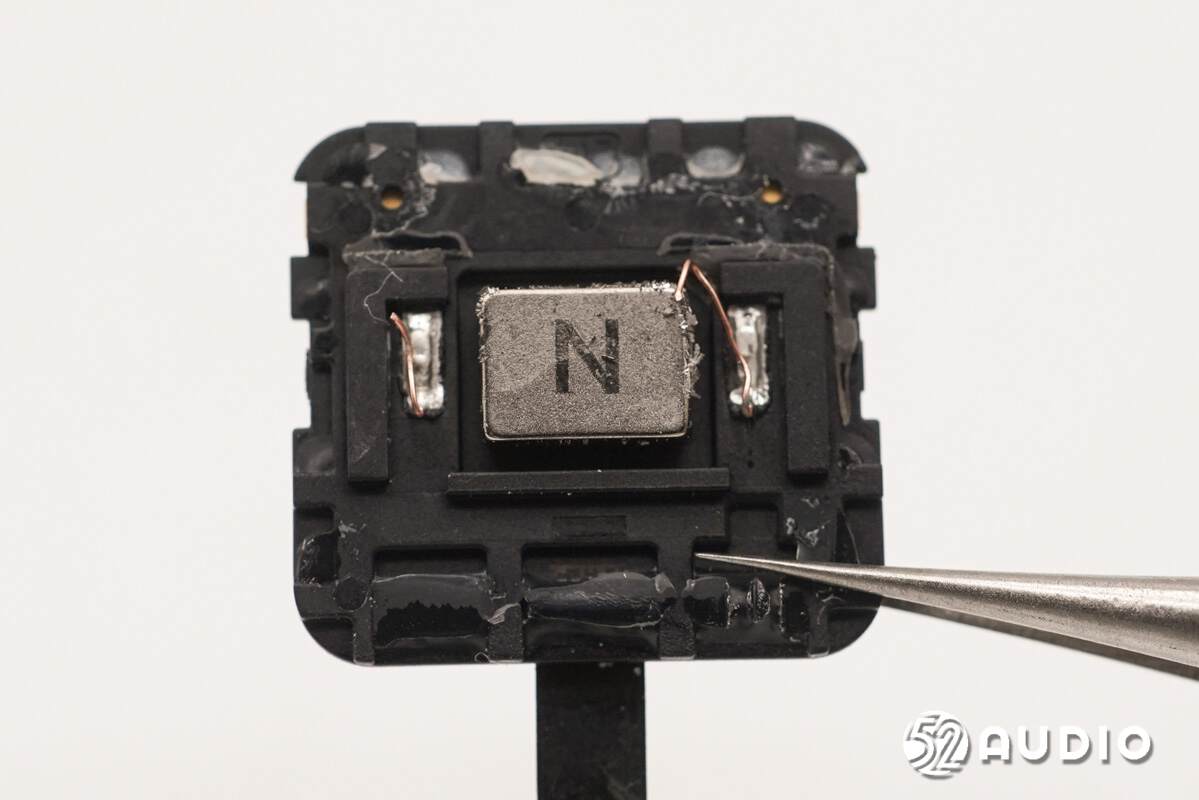
A magnet assembly on the other side of the small board magnetically attaches the wireless charger.
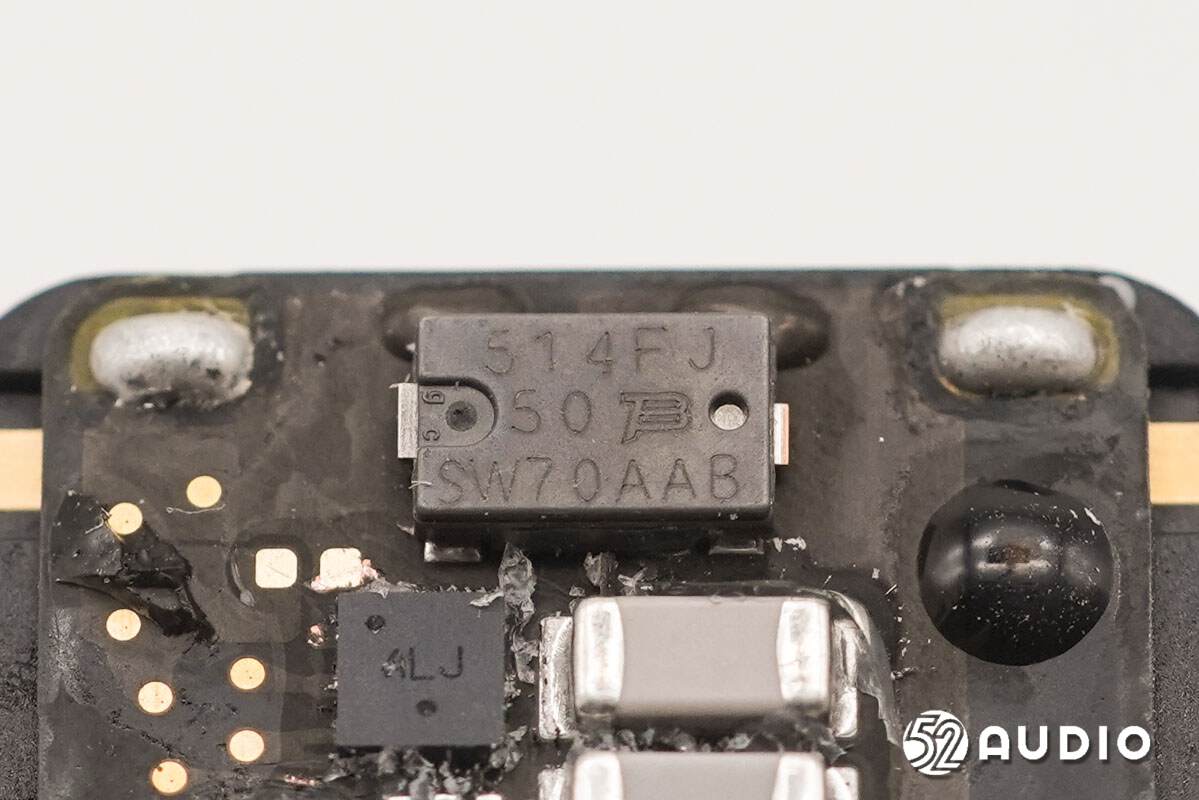
A Bourns thermal protection component for monitoring the wireless charging coil temperature.
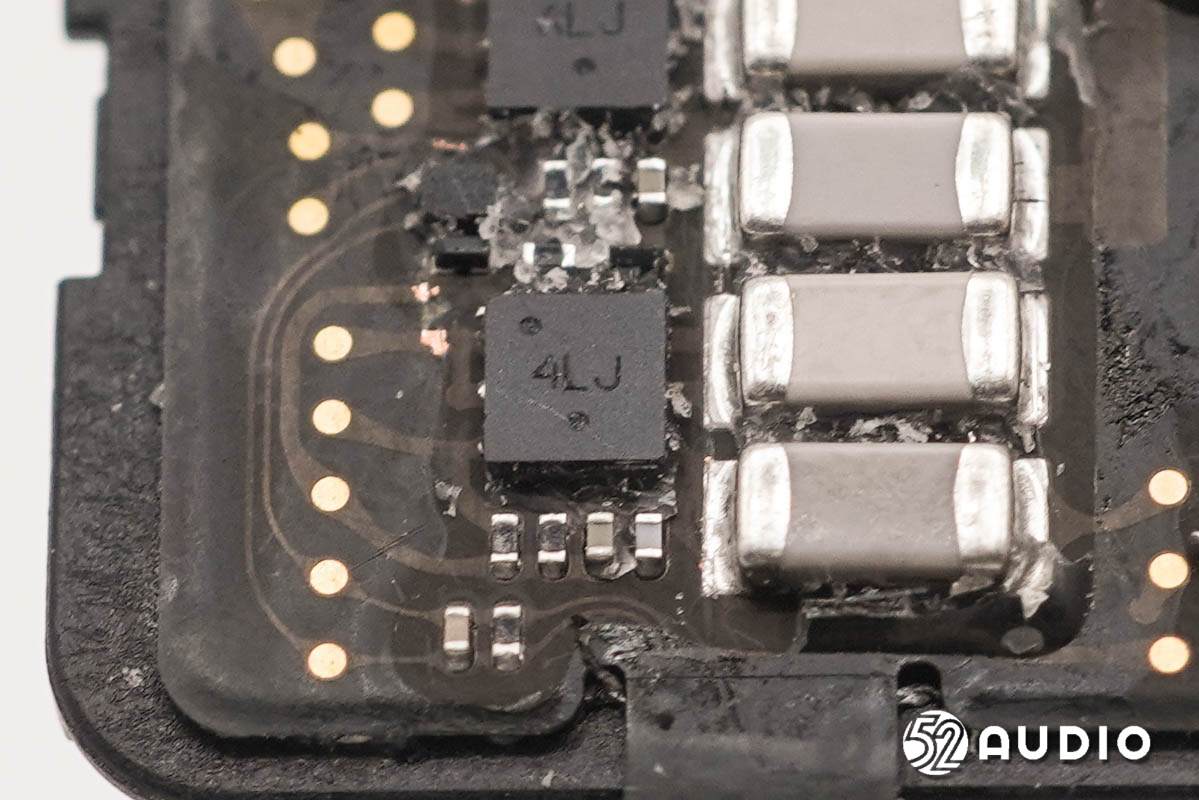
Two ICs marked 4LJ are mounted on the small board.
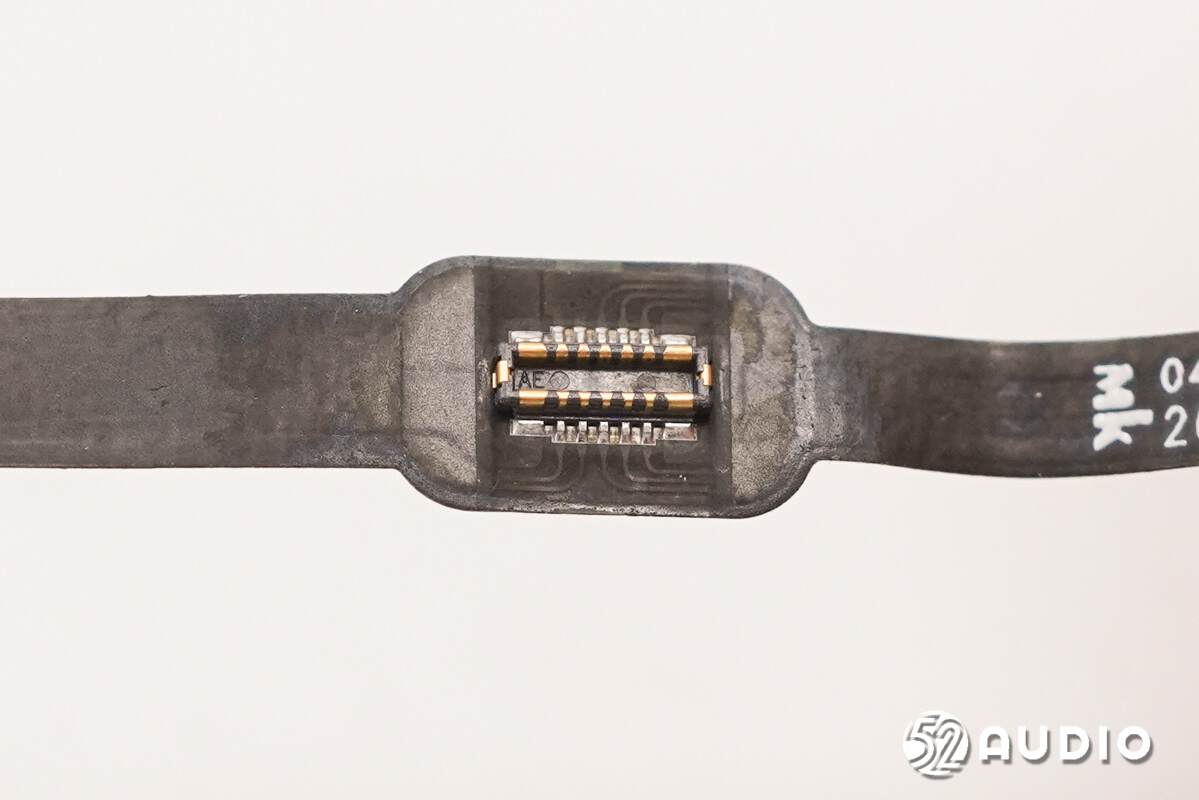
BTB connector plug at the end of the flex cable that connects to the mainboard.
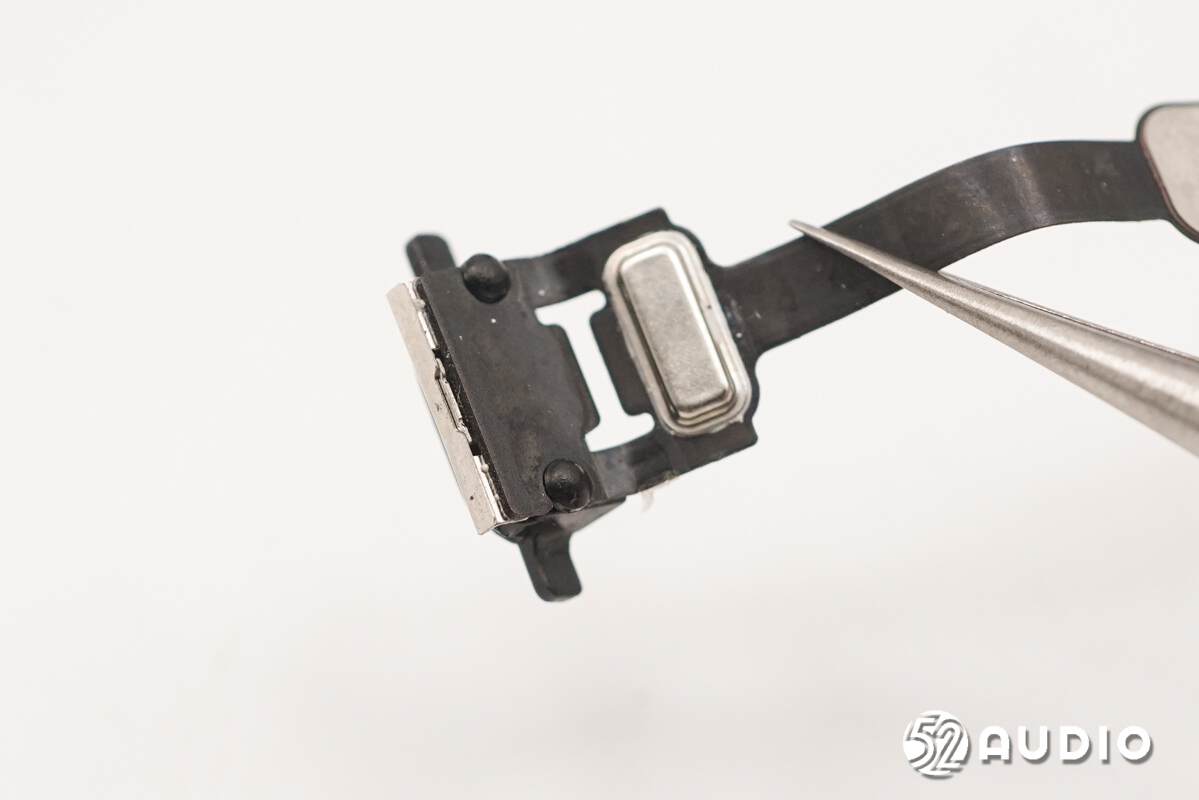
The Hall-effect sensor at the end of the flex cable. It detects whether the charging-case lid is opened or closed, enabling automatic connection when the lid is opened.
Earbud Teardown
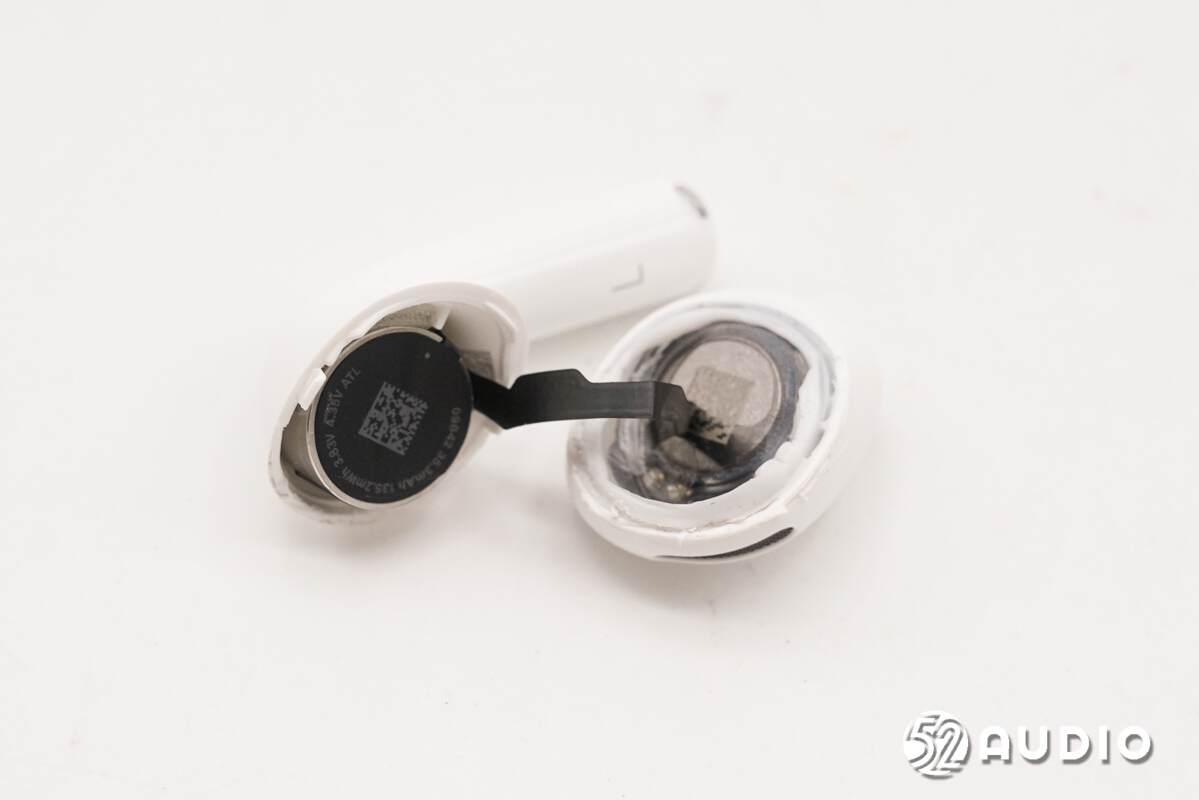
Open the acoustic chamber along the seam.
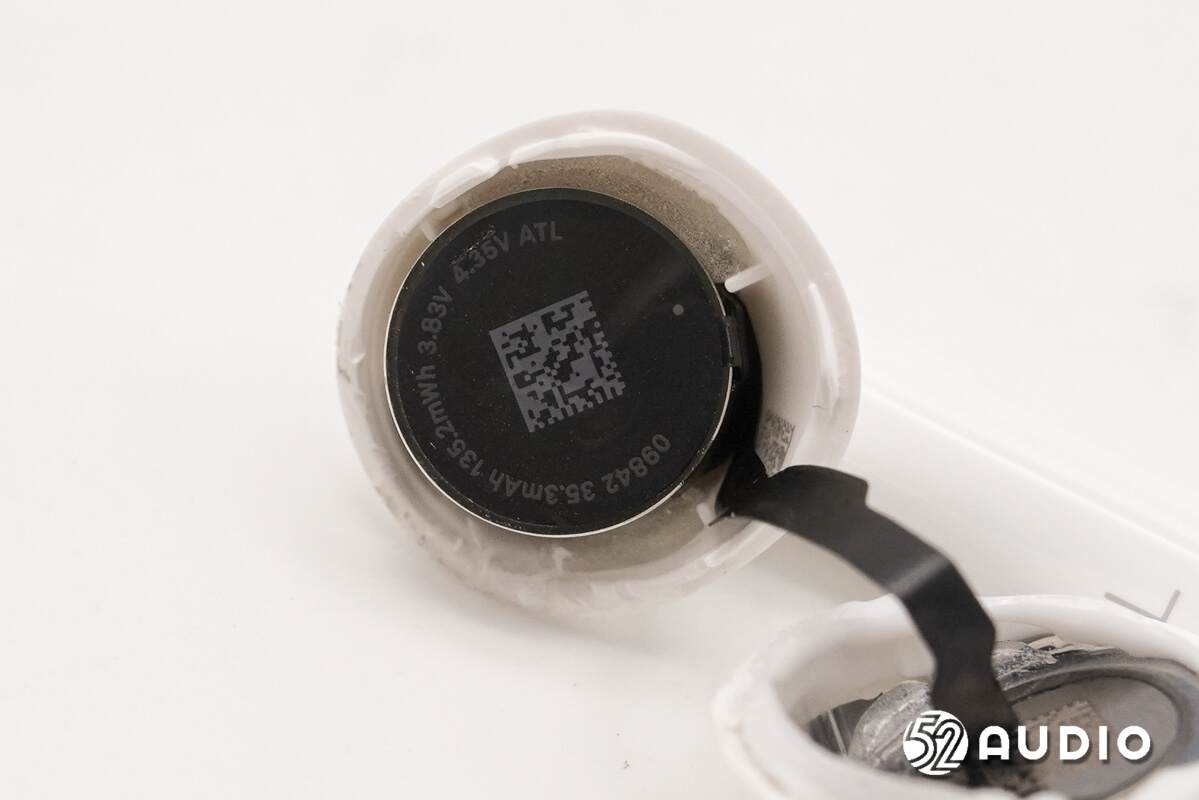
The rear cavity, which contains a steel-cased button-cell battery.
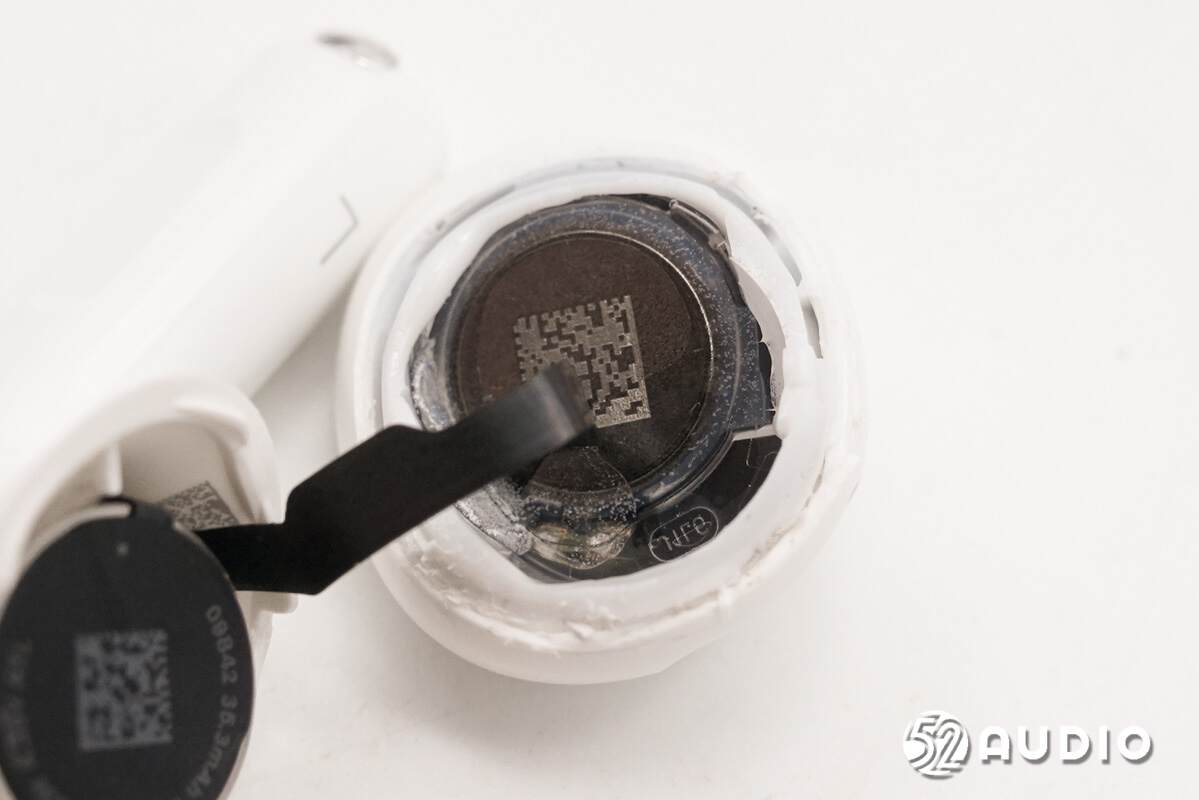
The speaker assembly in the front cavity, sealed with adhesive.
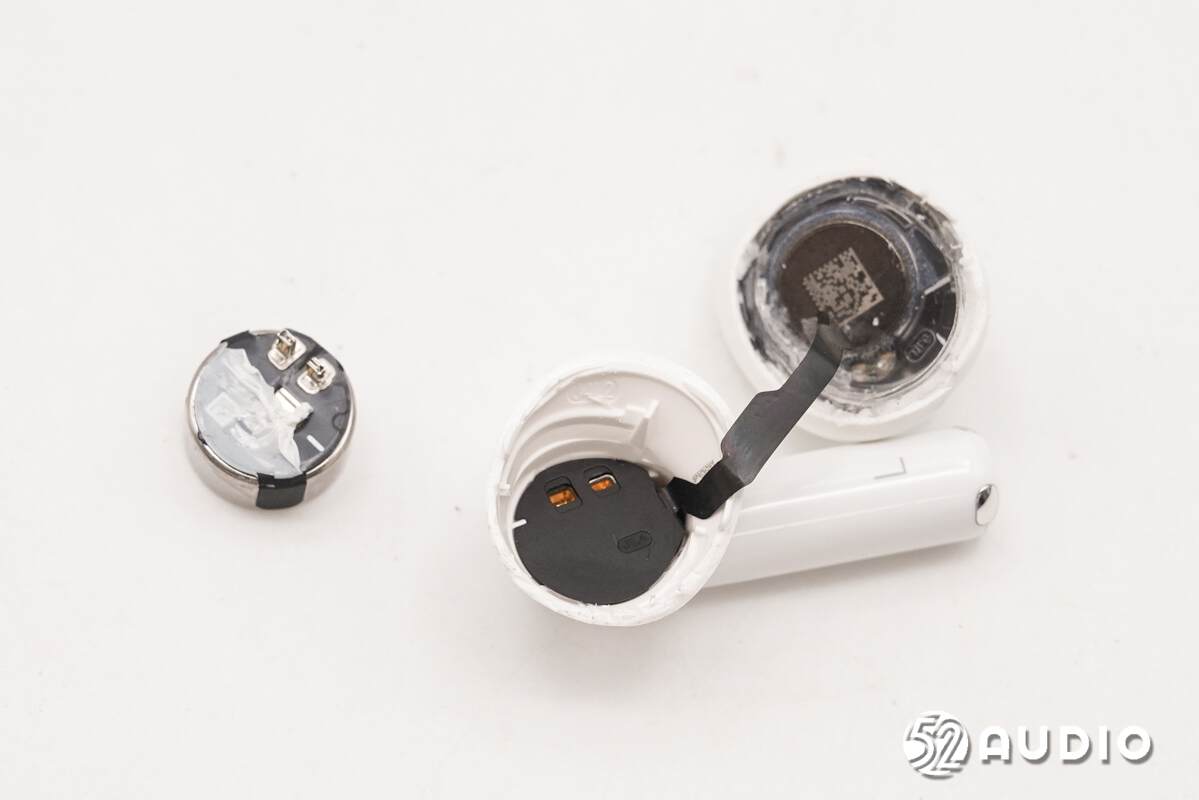
Remove the battery from the rear cavity. The battery is designed to be removable, which could make future repairs easier.
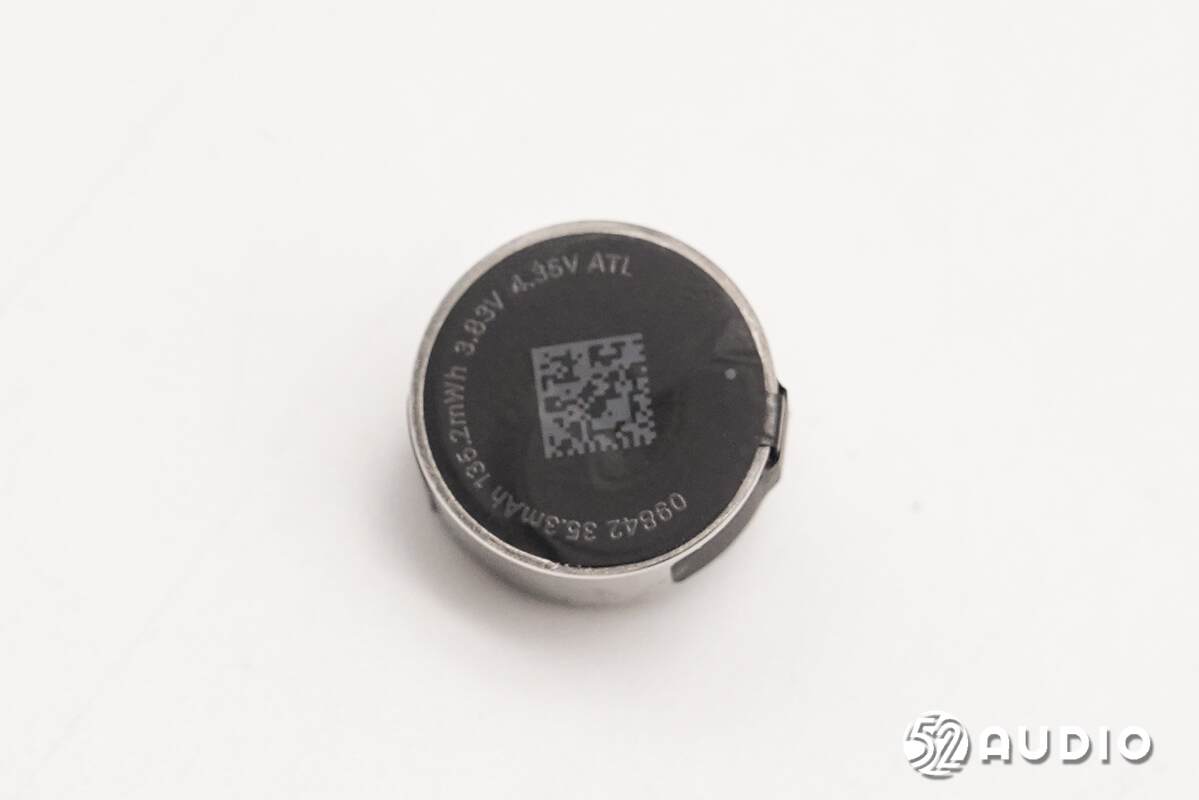
Information on the label of the steel-cased button-cell battery inside the earbud: model 09842; rated capacity 35.3 mAh / 135.2 mWh; nominal voltage 3.83 V; charge limit voltage 4.35 V; supplied by ATL.
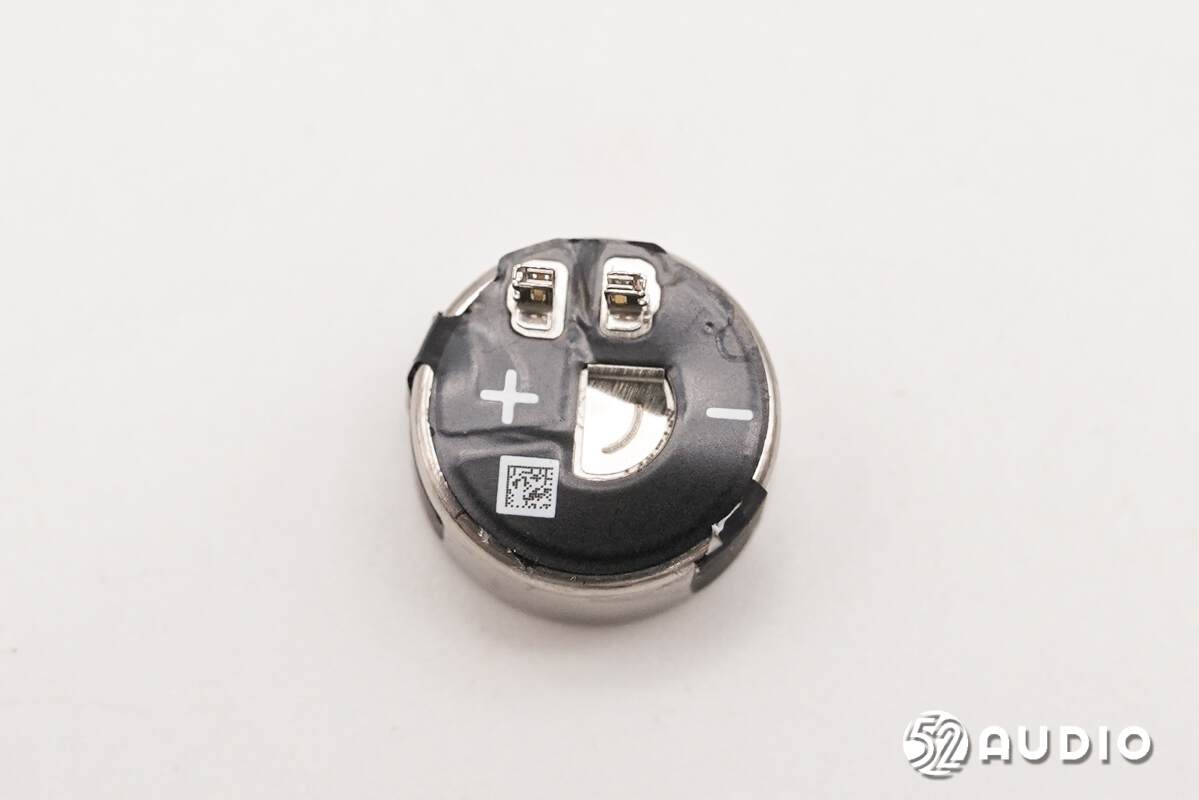
The back of the battery, which connects to the mainboard flex cable through metal clips.
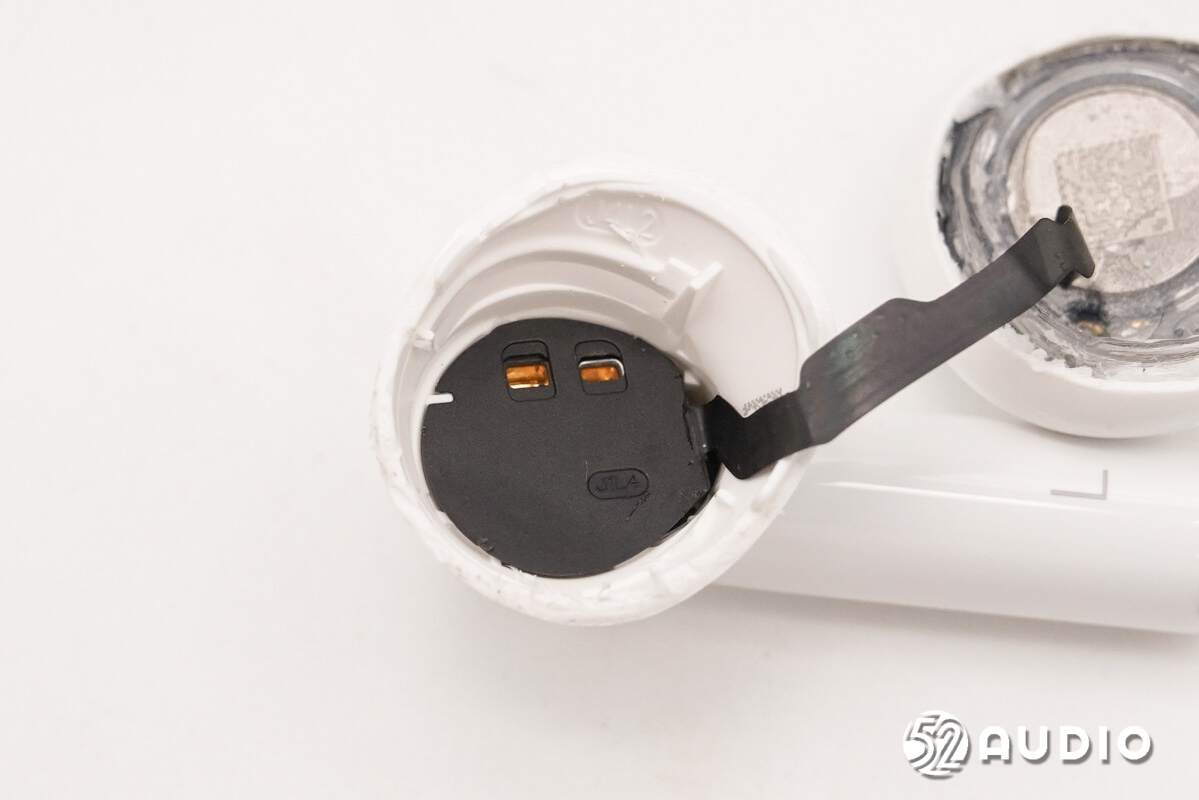
The internal cavity, which includes an isolation cover plate.
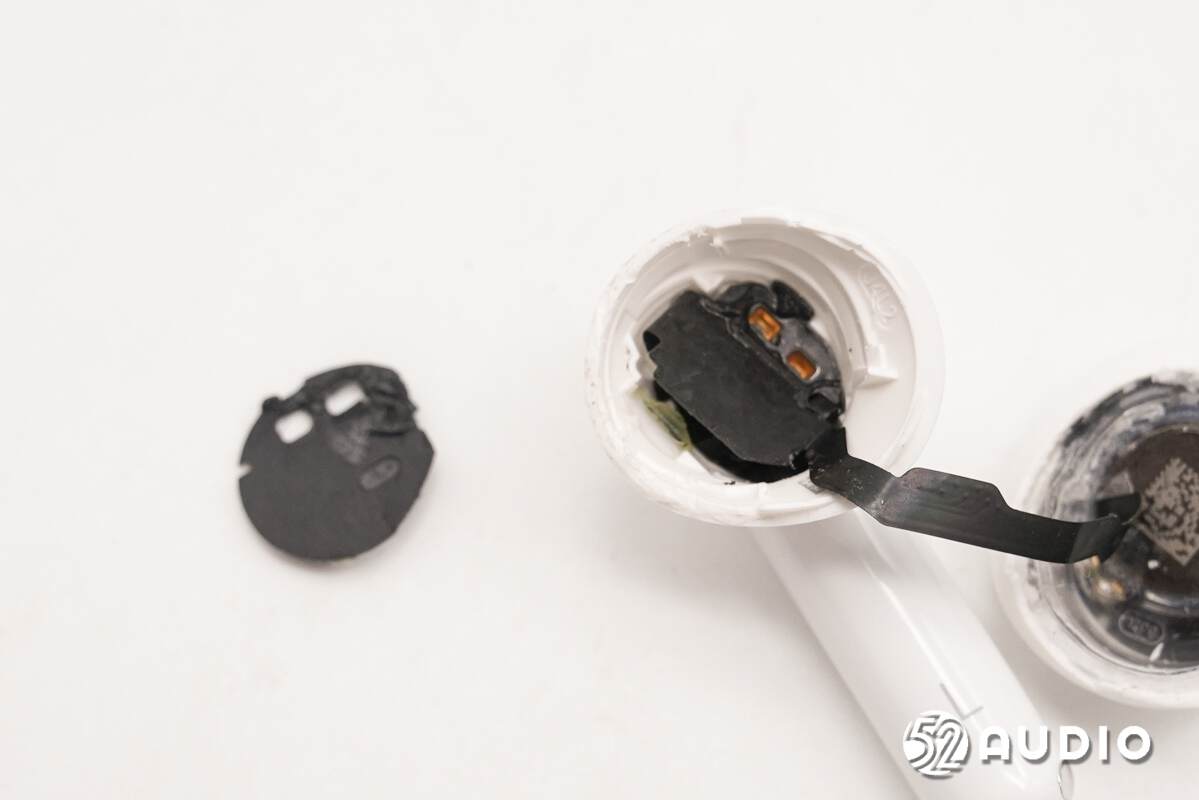
Remove the cover plate to reveal a flex cable connected to components inside the earbud stem.
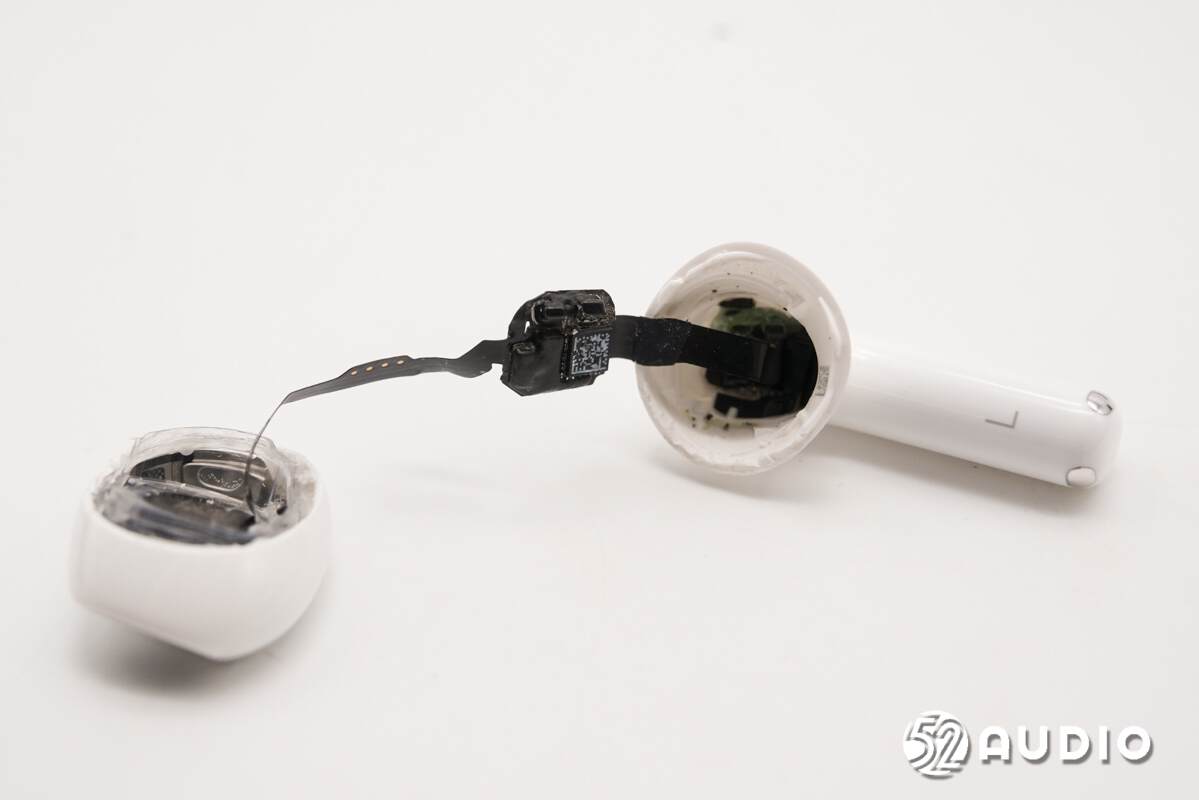
Remove the small flex-cable board connected to the battery. It is secured to the bottom of the cavity with adhesive.
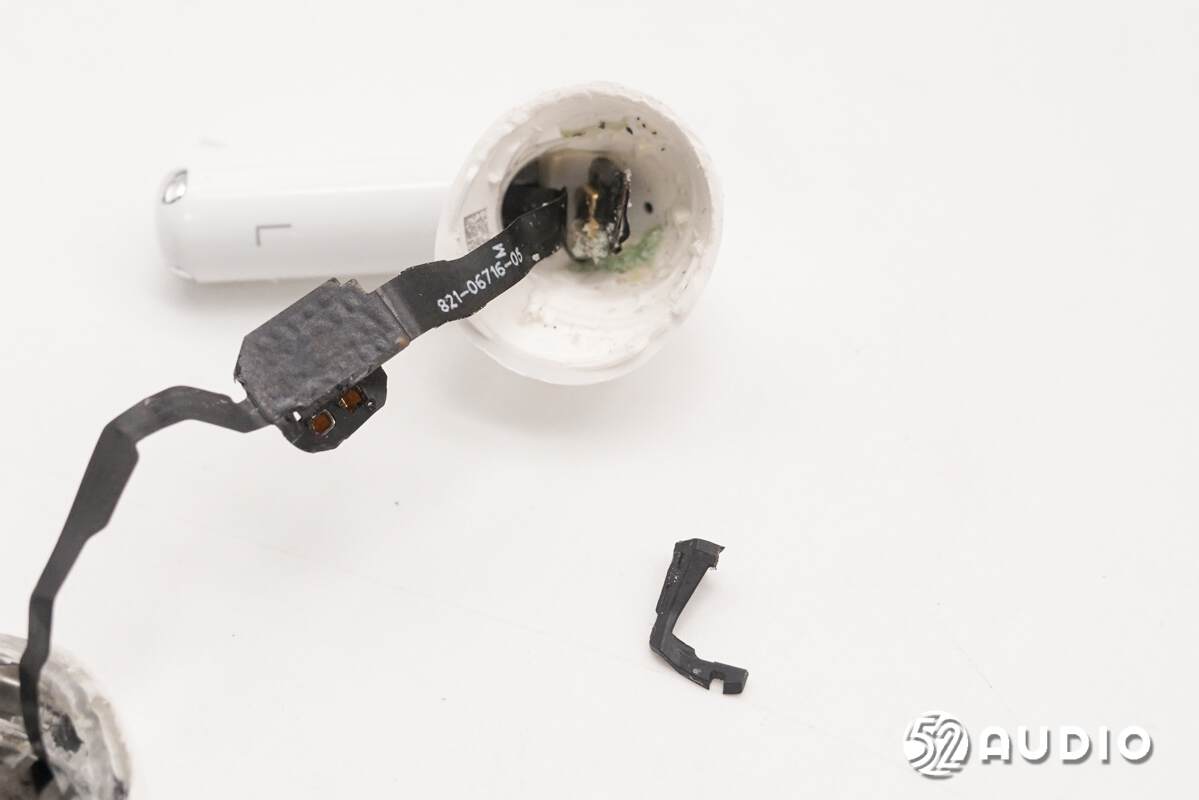
Remove the adhesive and internal frame to reveal the feedforward noise-cancelling microphone inside the cavity.
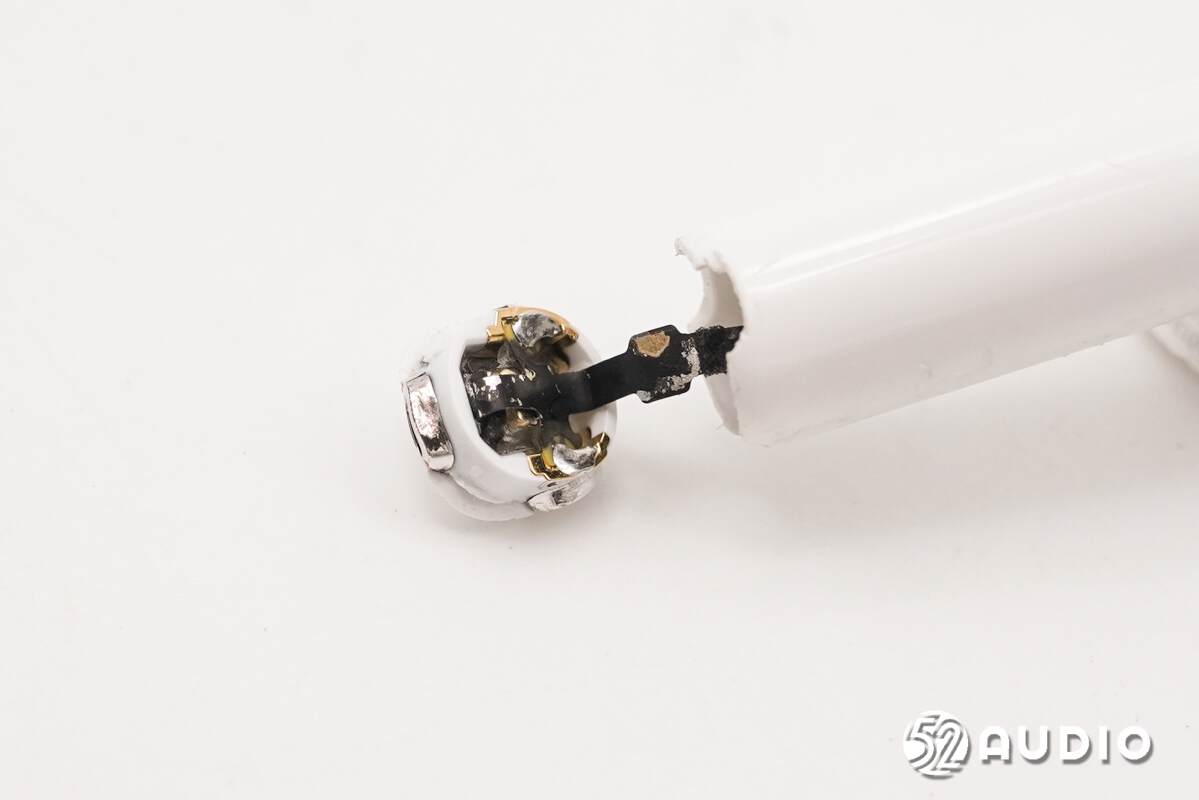
Remove the end cap at the bottom of the earbud stem. A flex cable inside the end cap connects the voice-call microphone and charging contacts.
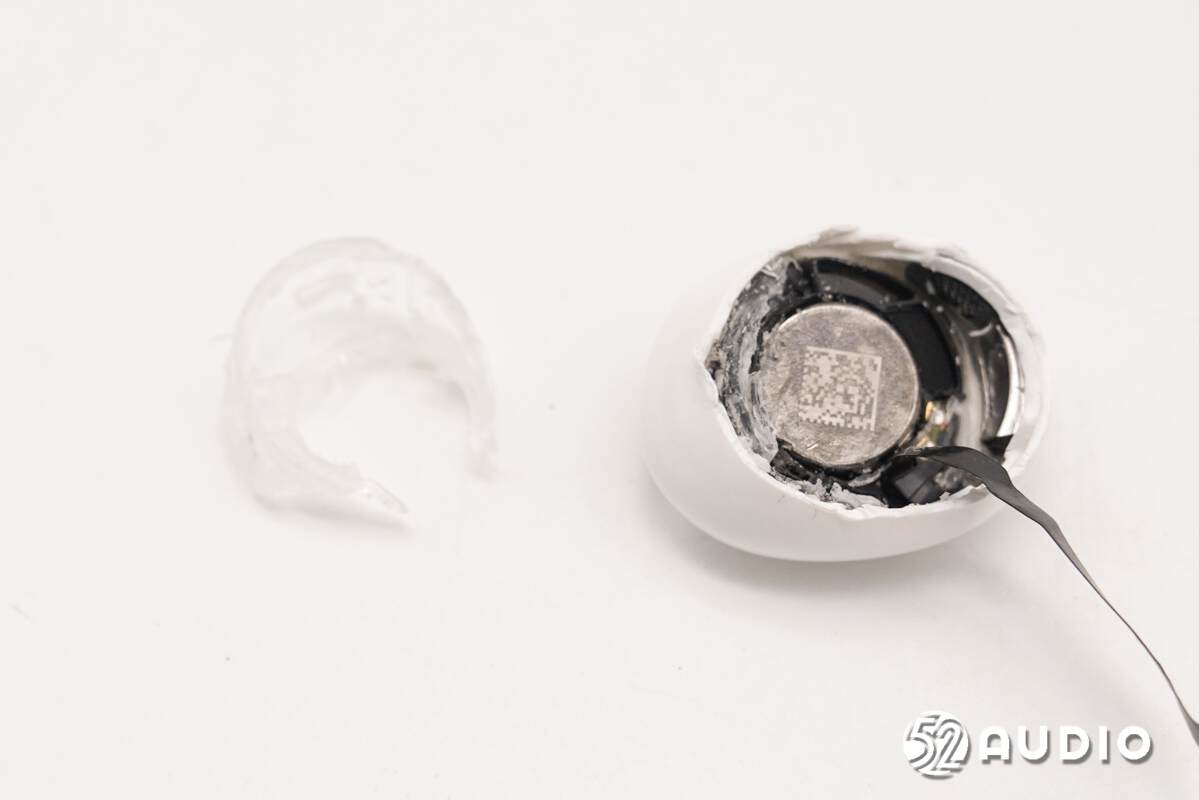
Remove the transparent acoustic component from the front cavity.
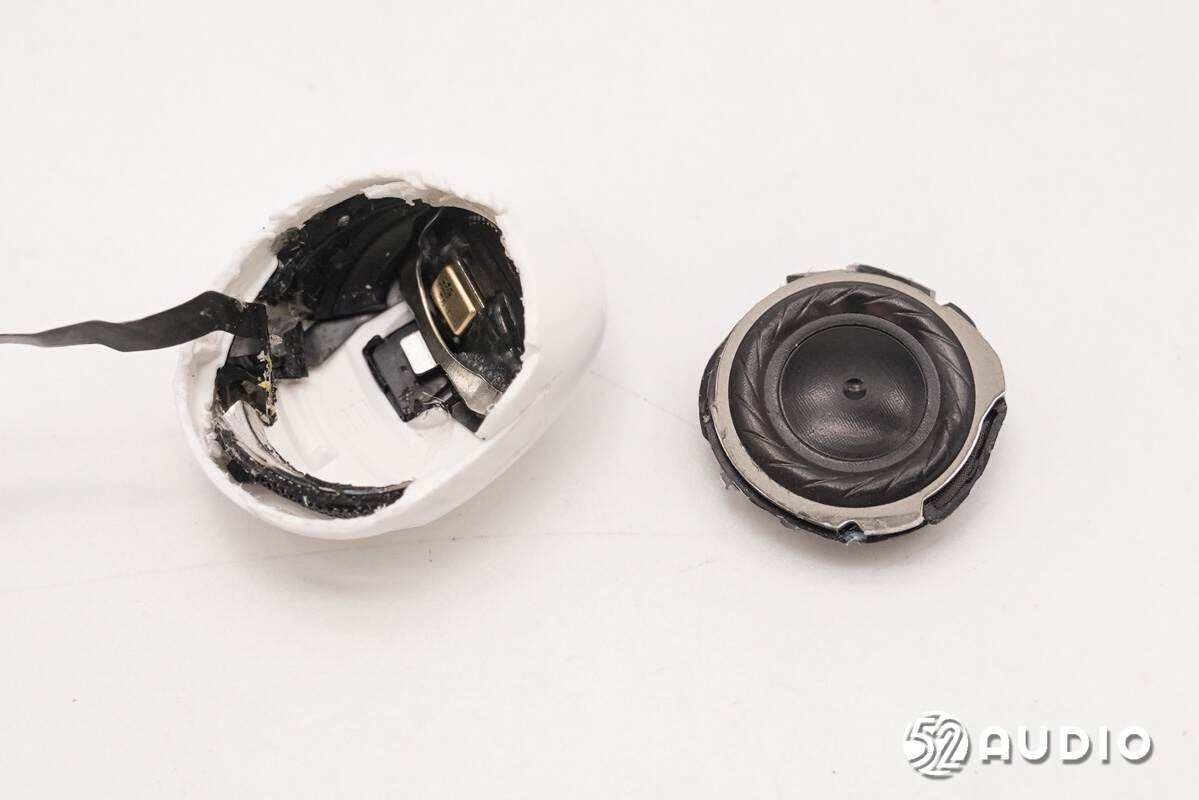
Disconnect the solder joints and remove the speaker.
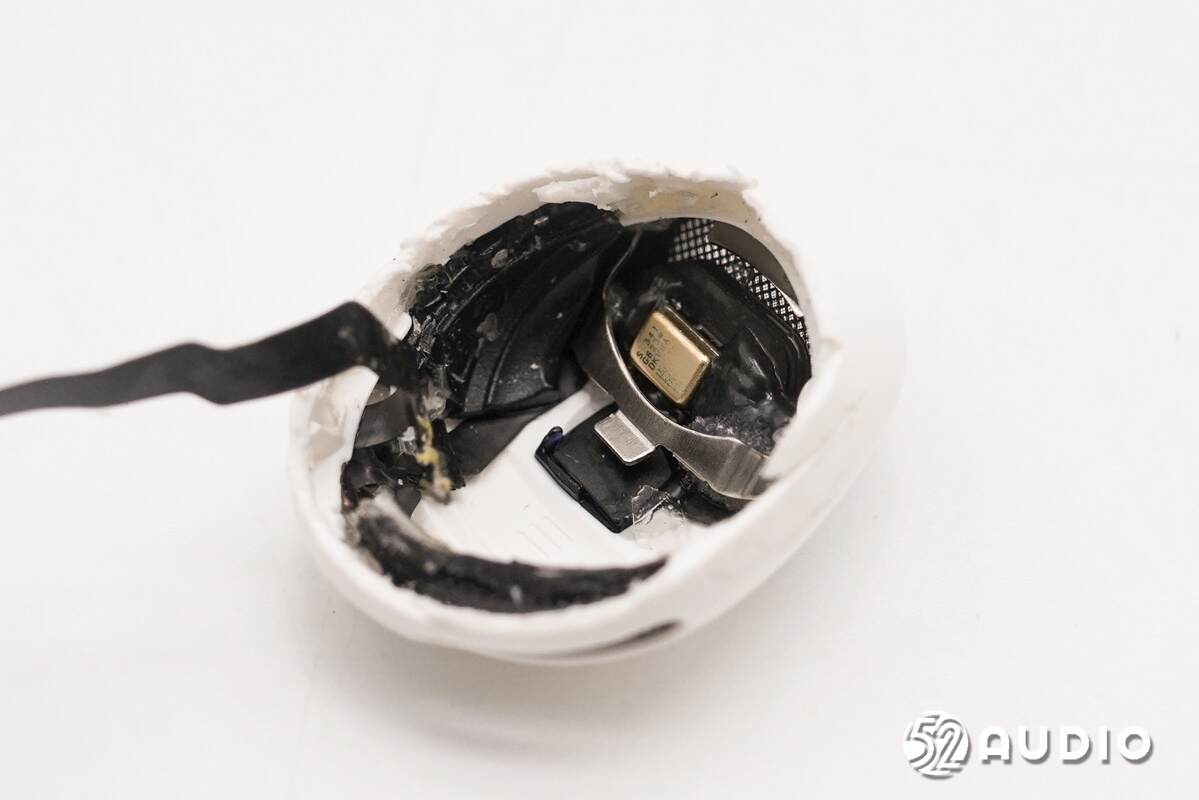
The bottom of the front cavity. The flex cable connects the optical wear-detection sensor and feedback microphone.
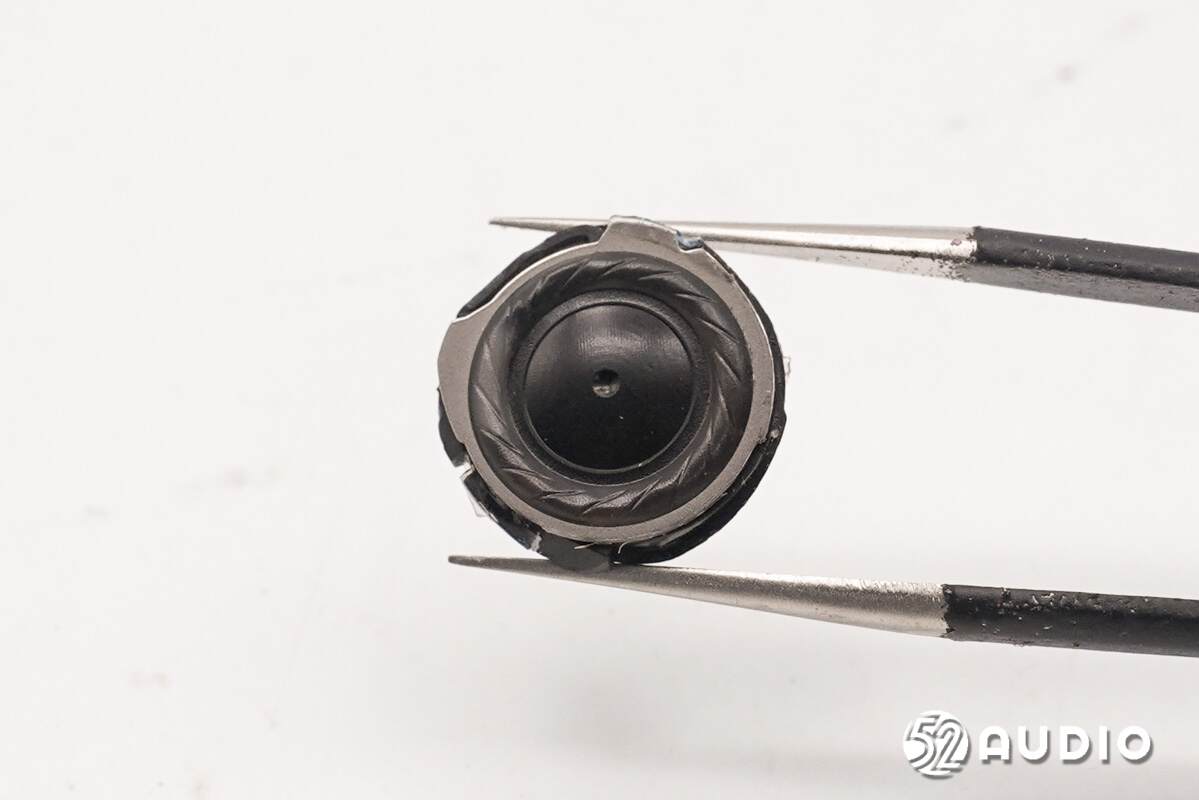
The earbud speaker, which uses an Apple's custom high-excursion driver.
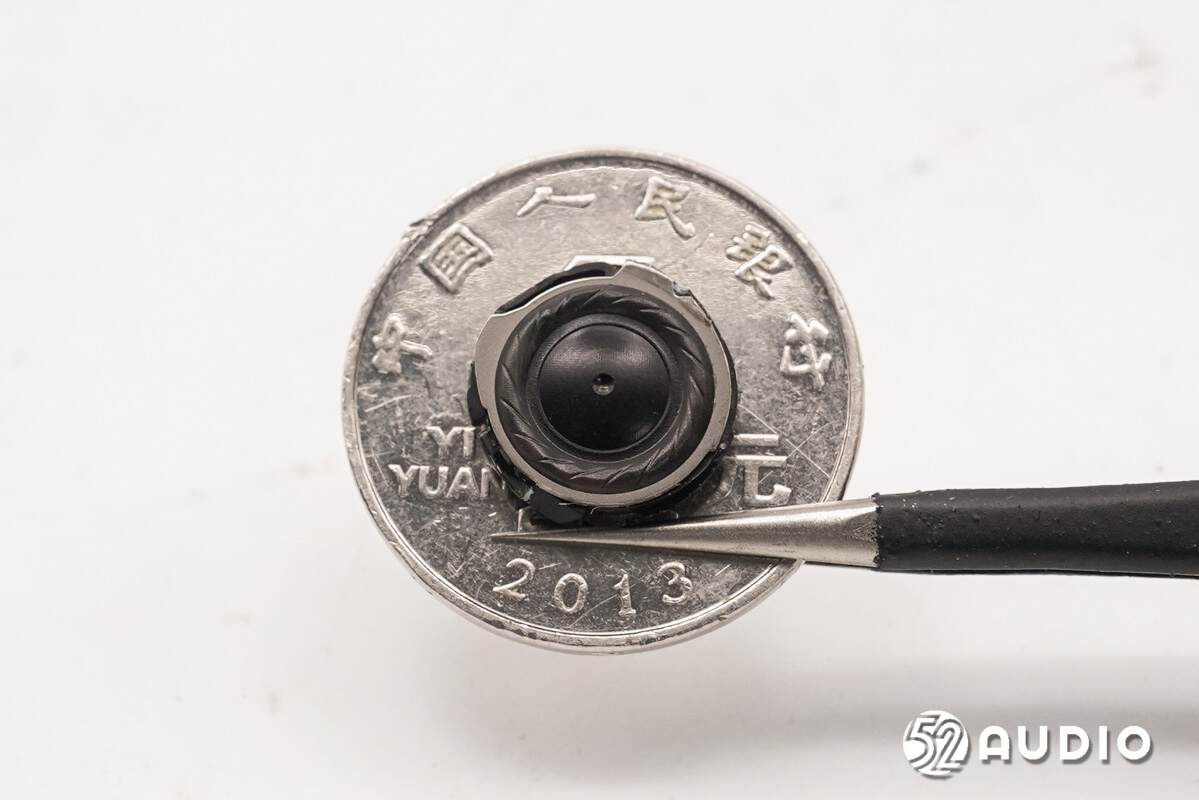
Size comparison between the speaker and a one-yuan coin.
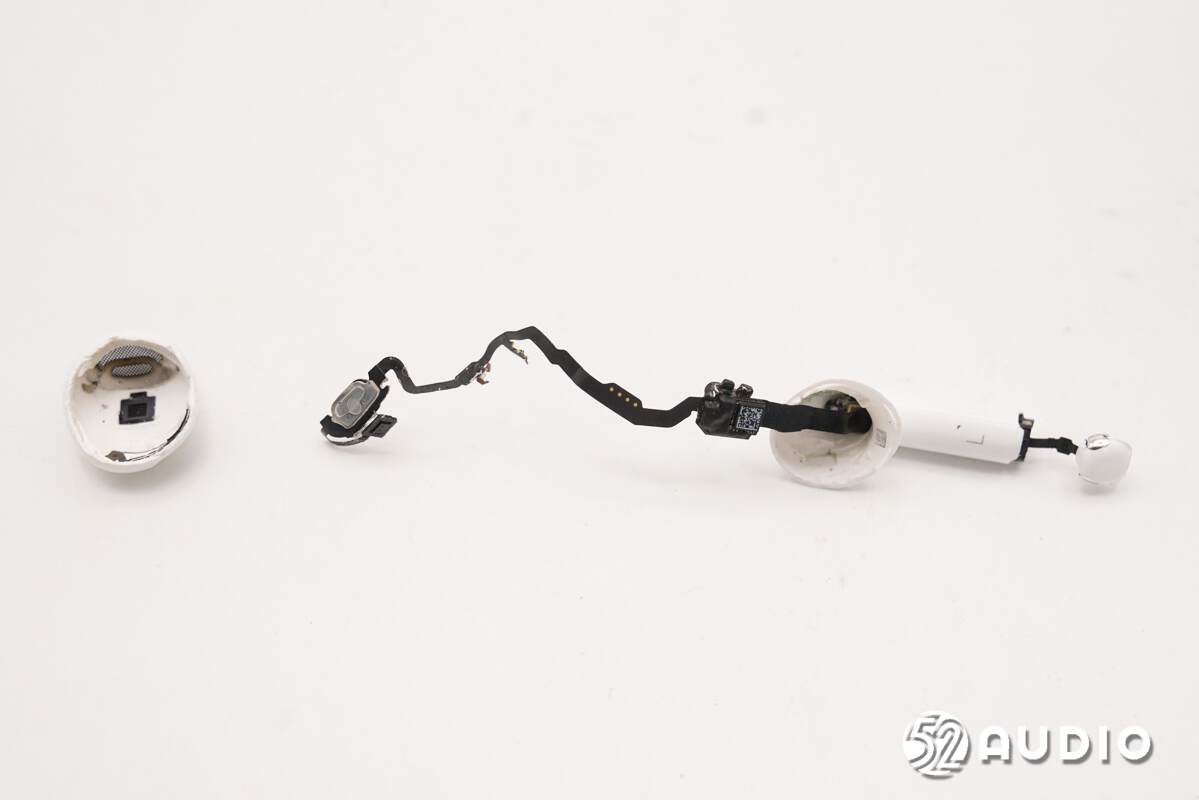
Remove the retaining frame and take out the flex cable and components from the front cavity.
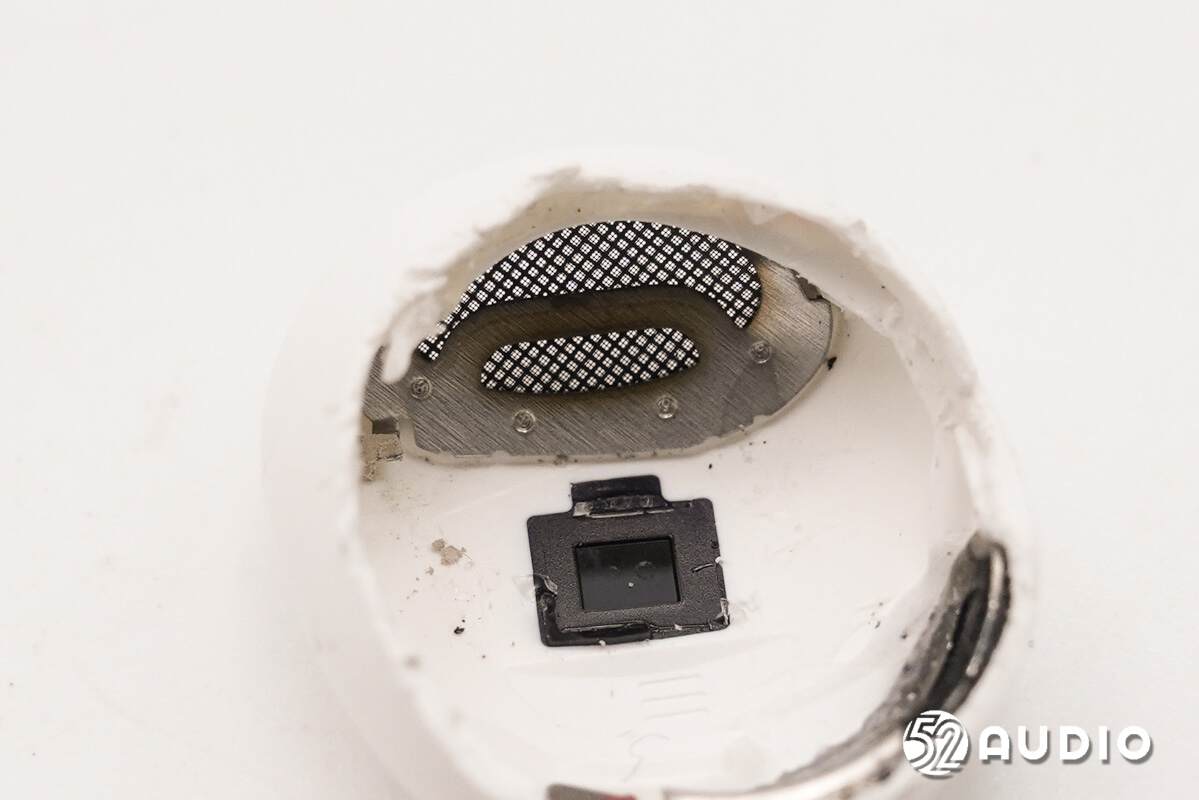
The bottom of the front cavity.
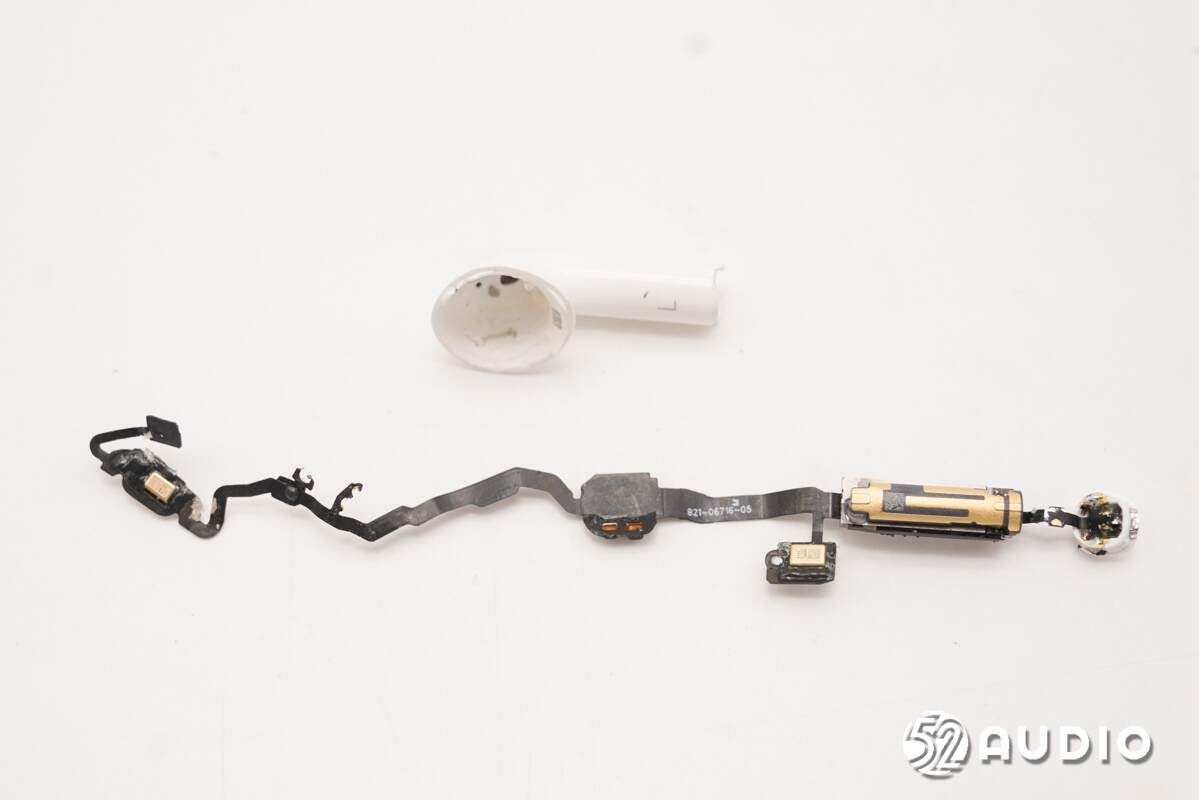
Pull out the flex cable inside the earbud stem. The internal components are connected by a single continuous flex cable.
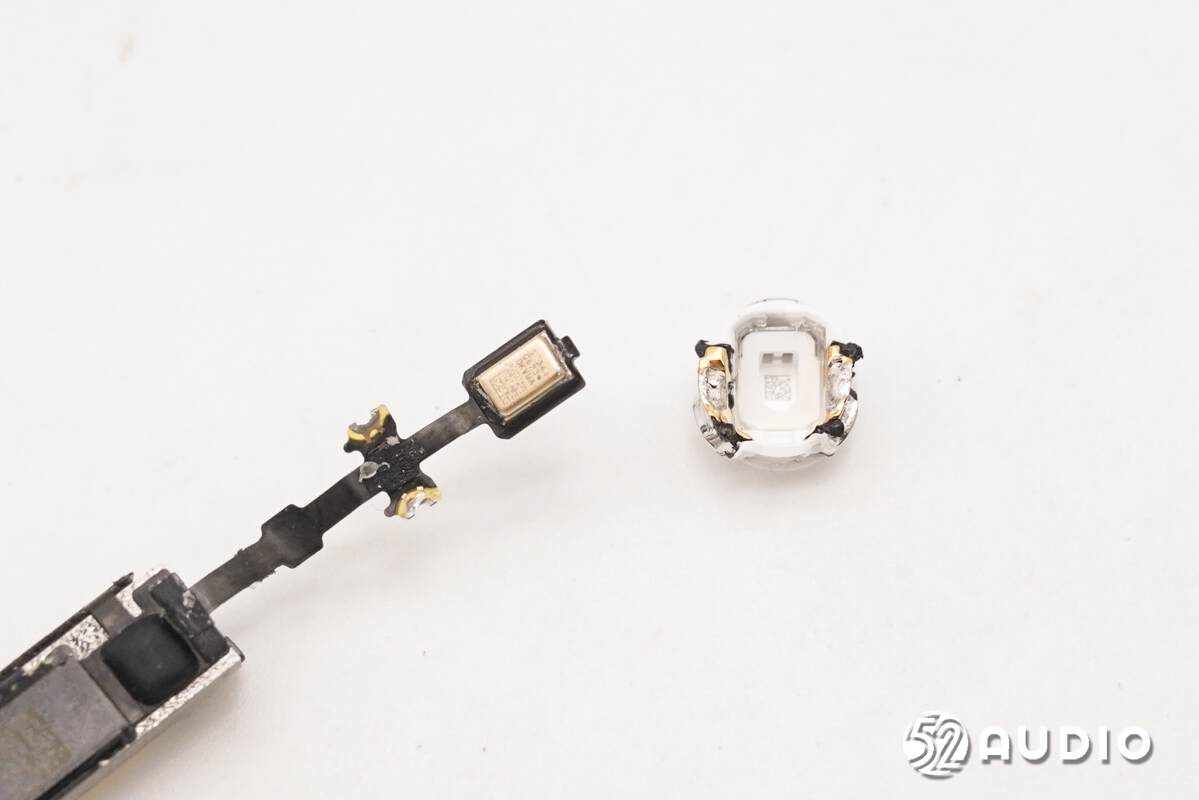
Disconnect the solder joints and remove the end cap.
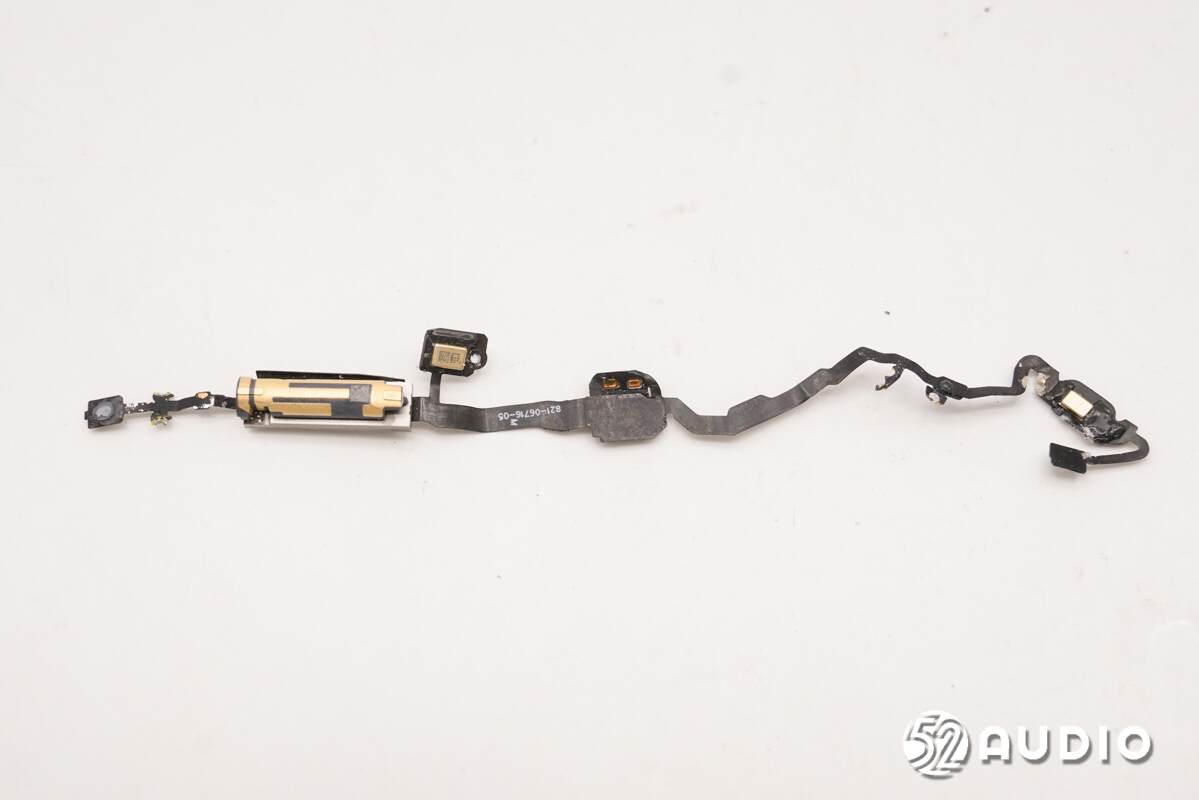
Circuitry on one side of the internal earbud flex cable.
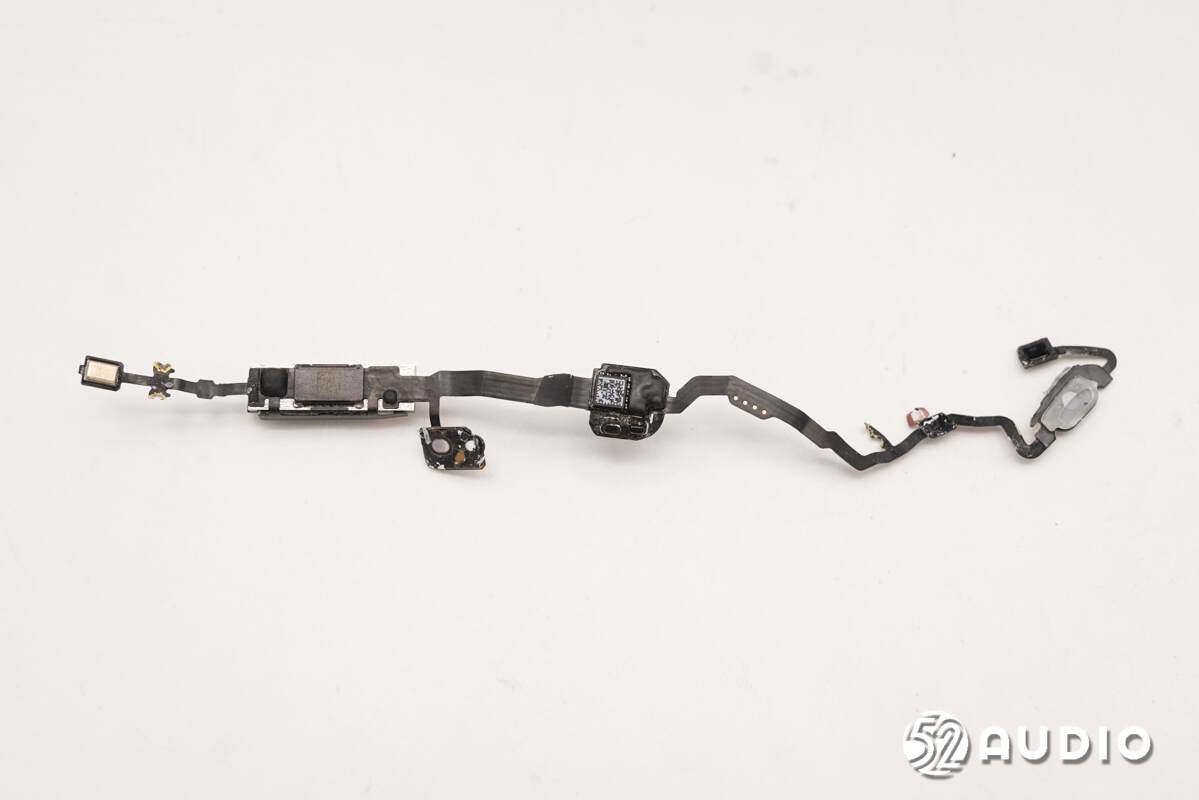
Circuitry on the other side of the internal earbud flex cable.
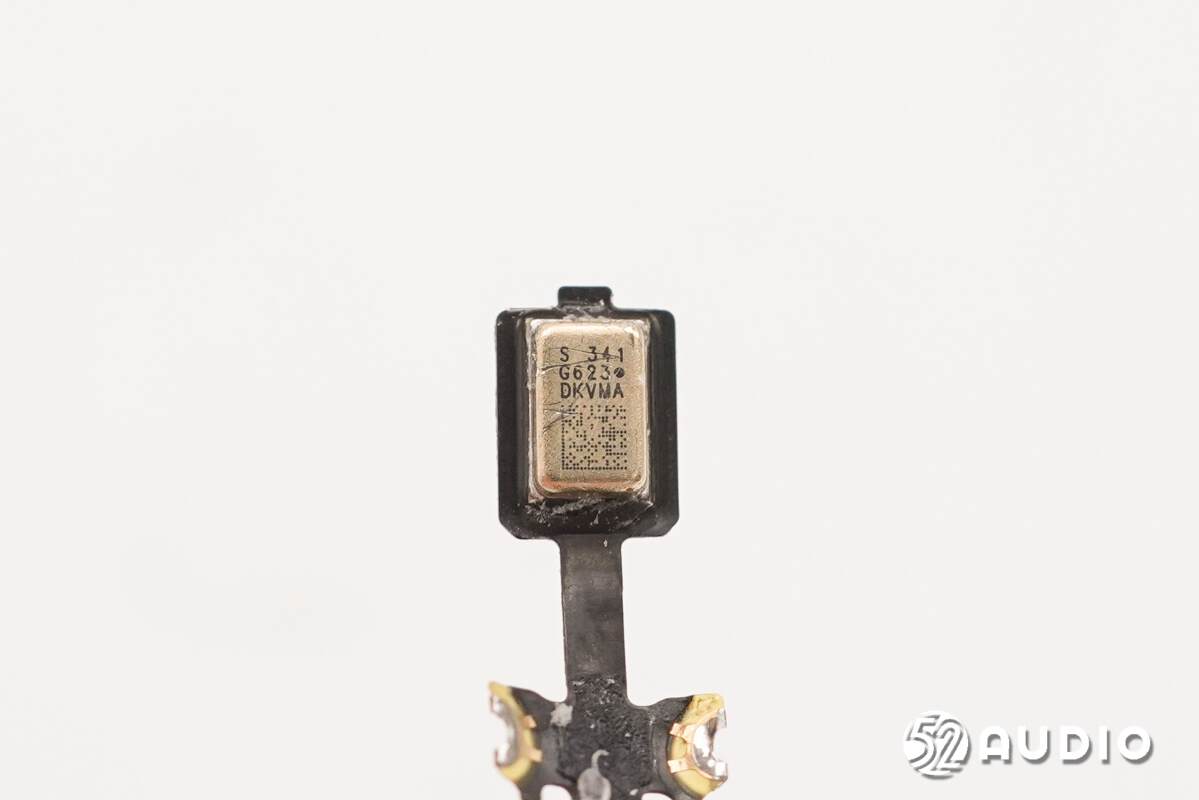
The MEMS microphone marked S 341, which picks up the wearer’s voice during calls.
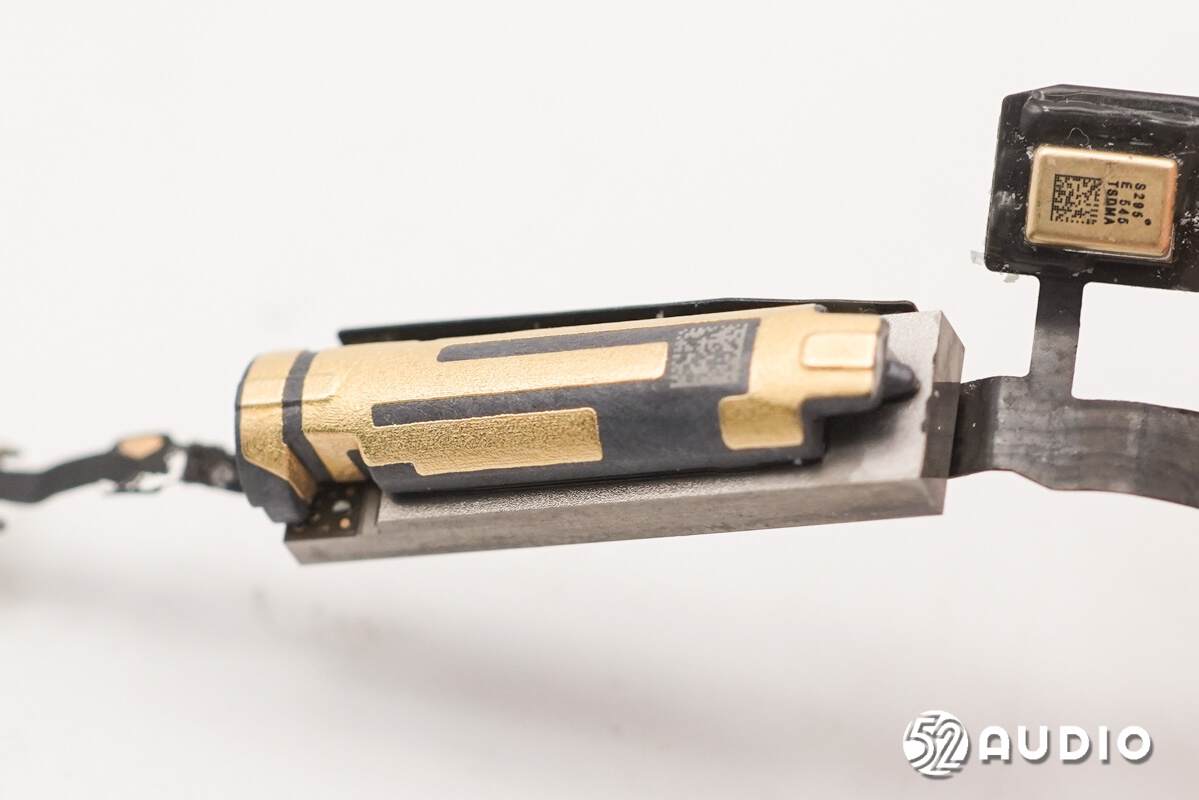
The Laser Direct Structuring (LDS) antenna printed on the retaining frame for transmitting and receiving wireless signals.
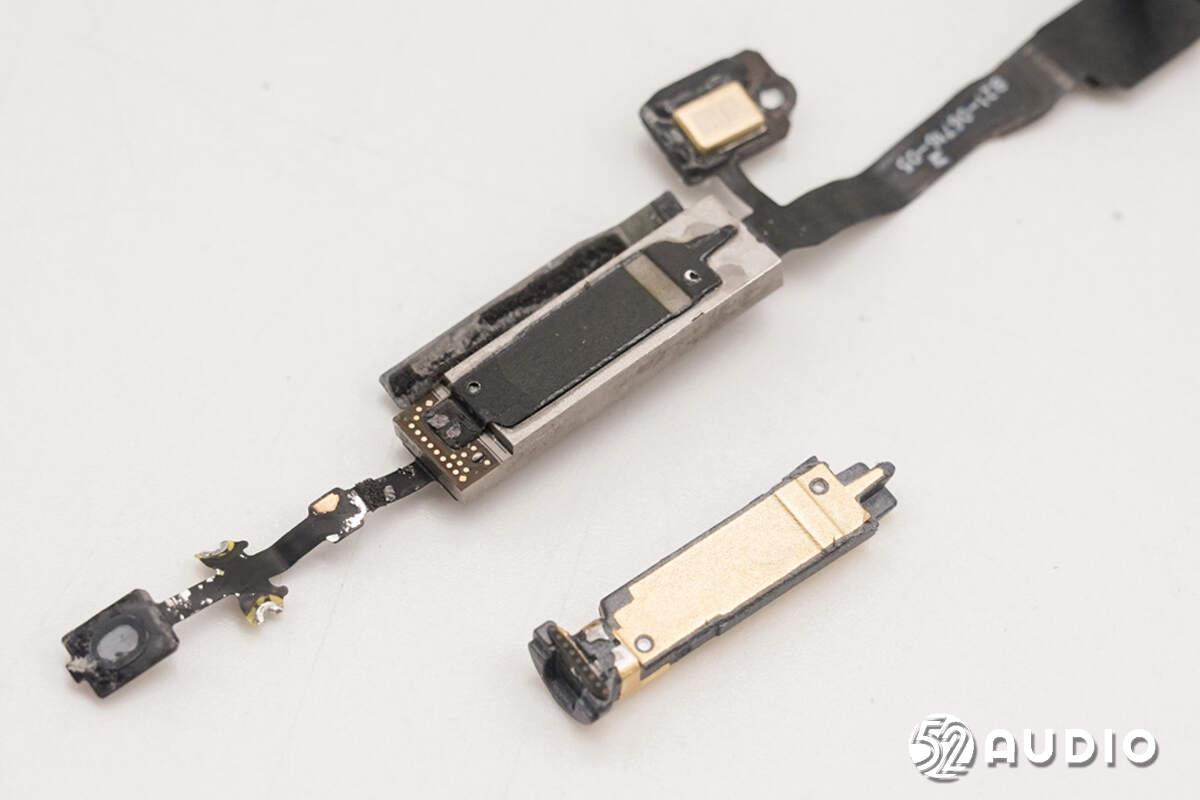
Remove the frame to reveal the H2 chip, which adopts a System-in-Package (SiP) design.
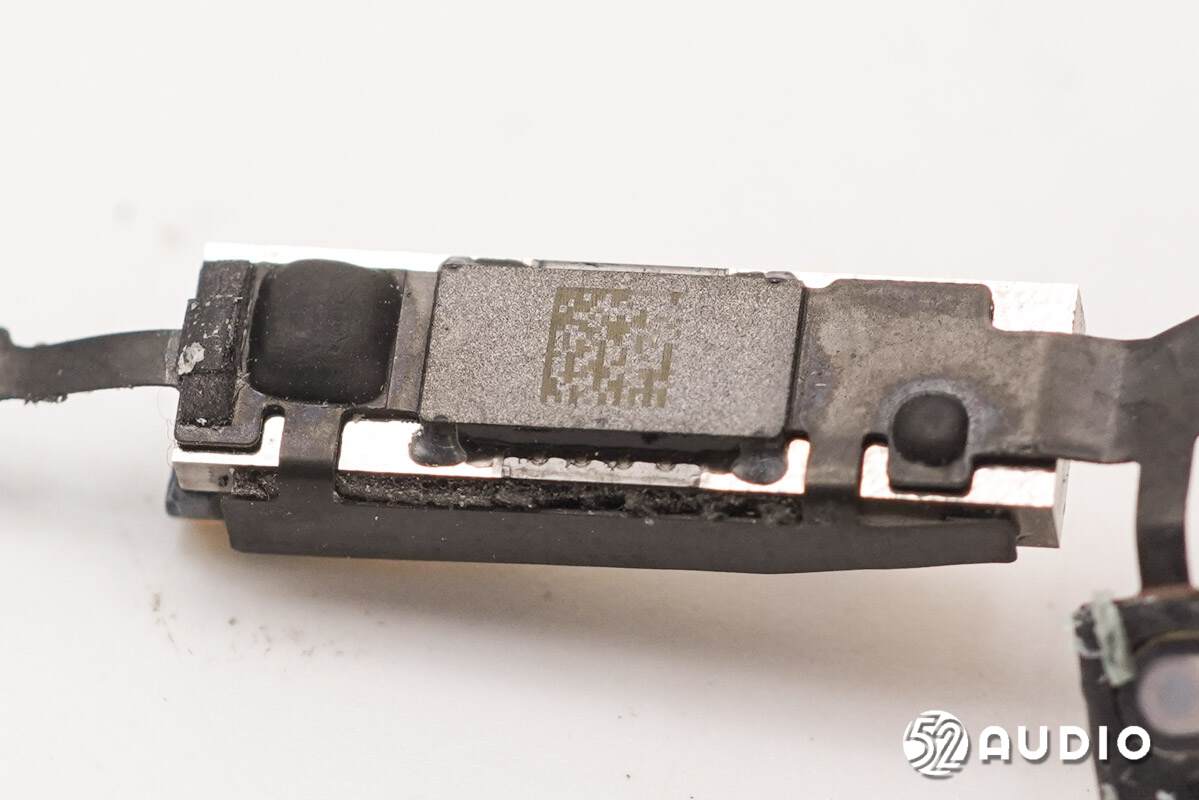
An IC marked with a QR code is mounted on the flex cable behind the H2 chip and is believed to be the detection chip for the force sensor. The force sensor below supports squeeze and swipe controls.
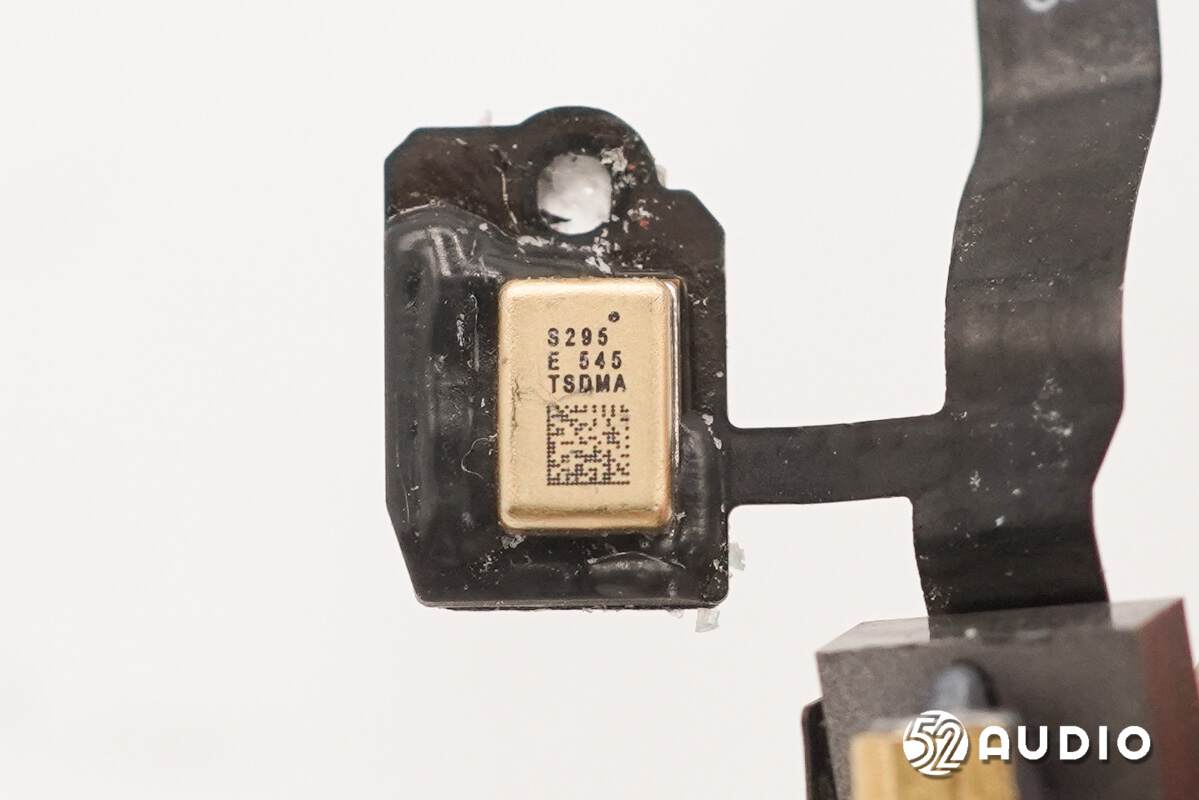
MEMS microphone marked S295, used as the feedforward noise-cancelling microphone to capture sound for Active Noise Cancellation, Transparency mode, and call noise reduction.
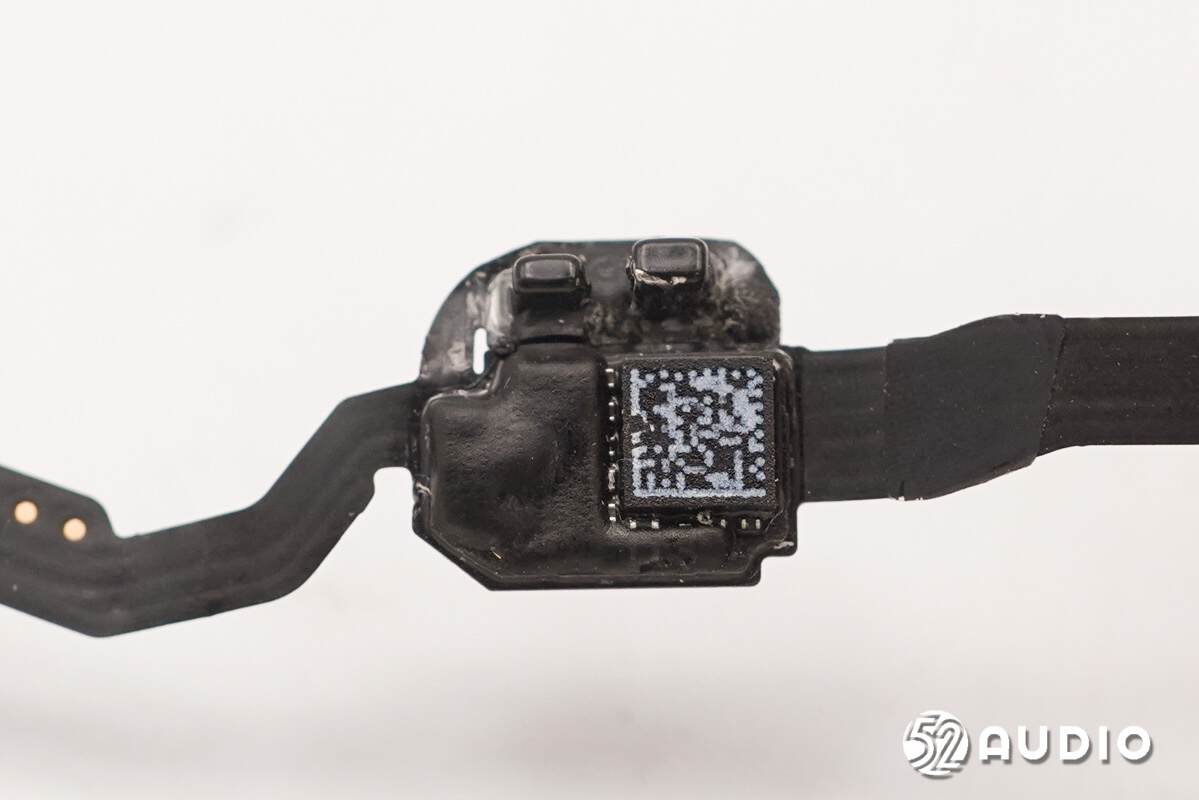
Circuitry on the small board connected to the battery. It contains an IC marked with a QR code, believed to be a lithium battery protection IC.
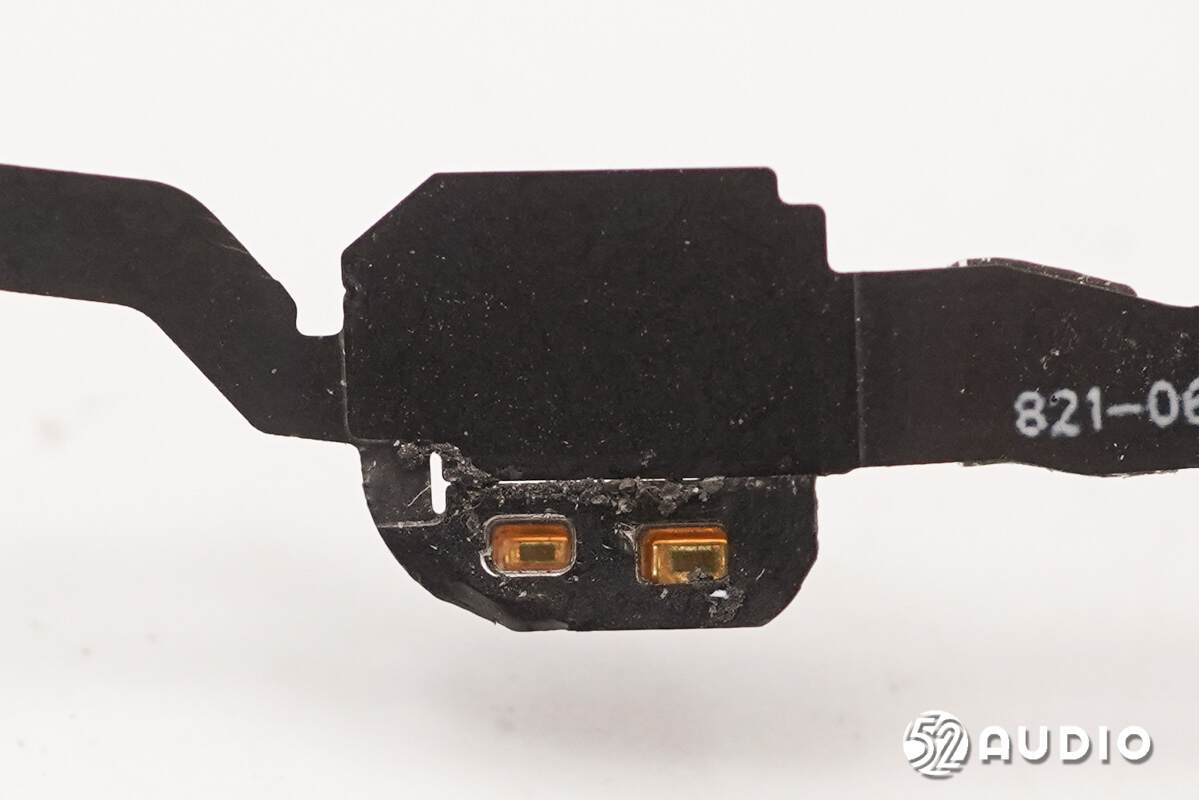
A slot on the back of the small board connects to the battery contacts.
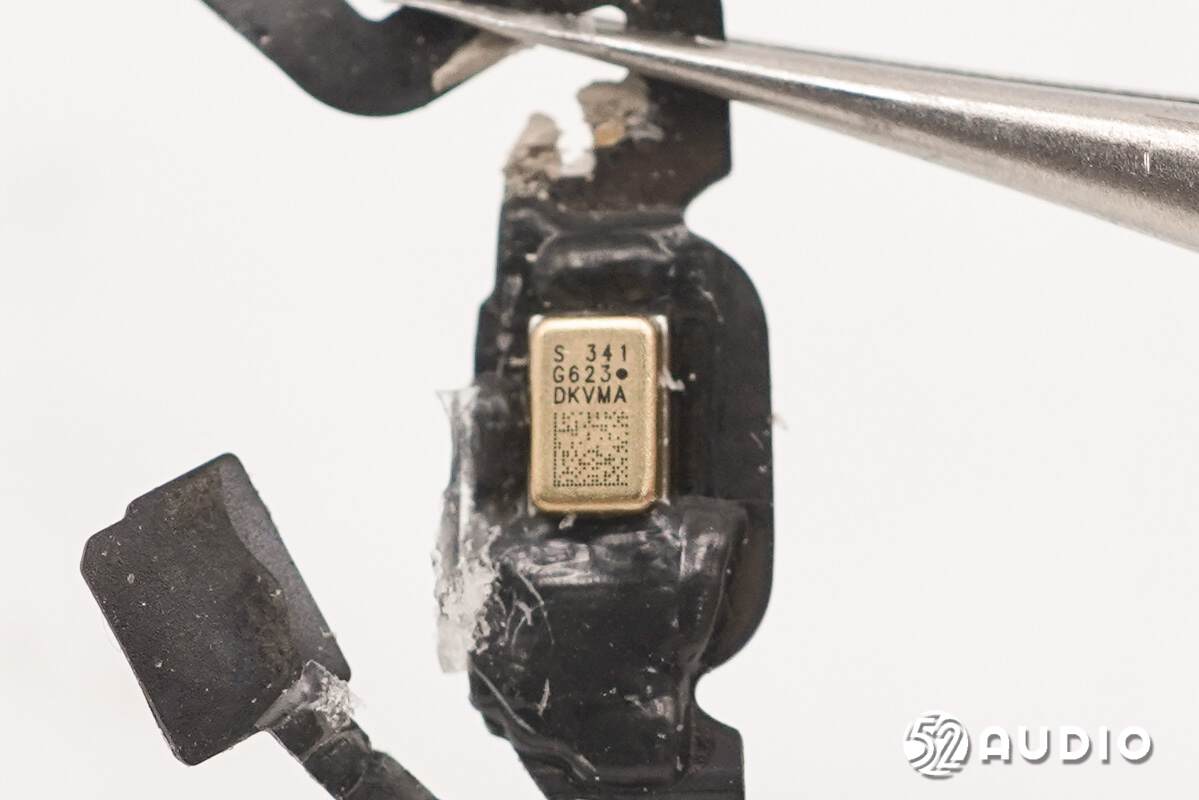
MEMS microphone marked S 341, serving as the in-ear feedback microphone. It captures sound for Active Noise Cancellation, Adaptive EQ, Adaptive Noise Control, Personalized Volume, and other features.
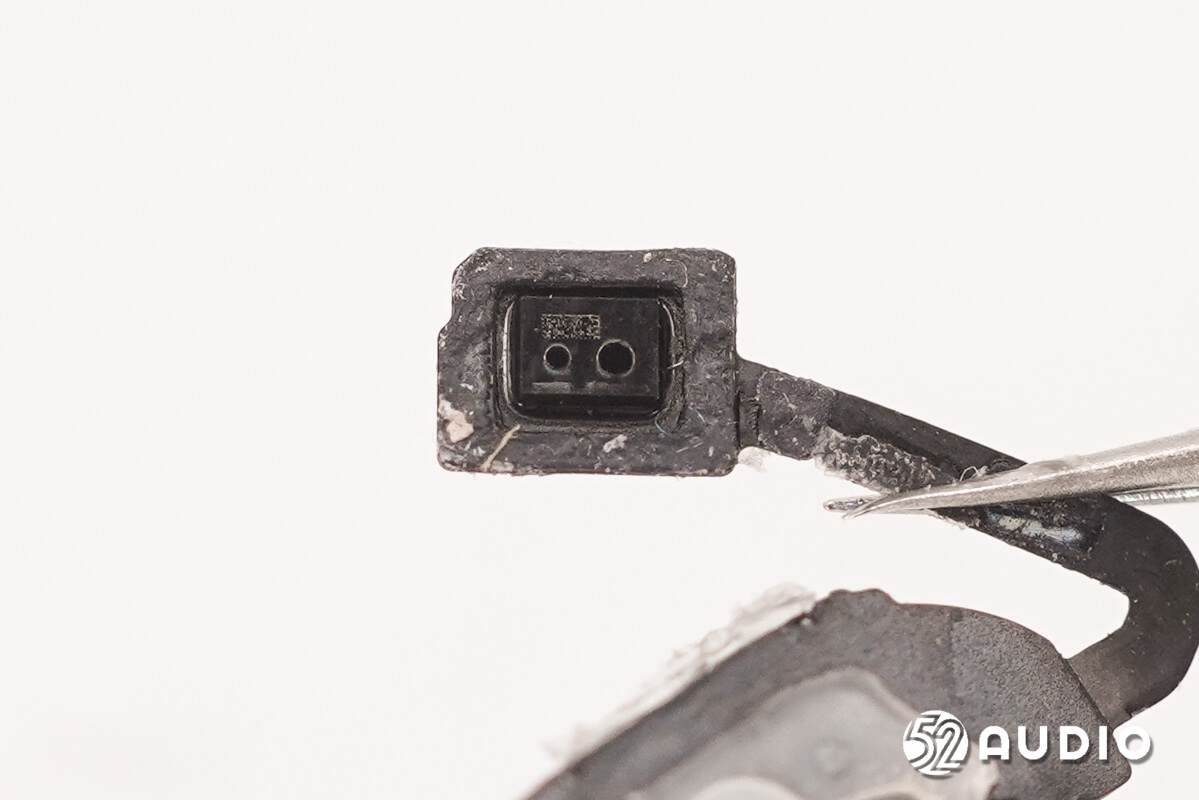
The optical in-ear detection sensor, which automatically pauses playback when the earbuds are removed and resumes playback when they are worn.
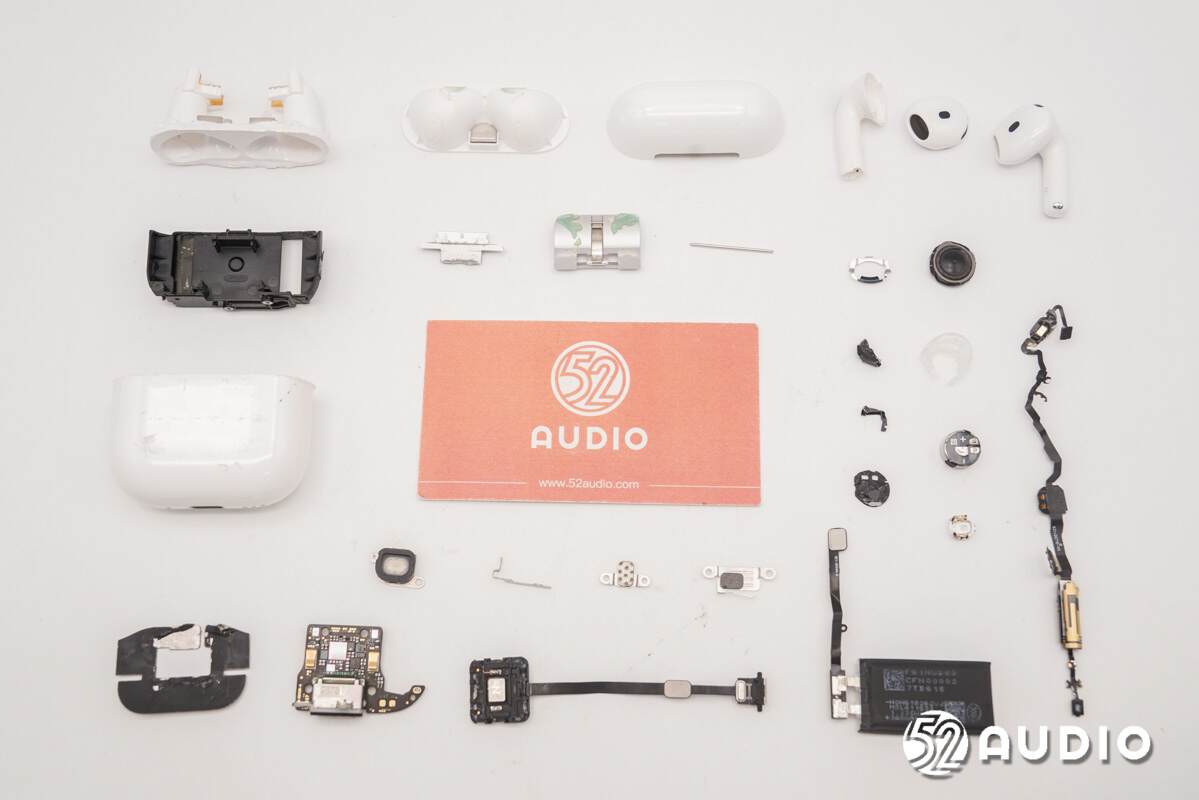
Well, those are all components of the AirPods 5 with Wireless Charging Case.
Summary of 52 AUDIO
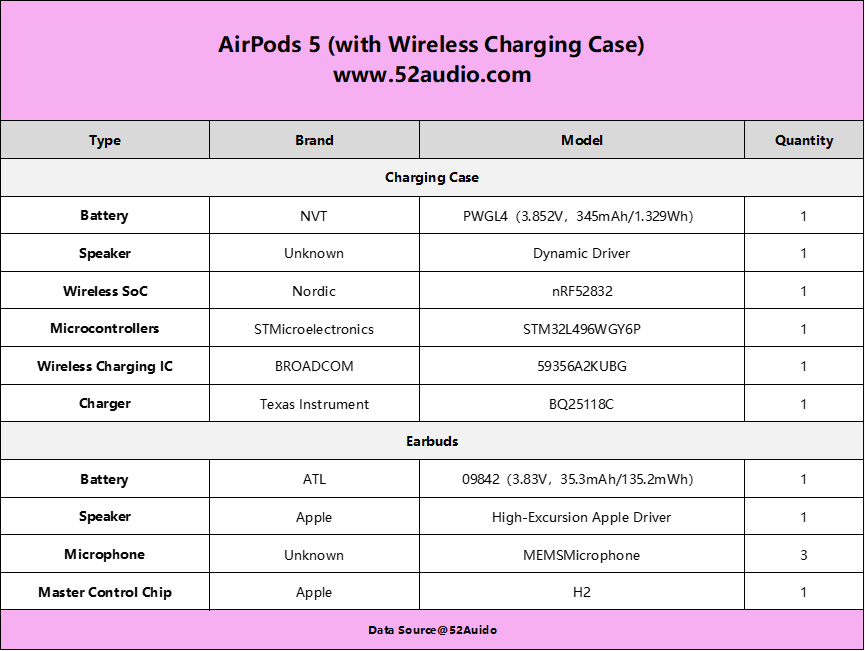
The known bill of materials for the AirPods 5 with Wireless Charging Case is provided below for reference.
The AirPods 5 with Wireless Charging Case retain the previous generation’s overall design, including a rounded-rectangle charging case and open-fit earbuds. They are compact, portable, and lightweight to wear. The internal structure is also very similar to that of the previous generation. The main differences are the return to a removable battery design in the earbuds, as seen in the third generation, a slight increase in battery capacity, and an upgraded dust- and water-resistance rating, which makes disassembly more challenging.
As for its key components, the charging case contains a NVT 3.852 V / 345 mAh lithium-ion battery pack and a built-in speaker. It uses a Broadcom 59356A2KUBG wireless charging management IC and a Texas Instruments BQ25118C charger to manage battery charging and discharging. A Nordic nRF52832 multiprotocol SoC supports the case-finding function, while an STMicroelectronics STM32L496WGY6P microcontroller controls the overall device.
The earbuds contain an ATL 3.83V / 35.3 mAh steel-cased button-cell battery, an custom high-excursion Apple driver, and three MEMS microphones. The master control chip remains the H2 chip in a System-in-Package (SiP) design. Other components include an optical in-ear detection sensor and a force sensor for squeeze and swipe controls.