
Introduction
On June 16, 2026, HP Poly debuted the Focus 6 business active noise-canceling headset, officially hitting store shelves in July. Tailored for professional enterprise communication and hybrid ANC, the headset comes bundled with an innovative 2-in-1 desktop wireless charging stand.
The headset supports both USB-C wired charging and convenient headband-suspension wireless charging, while its matching dock features the Qi2 wireless charging protocol, delivering up to 15W of magnetic fast charging for smartphones.
At the heart of this integrated wireless charging system is NuVolta, whose wireless power solutions are deployed across both the headset and the charging stand.
ChargerLAB will now deliver a comprehensive teardown report to inspect the internal architecture and component craftsmanship of this device.
Product Appearance
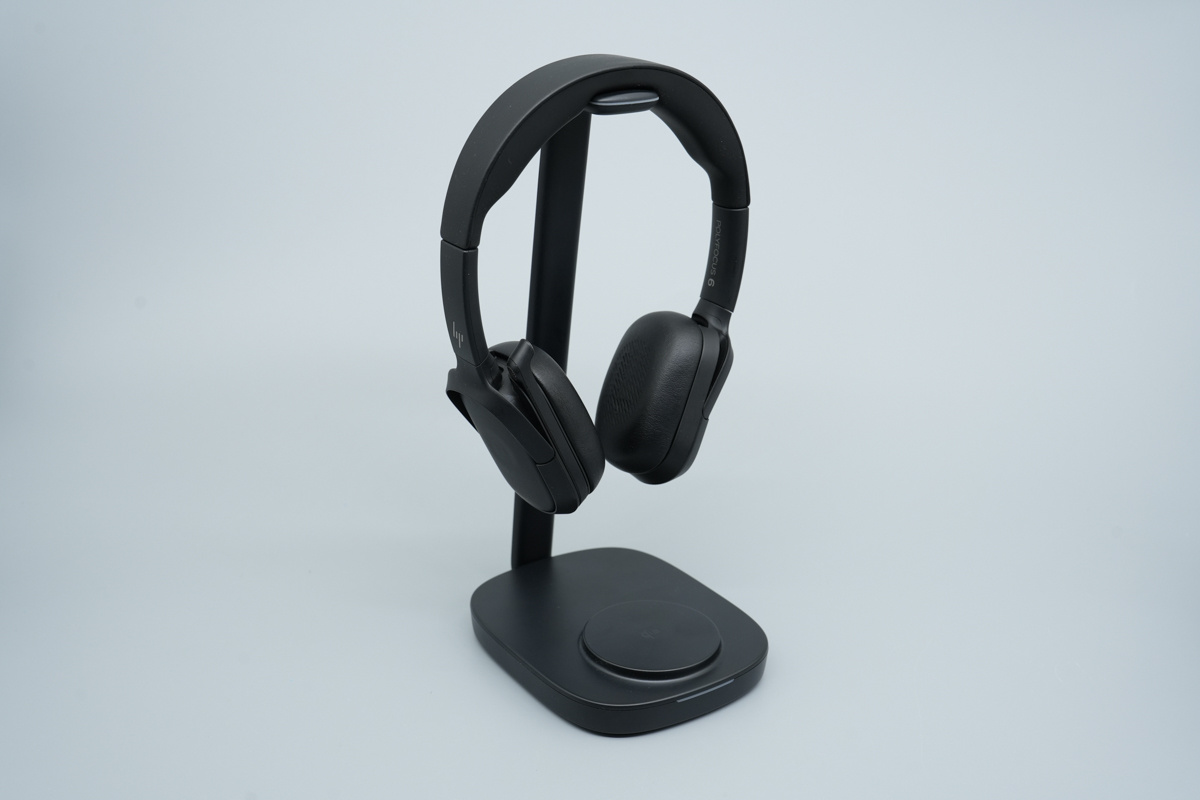
Placed on its dedicated charging stand, the FOCUS 6 headset features a sleek Space Black finish with a clean and professional design. The stand base integrates a wireless charging panel, providing both headset storage and desktop smartphone wireless charging.
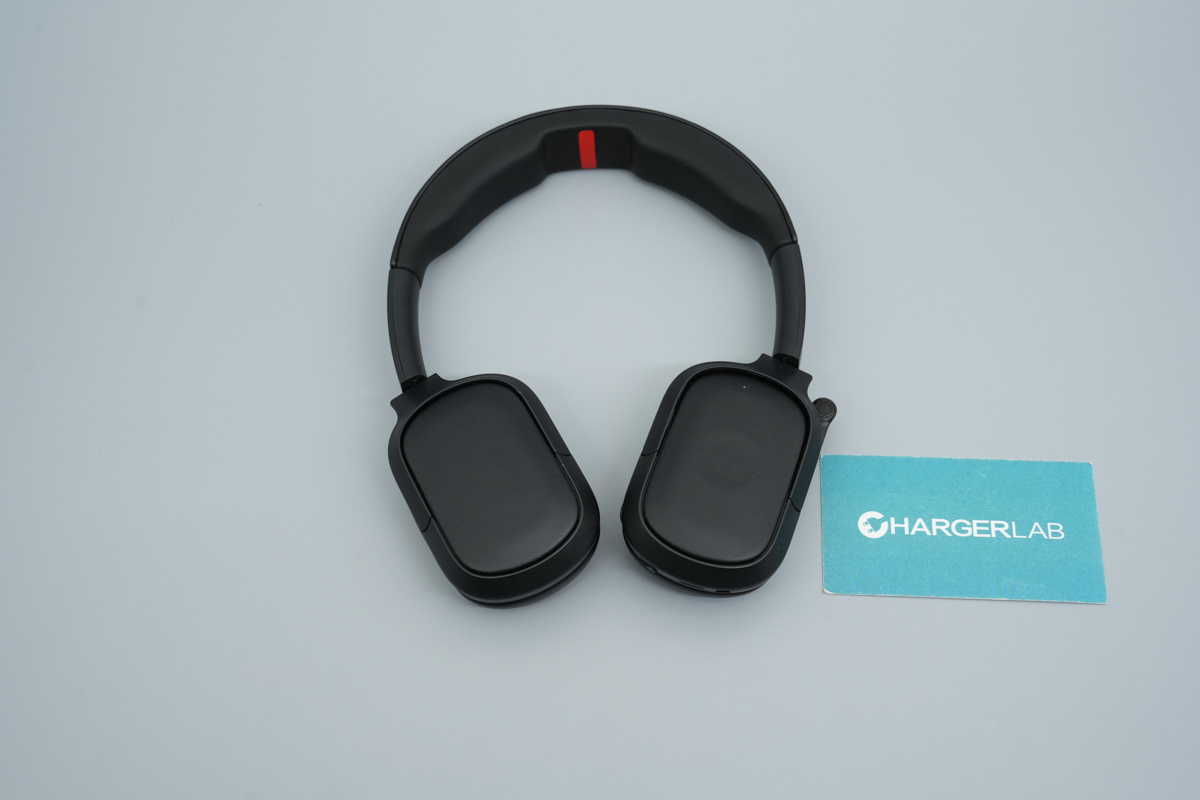
A red wireless charging area is placed at the center of the headband, while the earcups use a rounded rectangular shape designed around the human ear profile.
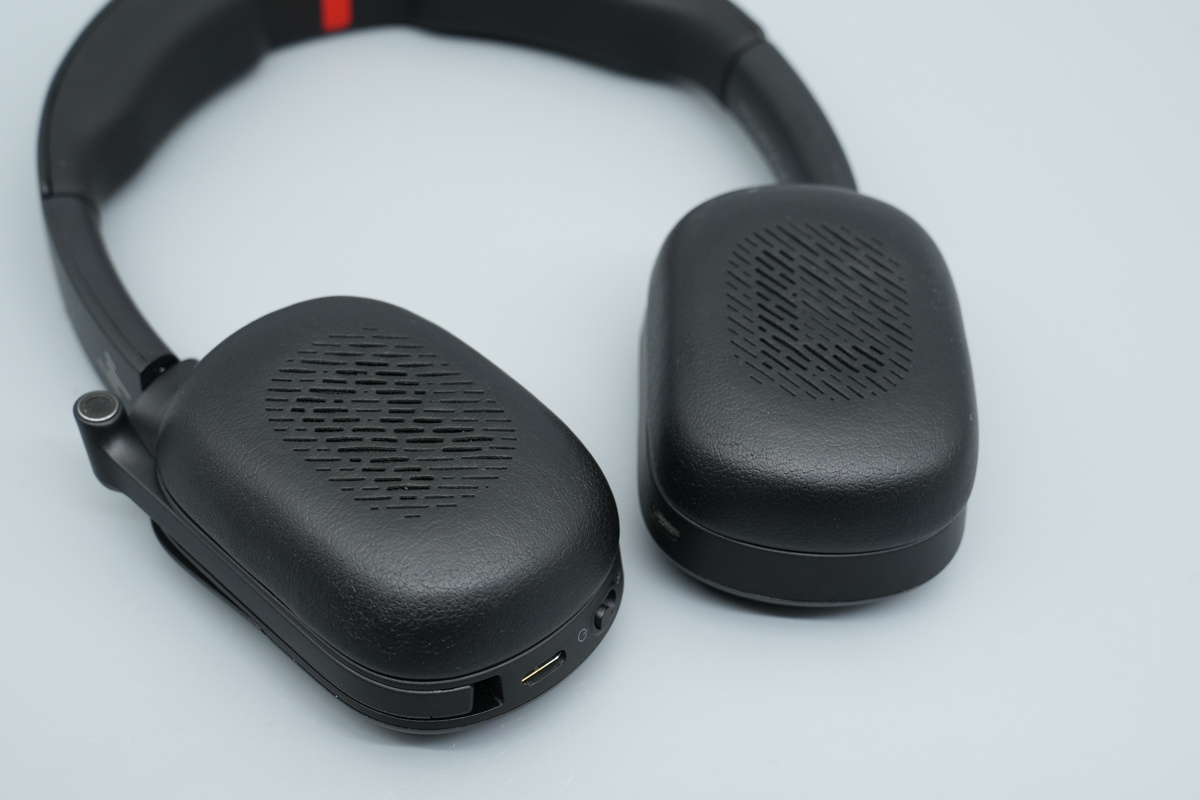
The earcups feature a leather-like texture, with a sliding power switch, status indicator, and USB-C charging port located underneath.
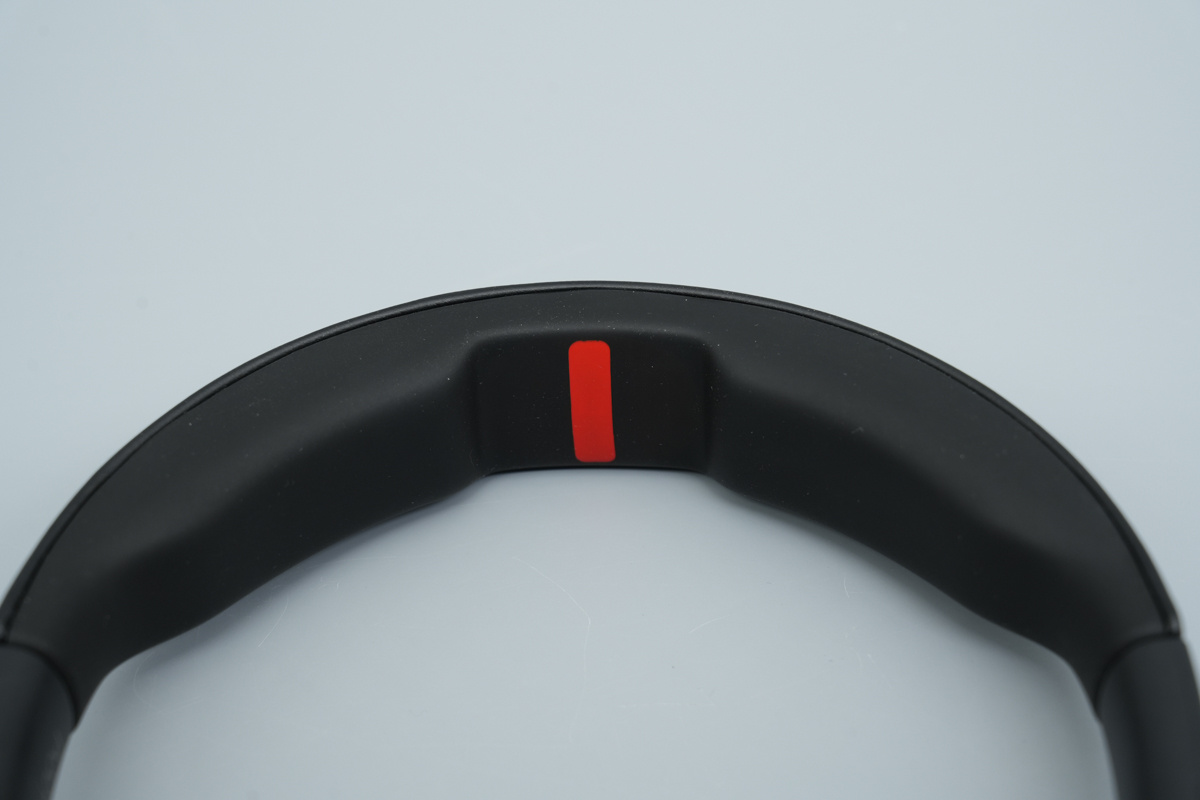
The inner headband uses soft, skin-friendly rubber material with an orange-red alignment marker, helping the headset lock into position on the charging stand.
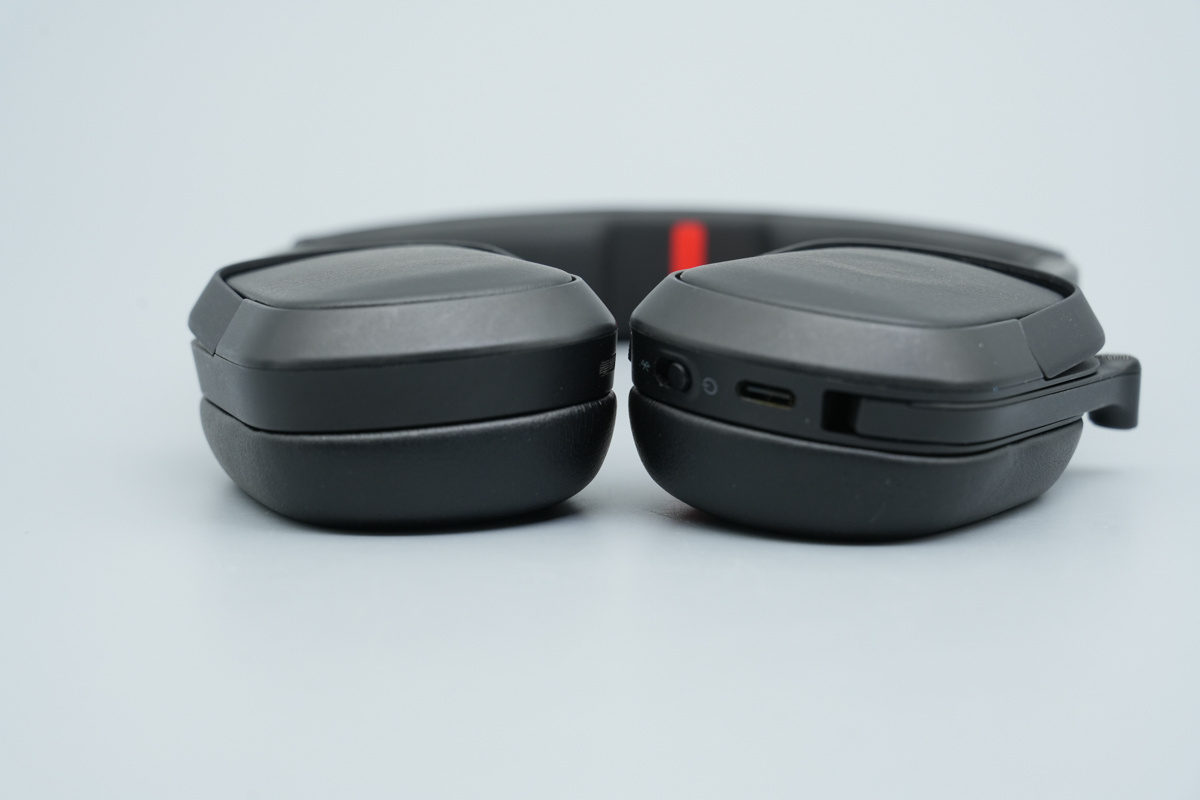
The earcups support horizontal adjustment, and the right side features a foldable microphone arm that automatically mutes when folded.
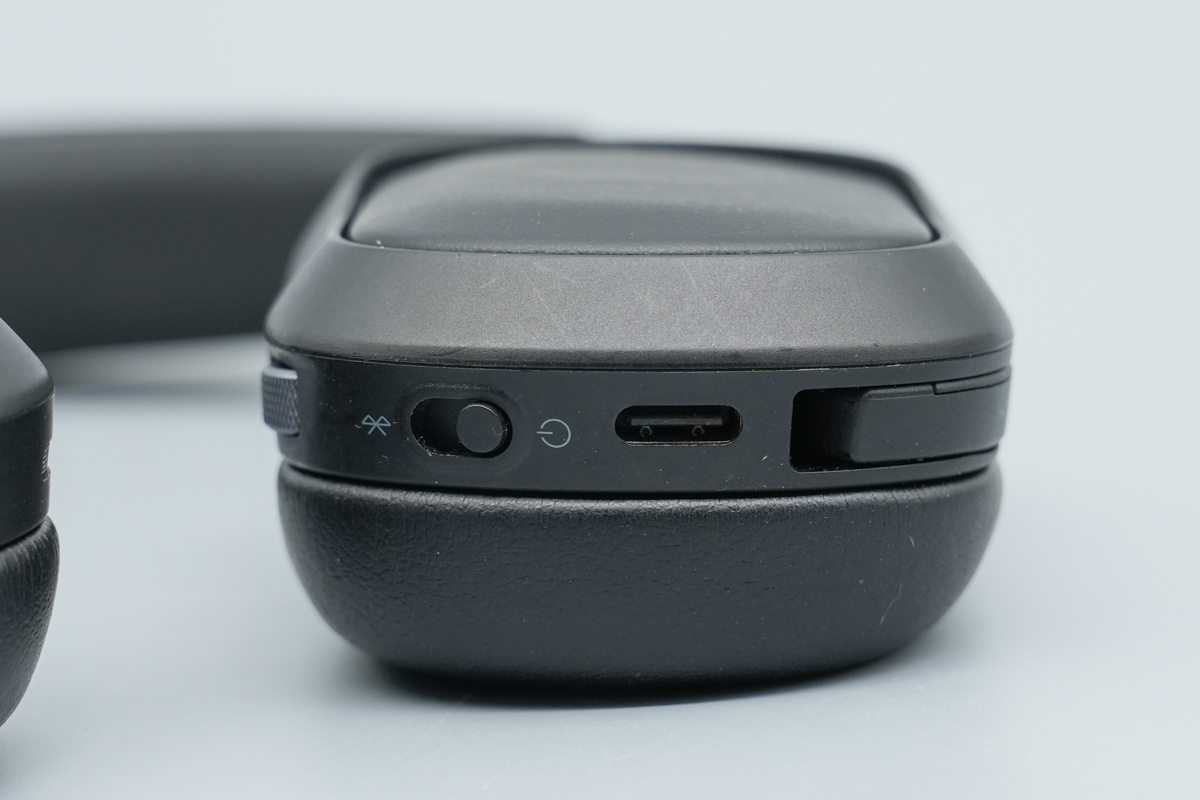
The bottom of the right earcup includes a Bluetooth pairing/power switch, volume control knob, USB-C input port, and microphone openings for voice pickup.
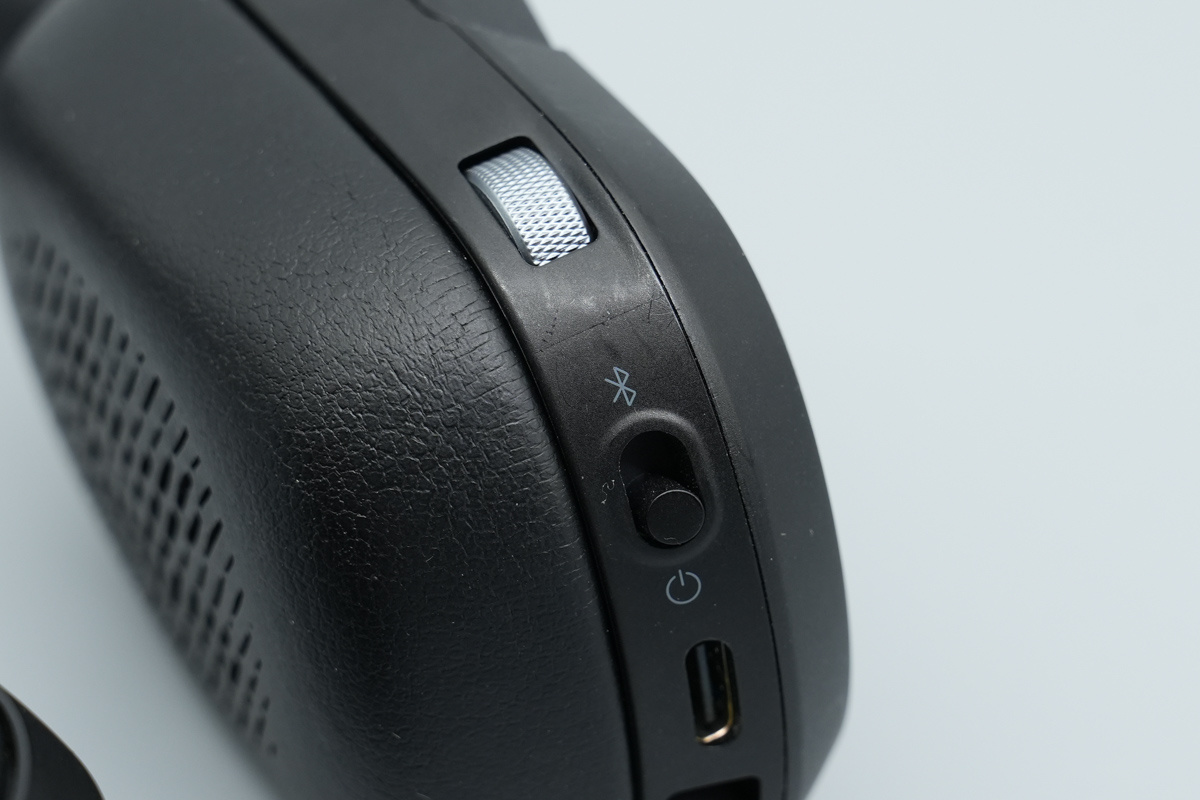
The metal rotary volume knob features fine anti-slip textures on the surface. With comfortable rotation resistance, it allows easy blind operation during calls or music playback.
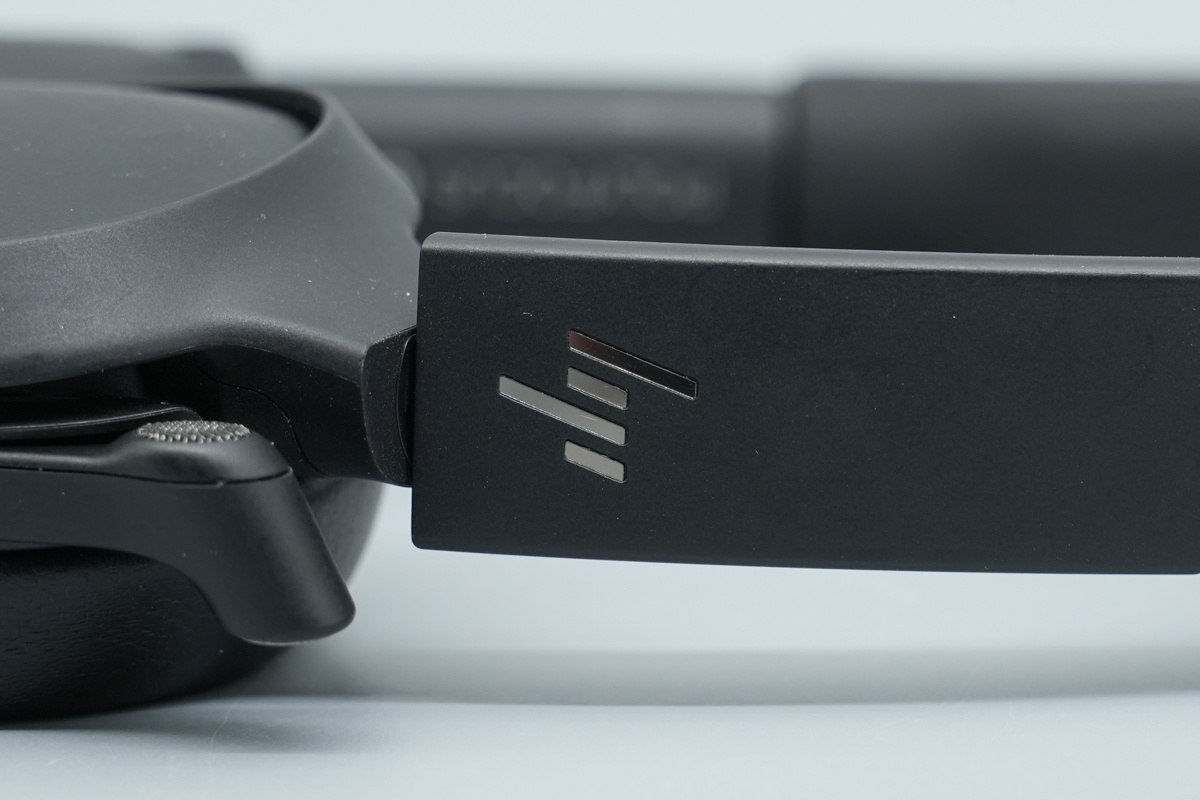
The headband rail carries a glossy metallic HP logo, with a refined finish and comfortable adjustment feel.
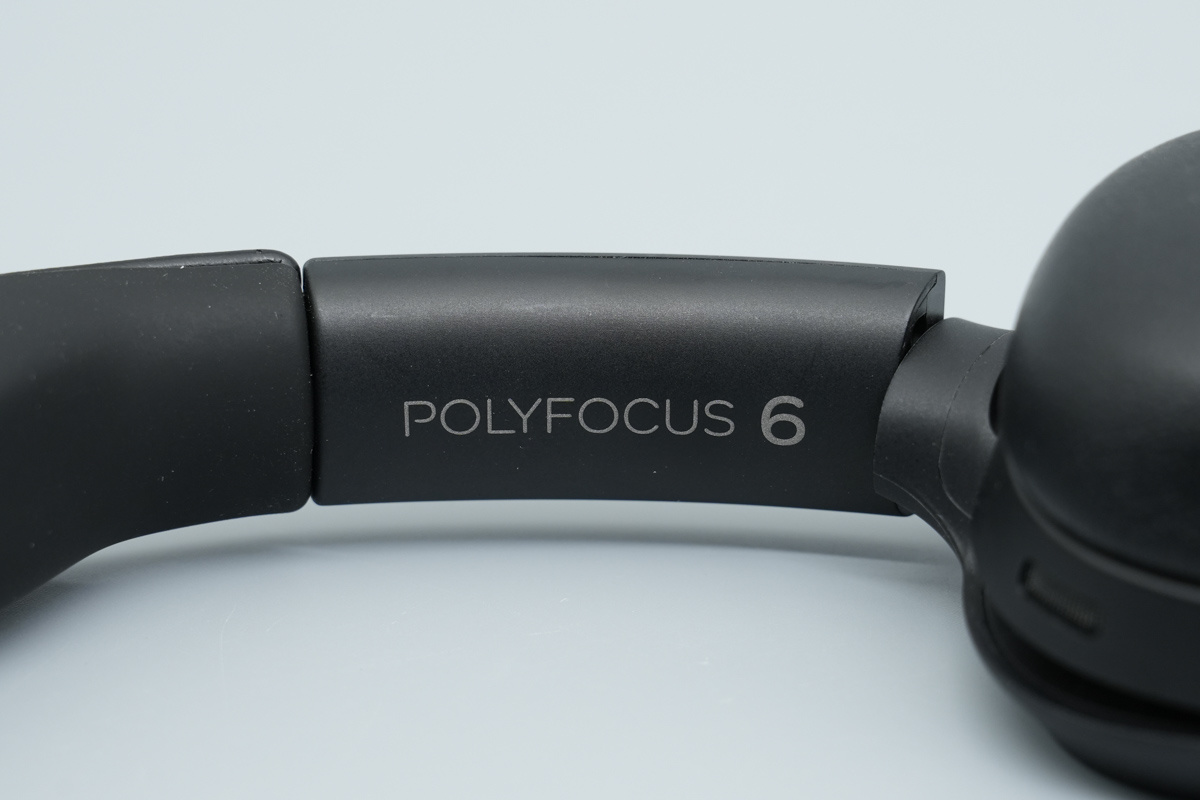
The product model FOCUS 6 is printed on the inside of the headband.
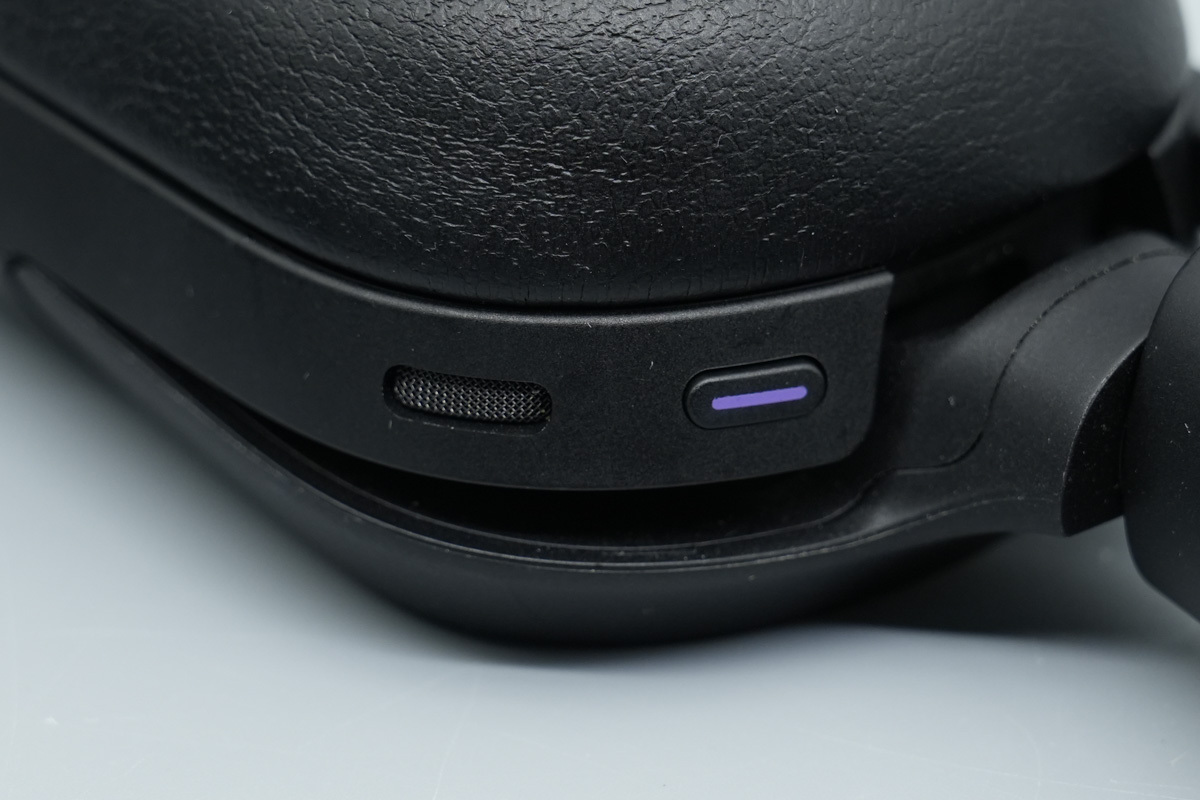
The noise-canceling microphone opening on the earcup side shows a fine metal dust-proof mesh inside, with a power button positioned nearby.
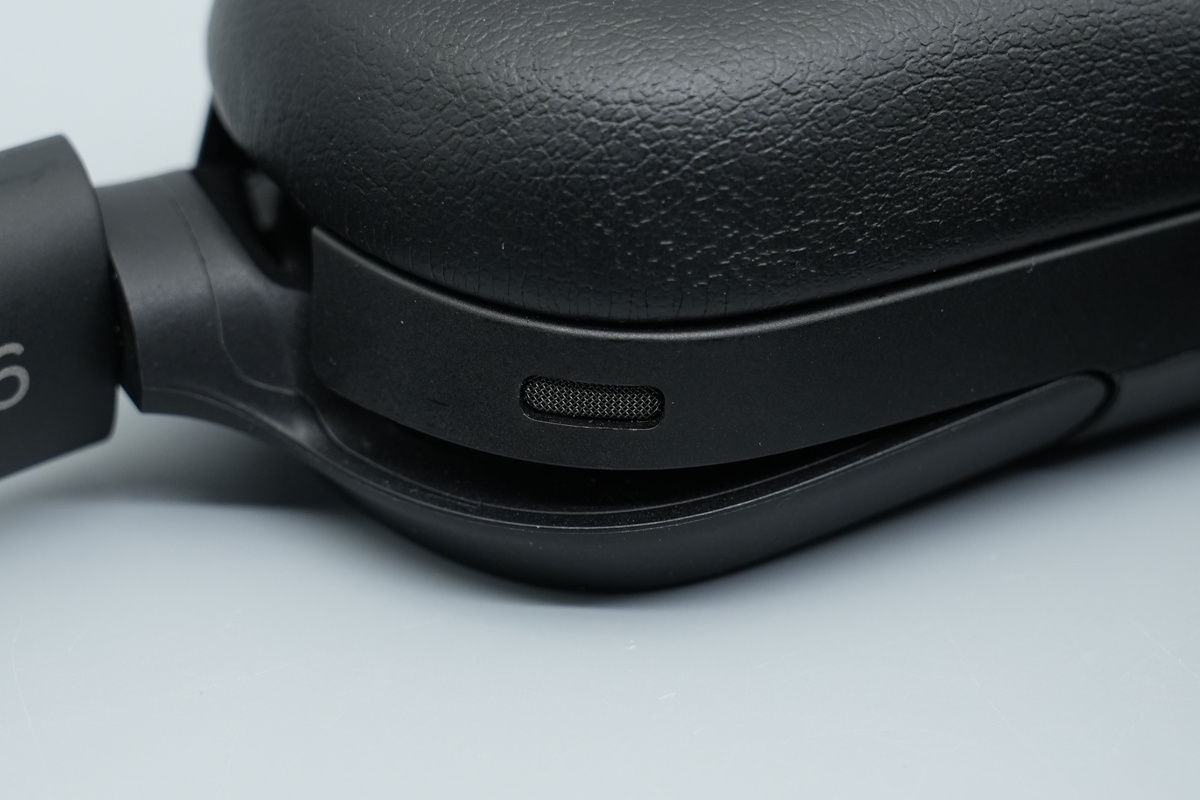
The other one also features a noise-canceling microphone opening with the same metal dust-proof mesh design.
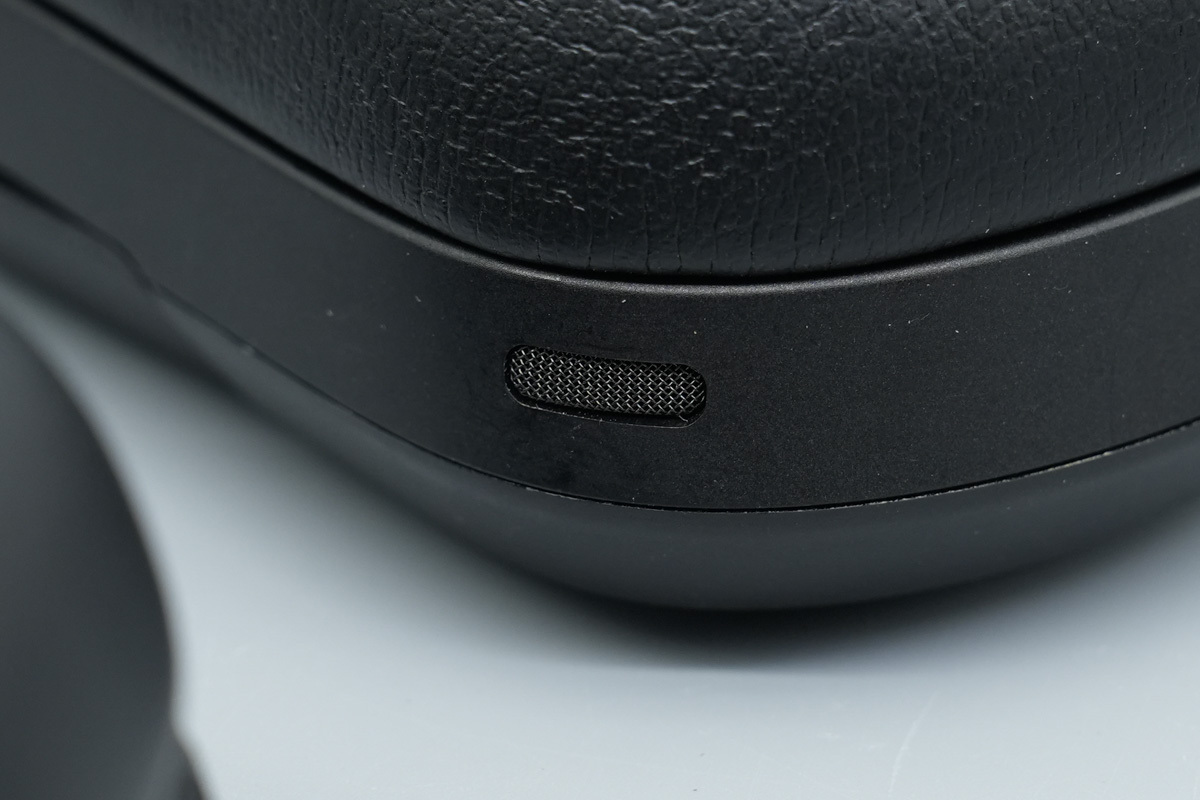
The other side of the headset also includes a noise-canceling microphone opening.
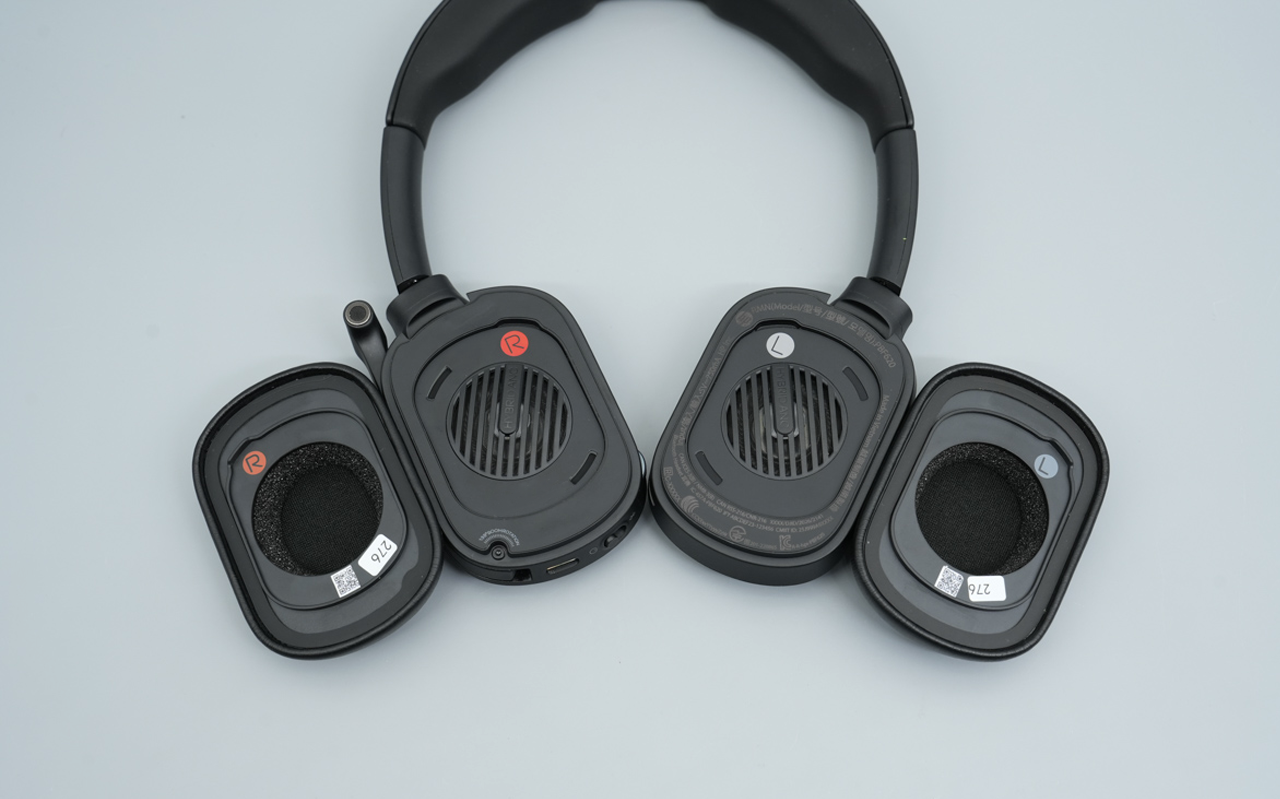
Removing the magnetic ear cushions reveals the internal acoustic chamber protective cover, with red “R” and white “L” markings for ear identification.
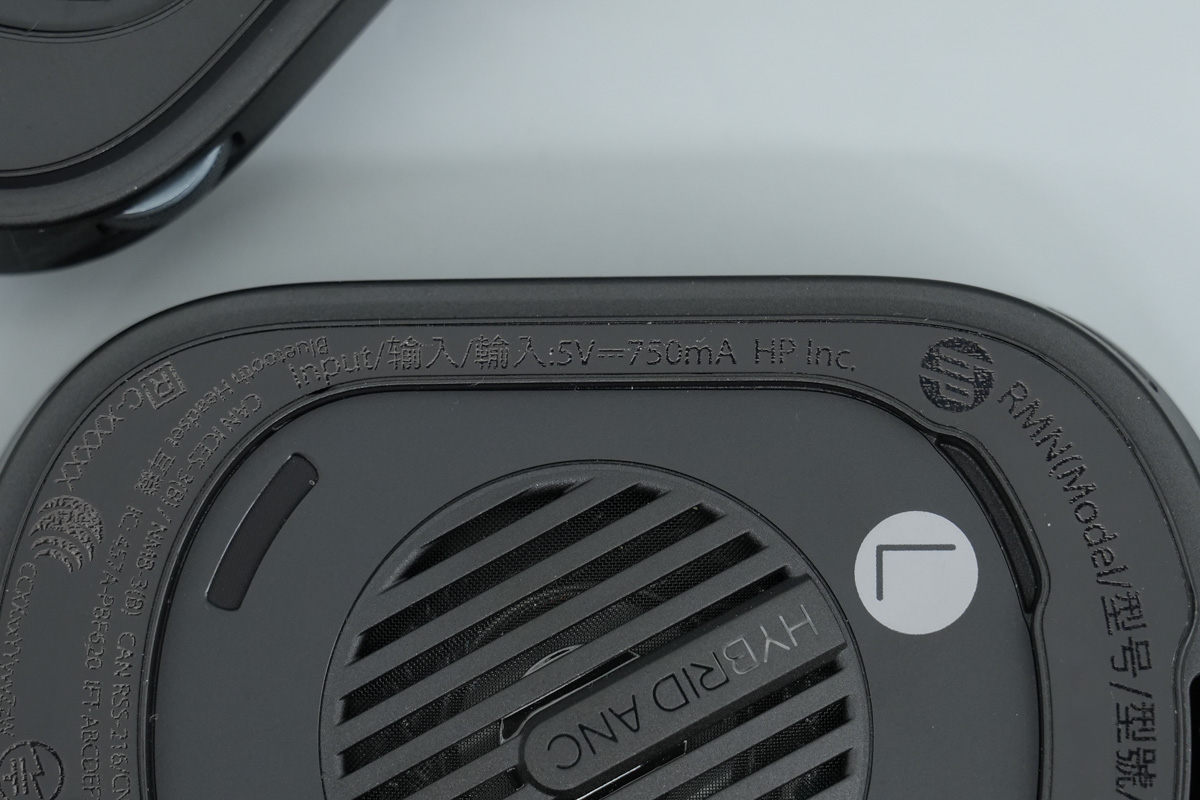
The product input spec is 5V 750mA and it supports HYBRID ANC hybrid active noise cancellation.
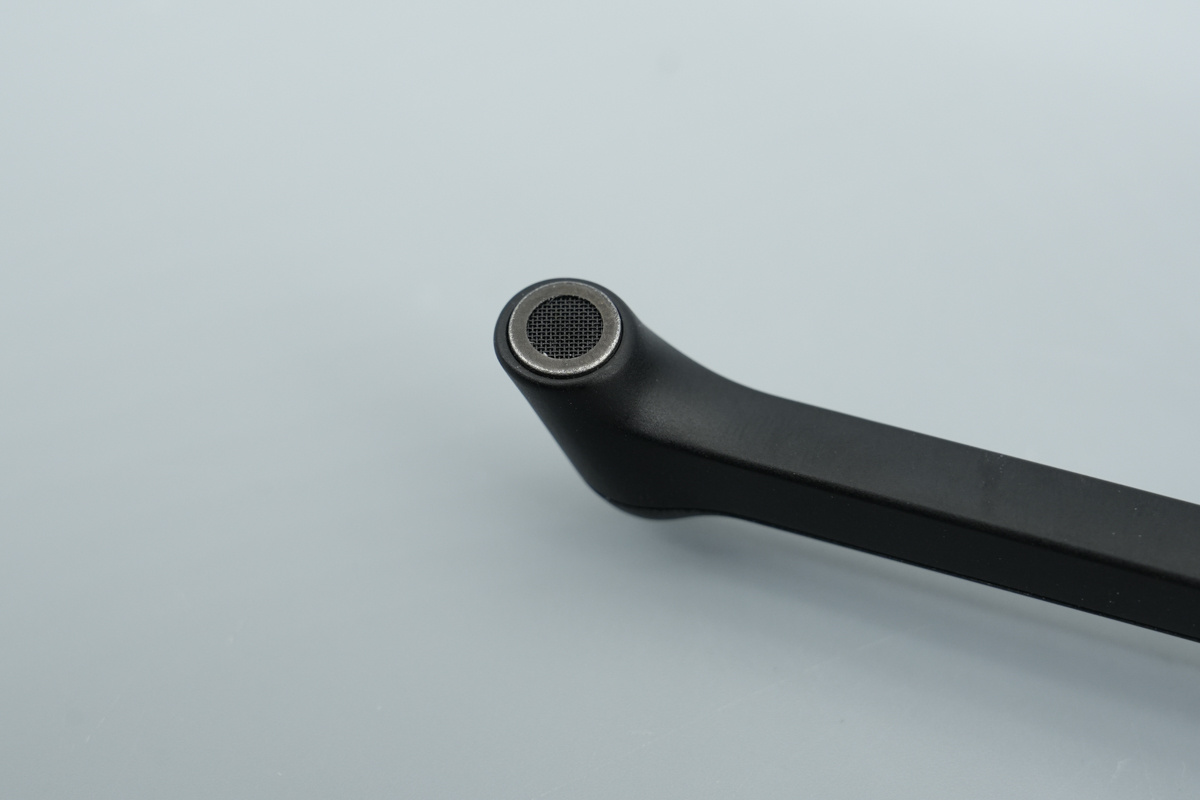
After unfolding the microphone arm, the front end features a metal mesh pickup opening with a built-in high-sensitivity voice microphone.
Headset Stand Overview
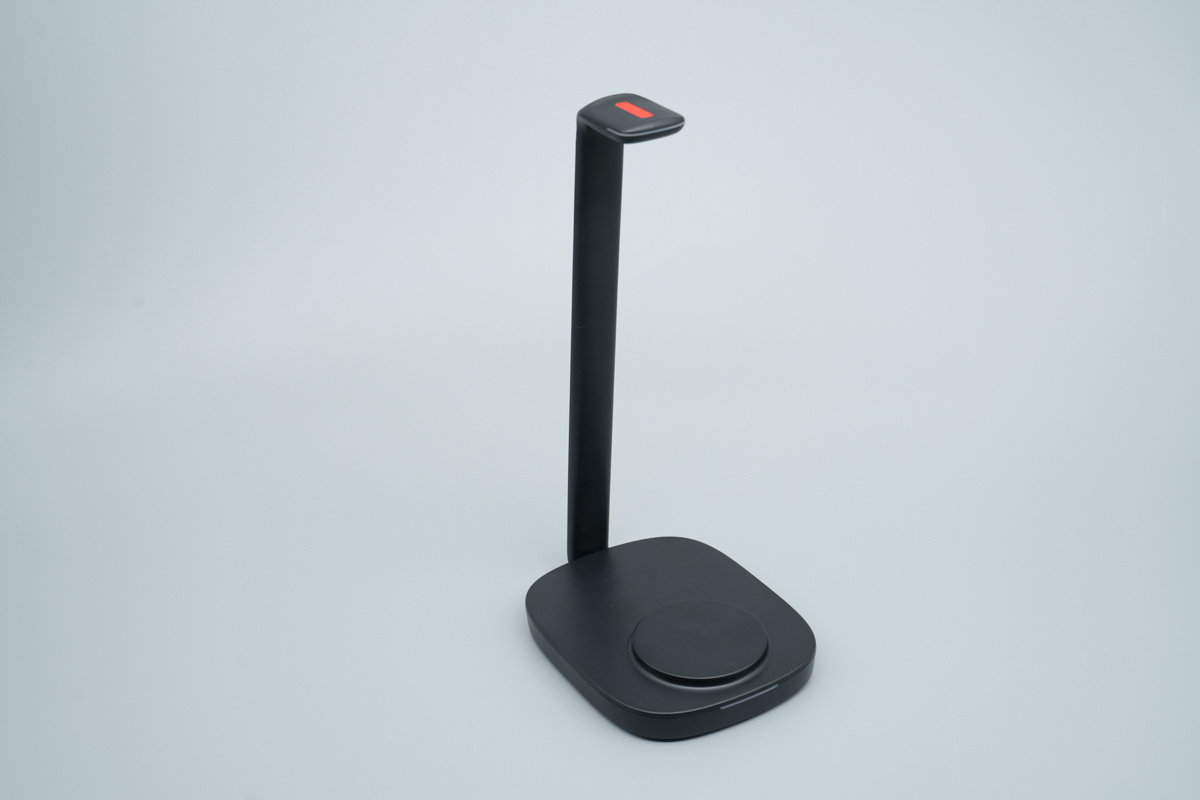
The dedicated headset stand features a minimalist design, with a hanging arm at the top and a raised Qi2 wireless charging area in the center of the base.
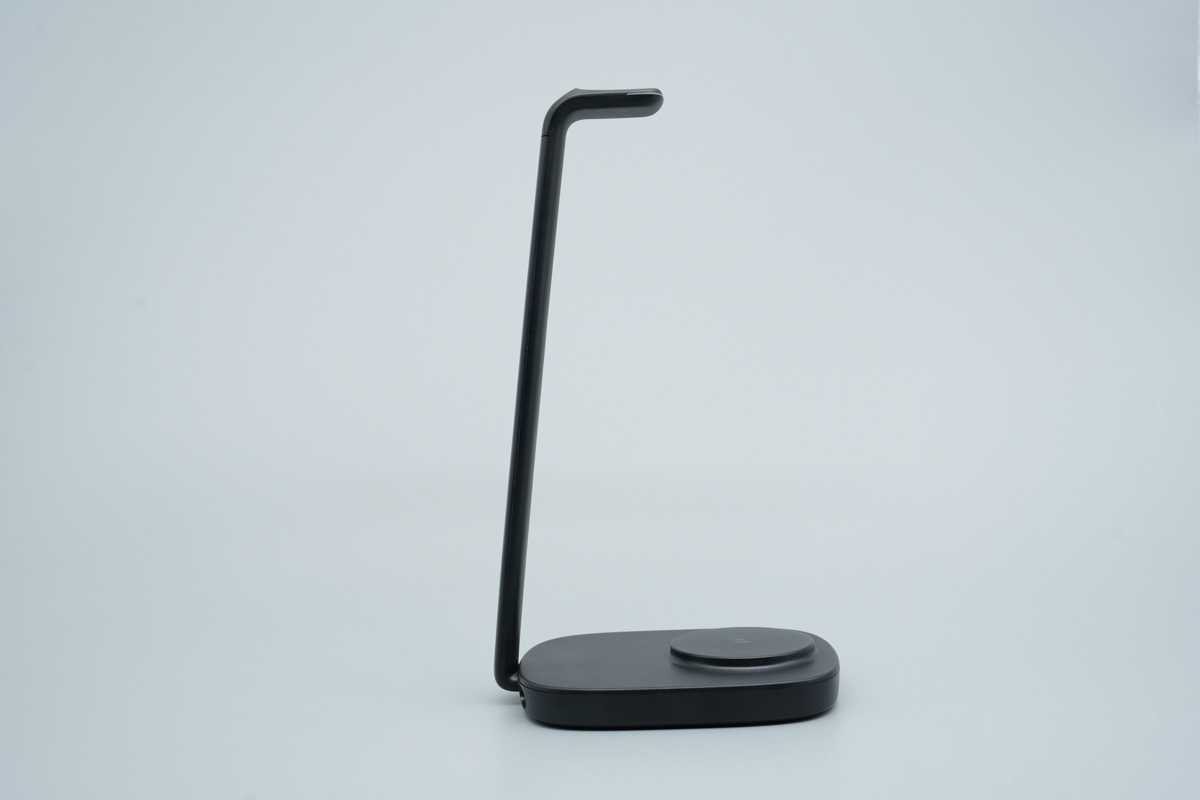
The stand leans slightly backward, while its thick, weighted base keeps the headset stable when suspended.
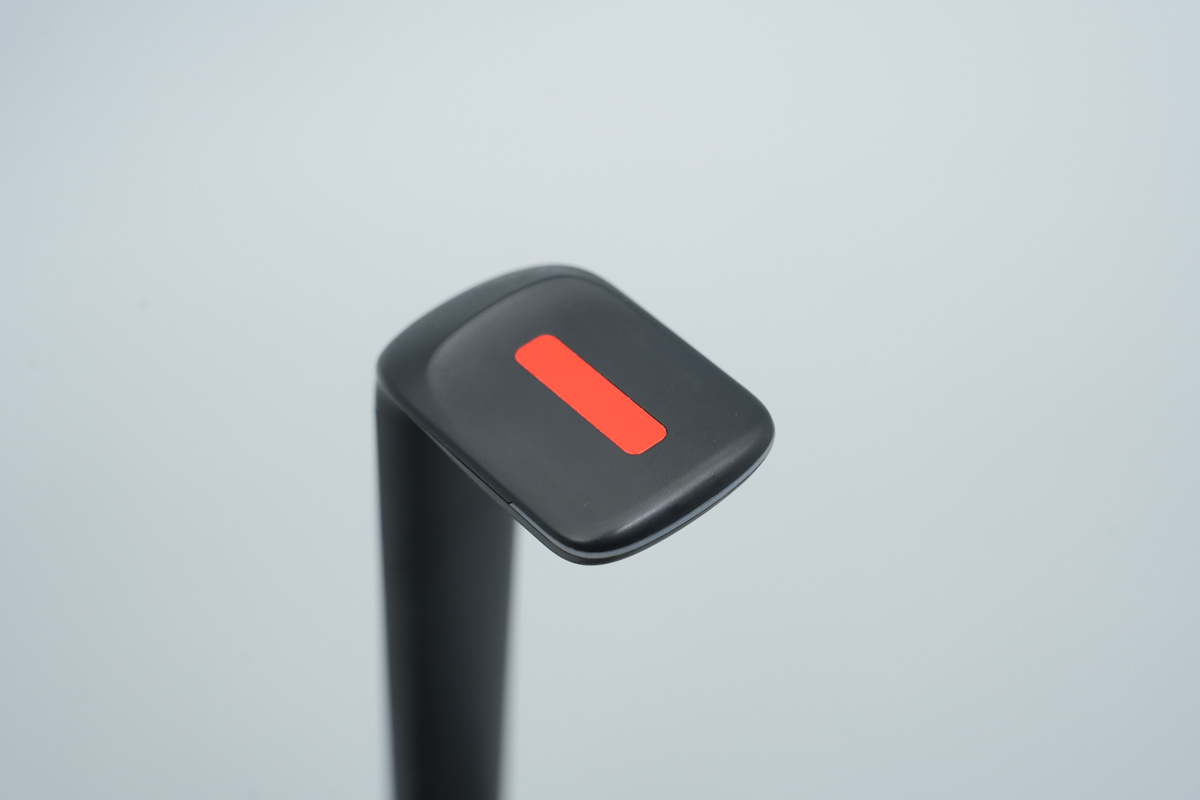
A red stripe on the top hanging area marks the wireless charging area.
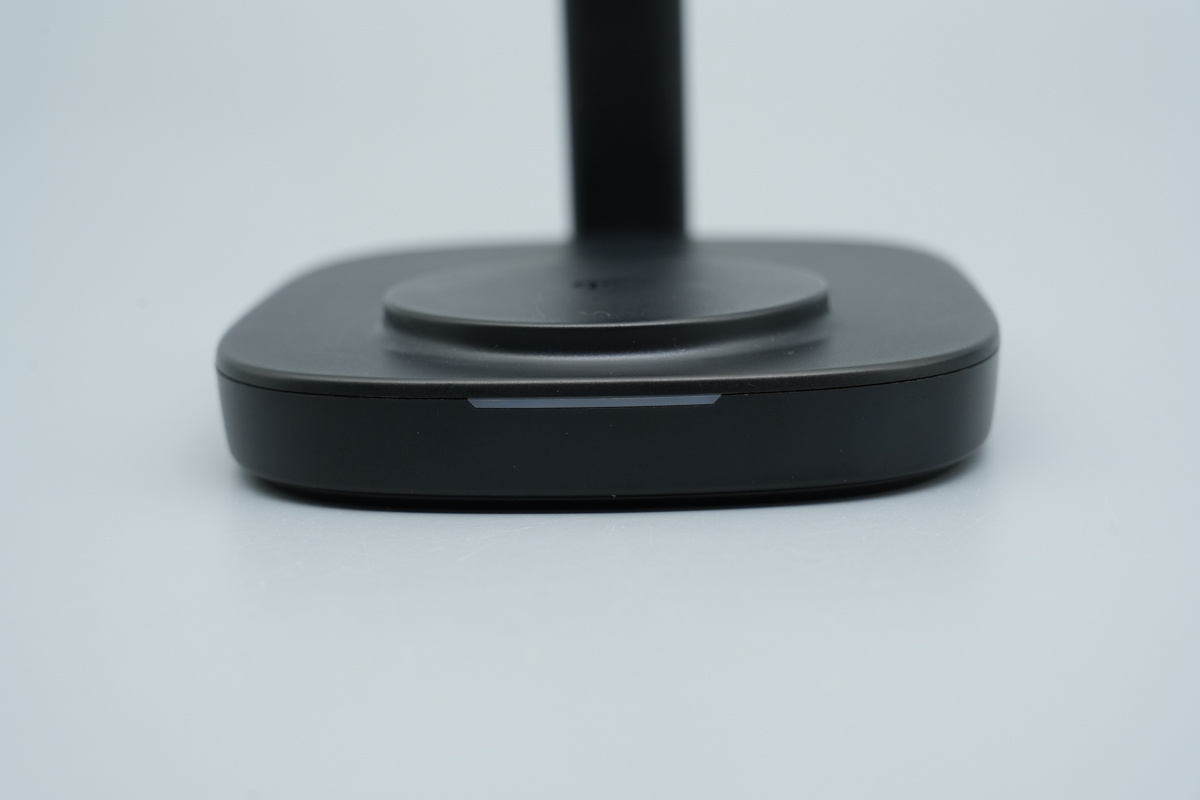
A long LED indicator sits along the lower front edge of the base to show the charging status.
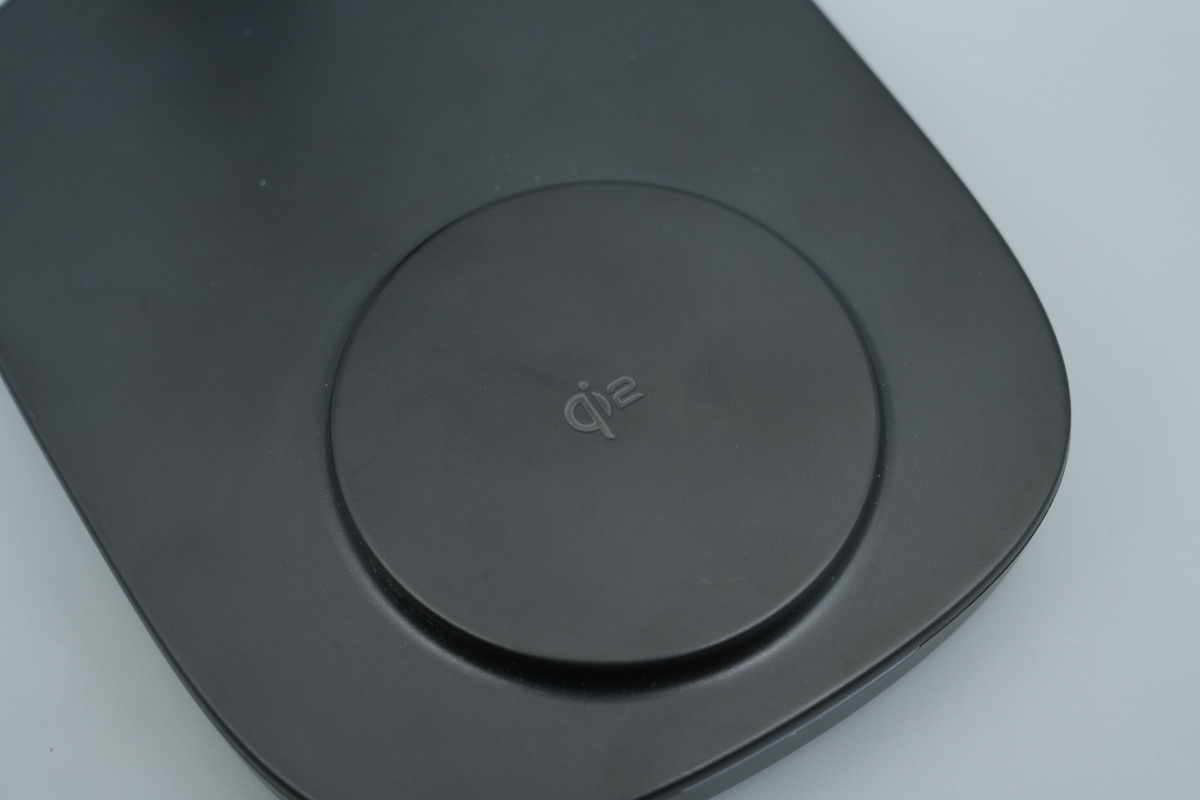
The Qi2 magnetic wireless charging pad on the front of the base.
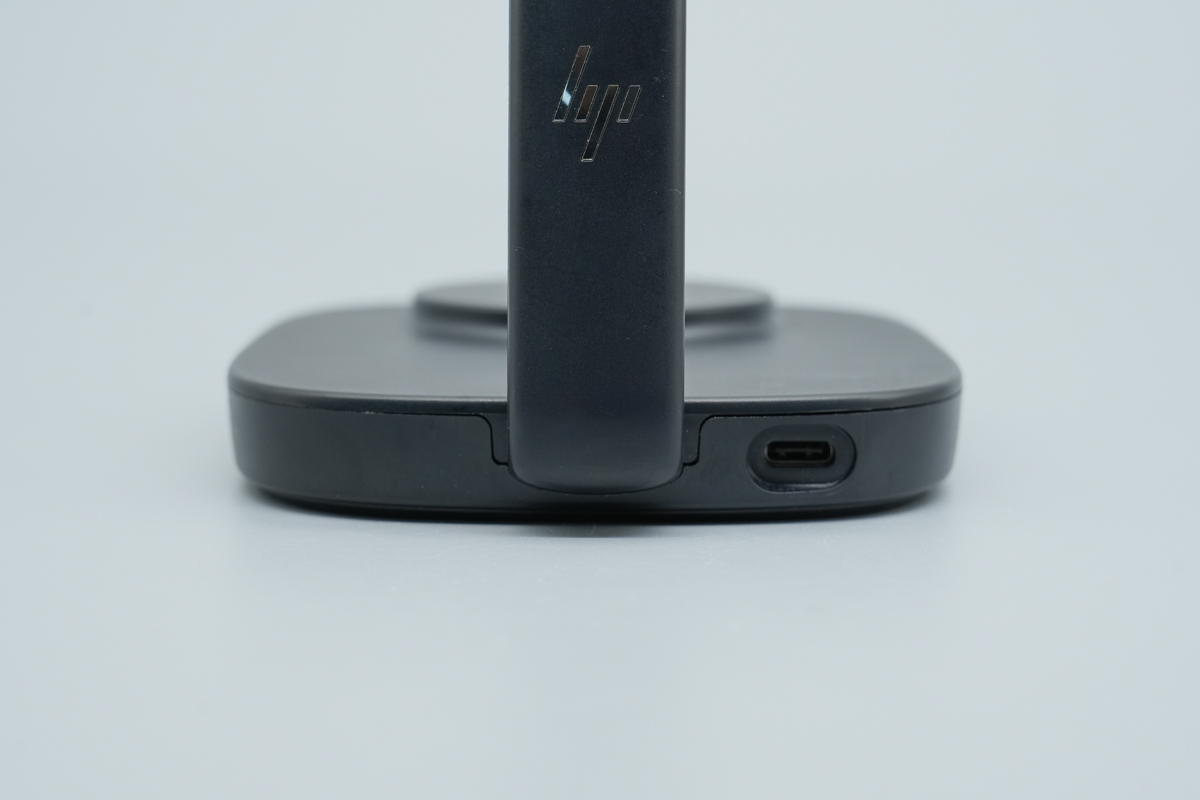
The HP logo is printed near the bottom of the rear support, with a USB-C input port located on the rear right side of the base.
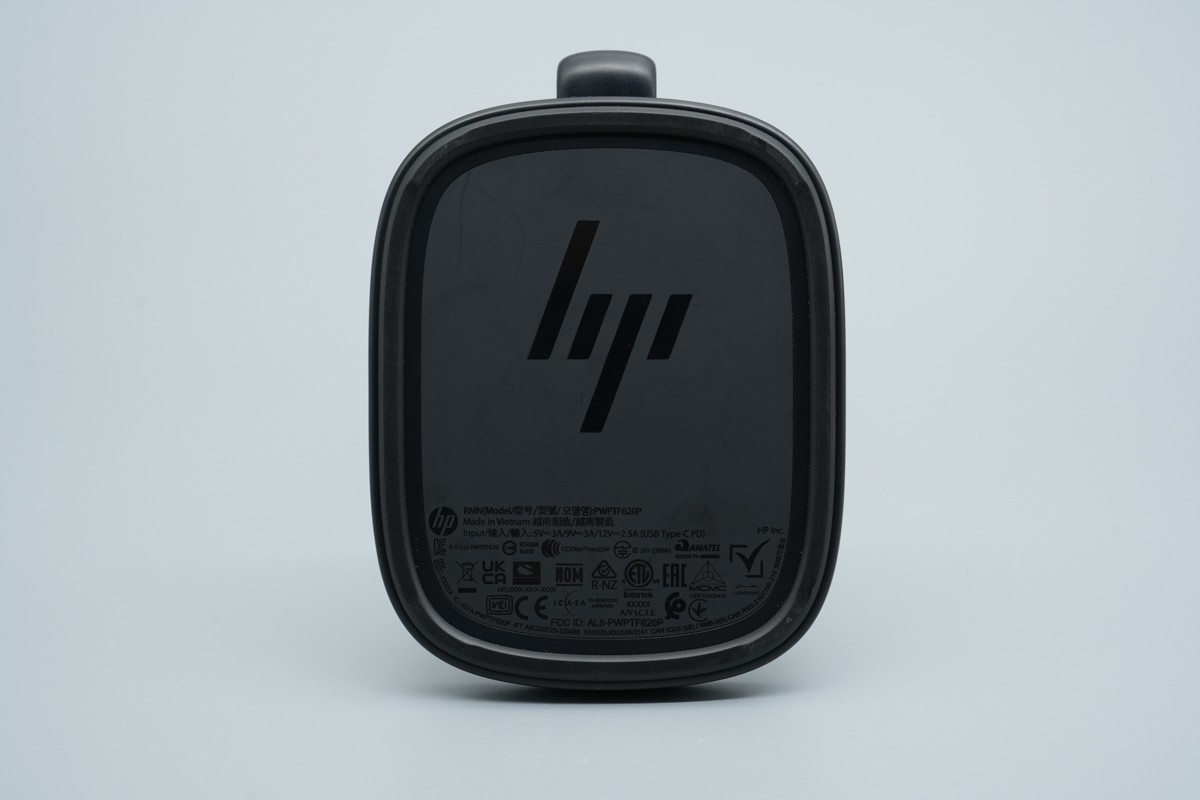
A wide ring-shaped anti-slip silicone pad surrounds the bottom of the stand.
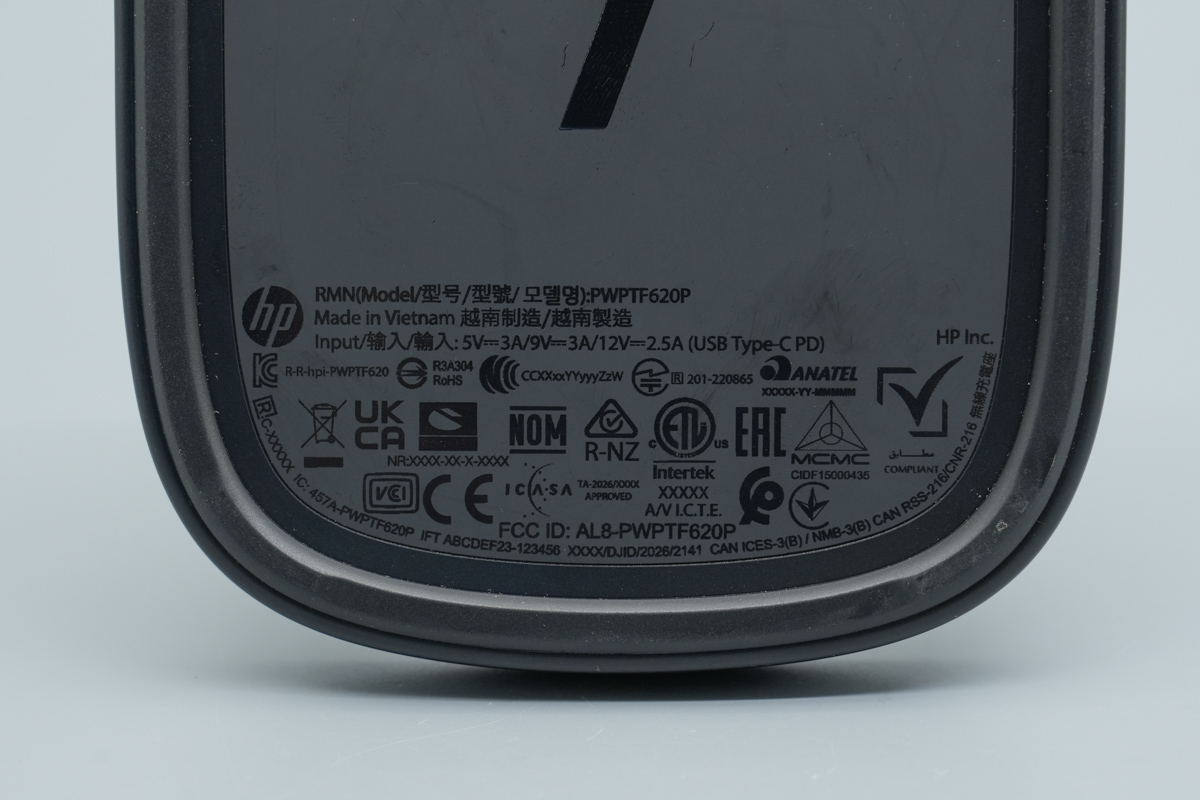
The nameplate on the bottom of the base:
Product Model: PWPTF620P
Input: 5V 3A / 9V 3A / 12V 2.5A (USB Type-C PD)
The product has passed CE, UKCA, and other certifications.
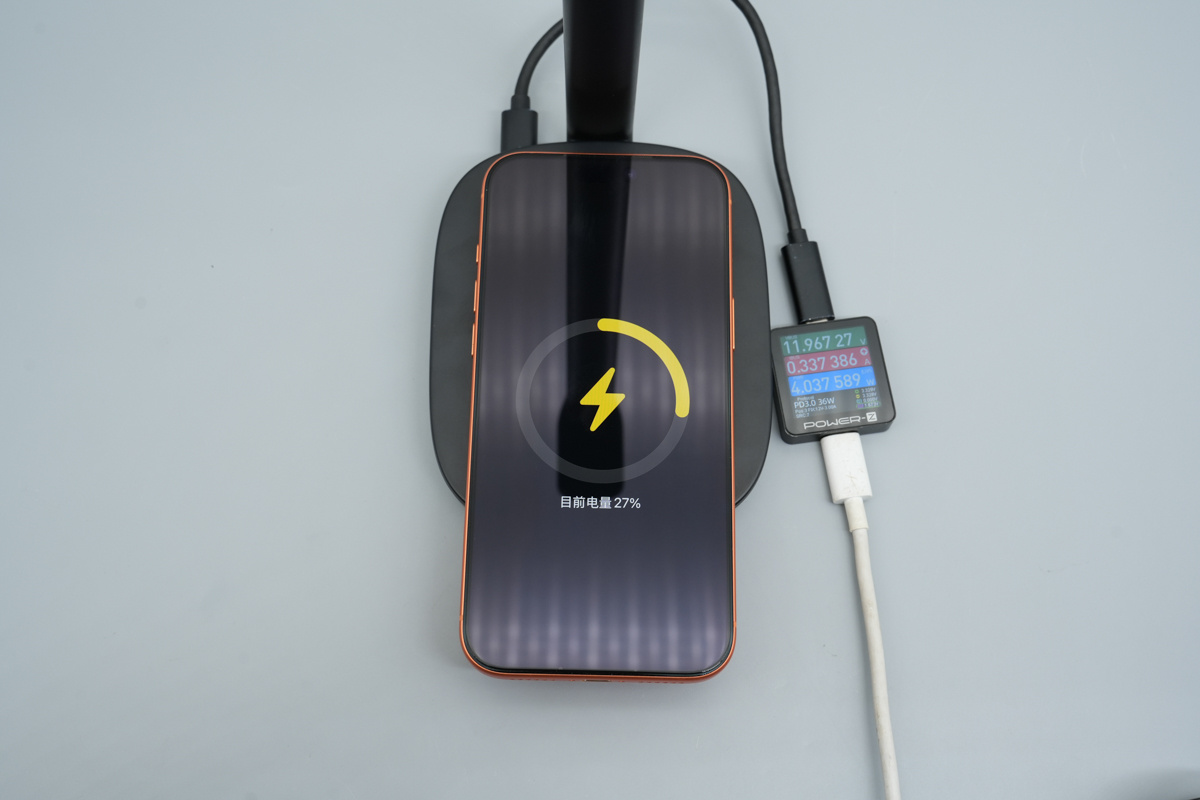
Attaching an iPhone 17 Pro Max to the base triggers the Qi2 wireless charging animation.
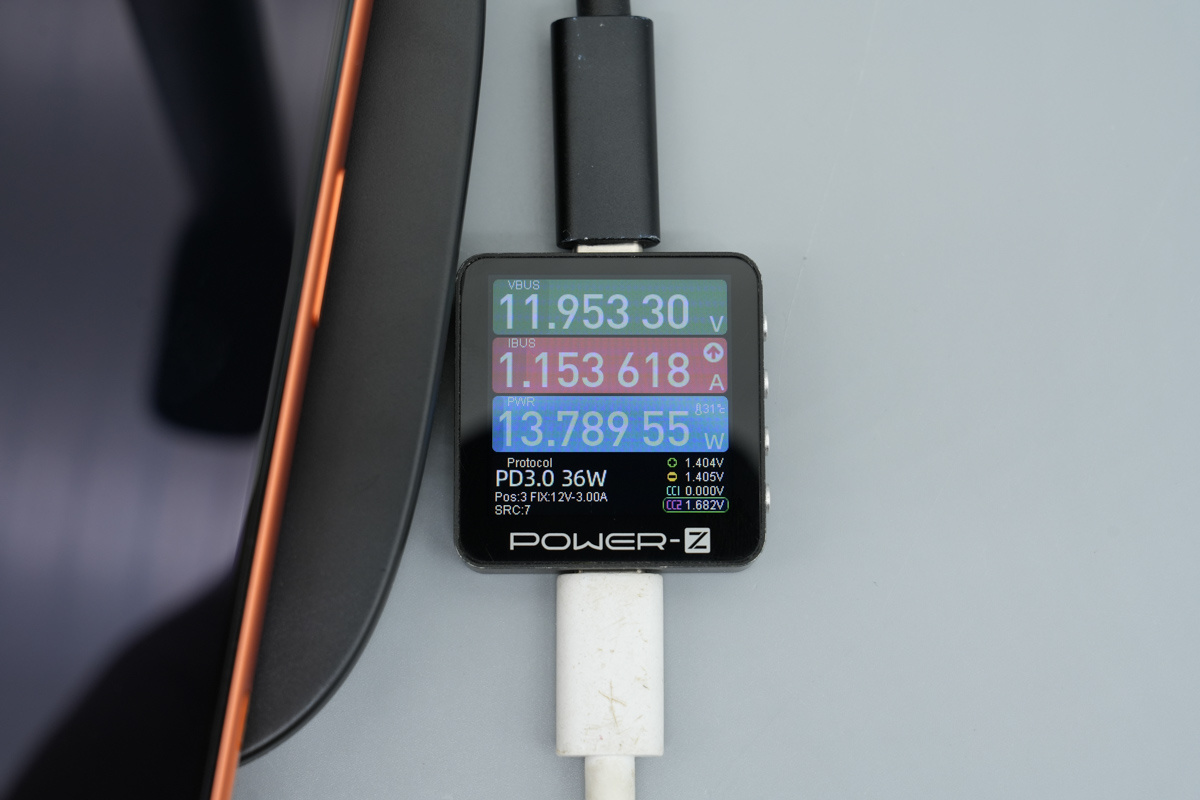
ChargerLAB POWER-Z KM003C measures the input power, showing that the voltage is 11.953V, the current is 1.153A, and the actual input power is approximately 13.79W.
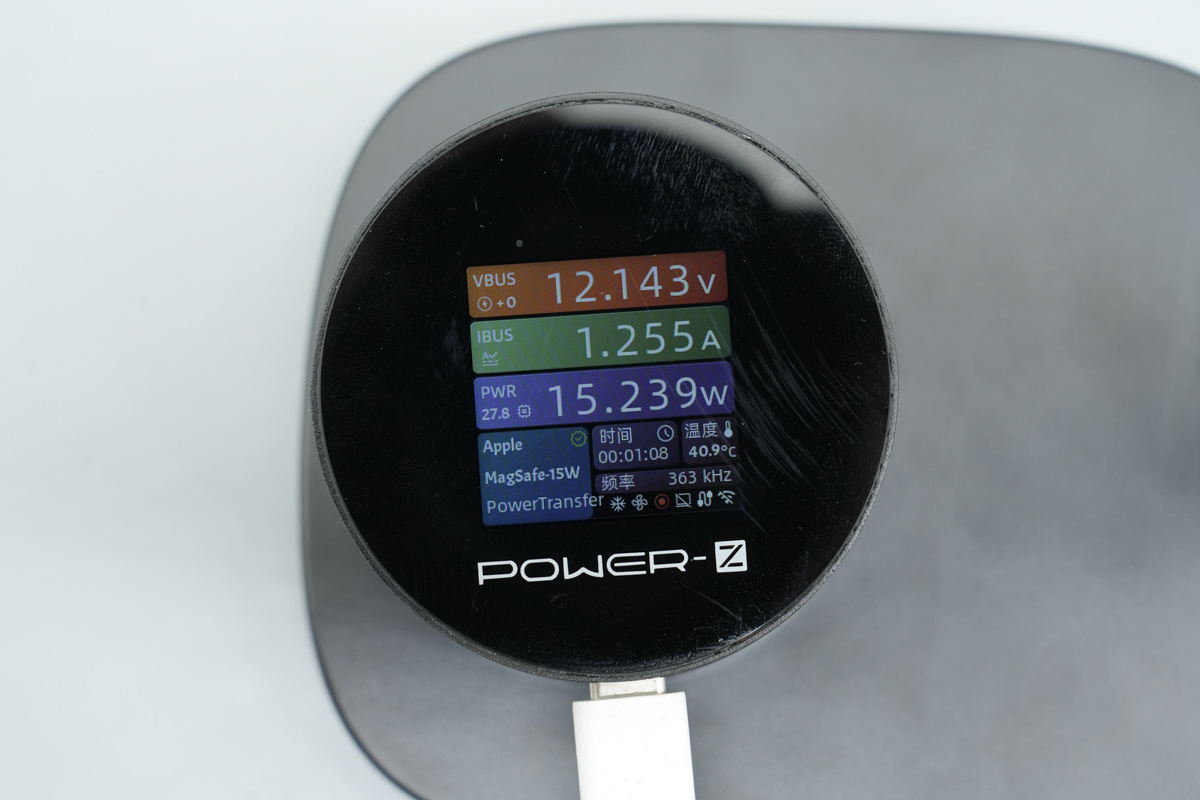
ChargerLAB POWER-Z Q25 confirms that the product supports Qi2 wireless charging.
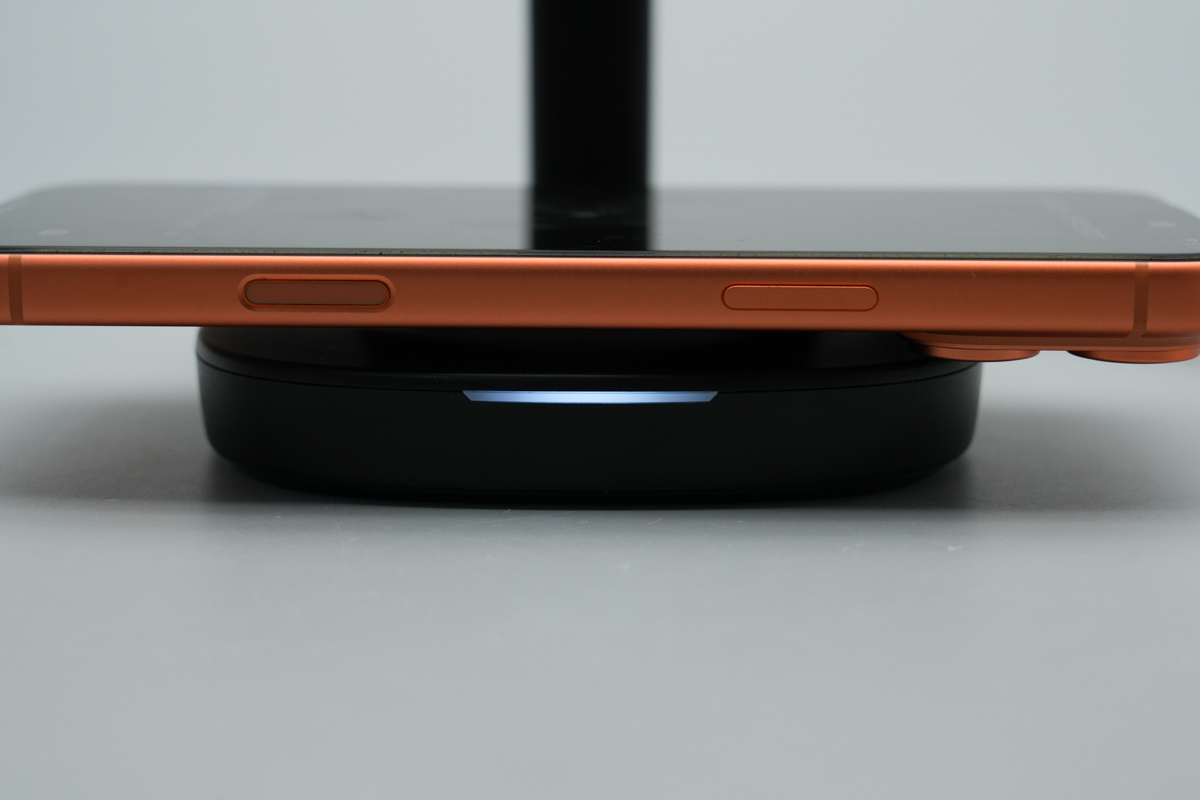
During wireless charging, the indicator on the front of the base lights up white.
Headset Dimensions and Weight
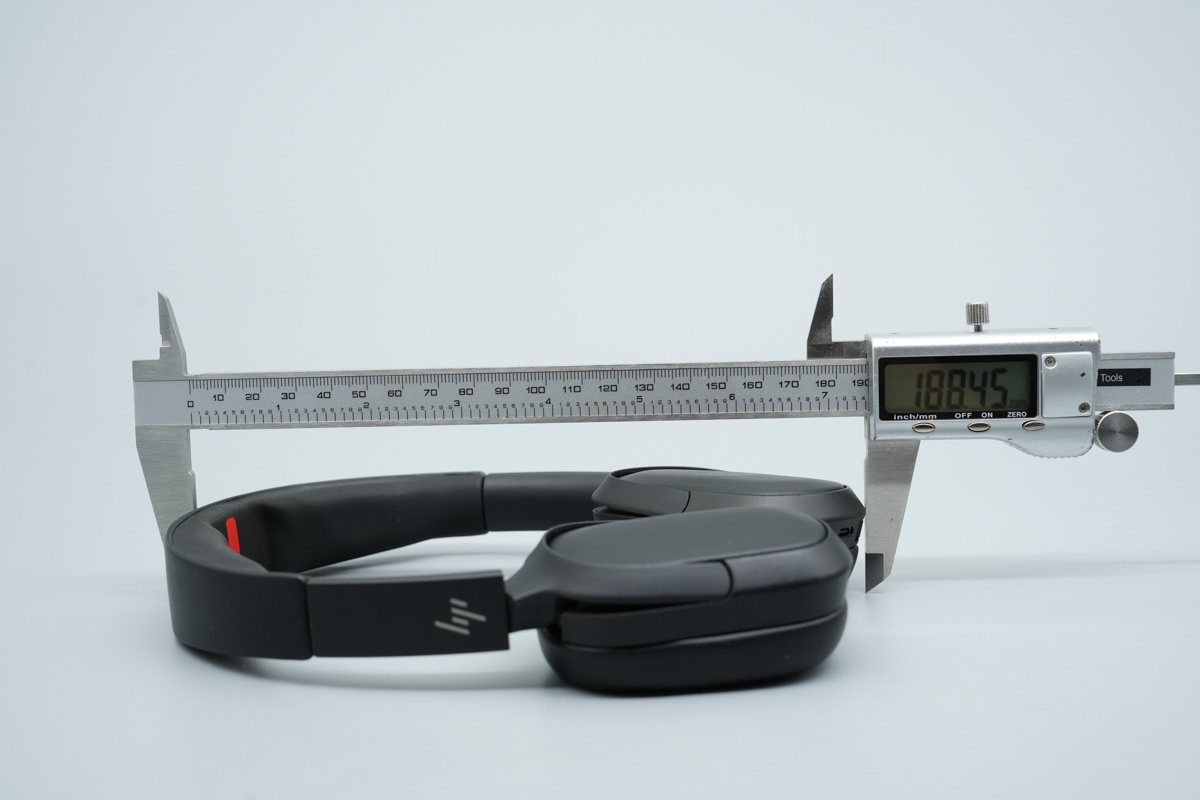
The overall height of the headset is about 188.45mm (7.419 inches).
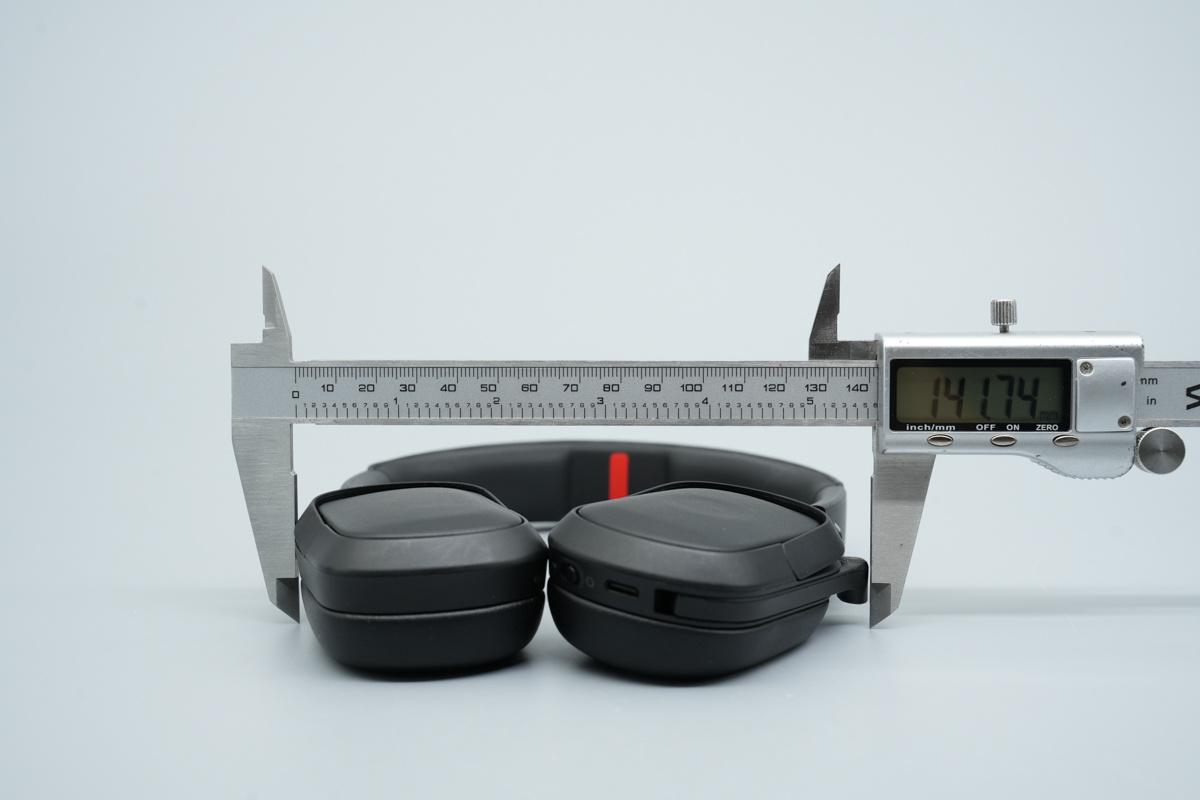
The width of the headset is about 141.74mm (5.580 inches).
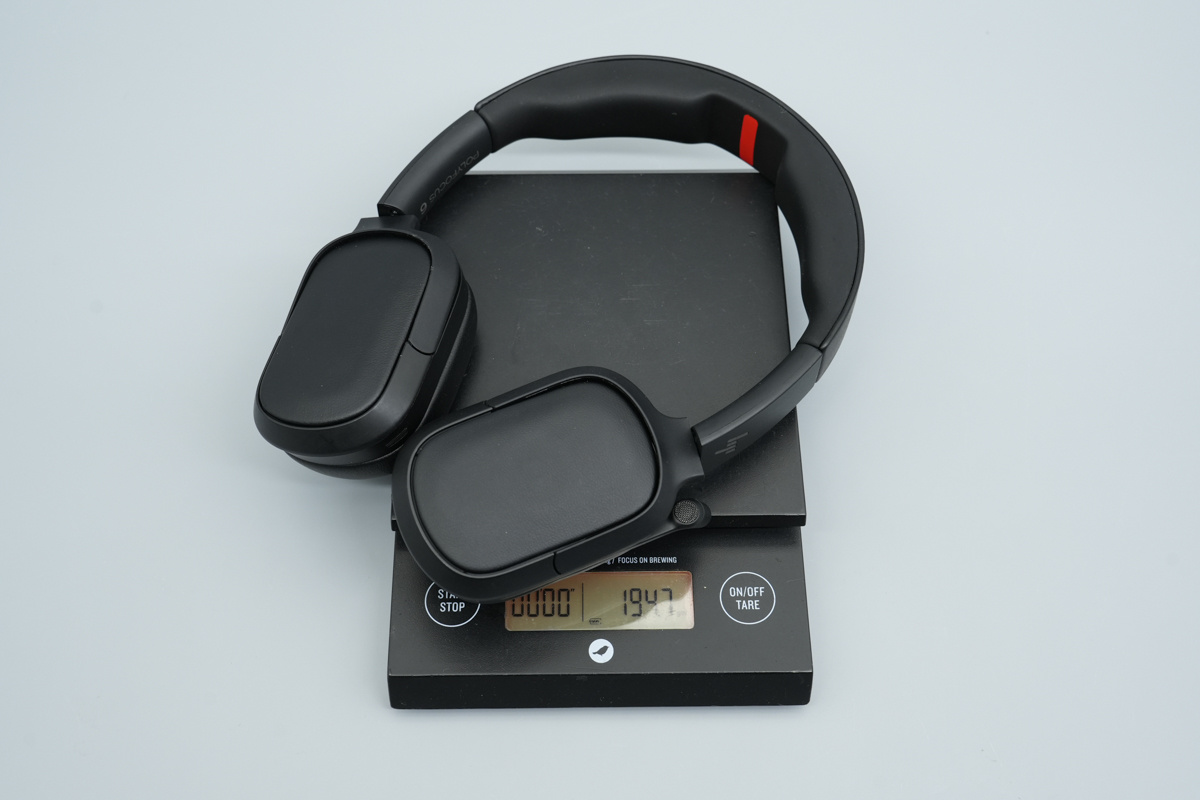
The weight is about 194.7g (6.868 oz).
Stand Dimensions and Weight
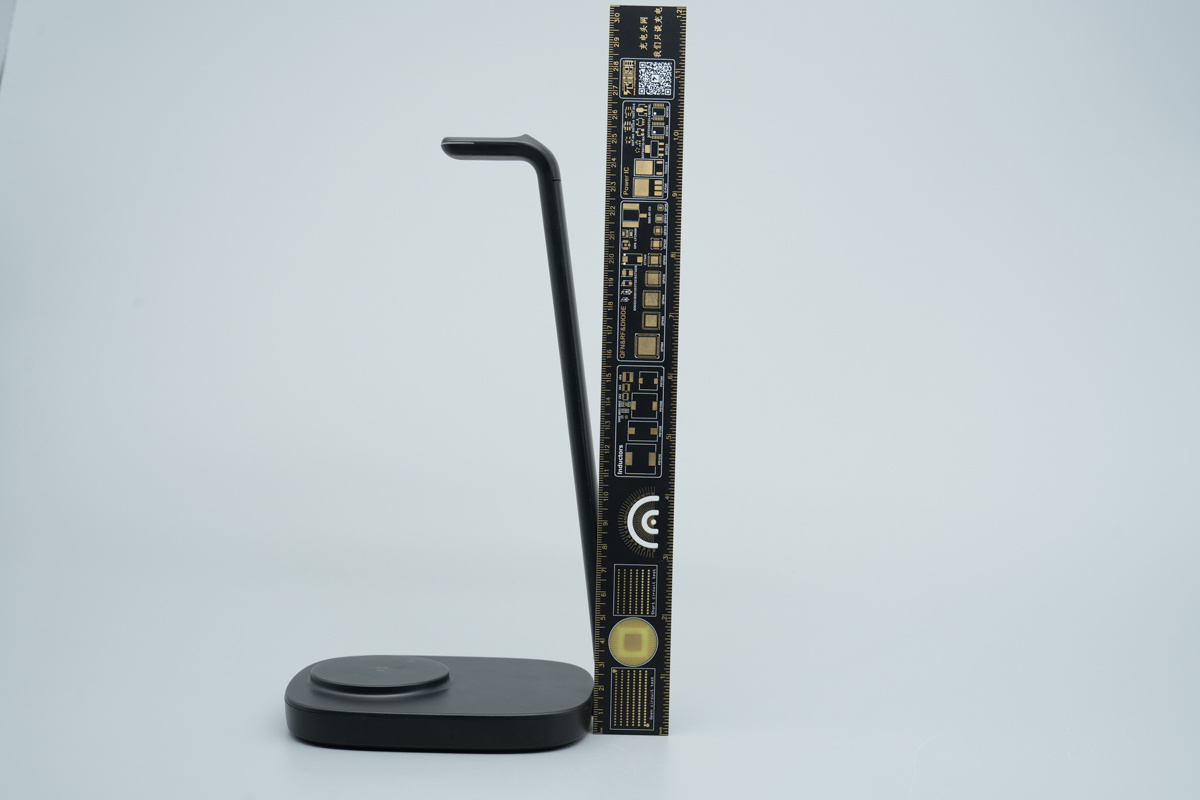
The overall height of the headset stand is about 25.5cm (10.039 inches).
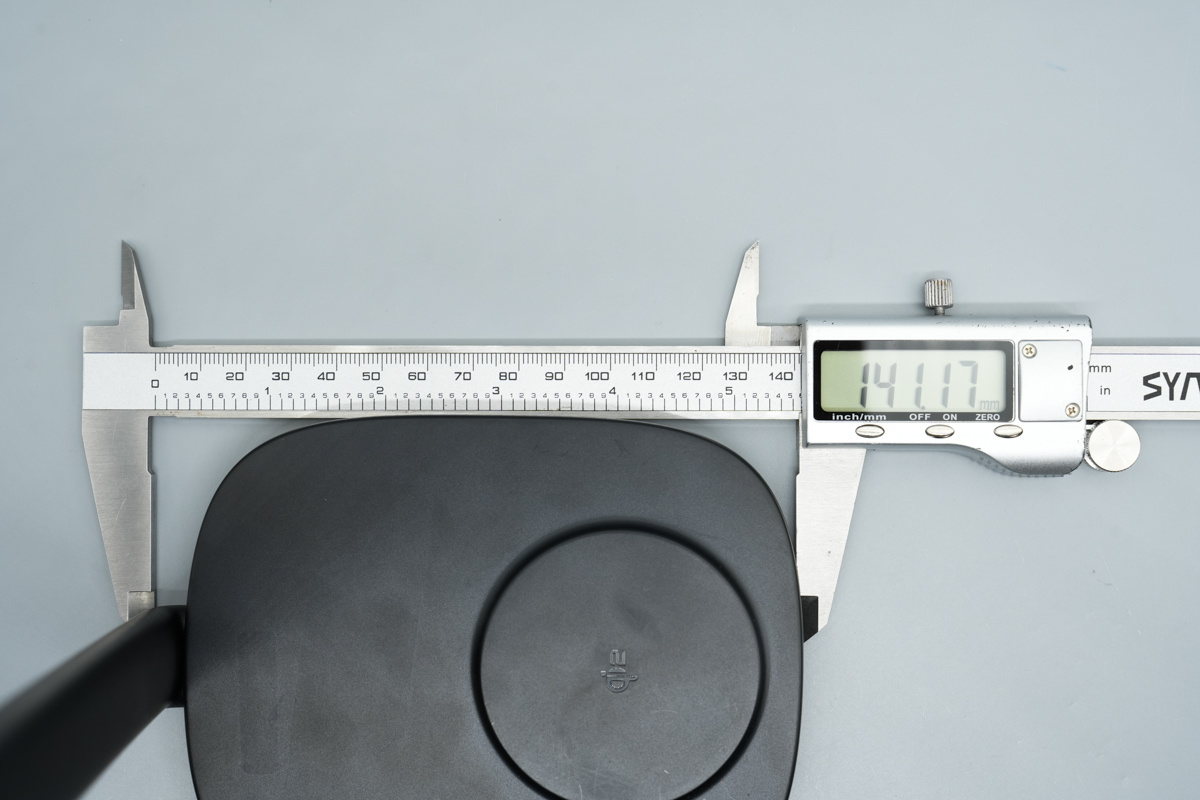
The length of the base is about 141.17mm (5.558 inches).
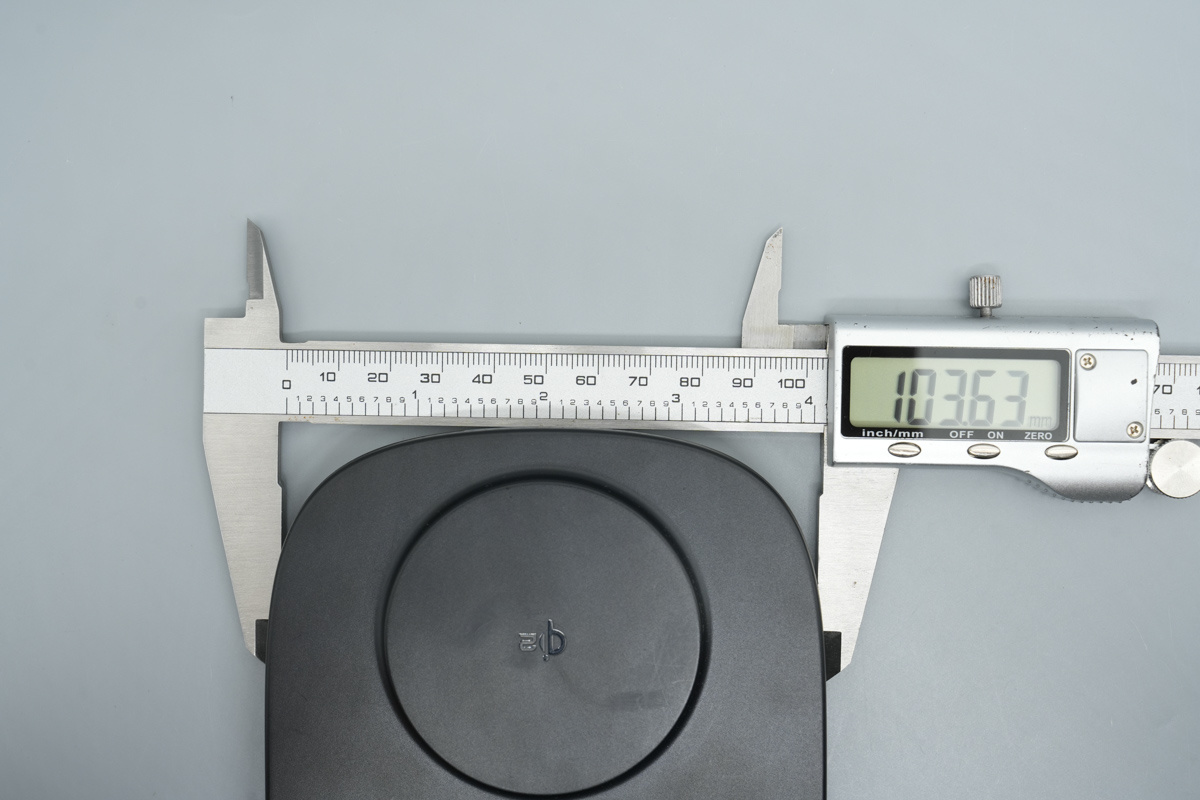
The width of the base is about 103.63mm (4.080 inches).
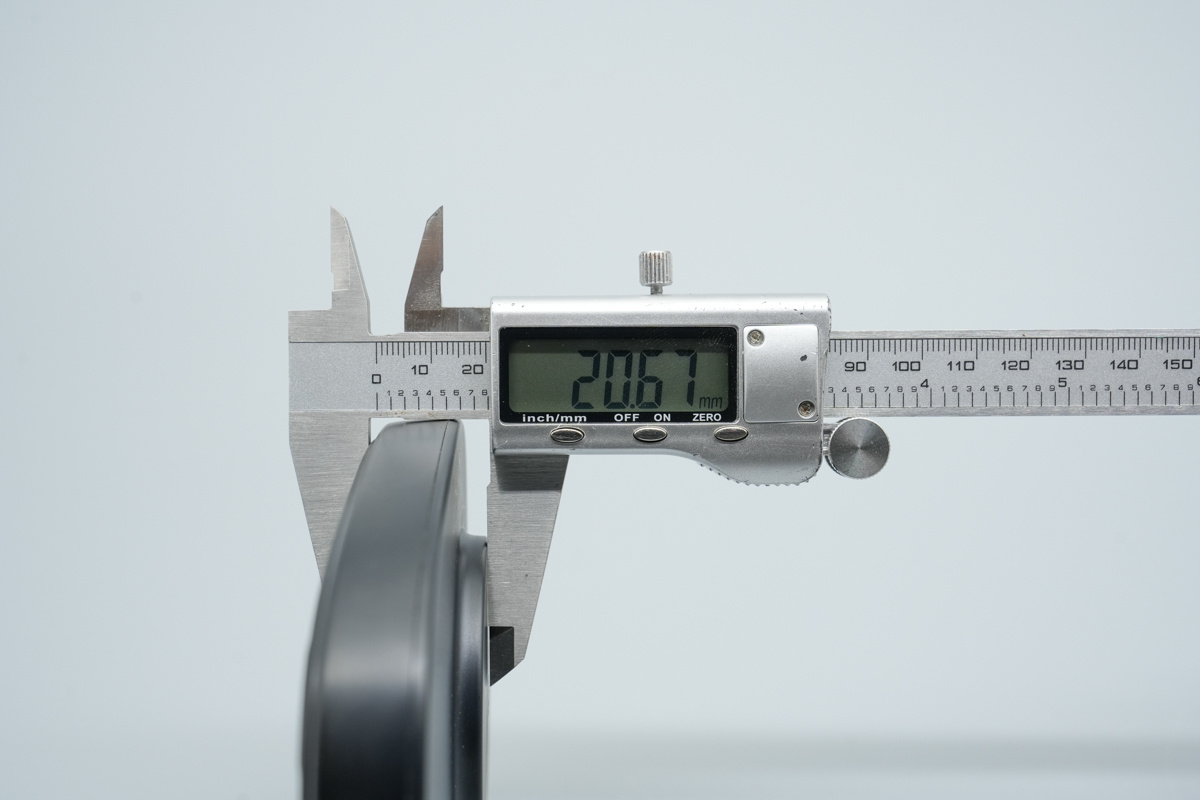
The thickness of the base is about 20.67mm (0.814 inches).
With the exterior covered, we’ll now move on to the teardown.
Teardown of the headset
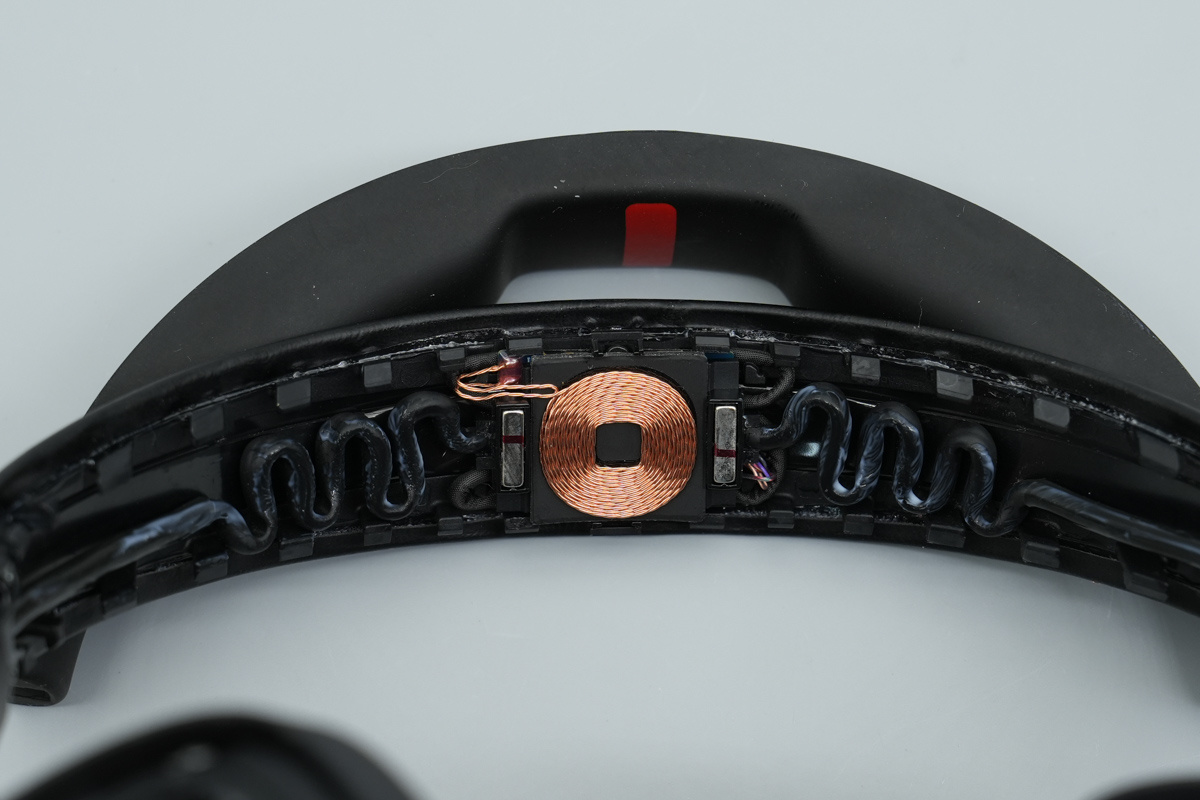
After removing the outer cushioning rubber from the headband, a circular wireless charging receiver coil can be seen embedded in the center for wireless charging with the stand.
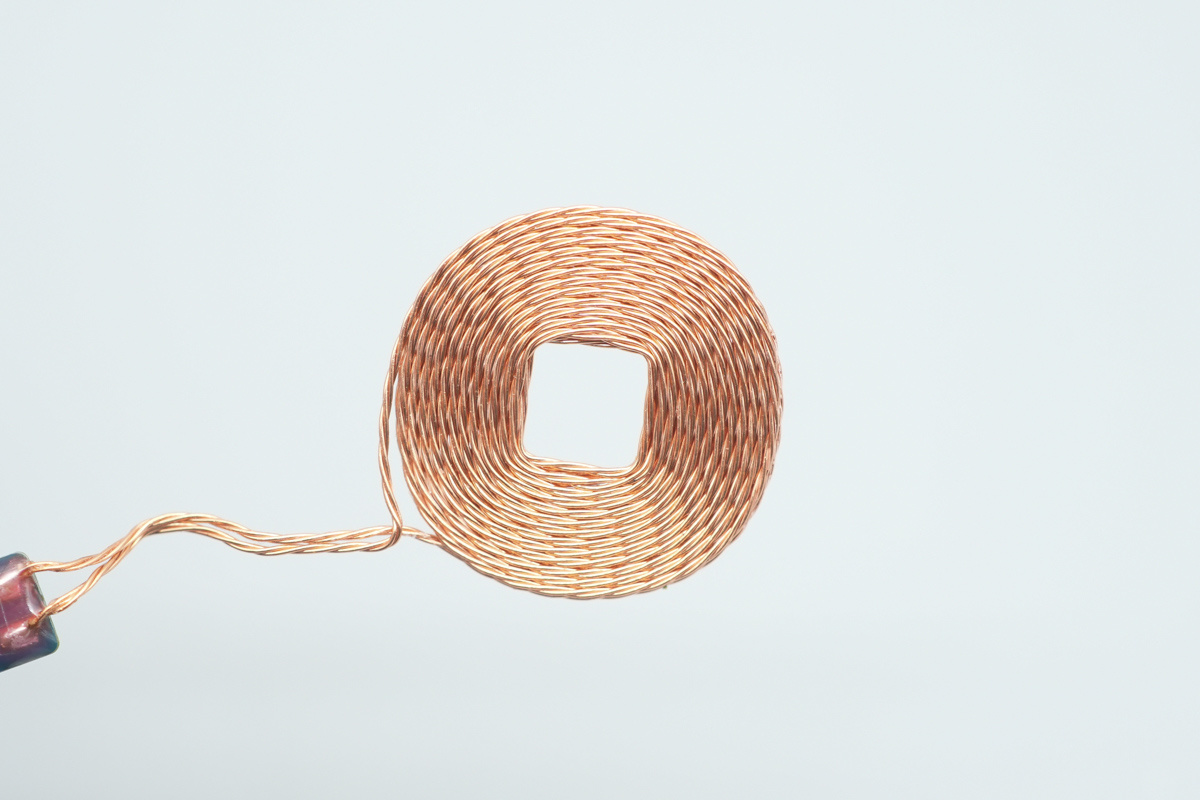
The wireless charging receiver coil in the headband, which is tightly wound with Litz wire.
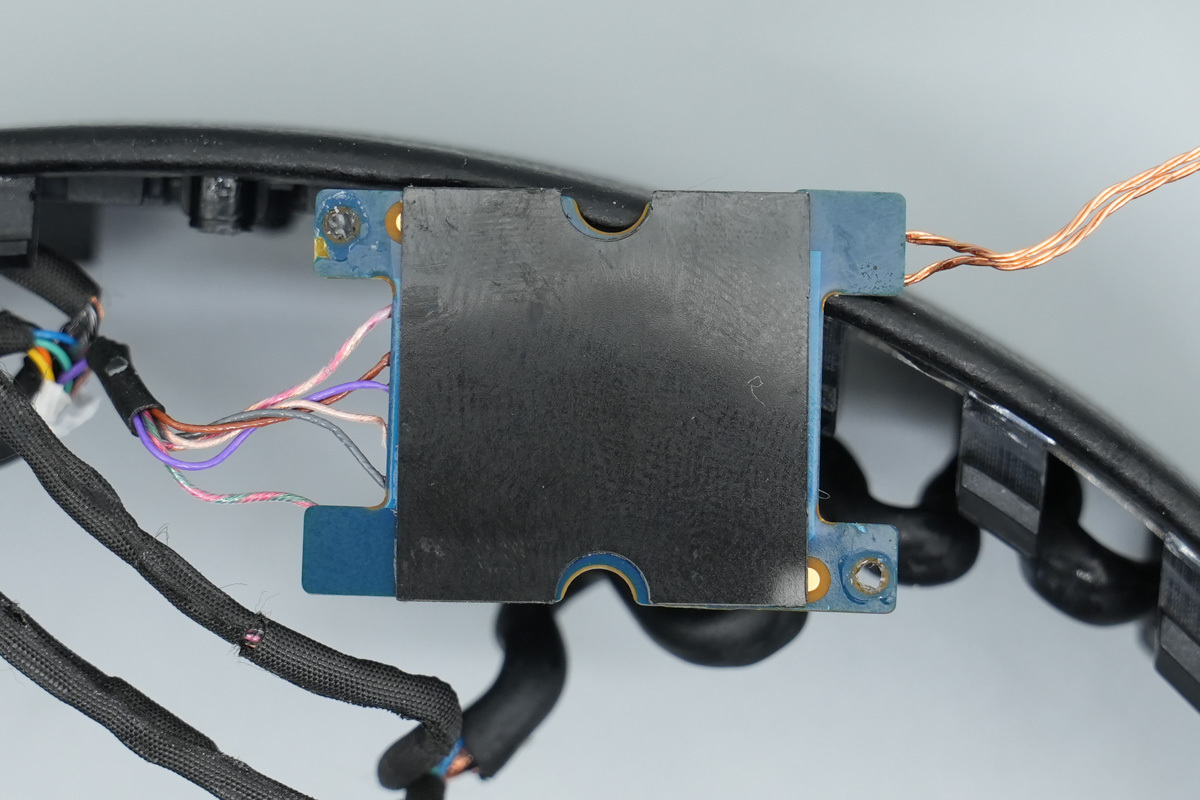
After removing the wireless charging receiver PCB, a magnetic shielding sheet can be seen on the back.
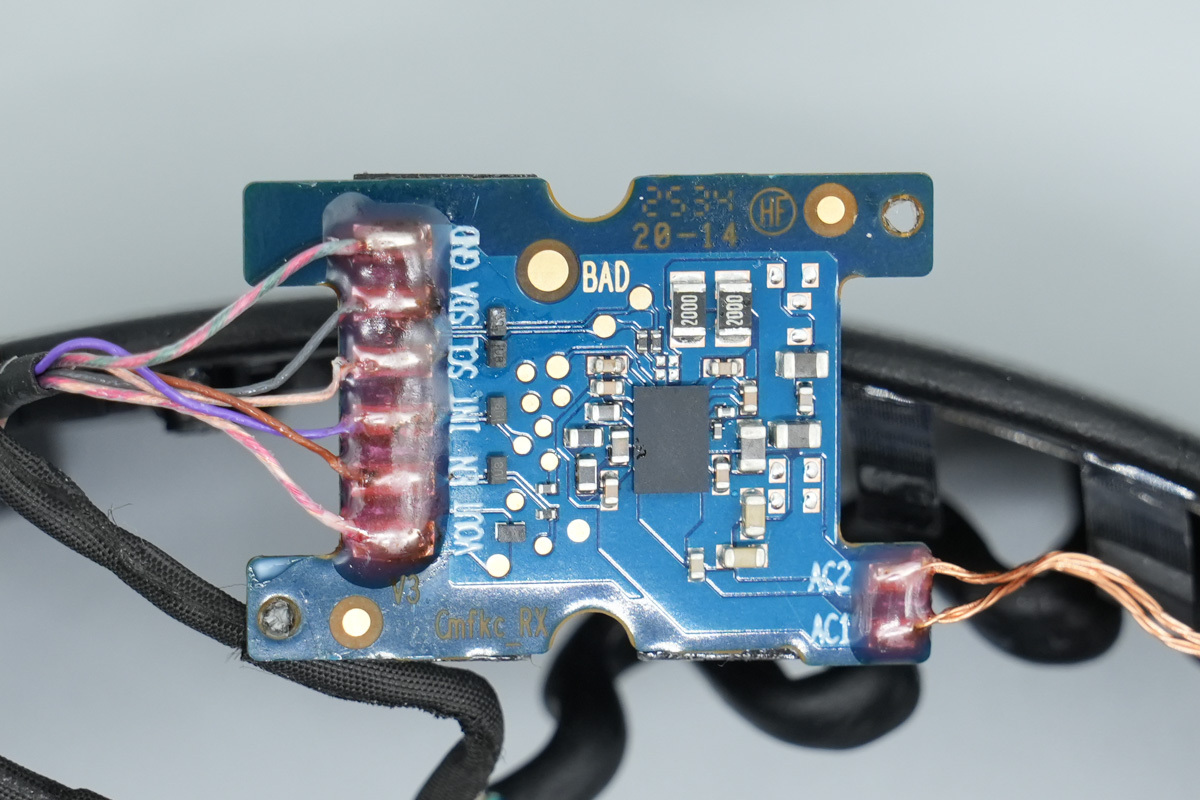
The front of the wireless charging receiver PCB houses the wireless charging receiver IC.
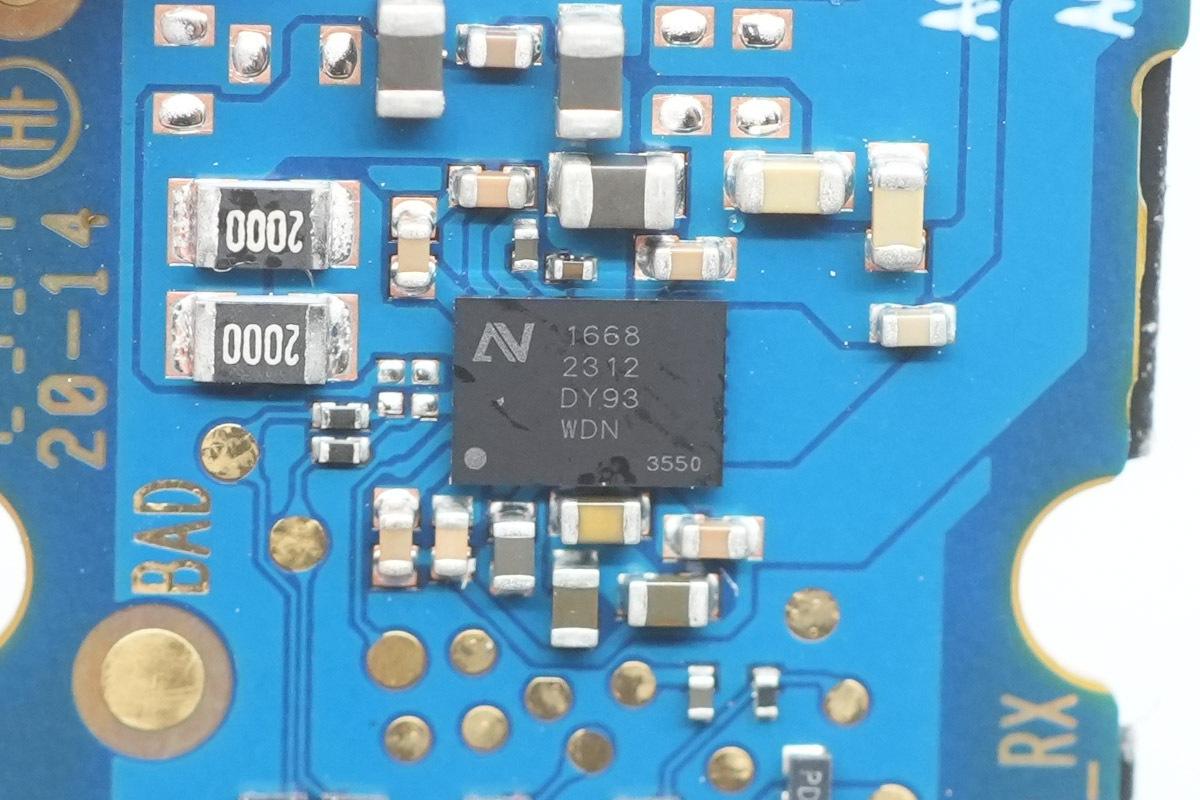
The wireless charging receiver IC is from NuVolta, model NU1668, and in a WCSP54 package. It is a highly integrated and efficient wireless charging receiver IC designed for applications with up to 50W output power.
It integrates a synchronous rectifier and a programmable low-dropout regulator, with the regulator providing a wide range of regulated output voltages. It also supports bidirectional communication with the transmitter system through ASK and FSK, with communication compliant with WPC standards.
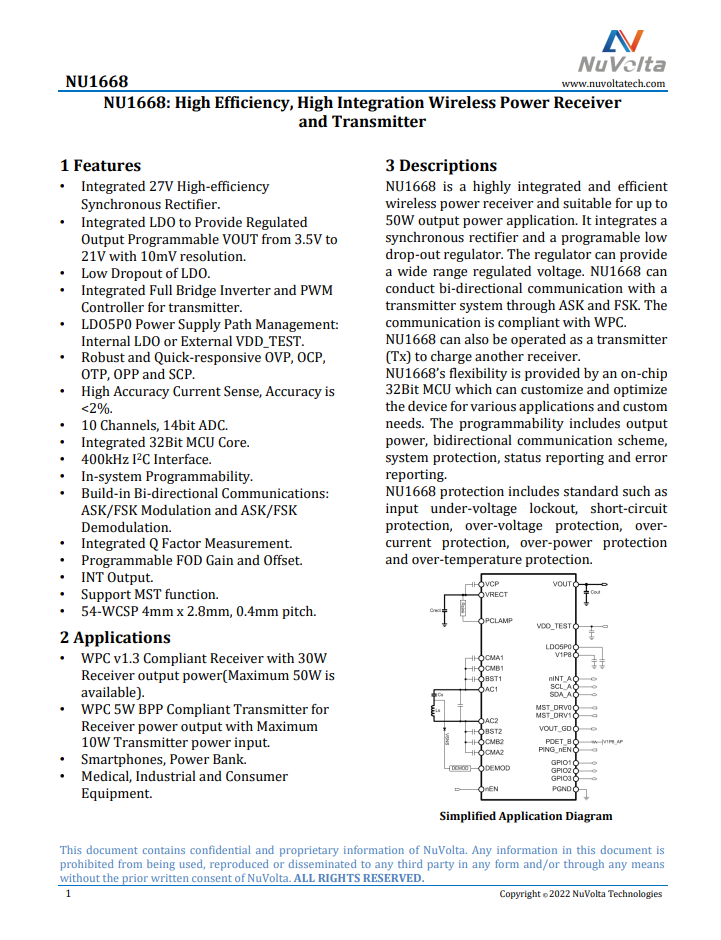
The NU1668 can also operate as a transmitter (Tx) to charge other receivers. It integrates a 32-bit MCU that can be customized and optimized for different applications and requirements. Output power, bidirectional communication schemes, system protection, status reporting, and error reporting can all be programmed.
It also provides multiple protection mechanisms, including input UVLO, SCP, OVP, OCP, OPP, and OTP.
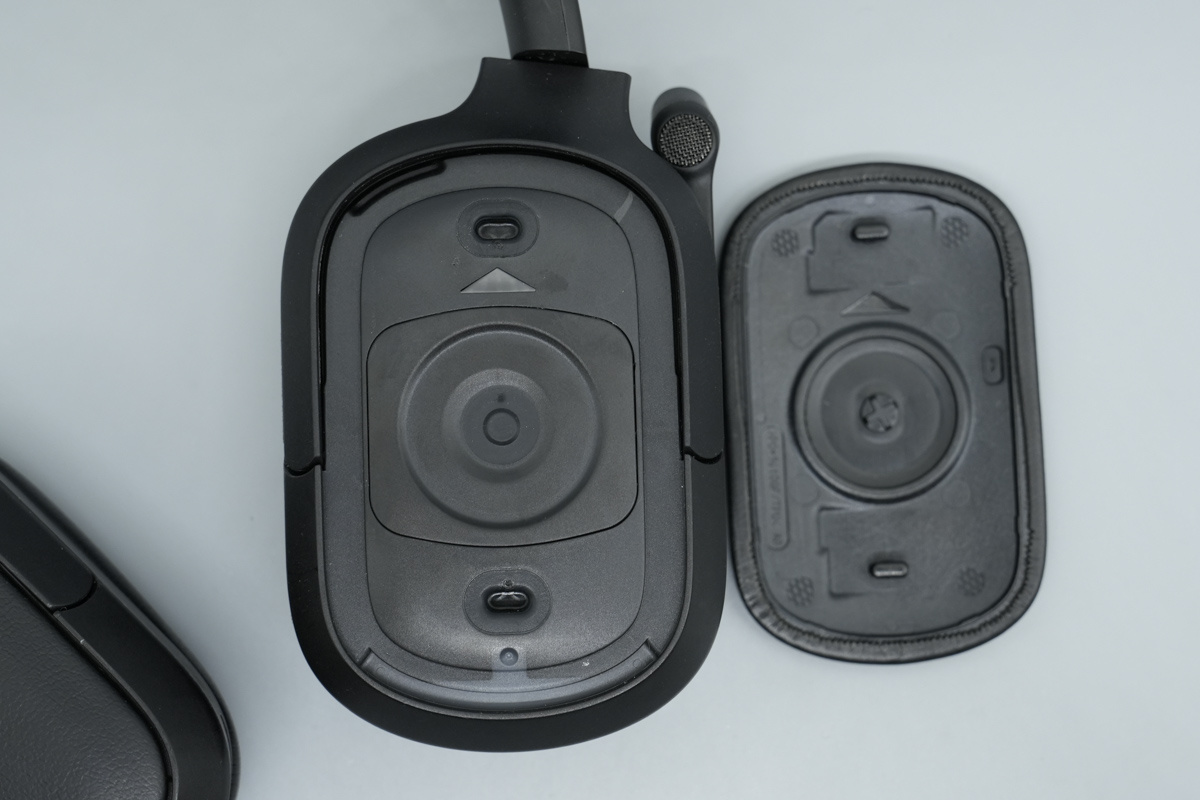
Prying open the right earcup outer panel reveals alignment clips and a play/pause button.
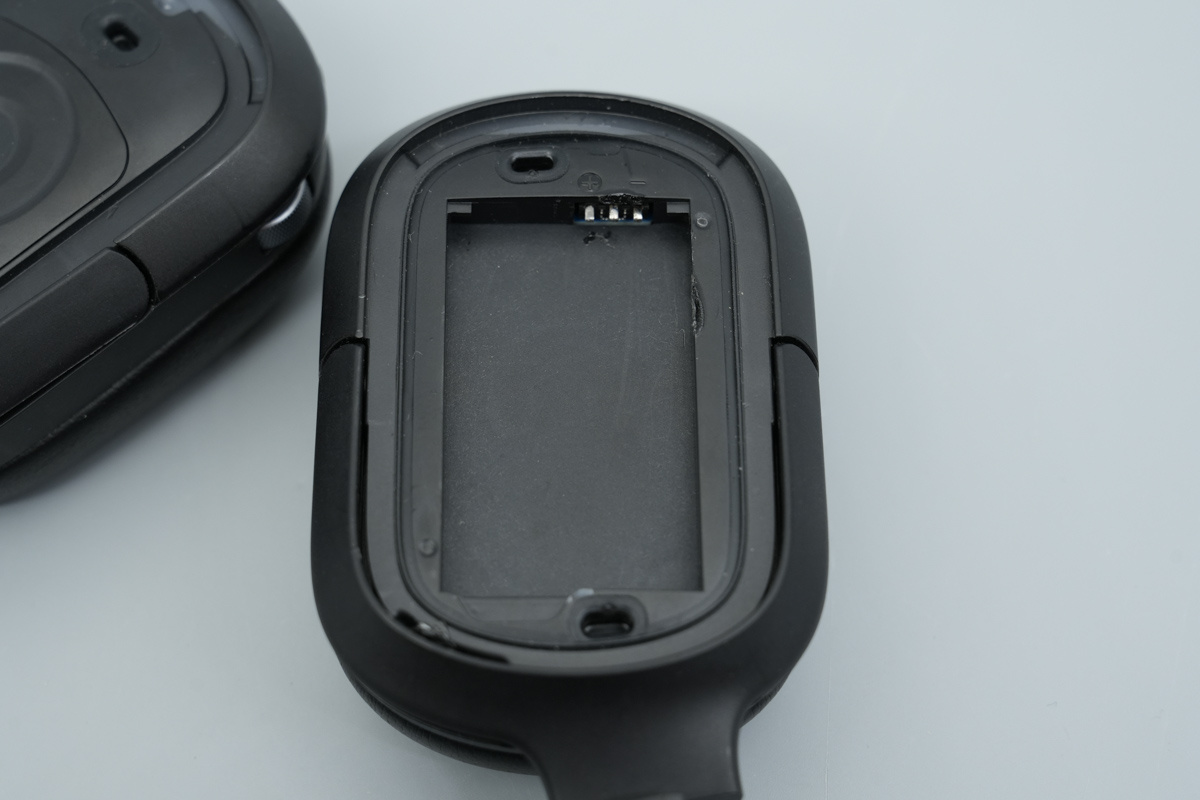
The left earcup contains a recessed compartment for the built-in battery.
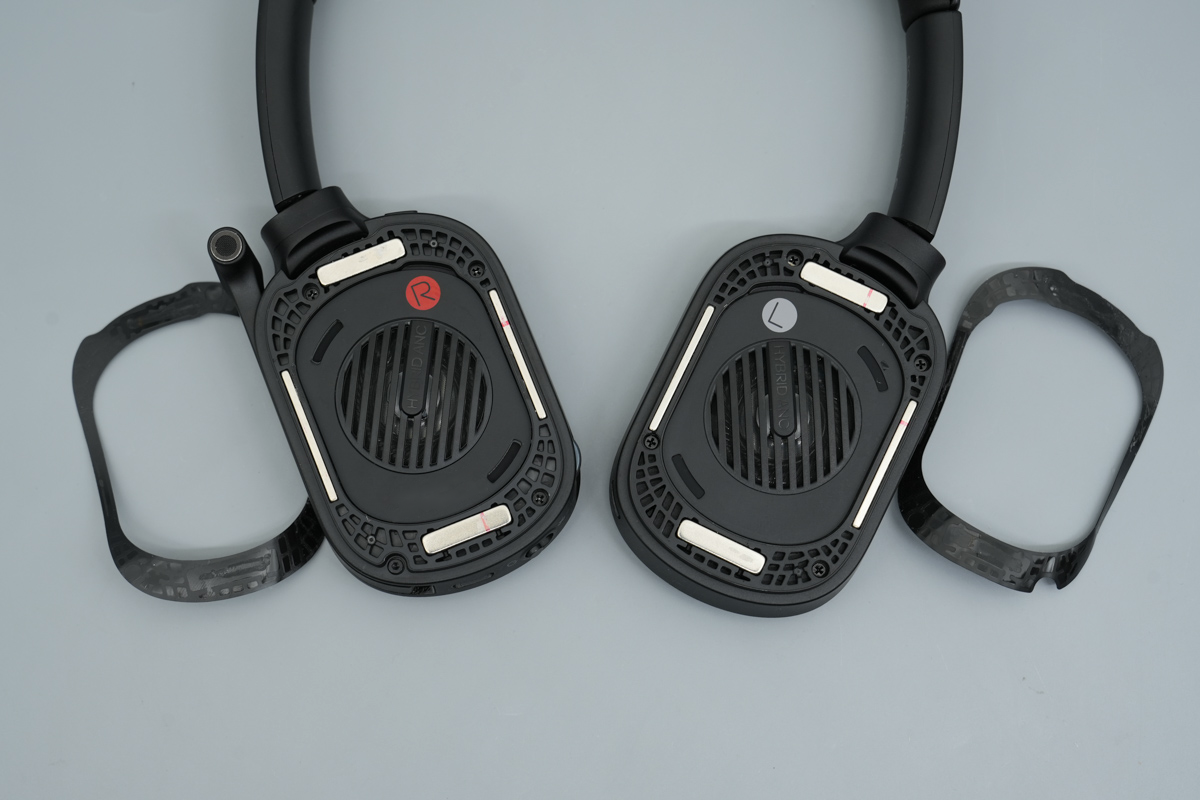
Removing the protective pad exposes the securing screws underneath.
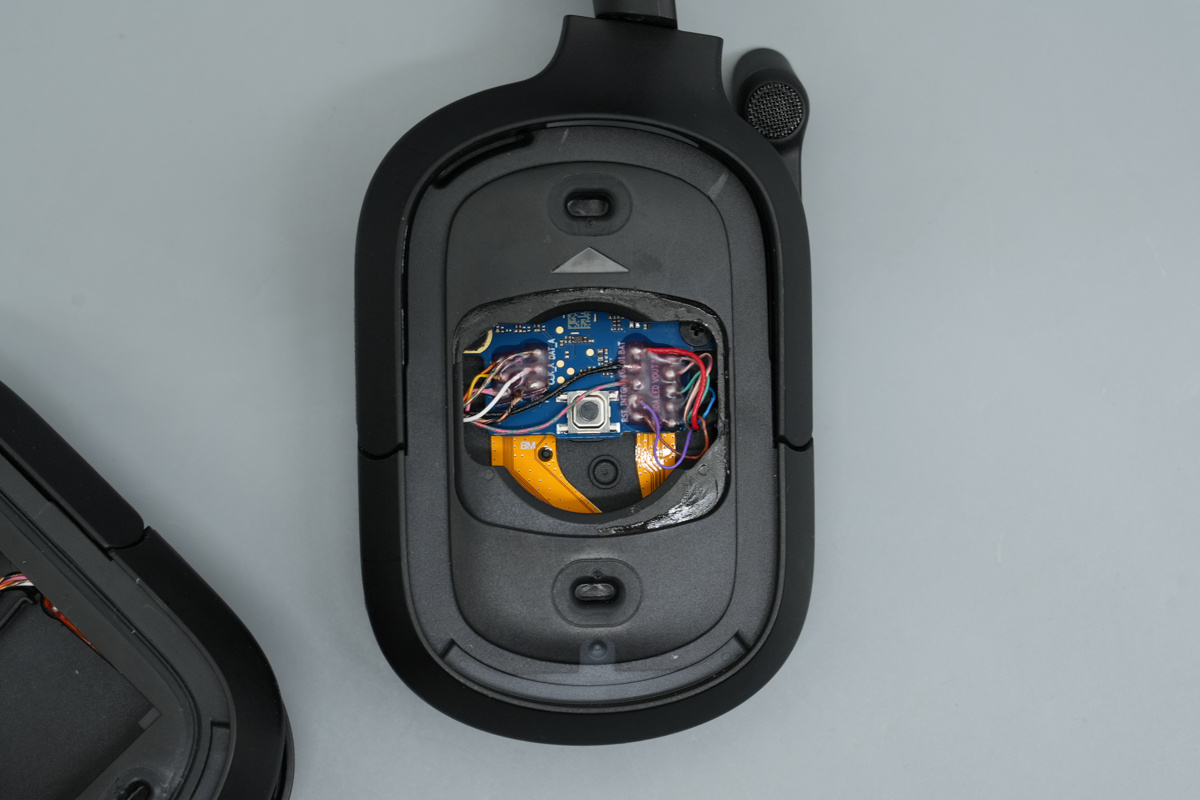
Opening the right earcup button cover reveals a push-button switch on the internal PCBA.
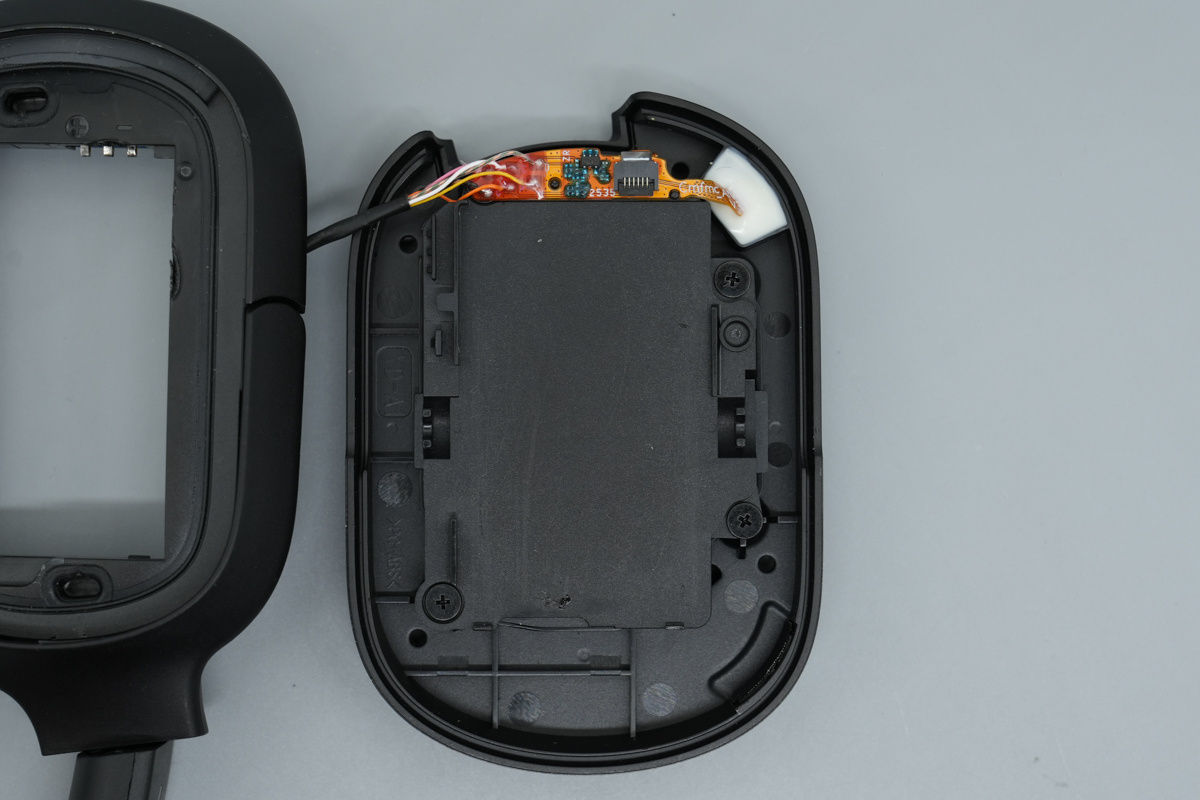
Inside the left earcup, the lithium battery occupies most of the space, with the speaker driver below and an FPC ribbon cable at the top.
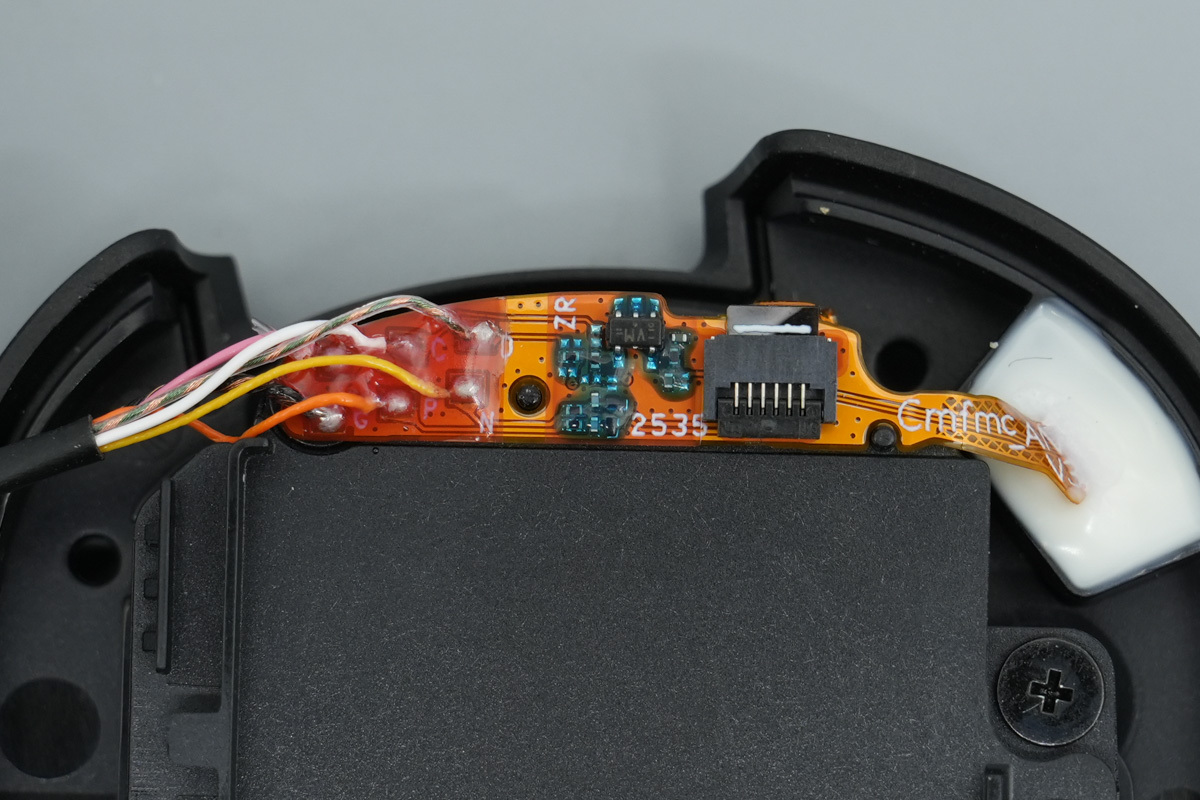
The FPC ribbon cable.
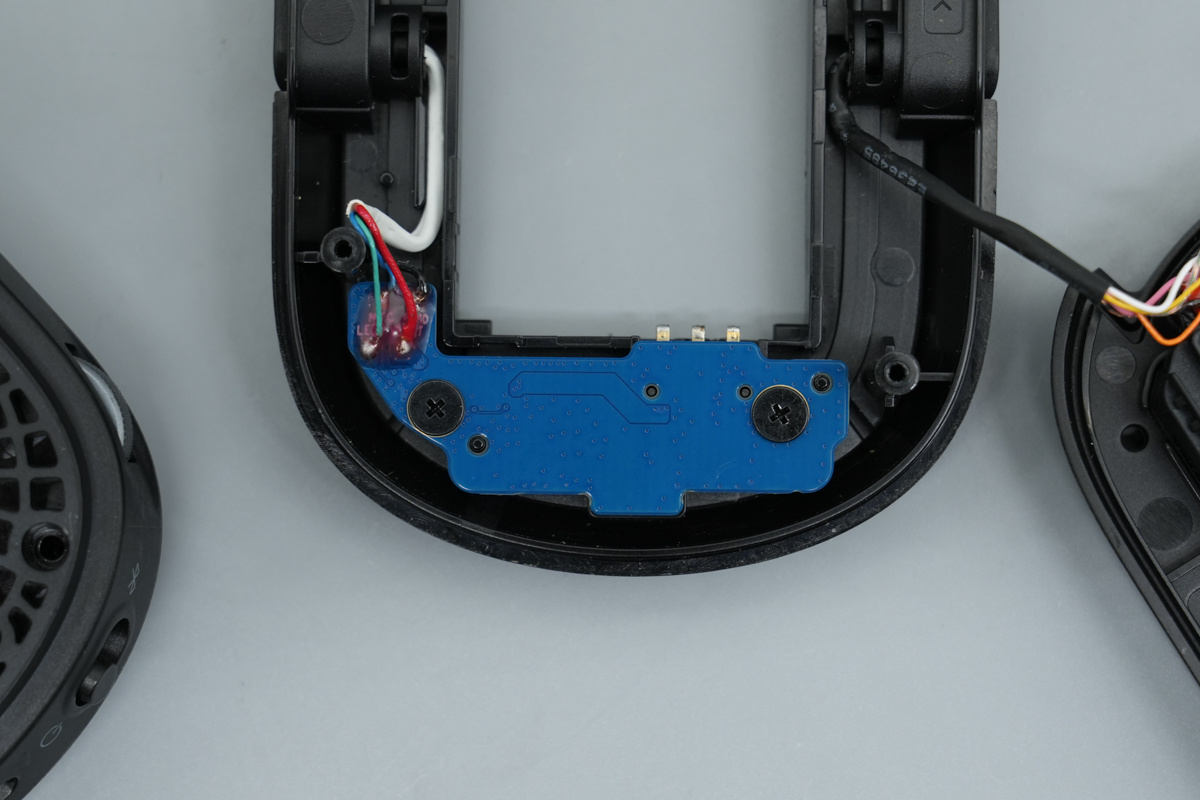
The battery connection PCB features battery contacts and securing screws.
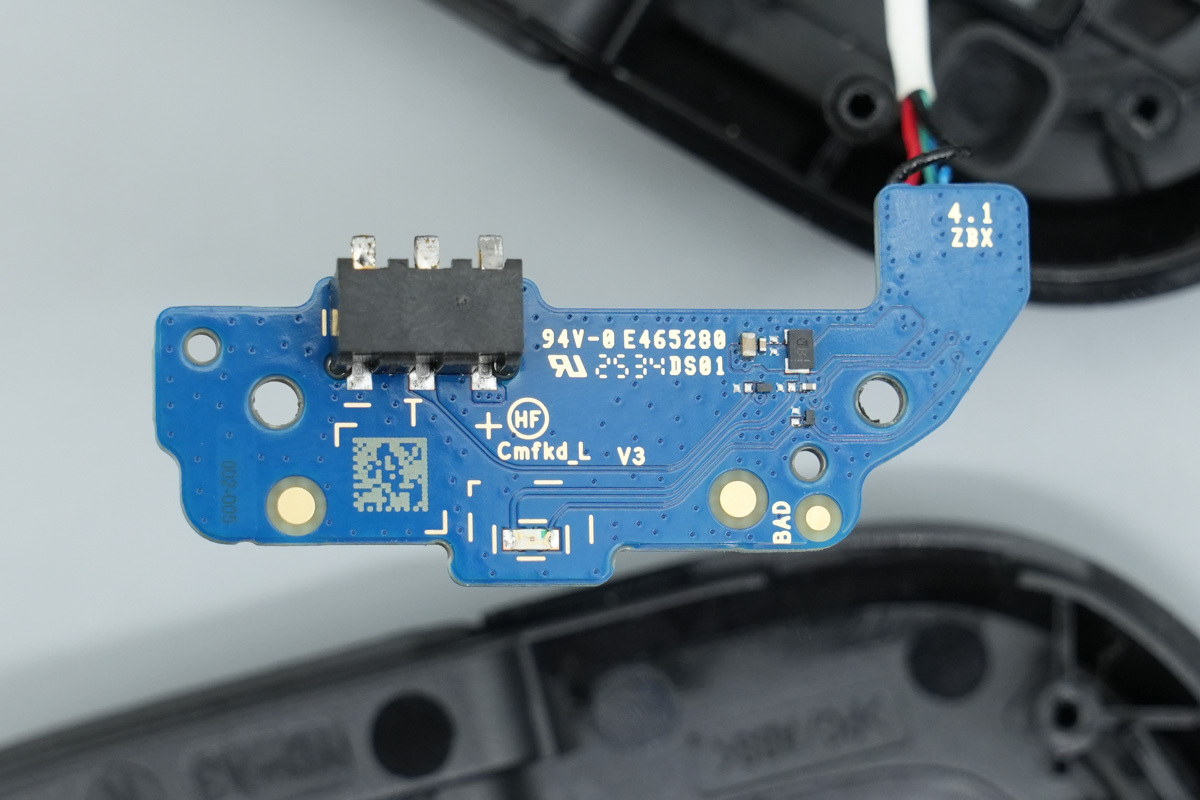
The front of the battery connection PCB.
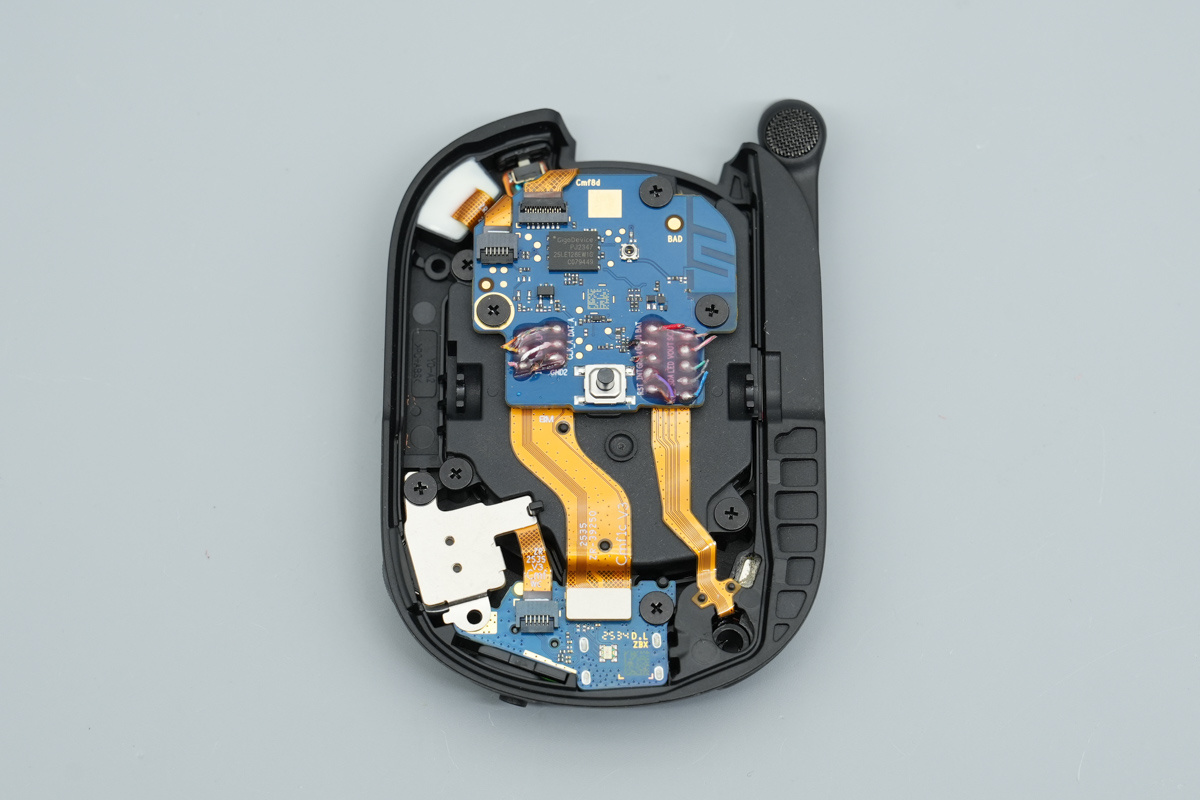
The PCBA layout inside the right earcup contains a master control PCB and a function control PCB connected by multiple FPC ribbon cables.
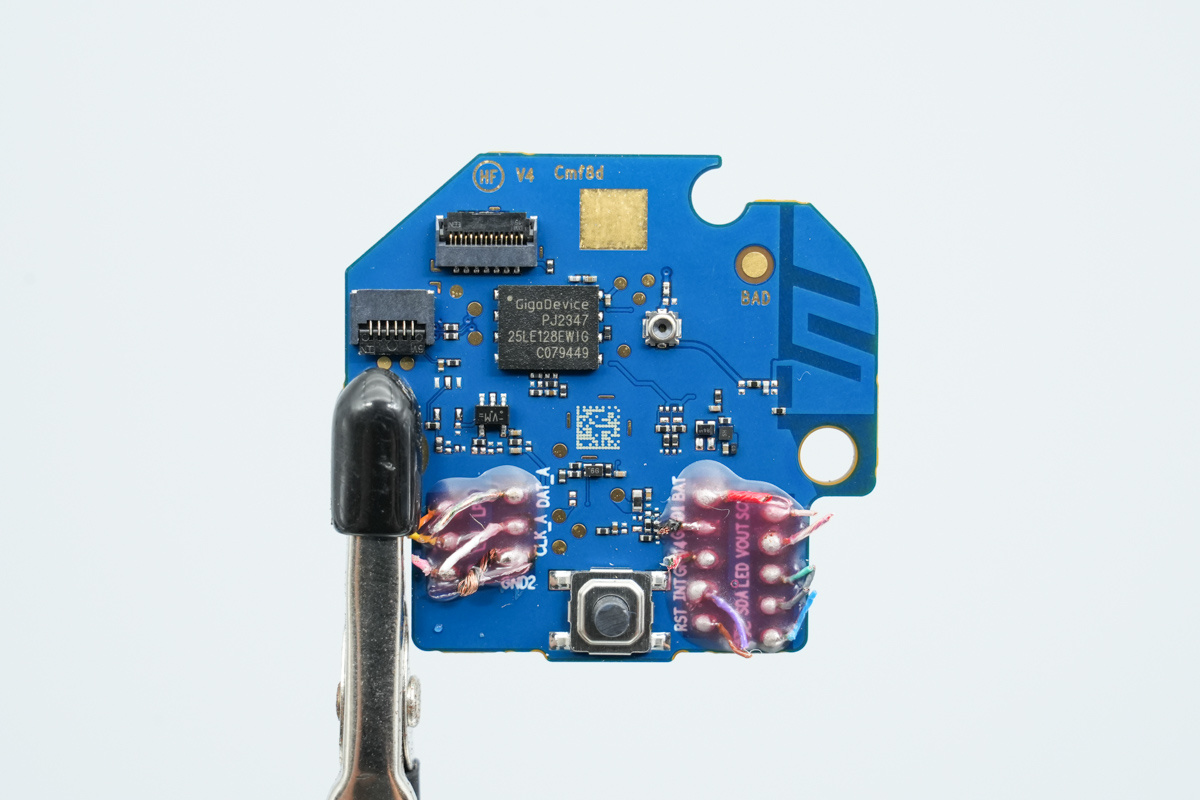
The front of the master control PCB houses a NOR Flash, FPC connectors, buttons, and other components.
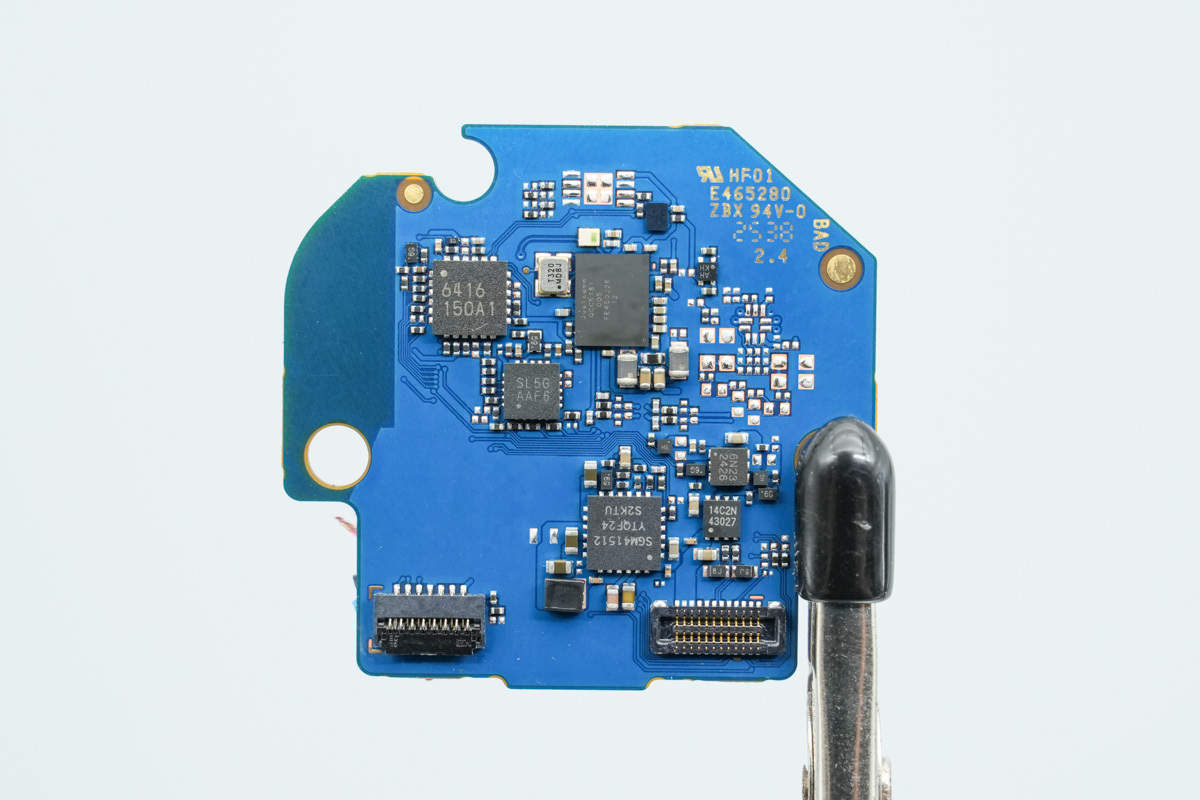
The back side houses the Bluetooth audio SoC, lithium-ion battery charging IC, and other components.
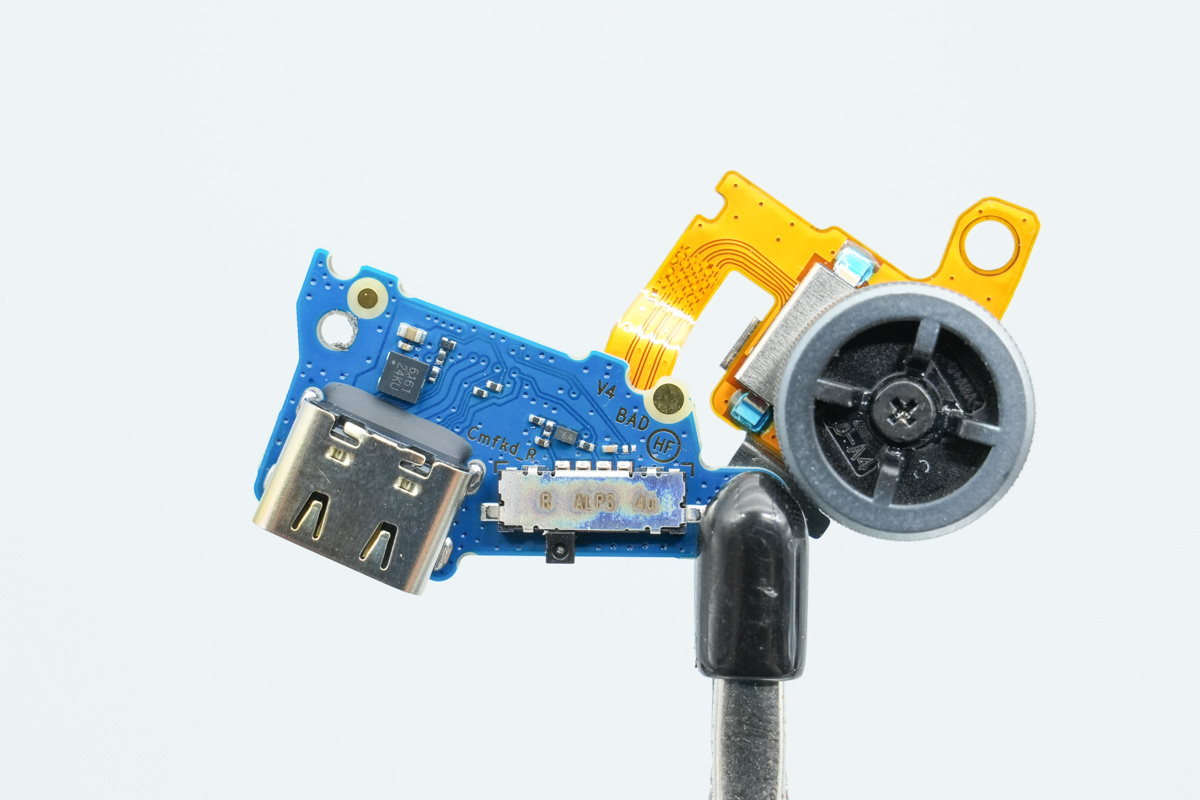
The functional control PCB on the side of the headset features a USB-C port, a metal volume adjustment wheel, and a toggle switch on the front.
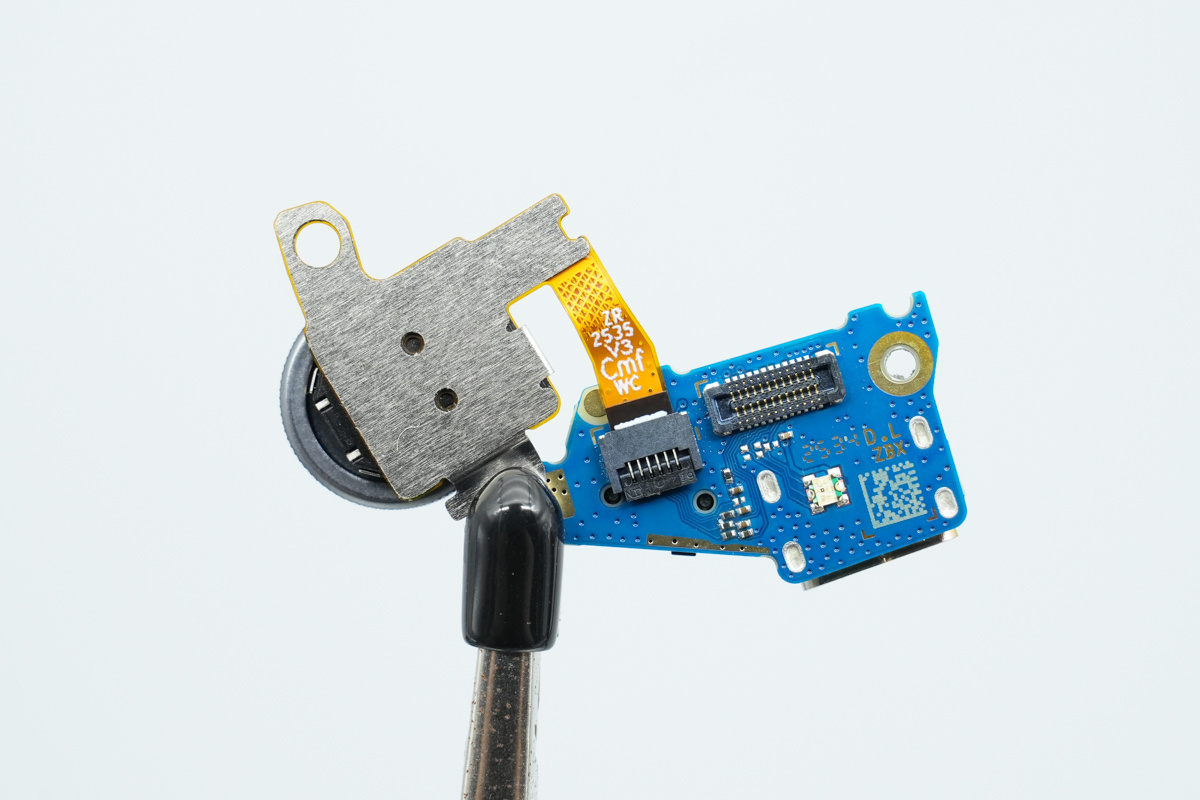
The rear side is equipped with an LED indicator, which is used to display connection status and charging status.
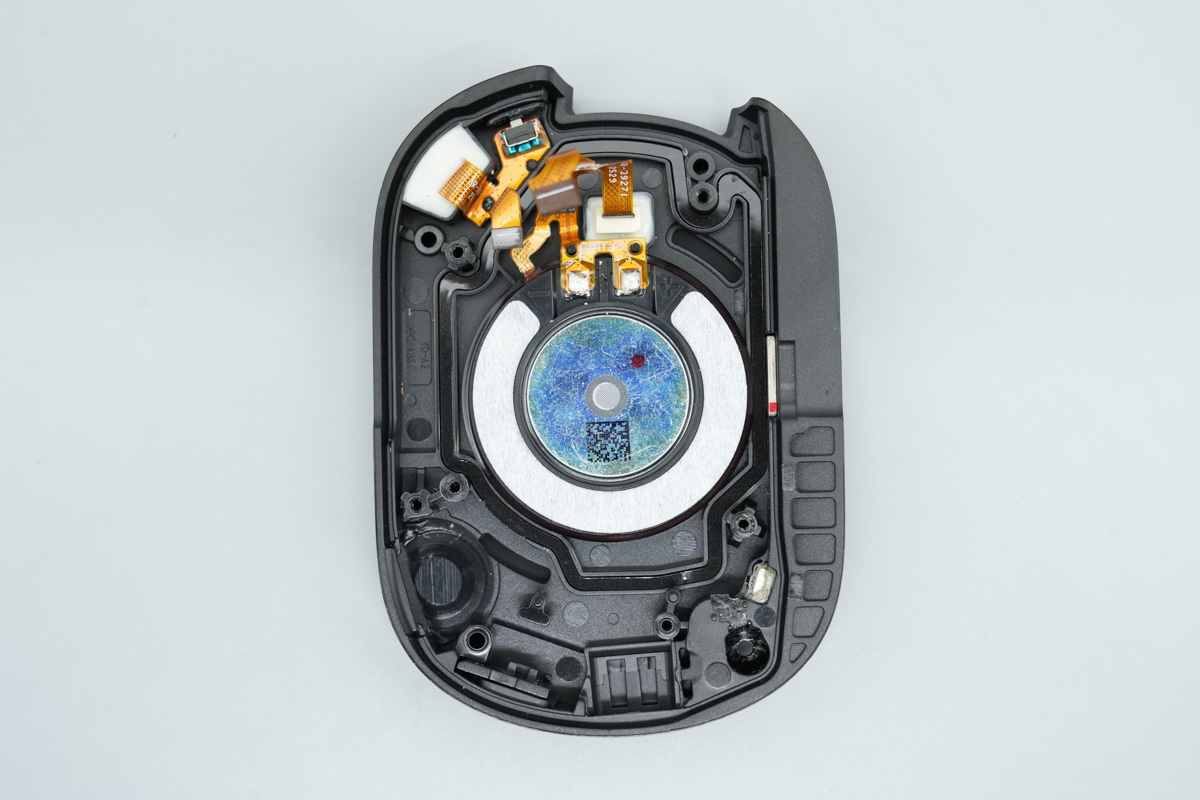
The built-in speaker driver.
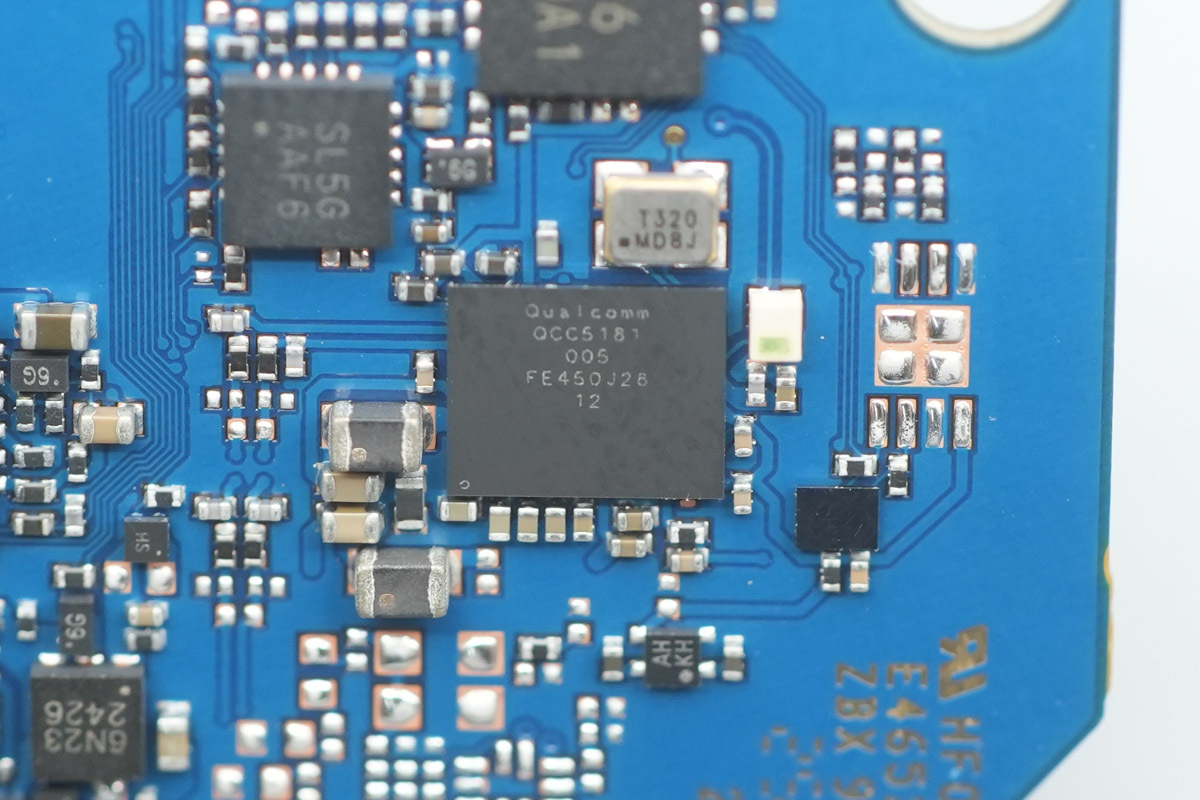
The headset integrates a Qualcomm QCC5181 Bluetooth audio SoC, housed in a WLCSP99 package. As part of Qualcomm’s second-generation S5 Sound Platform, it supports Bluetooth 5.4 and is fully compatible with the requirements of the latest Bluetooth LE Audio standard, including Auracast broadcast audio.
It supports Snapdragon Sound tech and introduces new features including spatial audio with dynamic head tracking, 48kHz lossless music streaming, and ultra-low 48ms latency gaming experiences between smartphones and earbuds.
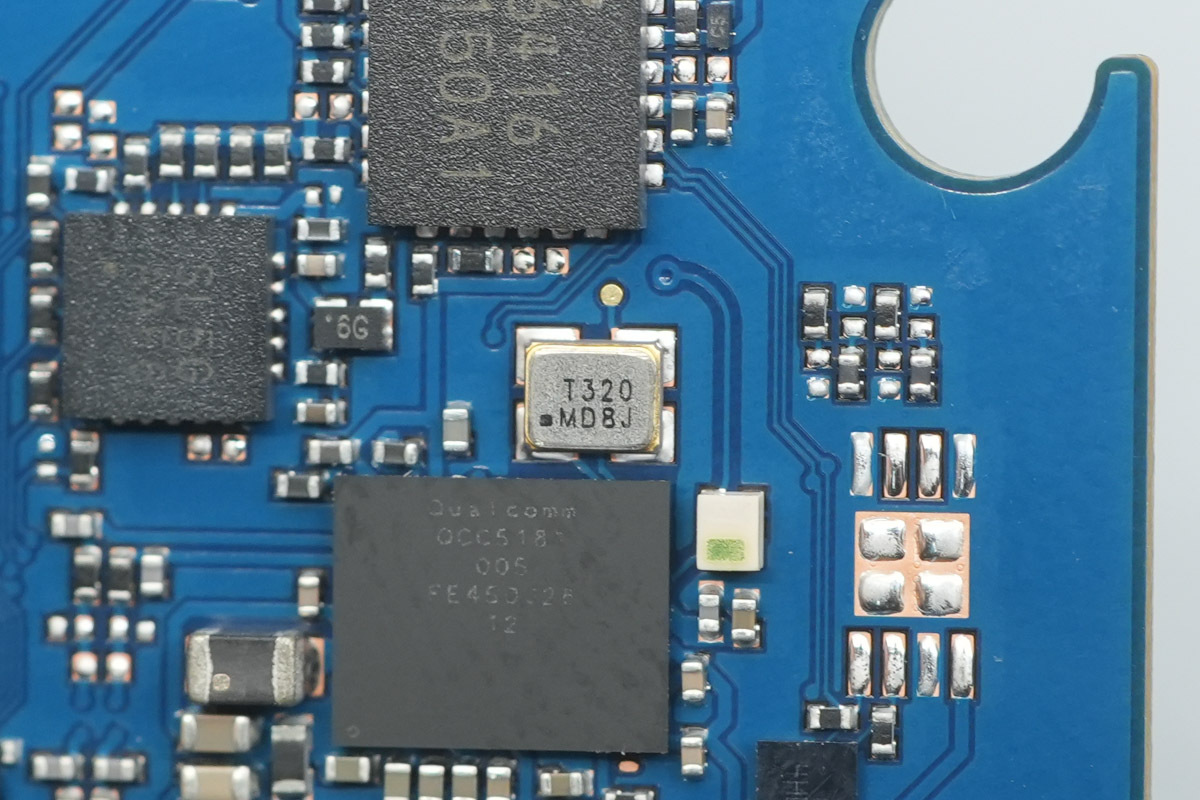
A crystal oscillator provides the clock signal for the Bluetooth audio SoC.
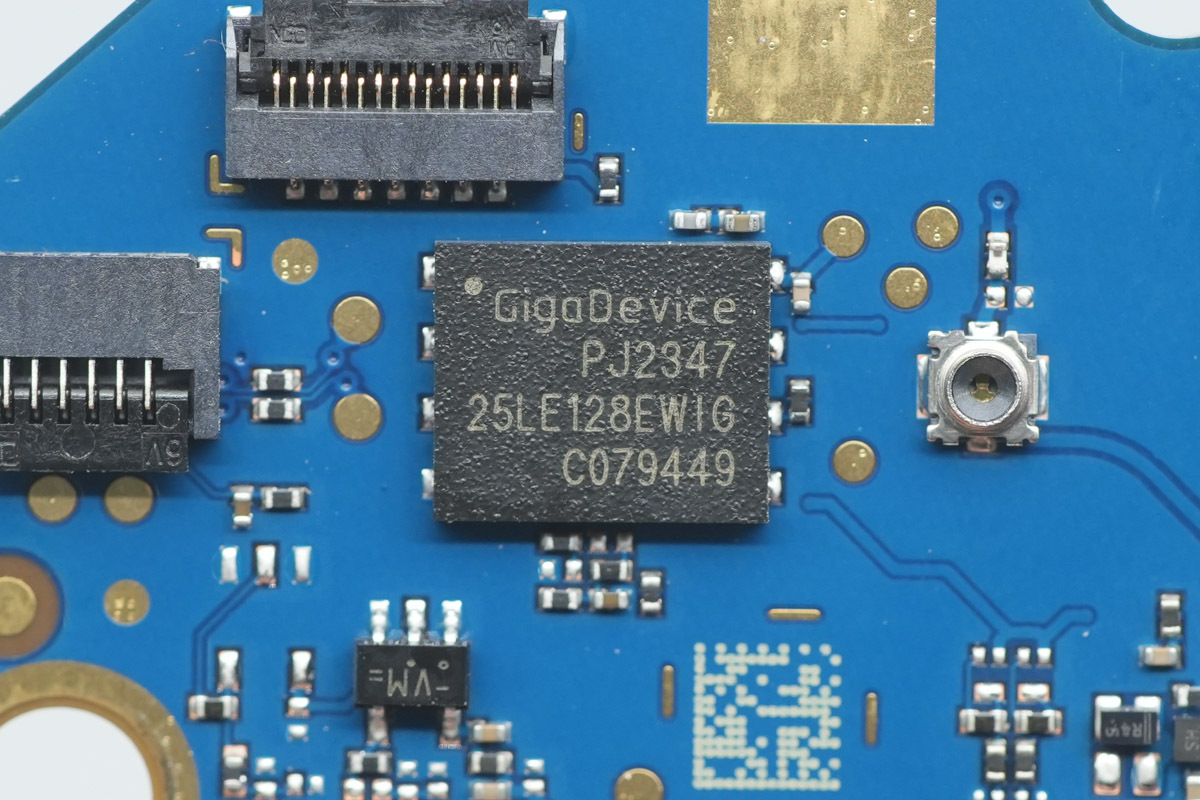
The built-in NOR Flash comes from GigaDevice, model GD25LE128E, with a capacity of 128Mbit and housed in a WSON8 package.
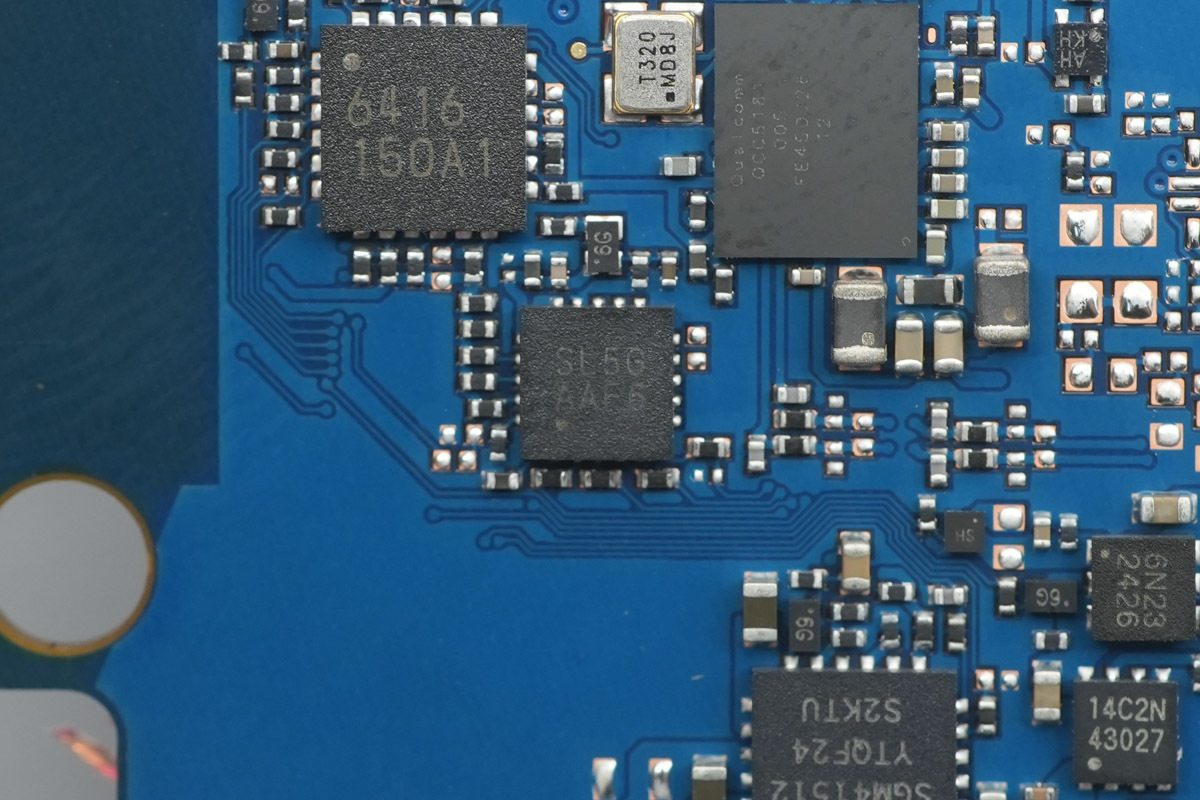
A chip, marked 6416 and SL5G.
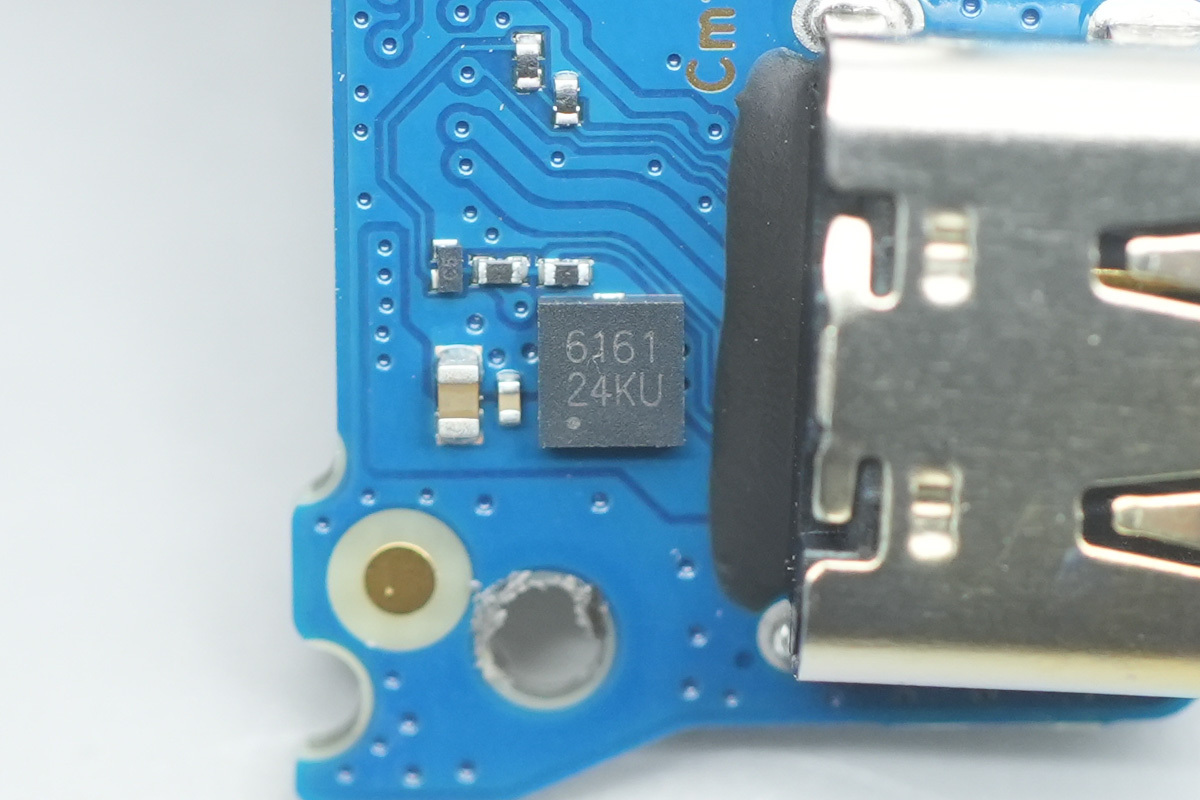
A component, marked 6161.
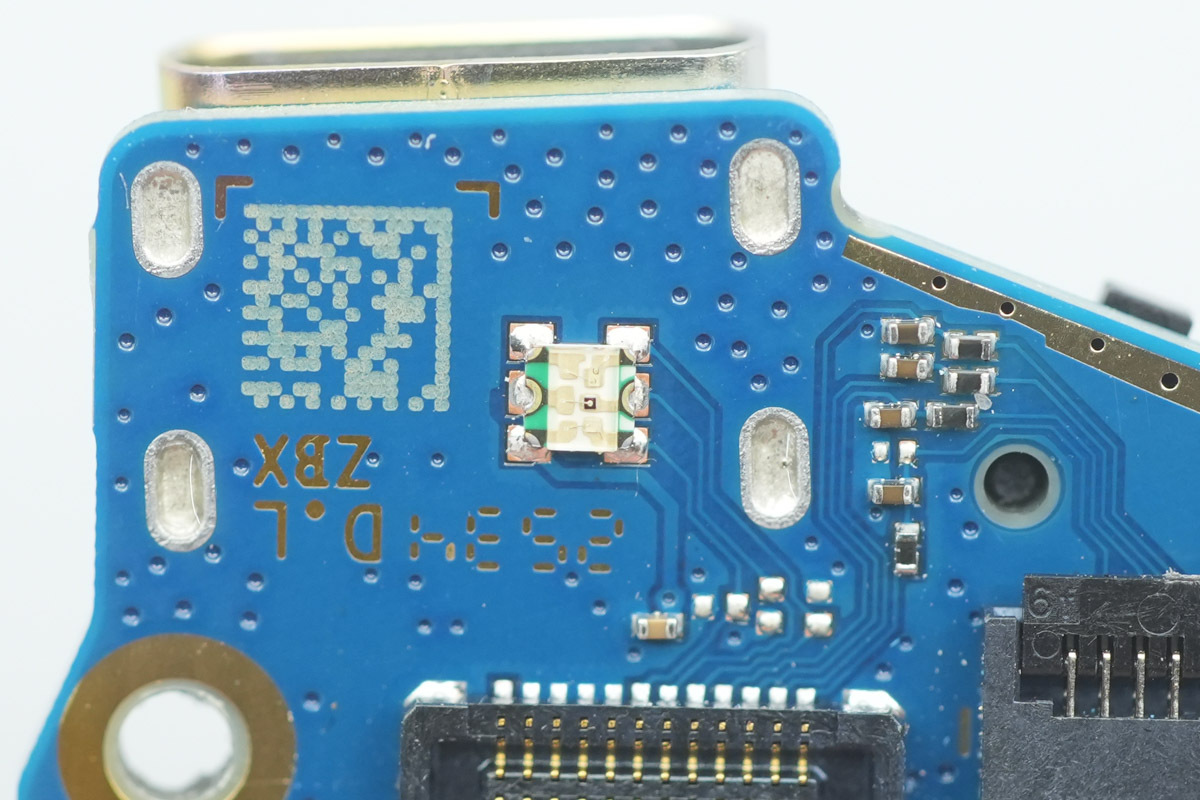
An LED indicator is used to display charging status and product connection status.
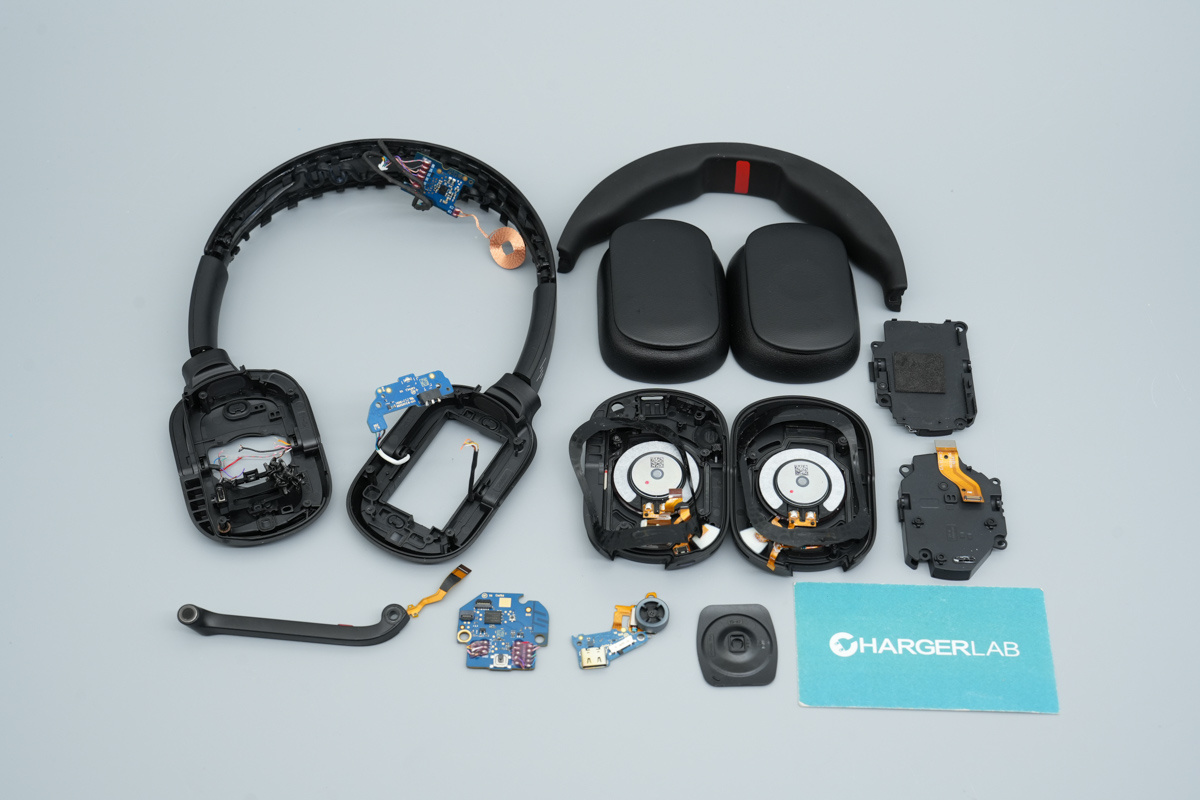
The headset teardown is now complete. Here are all the internal components.
Next, we will continue disassembling the included 2-in-1 charging stand.
Teardown of the Stand
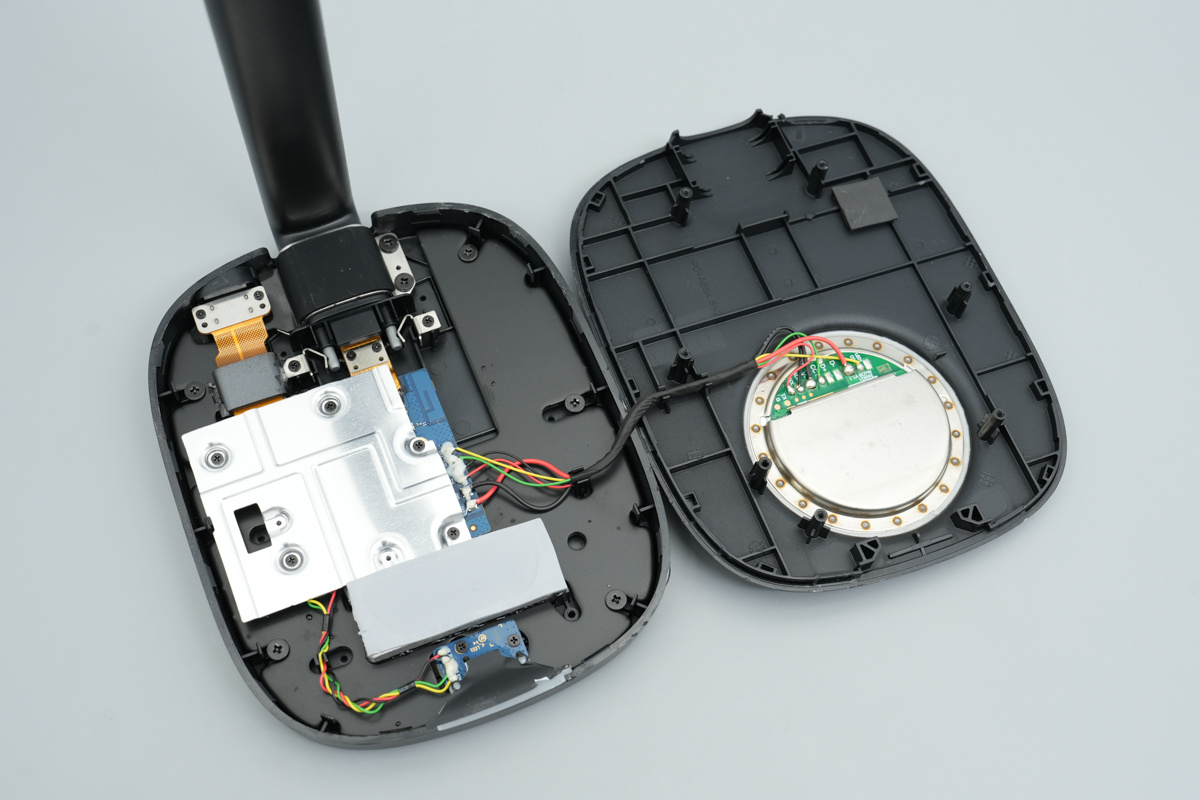
After removing the bottom cover screws, the internal layout reveals a neatly arranged wireless charging master control PCB and Qi2 wireless charging module.
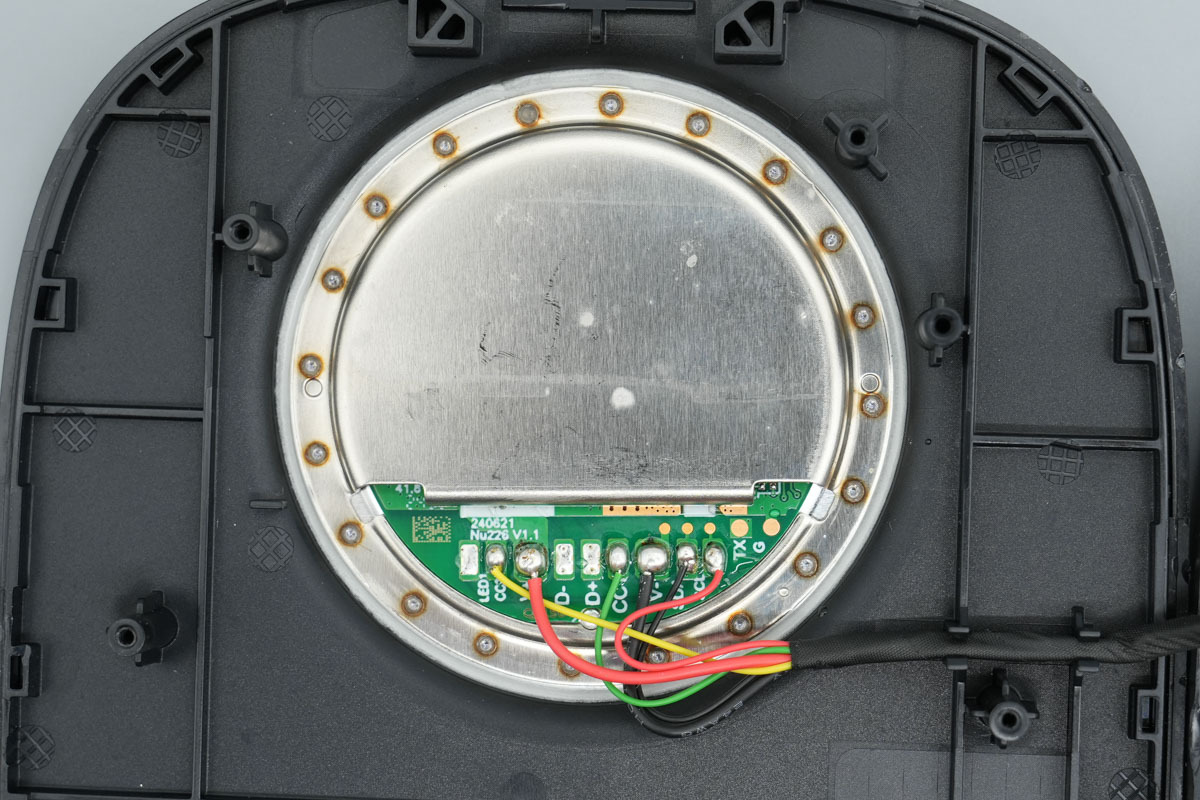
The Qi2 wireless charging module, which adopts the NuVolta MPP Module NU226.
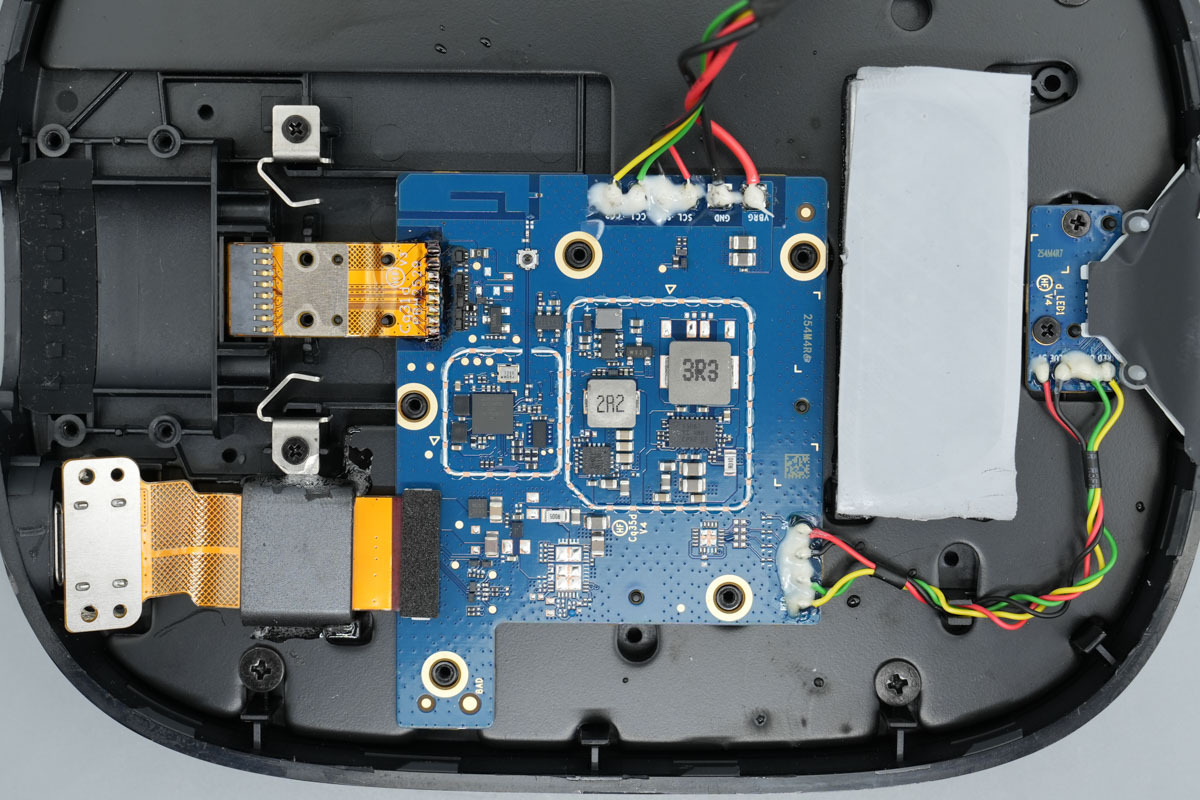
Removing the metal cover reveals the master control PCB.
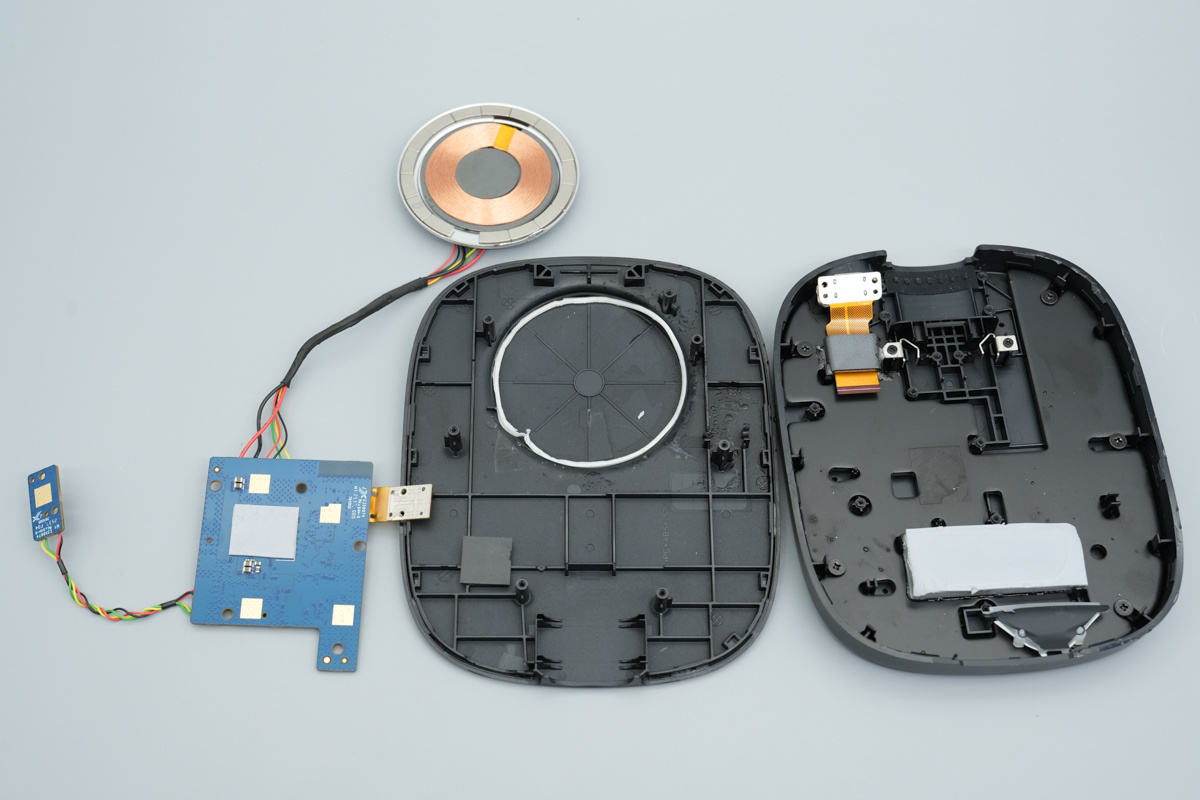
The internal modules of the charging stand base are removed one by one.
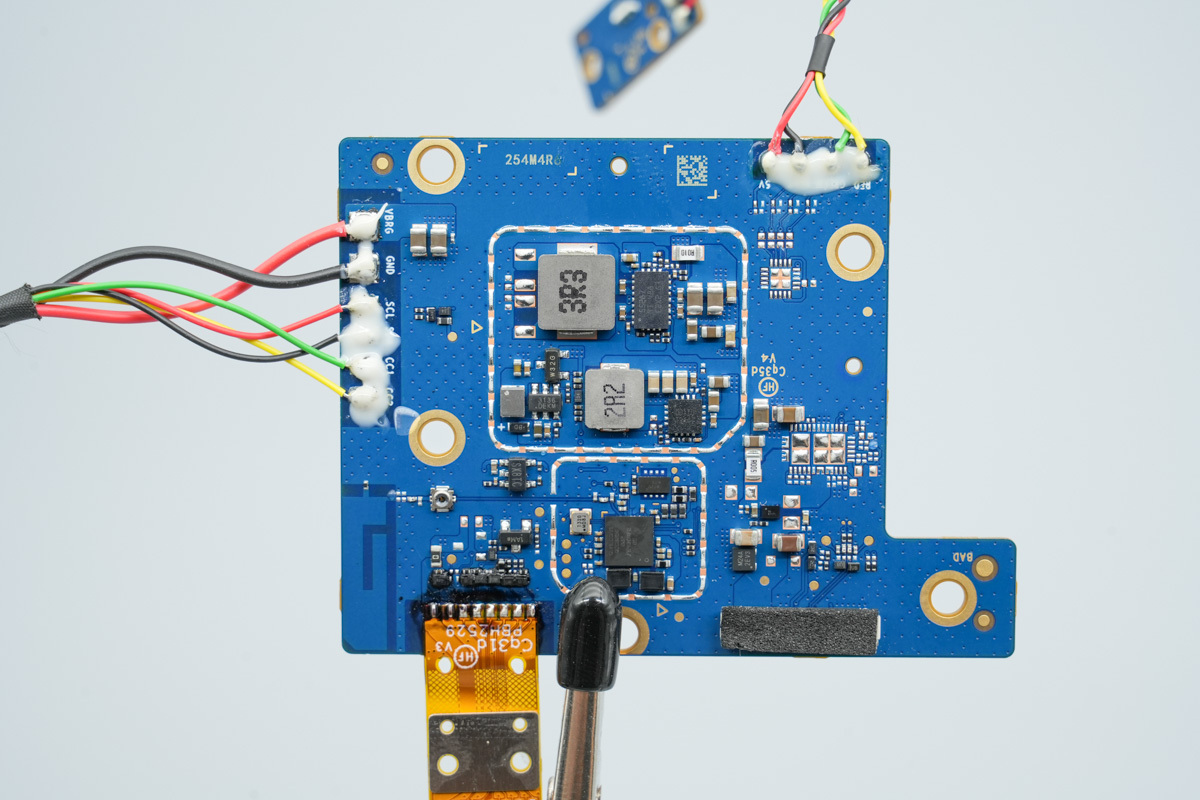
The front of the master control PCB mainly integrates the Bluetooth master control SoC and buck-boost converter IC.
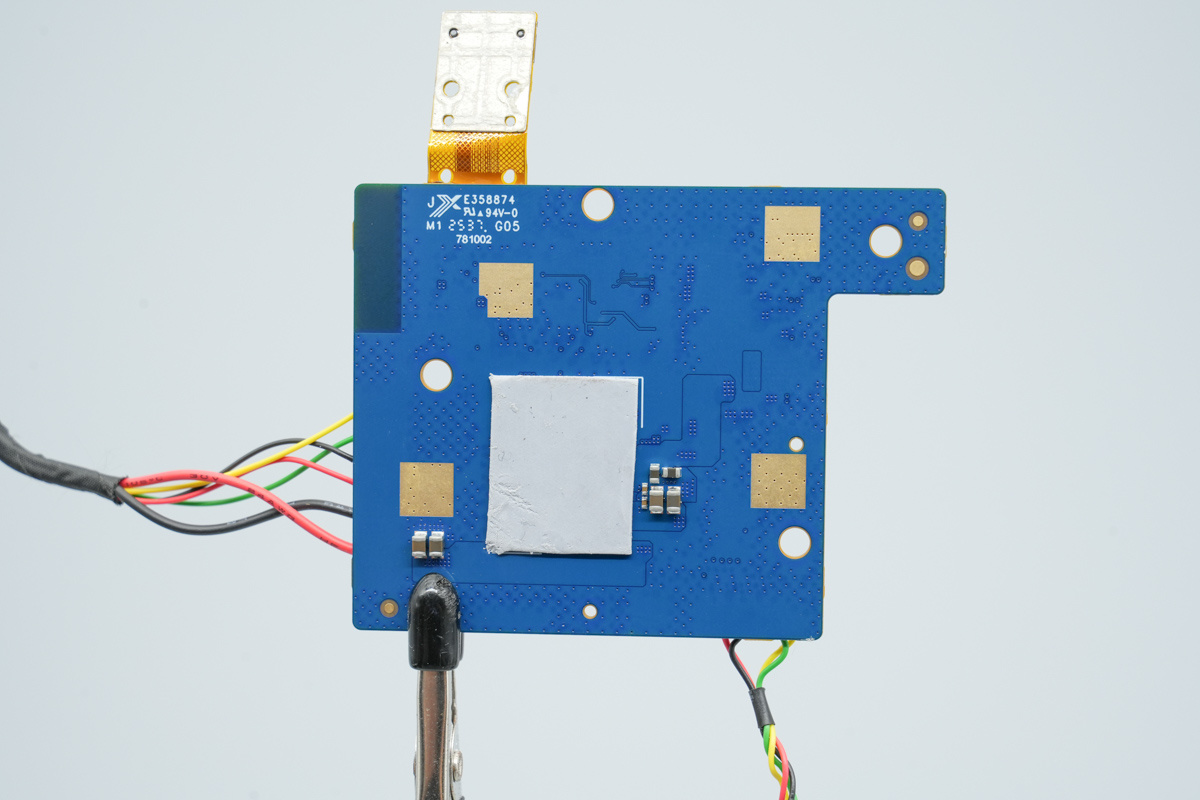
This is the back side of the master control PCB.
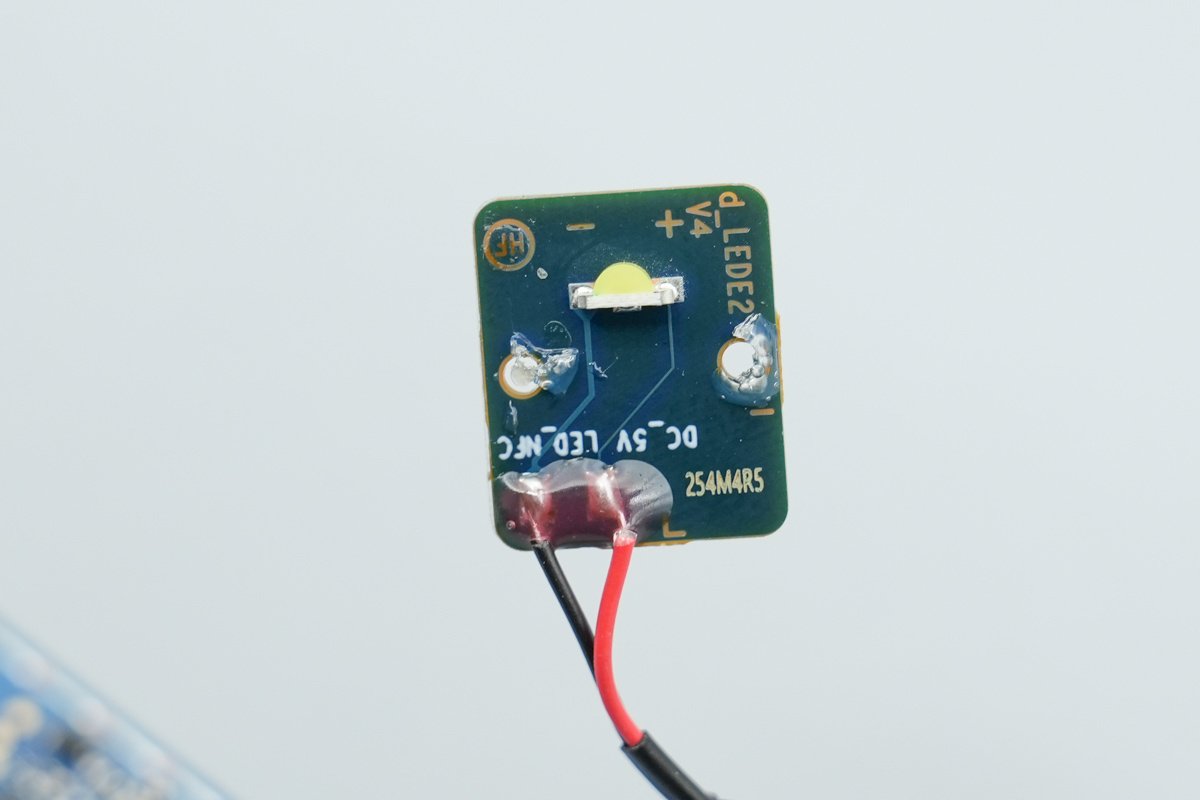
The LED indicator PCB.
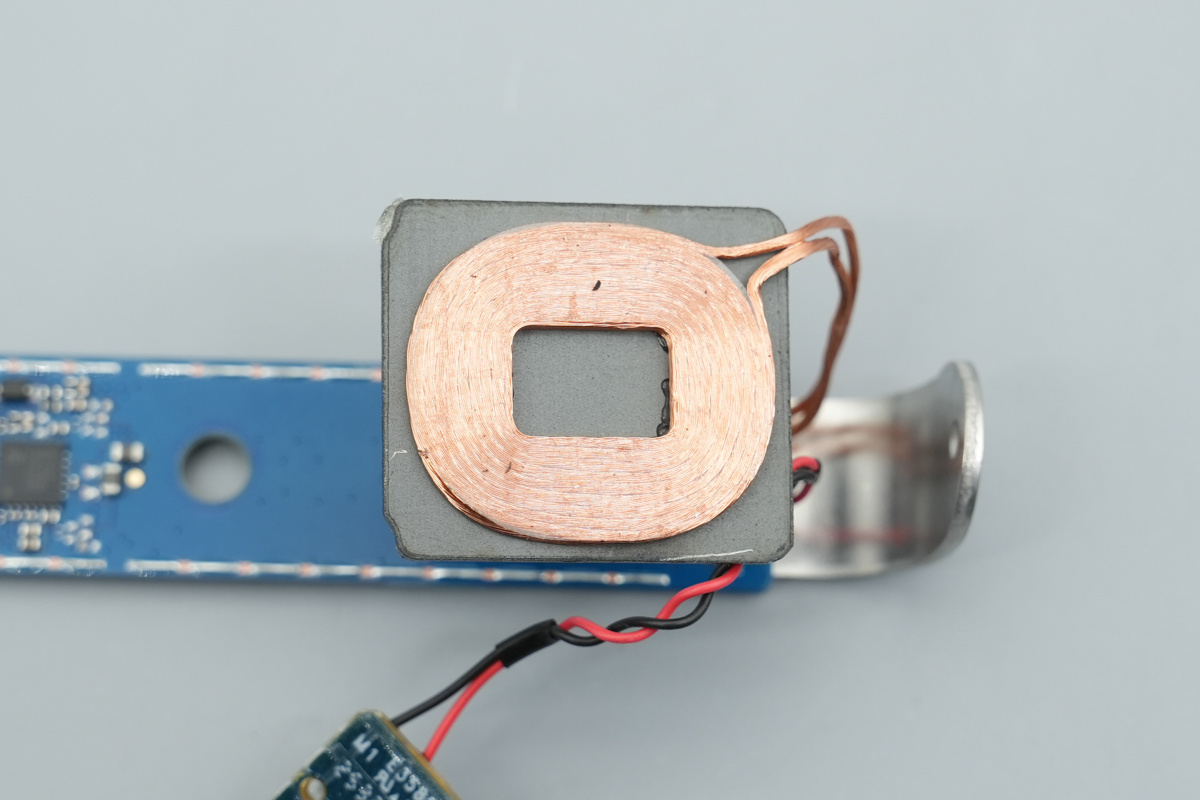
The stand section features an independent wireless charging PCB and wireless charging coil.
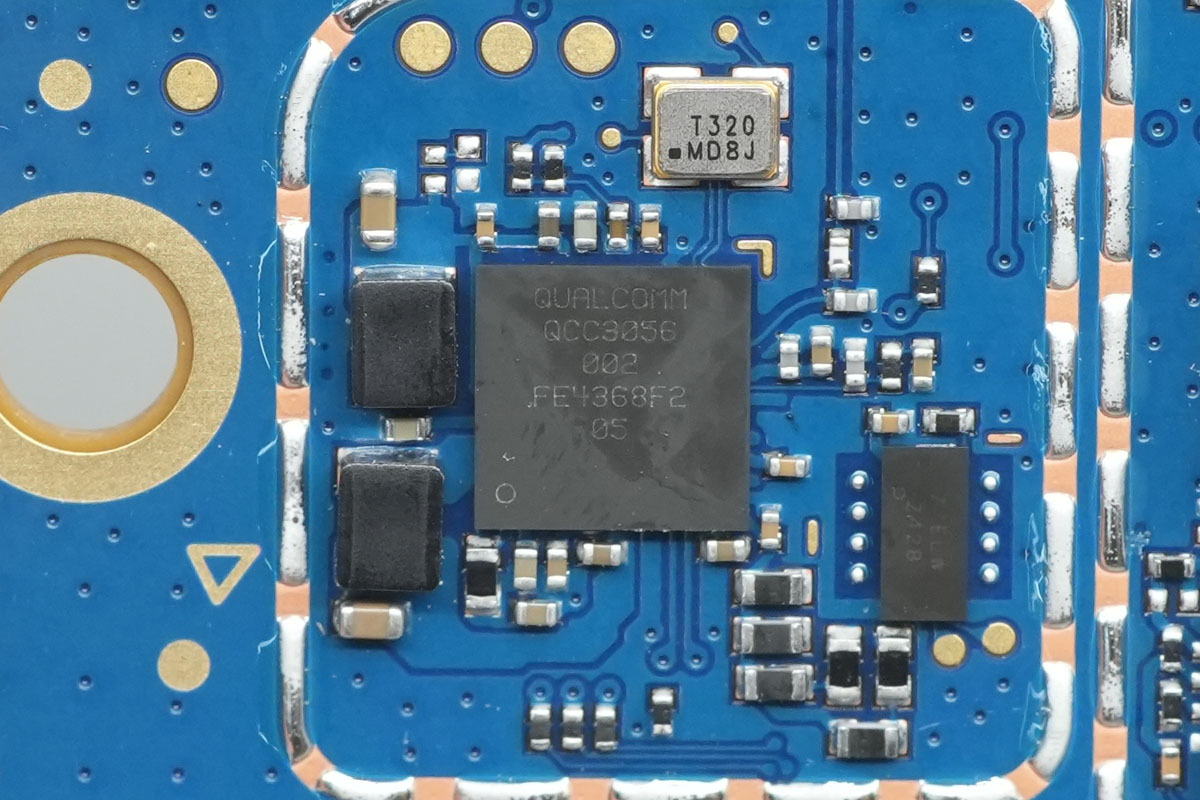
The base integrates a Qualcomm QCC3056 Bluetooth audio SoC, housed in a WLCSP package. It features a quad-core processor architecture, supports Bluetooth 5.3 and Qualcomm TrueWireless Mirroring tech, providing stable wireless connectivity.
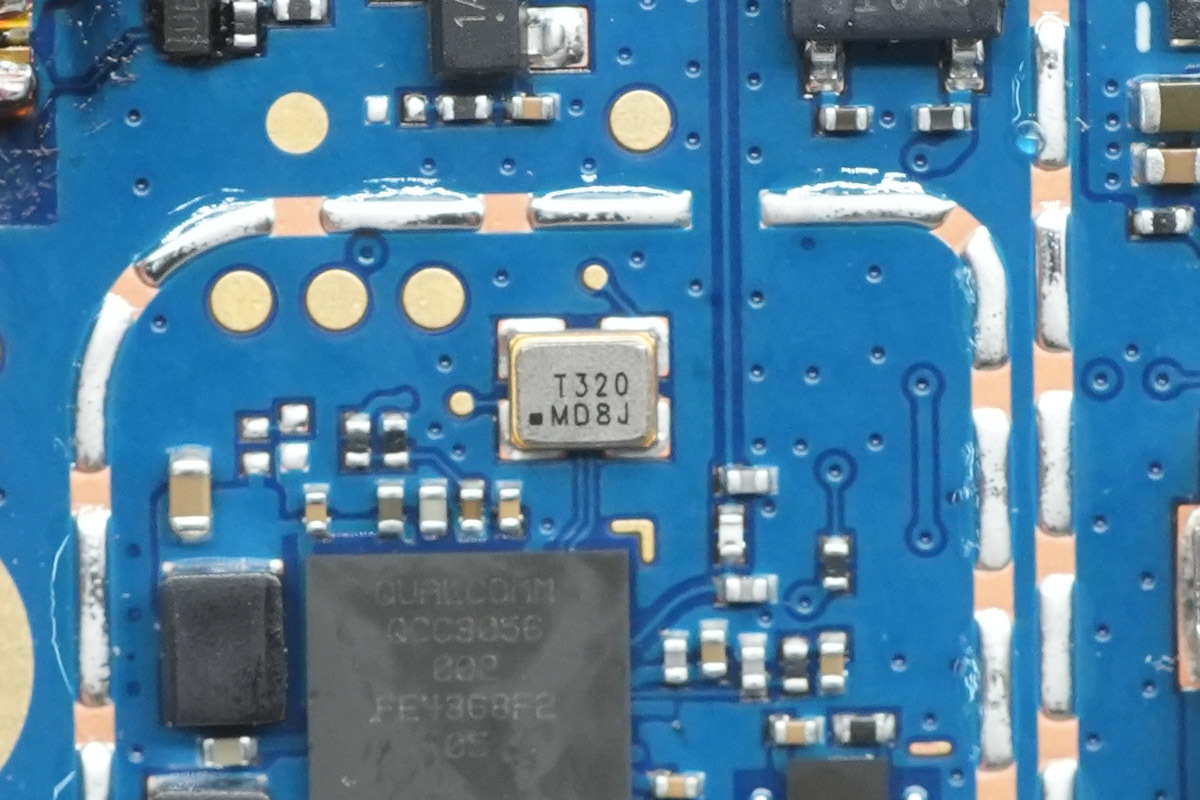
A crystal oscillator provides the clock signal.
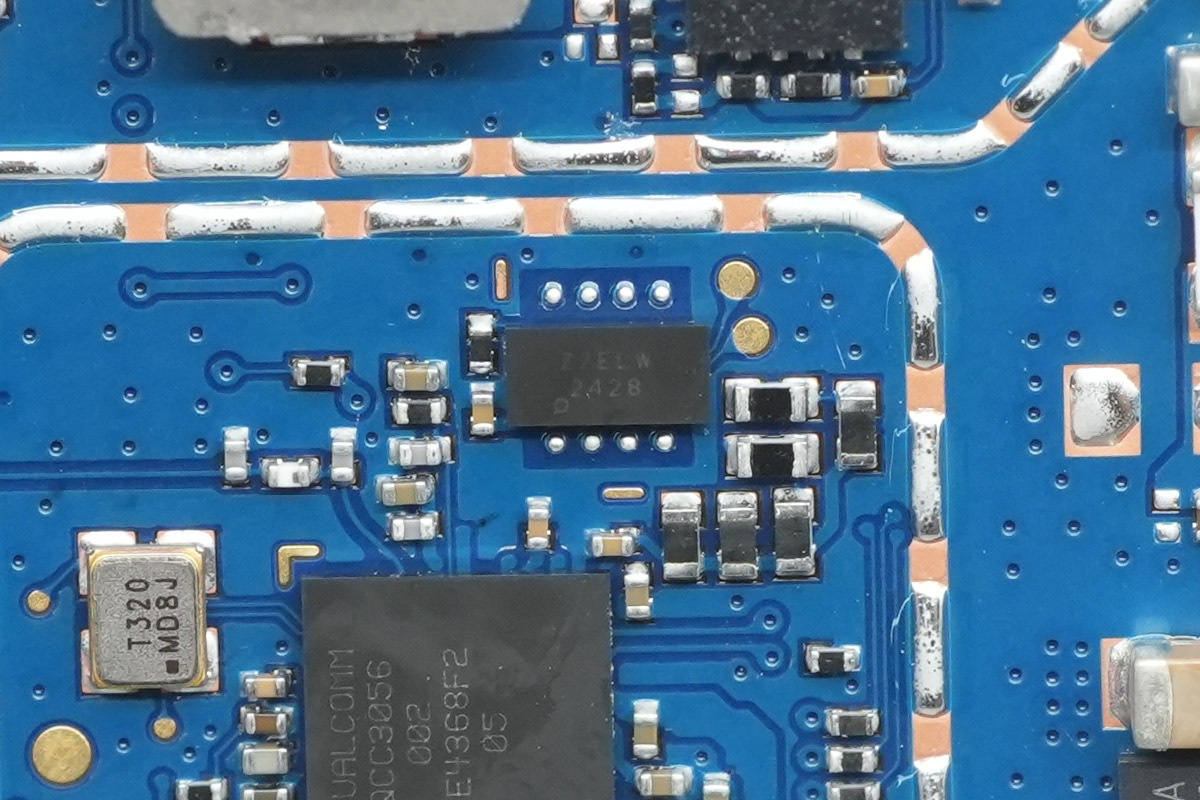
A chip, marked 27ELW.
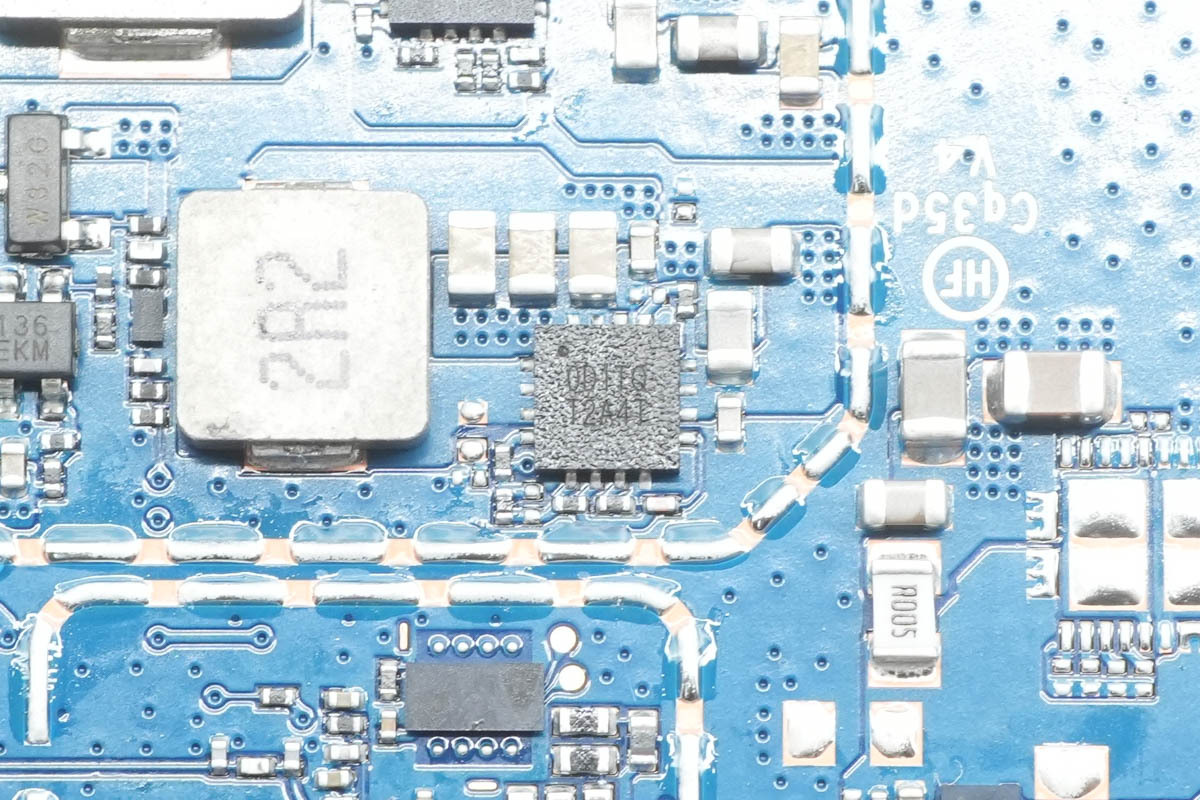
A chip, marked 0D1TQ.
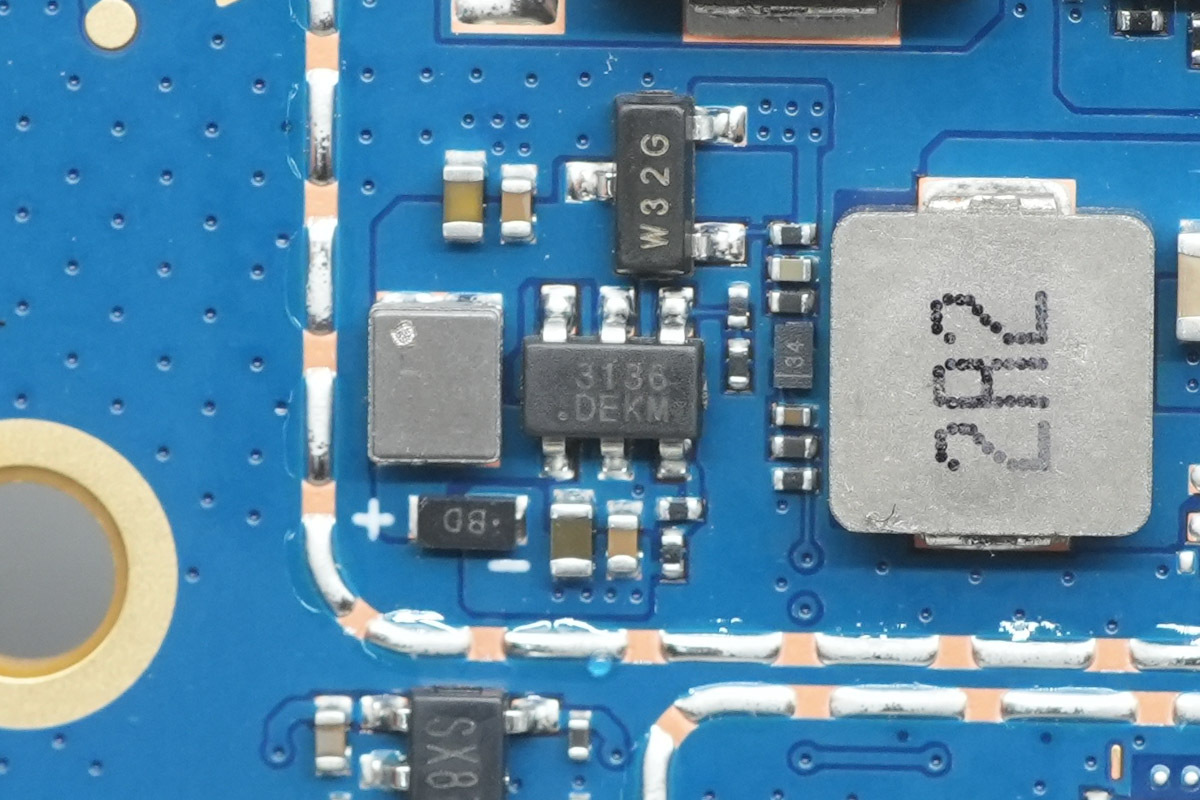
A chip, marked 3136.
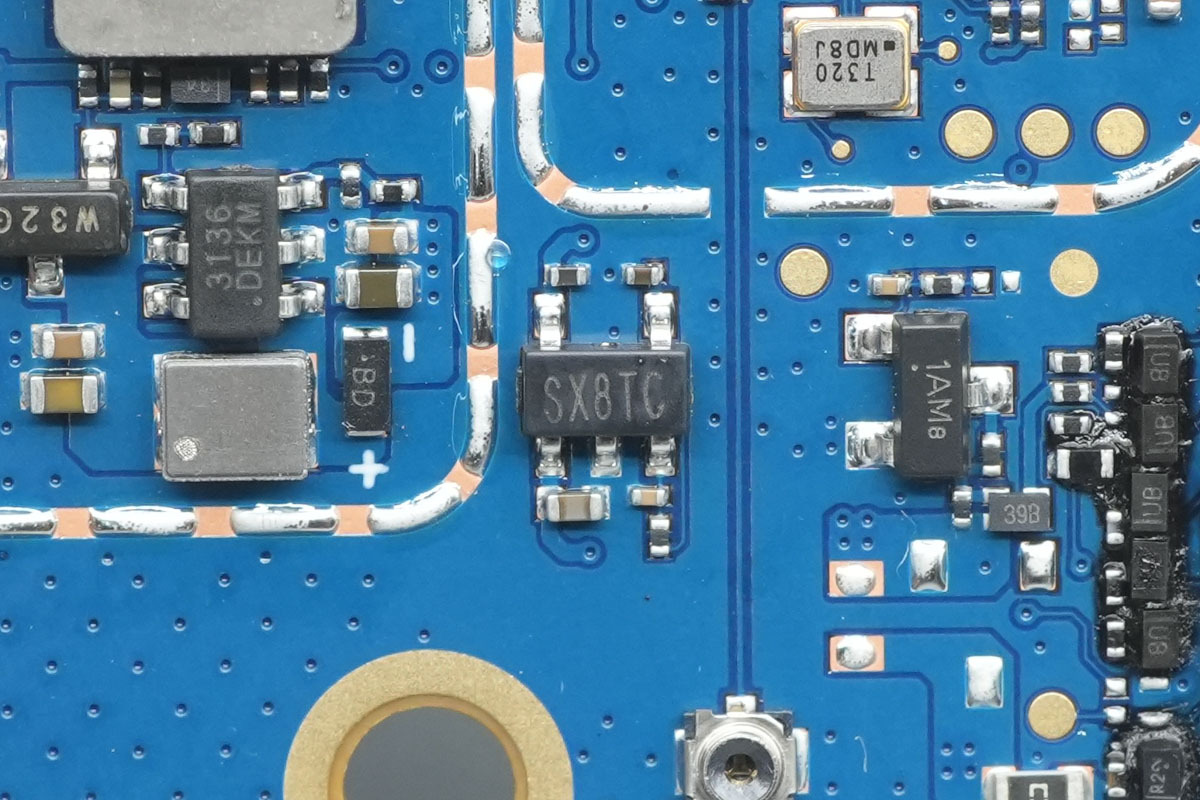
A chip, marked SX8TC.
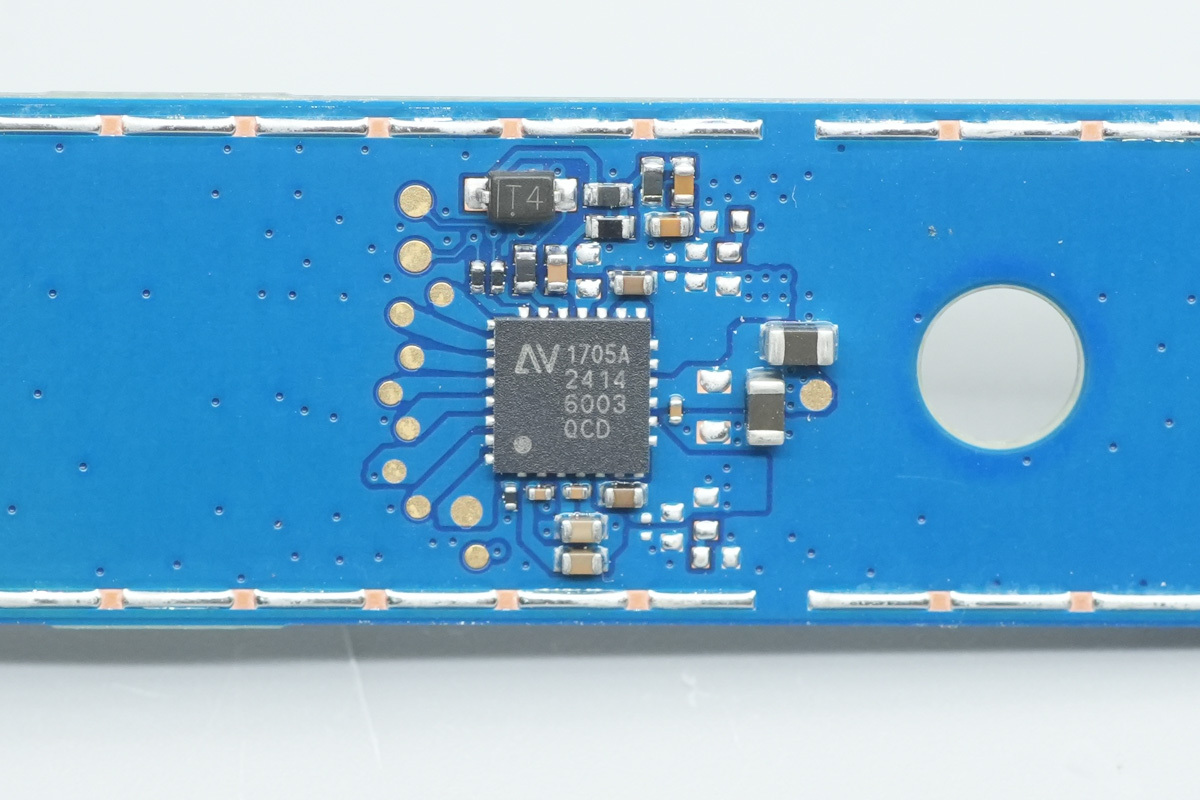
The wireless charging control chip used for charging the headset is from NuVolta, model NU1705A. It integrates a wide-frequency-range full-bridge power stage architecture and a 32-bit MCU core.
The power system integrates all key functional modules, including high-efficiency power MOSFETs, low-EMI FET drivers, bootstrap circuits, integrated 4.8V/1.8V LDO power supplies, and lossless current sensing tech.
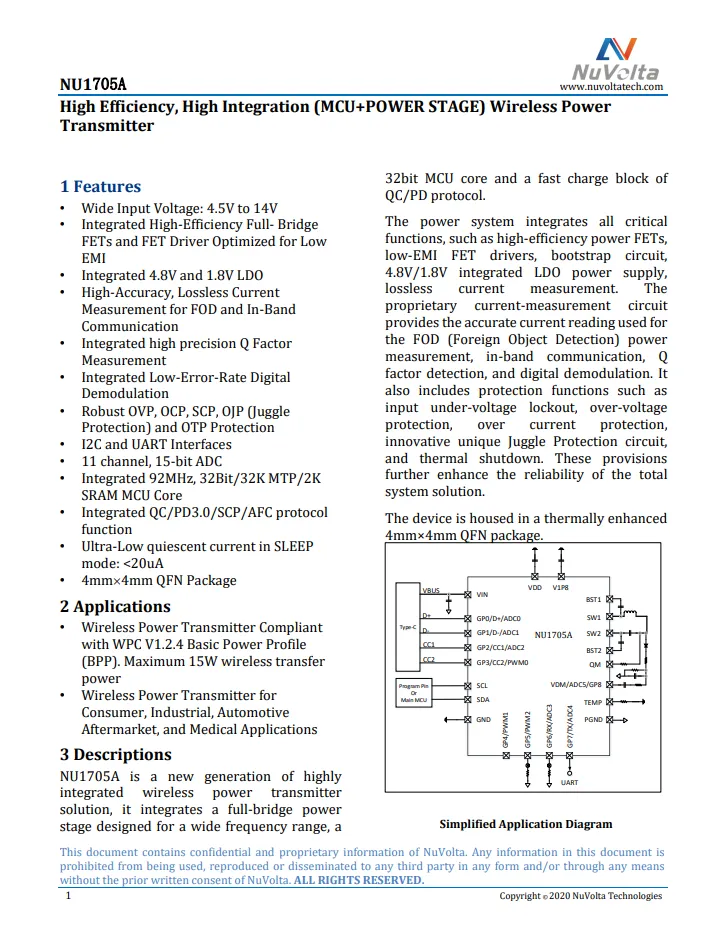
Its patented current sensing circuit provides accurate current measurement for foreign object detection, power measurement, in-band communication, Q-factor detection, and digital demodulation.
The chip also integrates multiple protection mechanisms, including input UVLO, OVP, OCP, proprietary Juggle Protection dynamic protection circuitry, and thermal shutdown protection. These features significantly improve overall system reliability. It is housed in a 4mm × 4mm QFN package.
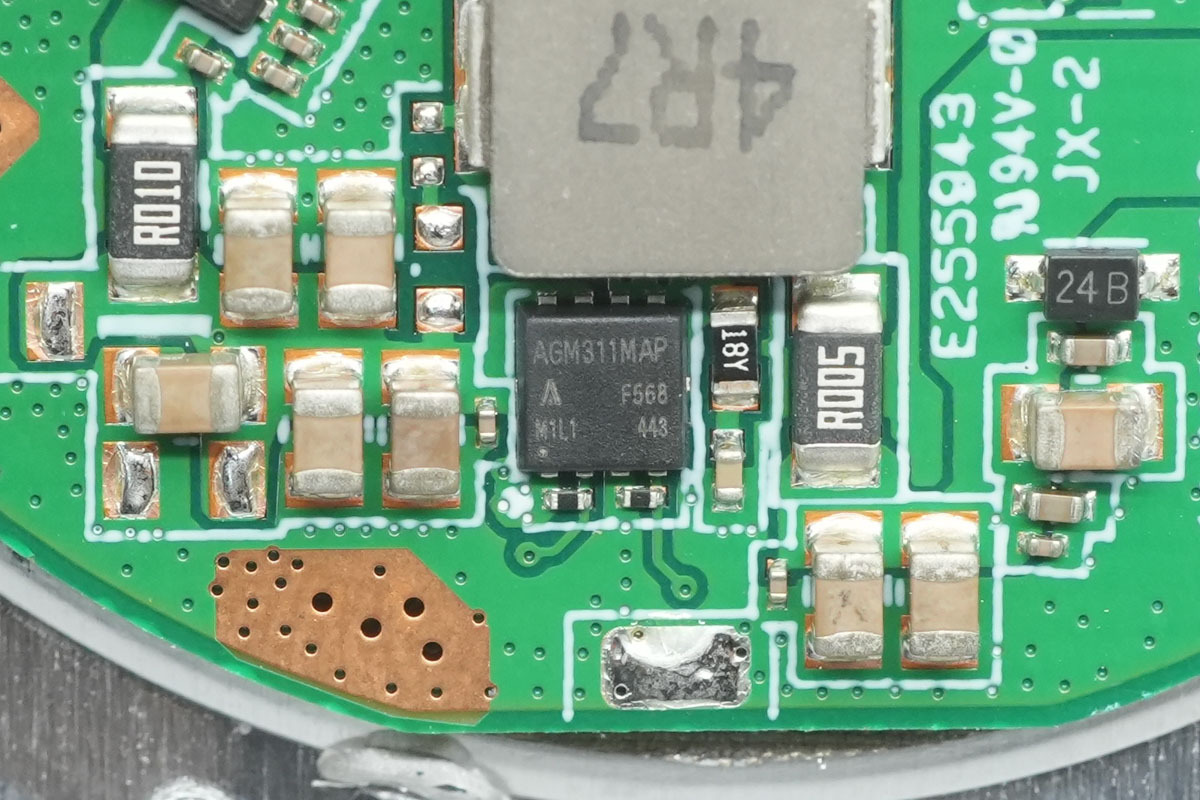
A boost MOSFET from AGMsemi, model AGM311MAP, features a 30V voltage rating, 10.5mΩ on-resistance, and a PDFN3333 package.
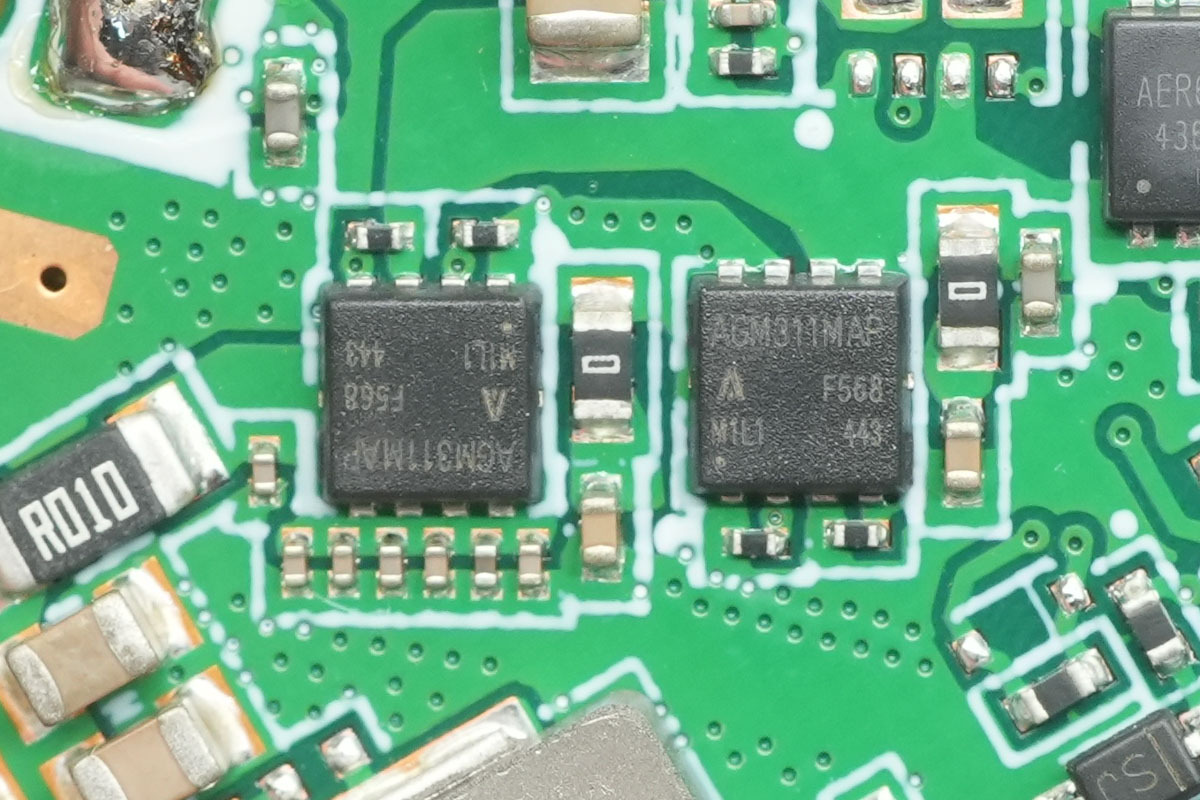
Two wireless charging power MOSFETs are also AGMsemi AGM311MAP devices.
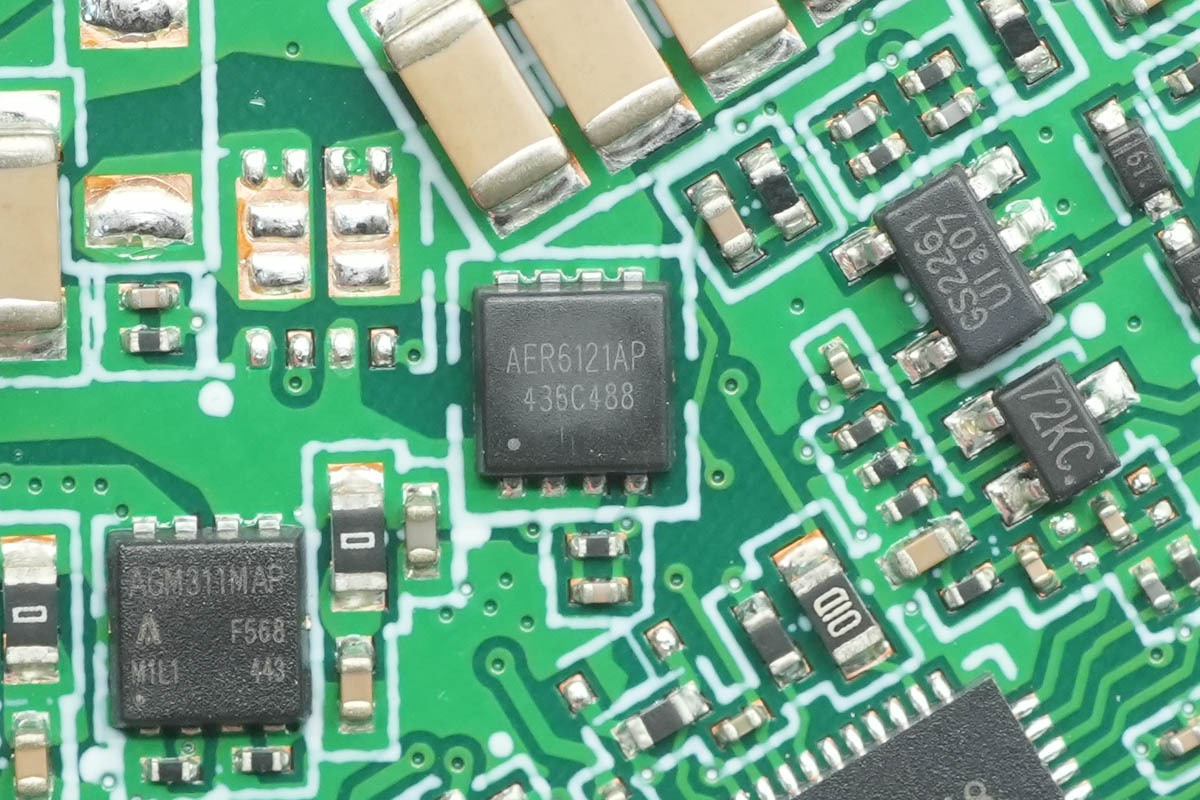
A wireless charging resonant cap switching MOSFET marked AER6121AP.
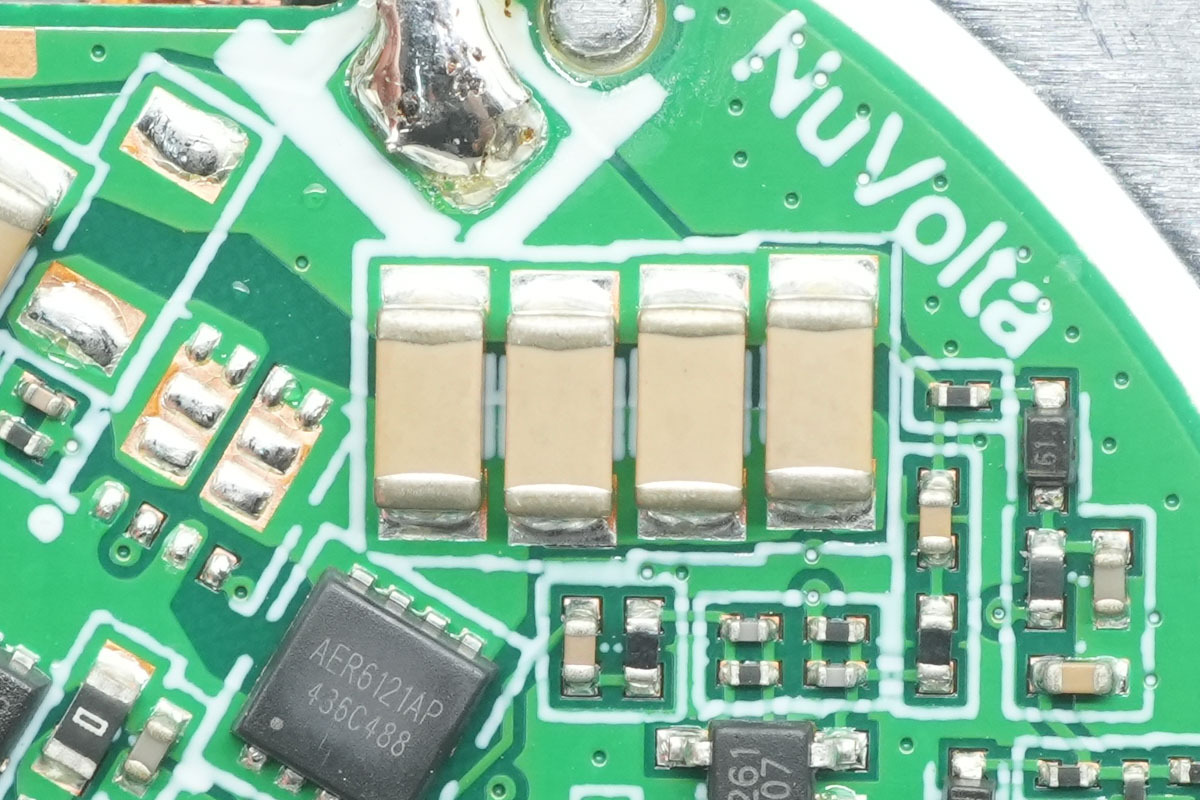
The wireless charging resonant cap.
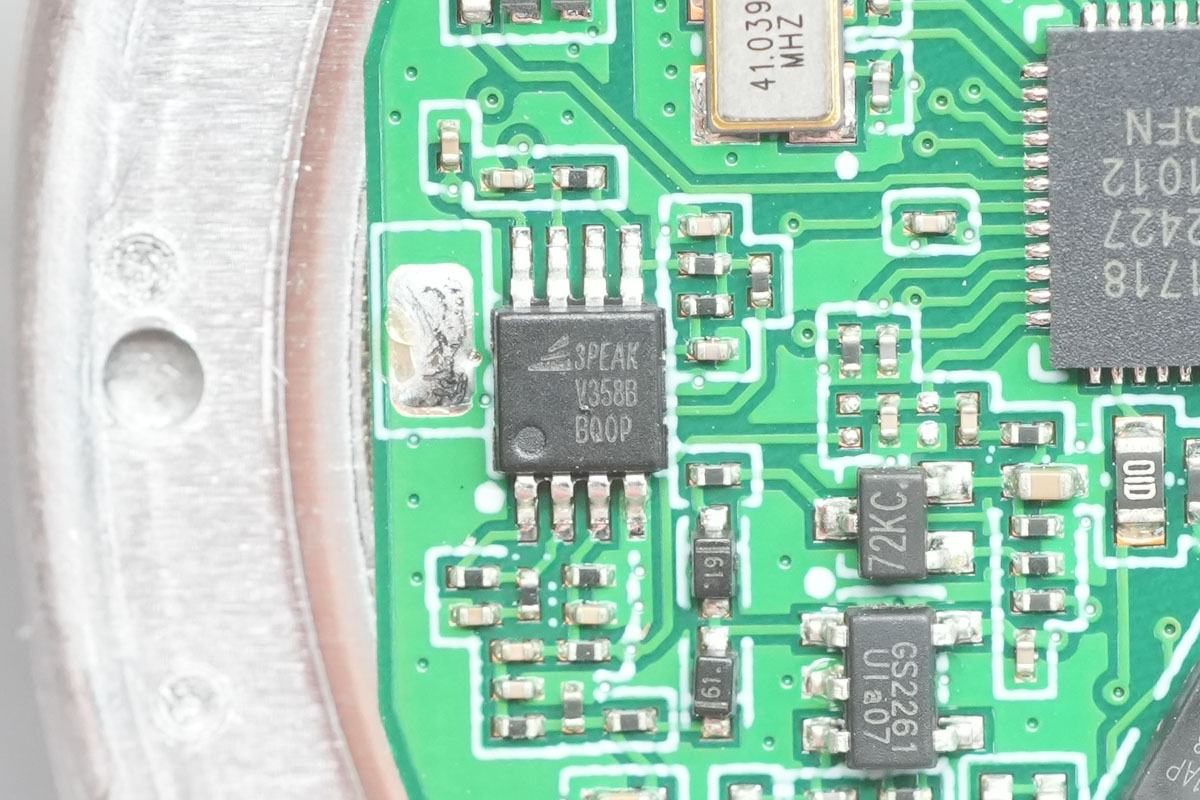
An operational amplifier from 3PEAK, model LMV358B, housed in an MSOP-8 package.
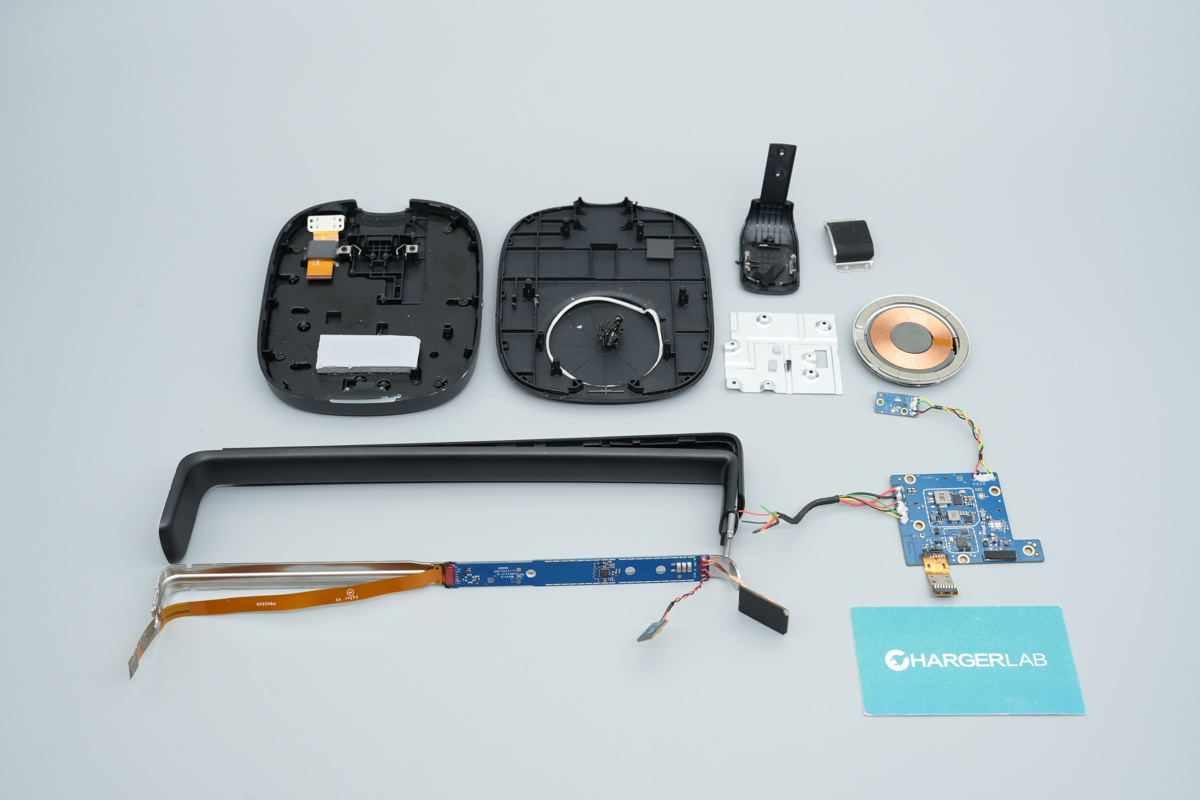
The teardown of the included headset charging stand is complete. Here are all the internal components.
Summary of ChargerLAB
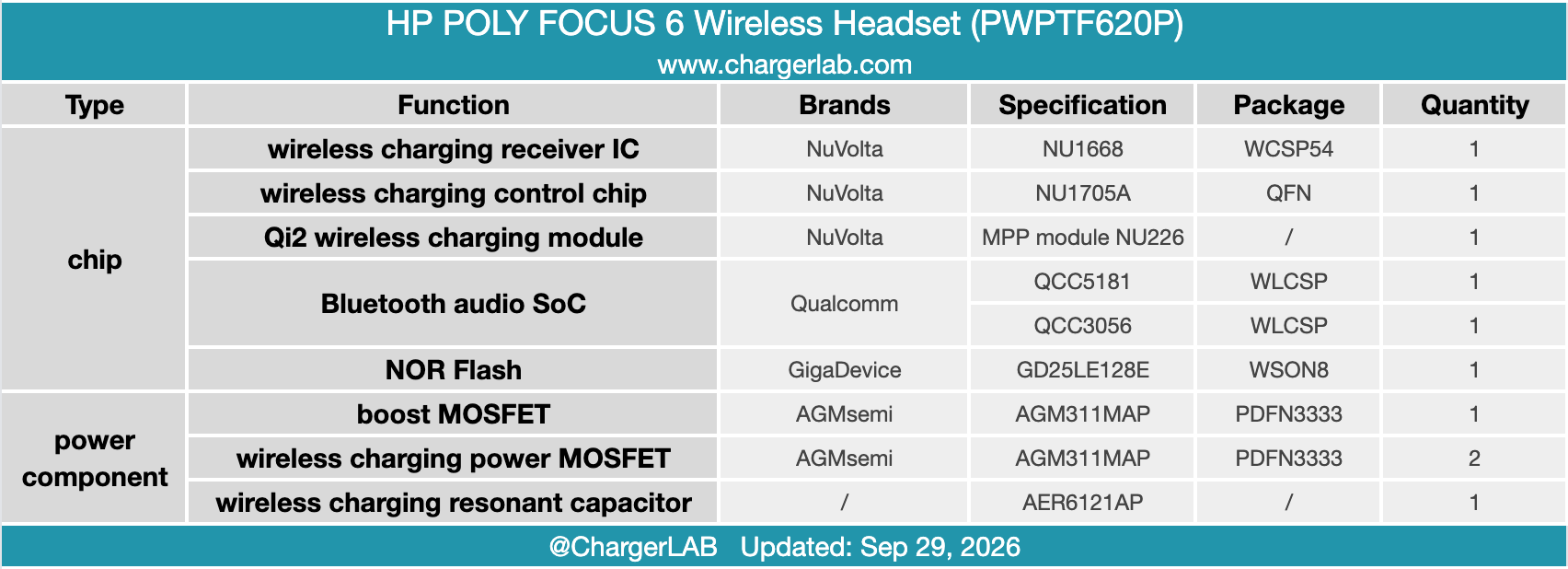
The HP Poly Focus 6 Wireless Headset bundle is styled in a sleek deep space black finish, featuring a rotatable folding boom mic and a tactile metal volume scroll wheel. The matching 2-in-1 desktop wireless charging stand supports effortless headband-suspension wireless charging, while its base integrates a 15W Qi2 magnetic wireless charging pad to power up smartphones.
Under the hood, the internal architecture is split between the headset and the charging stand.
In the headset, the headband houses a NuVolta NU1668 wireless power receiver to interface with the stand's charging coils. Audio streaming and wireless connectivity are driven by a Qualcomm QCC5181 Bluetooth audio SoC, backed by a GigaDevice GD25LE128E NOR Flash for storage and an SGMICRO SGM41512 IC handling lithium battery step-down charging and power path management.
On the stand side, the Qi2 charging module is anchored by a NuVolta MPP module NU226, while the top suspension pad dedicated to powering the headset relies on a NuVolta NU1705A wireless charging transmitter chip.
Furthermore, the stand incorporates an auxiliary Qualcomm QCC3056 Bluetooth audio SoC, a TI TPS55287 synchronous buck-boost converter, and a 3PEAK LMV358B operational amplifier, forming a comprehensive power delivery and control ecosystem.
With its wireless charging solutions deployed across both the headset and the charging stand, NuVolta serves as the primary wireless charging solution provider for the HP Poly Focus 6 bundle, supplying the key components that enable its integrated wireless charging experience.