
Introduction
RayNeo is a leading Chinese brand specializing in smart glasses, with a product portfolio spanning the Air series of wearable big-screen entertainment glasses, the X series of full-color waveguide AR glasses, and the V series of AI-powered camera glasses. The RayNeo V4 is its latest generation of AI glasses. Compared with the previous-gen V3, the RayNeo V4 features an upgraded dual-chip architecture and a Blue Whale semi-solid-state battery for longer battery life. It also brings improvements to imaging, audio performance, and AI assistant capabilities.
The RayNeo V4 features a new 1/2.9-inch square image sensor that allows flexible framing in both landscape and portrait shooting. The upgraded Falcon Imaging 2.0 supports video recording at up to 2.5K, professional-grade stabilization, and enhanced low-light performance. Joint optimization with ArcSoft improves color accuracy and white balance. The glasses also feature dual speakers co-tuned with BANG & OLUFSEN for more accurate reproduction of highs, mids, and lows. An upgraded bone-conduction microphone accurately captures the user's voice and enables rapid responses to AI requests.
The RayNeo V4 integrates the Qwen large language model and RayNeo Intent Recognition Model 2.0. Efficient dual-chip scheduling enables an average AI response time of 0.2 seconds. The high-definition camera captures real-time information from the surroundings, enabling image translation, object recognition, and guided tours of attractions. A four-microphone array enables accurate voice capture for creating schedules through voice commands, transcribing meetings in real time, and organizing information efficiently, helping improve productivity.
The RayNeo V4 uses a dual-chip platform combining the Qualcomm Snapdragon AR1 Gen 1 with the low-power BES2800BP, balancing performance and power efficiency. The Blue Whale semi-solid-state battery significantly increases battery capacity, providing up to 47 minutes of video recording or 11.8 hours of continuous talk time. An optional charging case is also available, featuring a 3,000 mAh battery that can fully recharge the glasses up to seven times, extending their runtime during outdoor use. Now, let's take a closer look at the teardown.
Appearance
Unboxing of the RayNeo V4
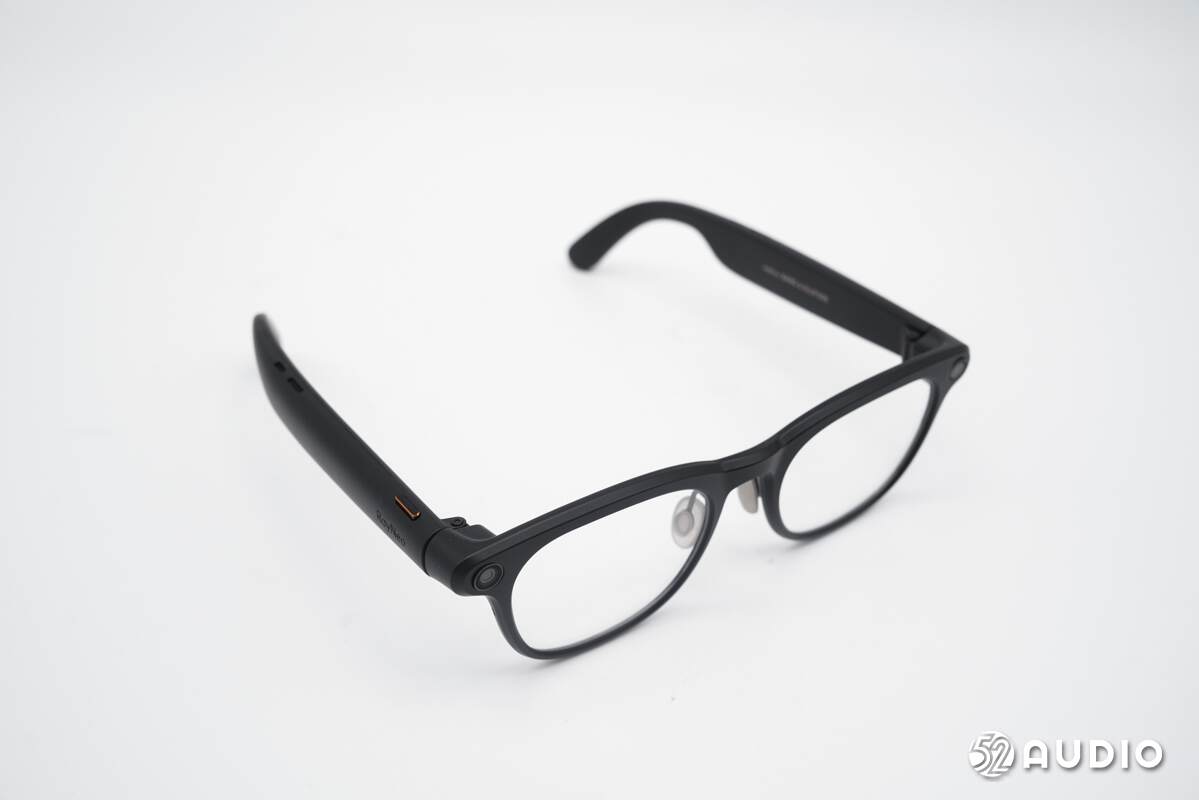
An overview of the RayNeo V4. The design largely follows the previous generation, with a matte Midnight Black finish and a lightweight enclosure made of custom nylon.
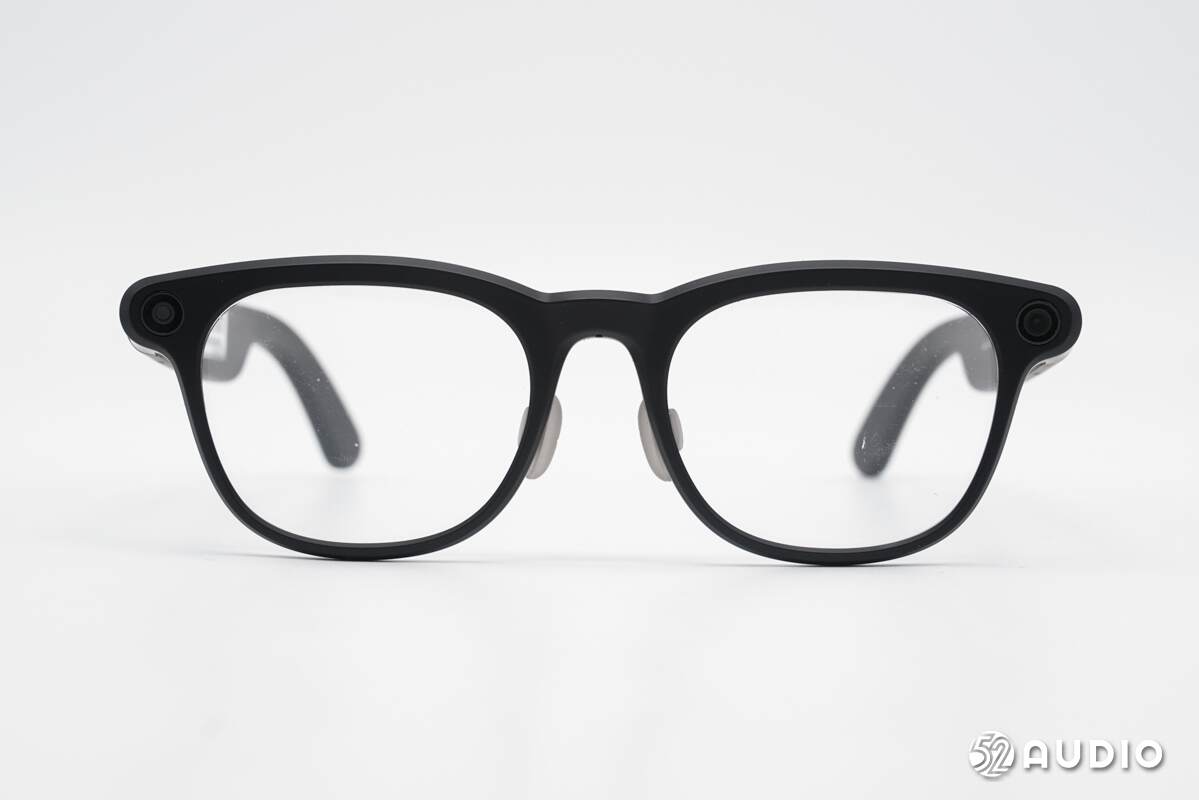
The front of the frame features a classic black-frame design, with a recording indicator on the left and a camera on the right.
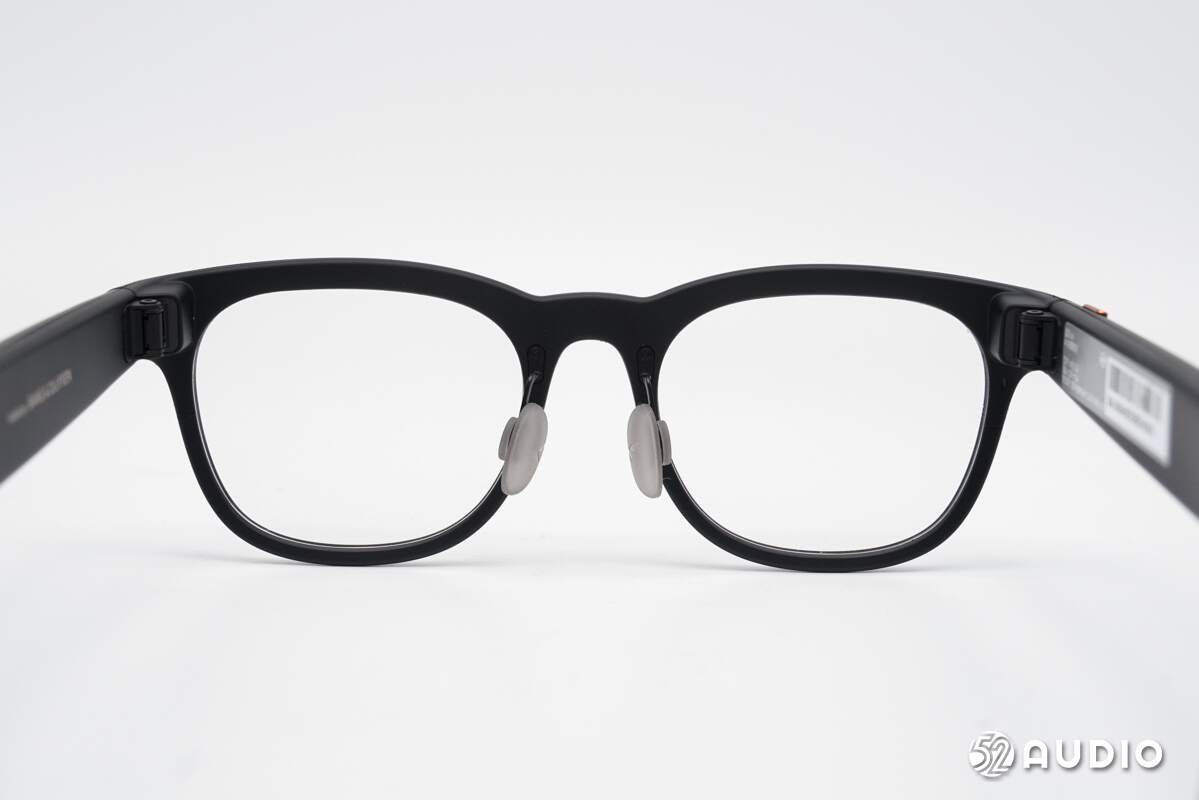
The inner side of the frame features an adjustable nose bridge and floating nose pads for a more comfortable fit.
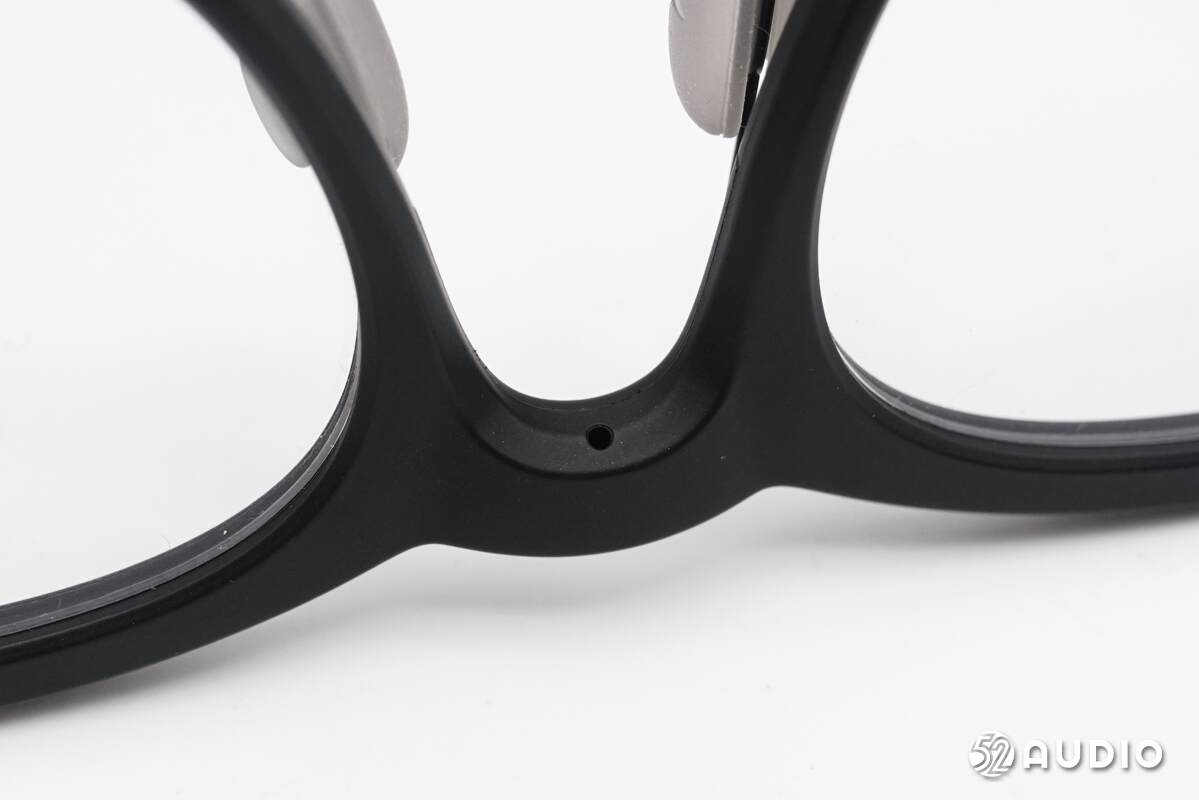
The microphone opening on the bottom of the frame.
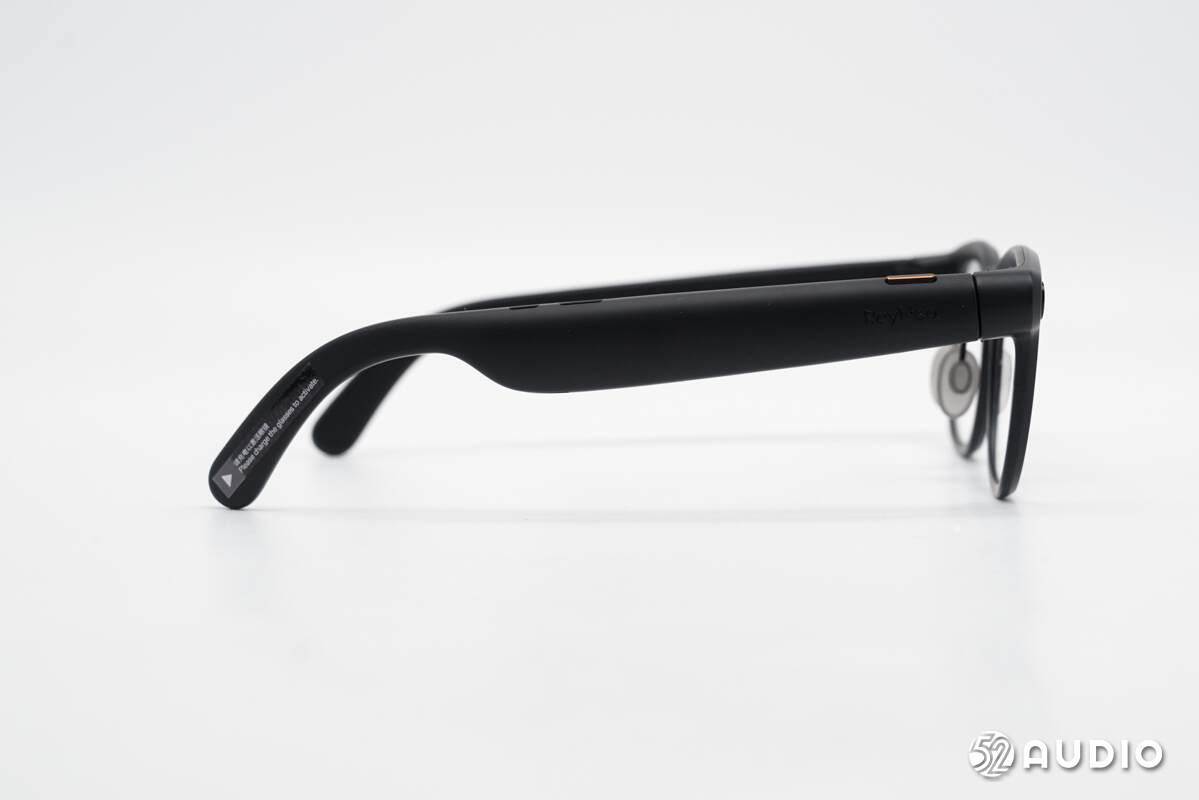
The right temple features a balanced front-to-back weight distribution for improved wearing comfort. The outer side bears the brand logo and includes a touch panel for multifunction controls.
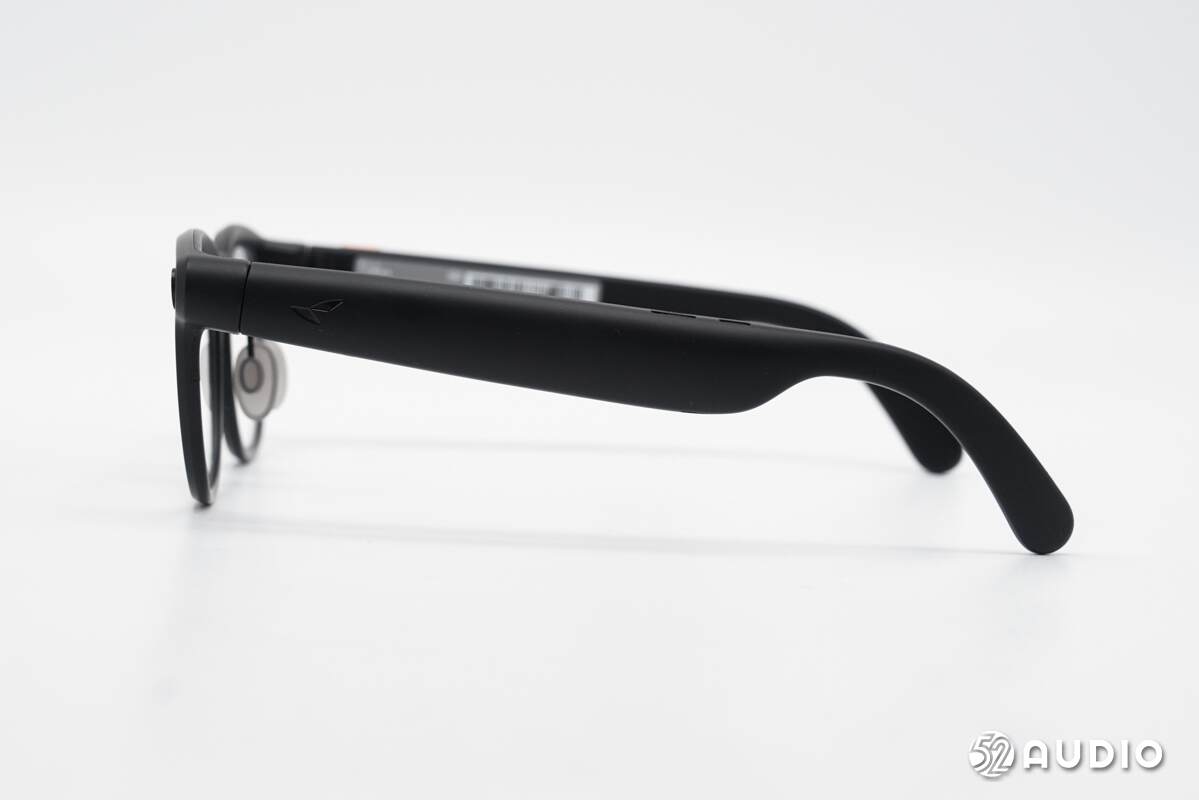
The left temple features a symmetrical design matching the right temple.
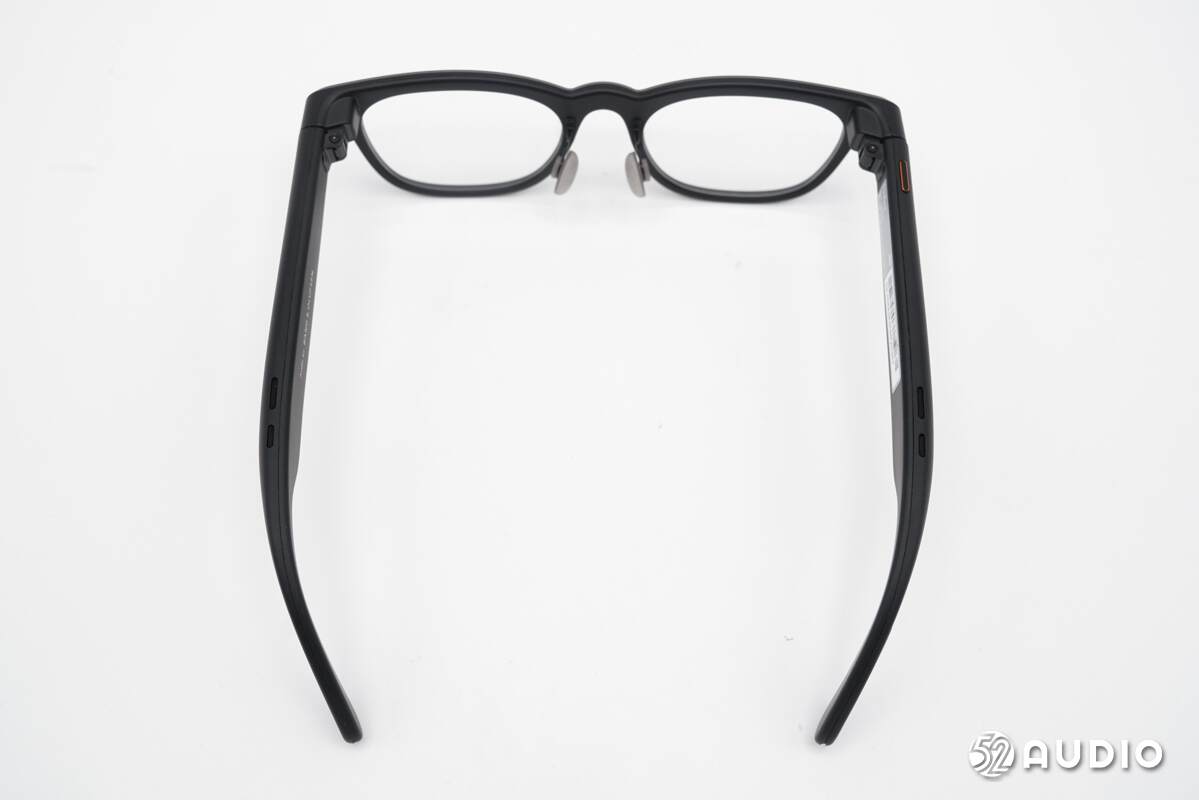
A top view of the glasses. The temples feature acoustic vents, and the right temple also has a capture button.
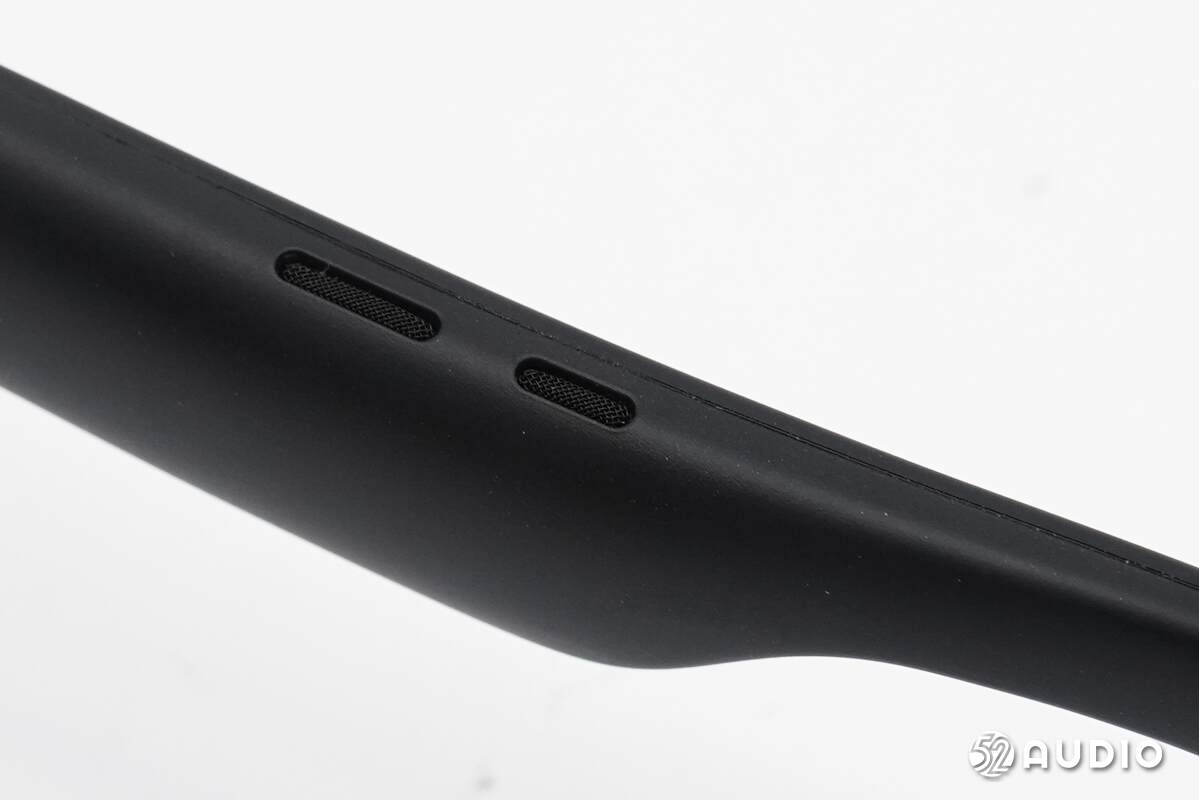
The acoustic vent on top of the temple. A metal mesh protects the opening while allowing air to circulate inside the acoustic chamber.
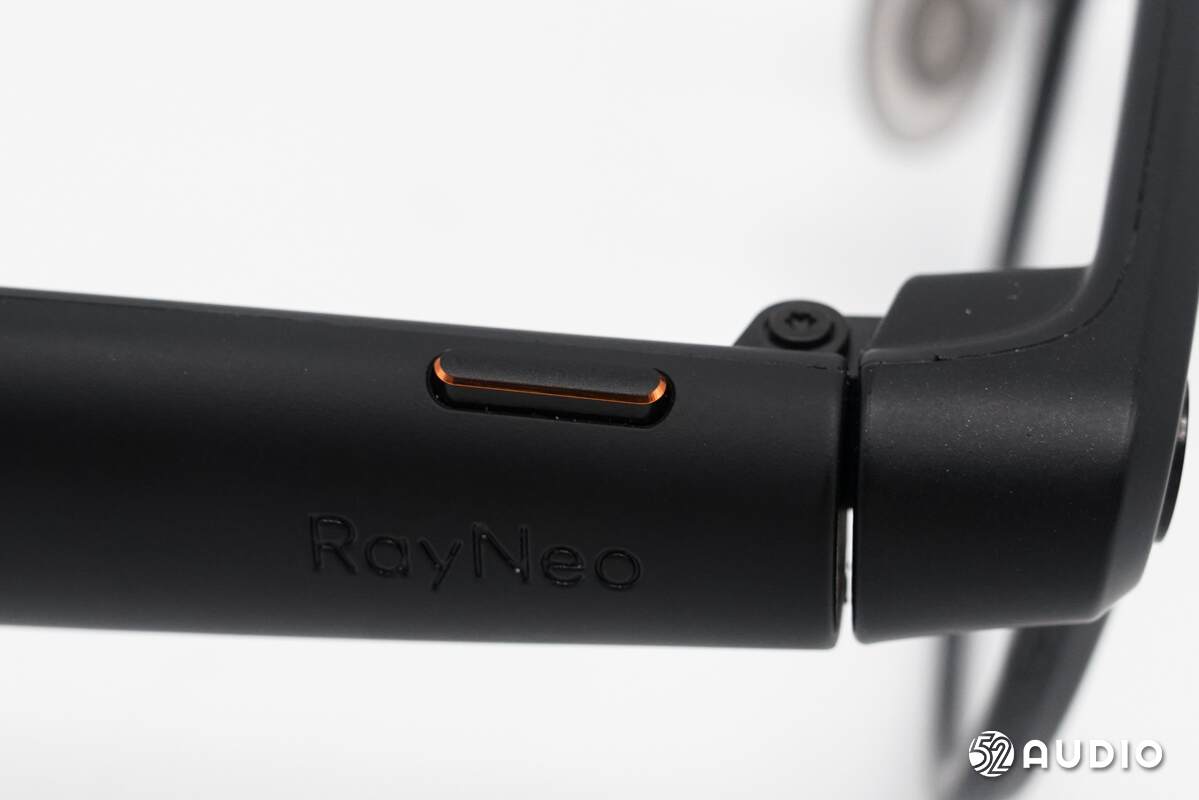
The capture button on top of the right temple is accented by a glossy orange chamfer.
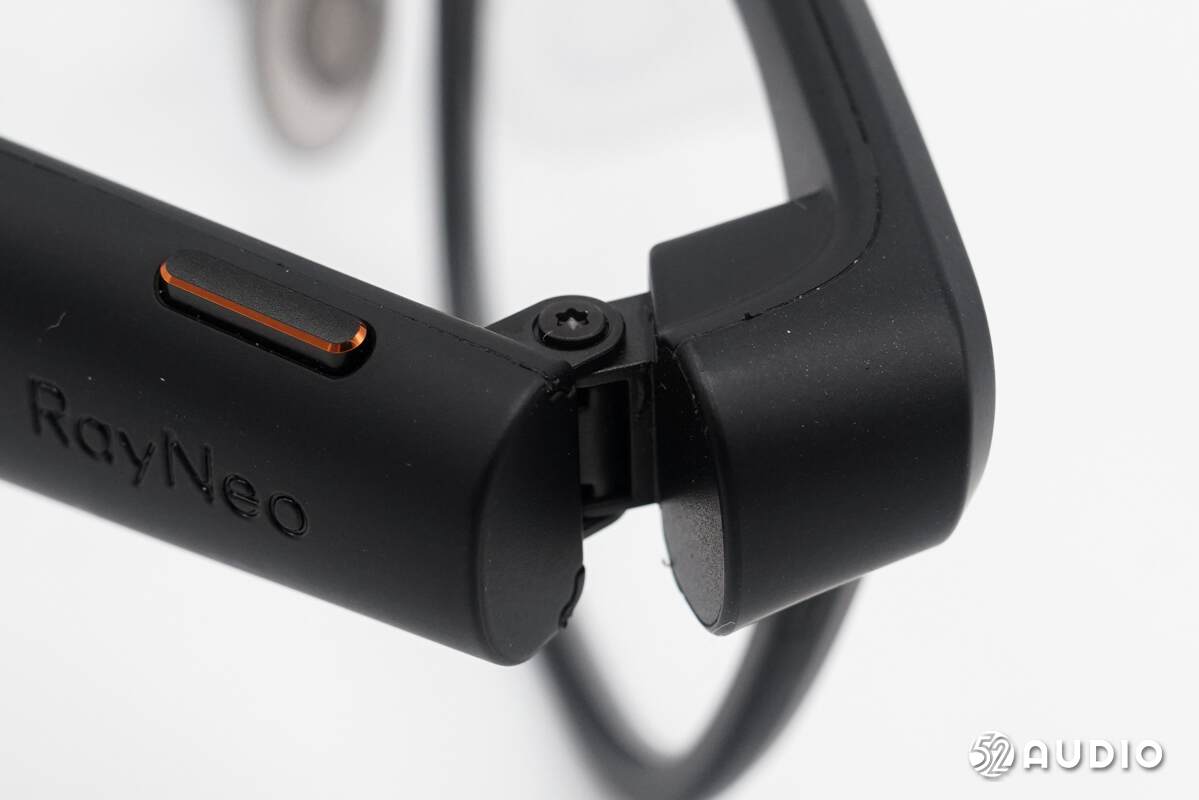
The hinge connecting the temple to the frame is made of titanium alloy, offering a lightweight yet strong and durable structure. A new sealing process at the temple-to-frame connection creates a cleaner, more unified appearance while improving dust and water resistance.
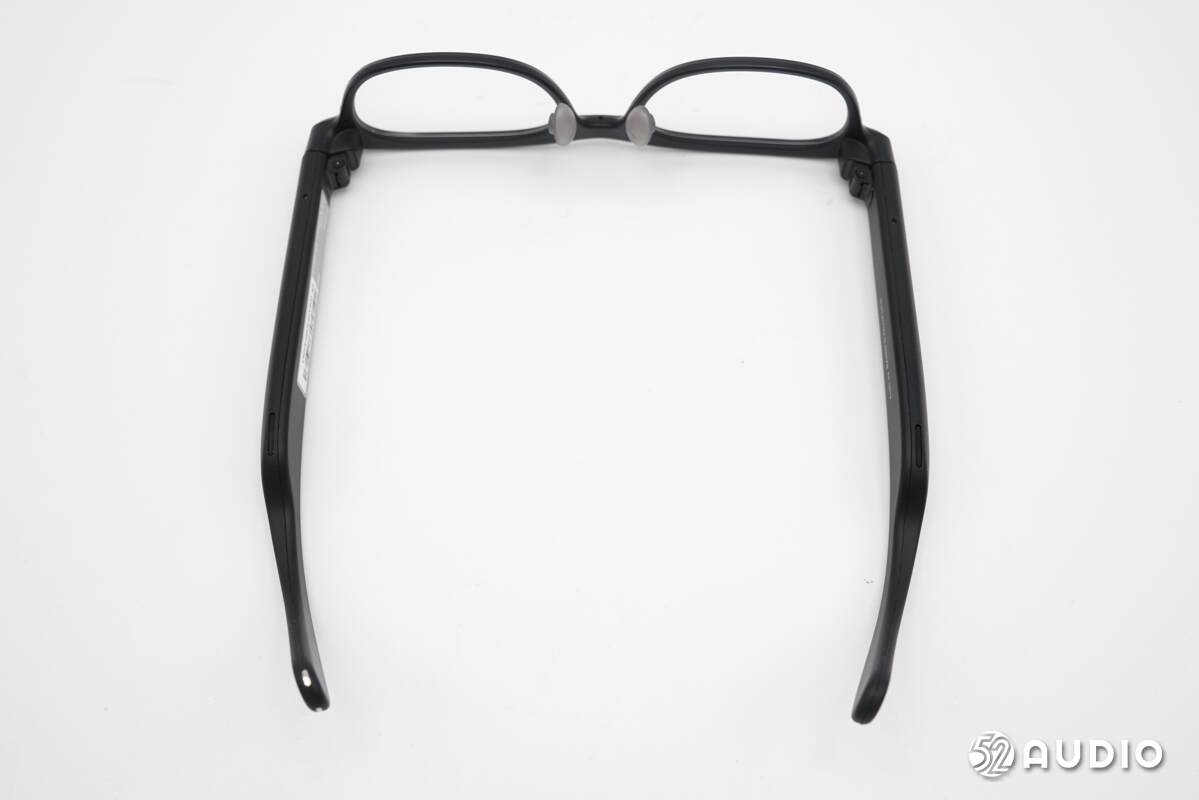
A bottom view of the glasses. Both temples feature speaker openings and microphone openings.
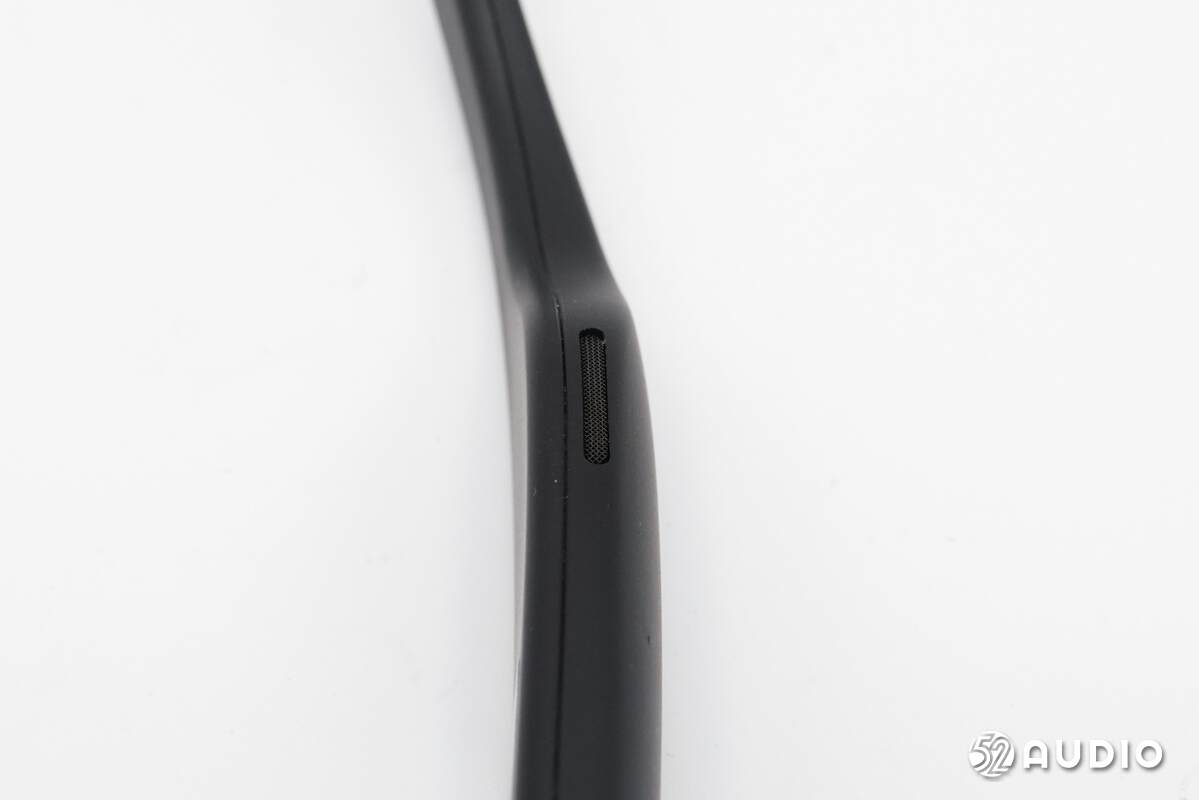
The speaker opening is protected by a metal mesh.
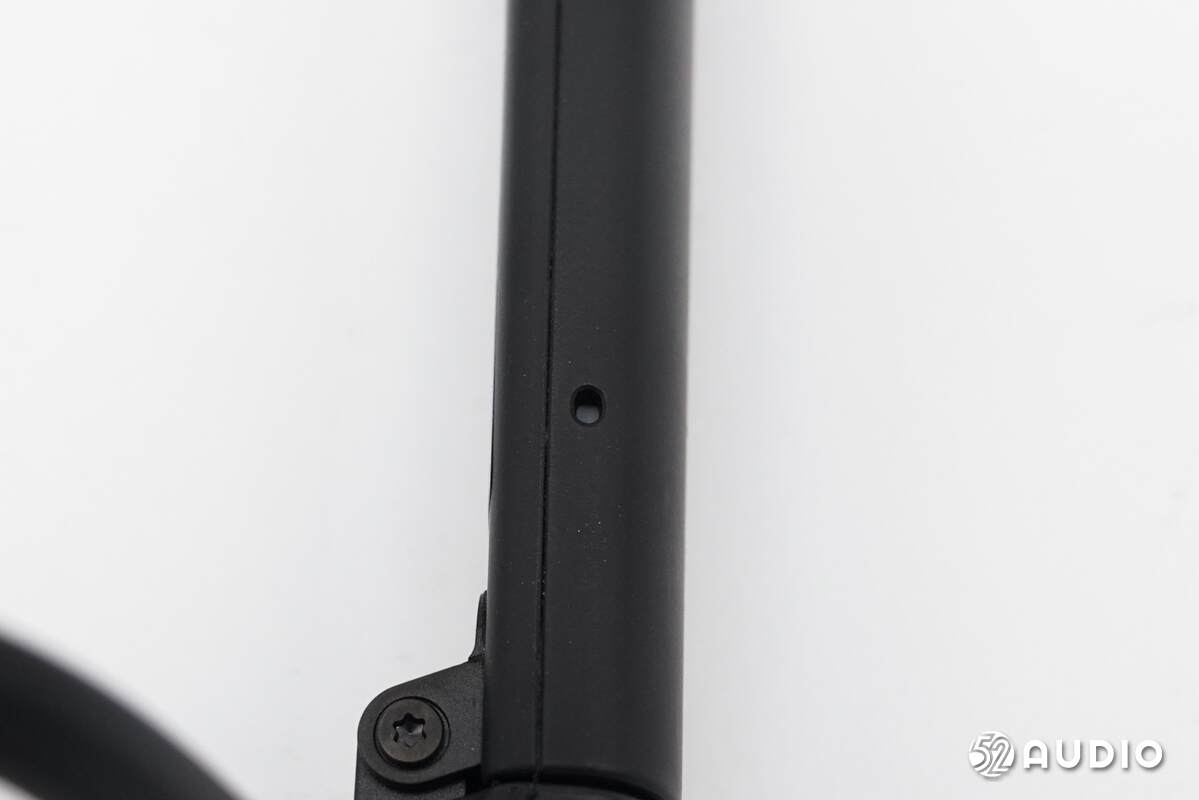
The microphone opening.
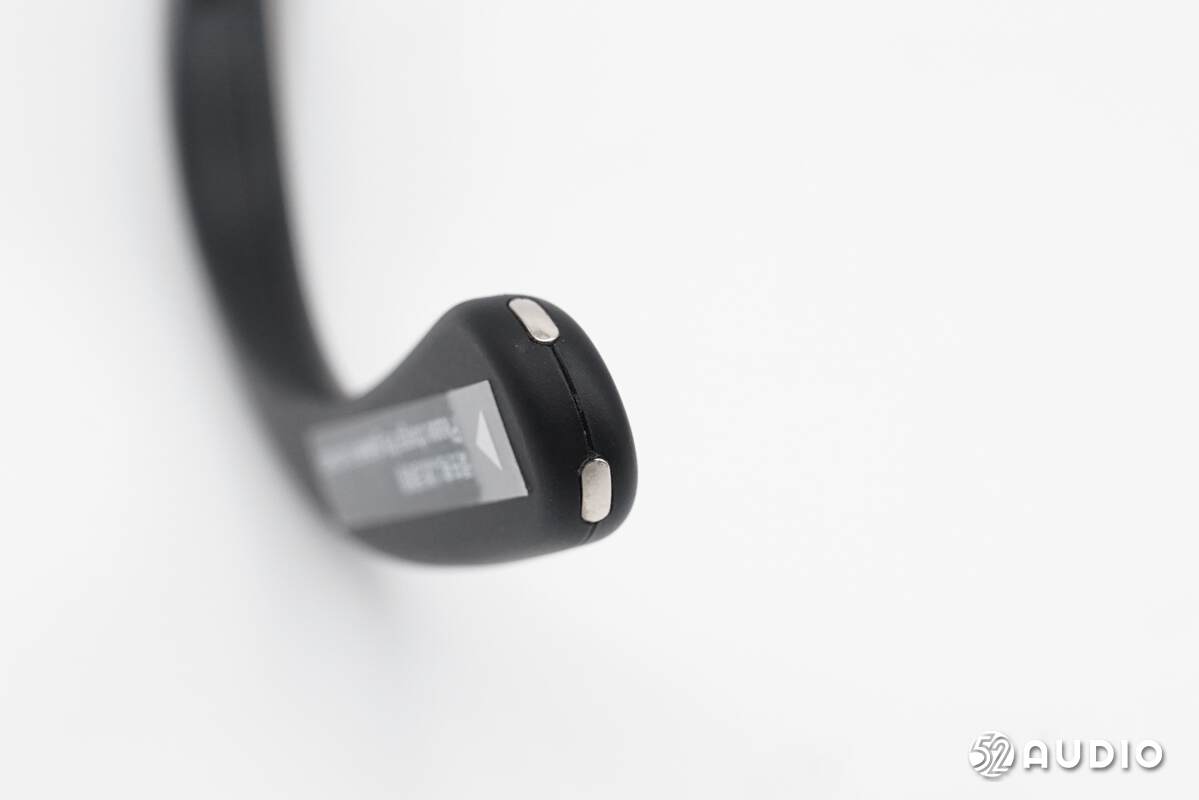
The charging contacts at the end of the right temple.
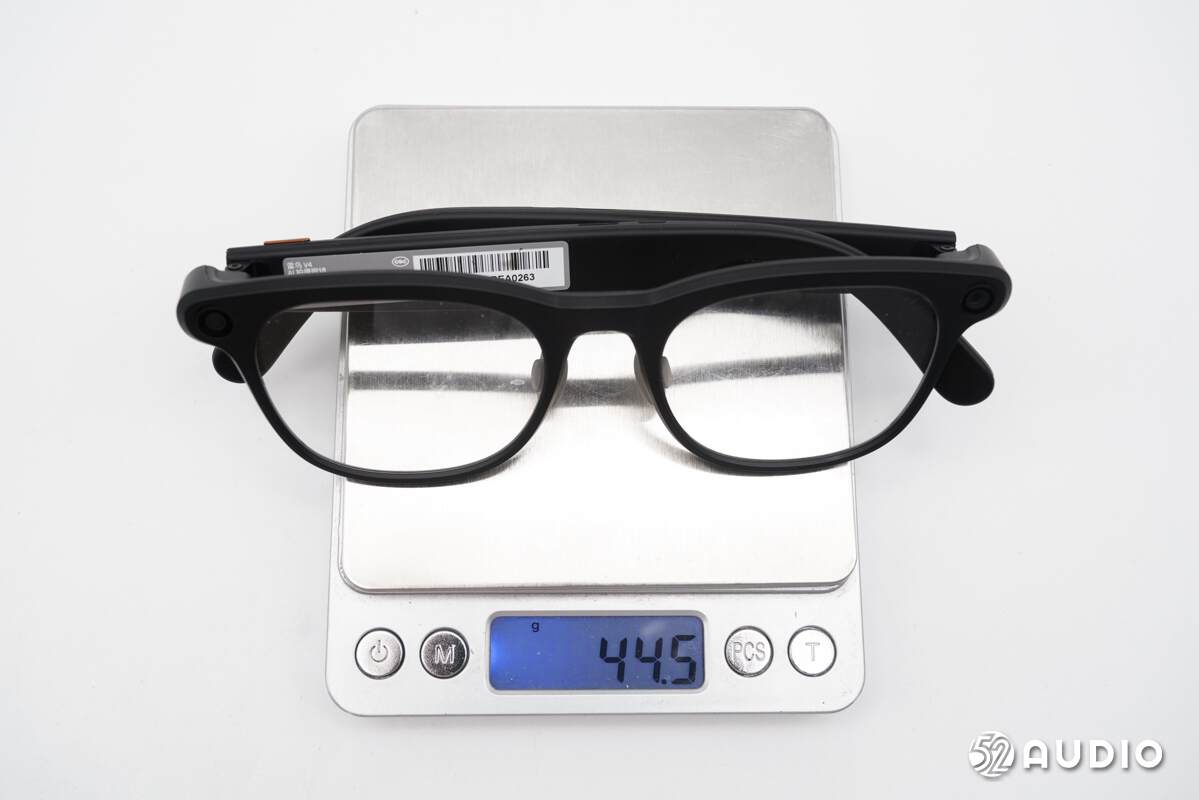
According to measurements by 52 AUDIO, the RayNeo V4 weighs approximately 44.5 g (1.57 oz) with the factory-installed lenses.
Teardown
Teardown of the RayNeo V4
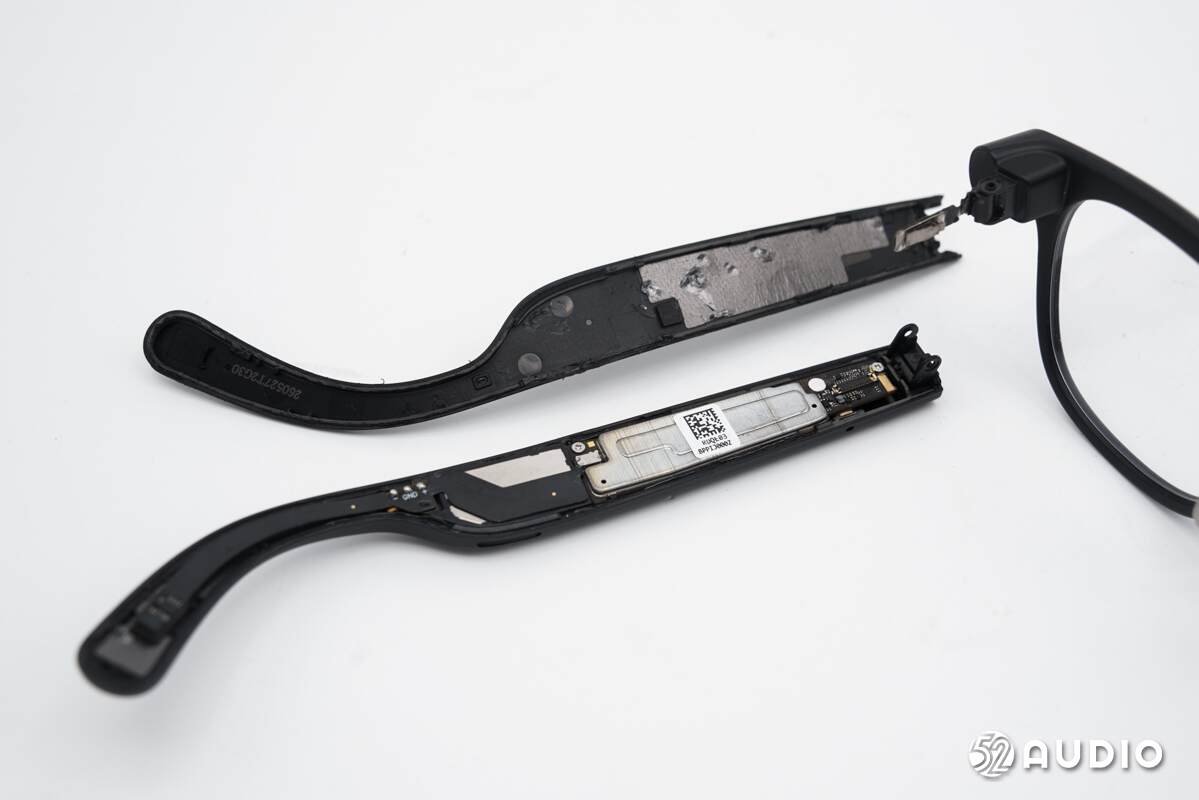
Begin the teardown by opening the left temple.
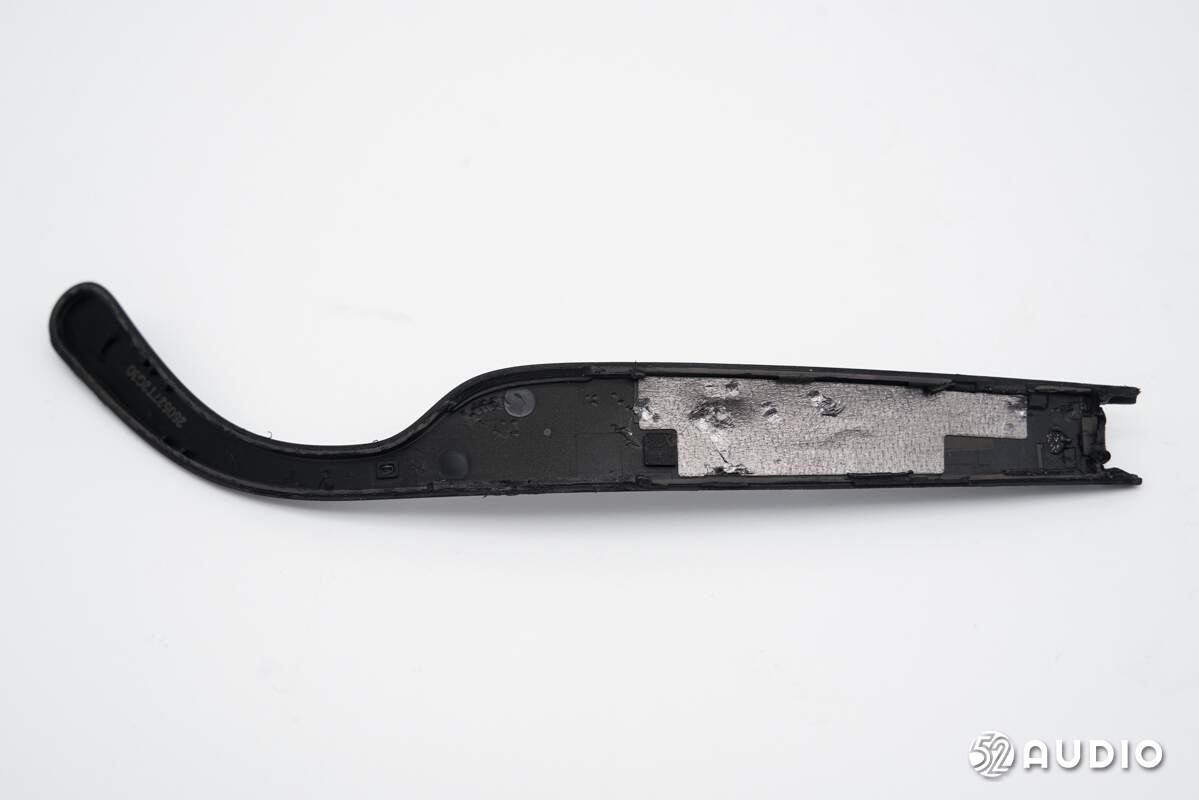
The inner cover of the left temple features a heat-dissipation film.
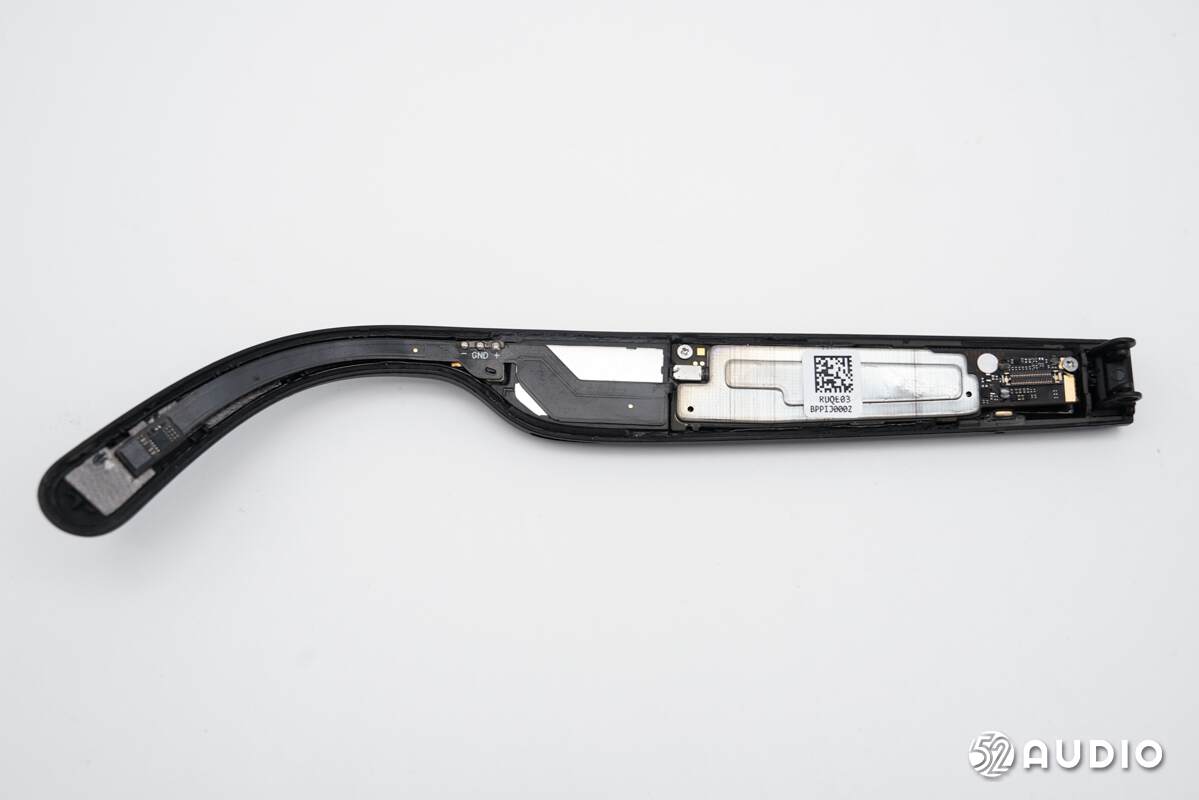
The internal cavity houses the mainboard, speaker, microphone, and other components.
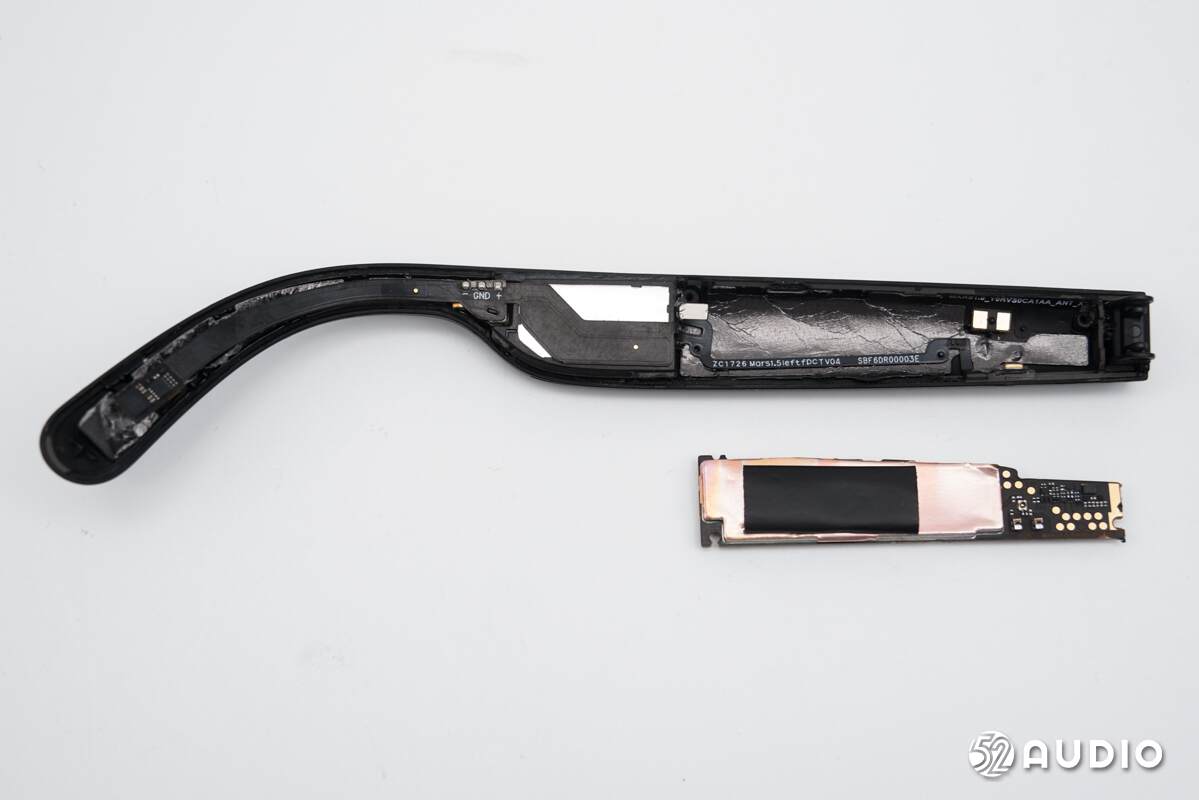
Remove the securing screws, disconnect the connectors, and take out the mainboard assembly.
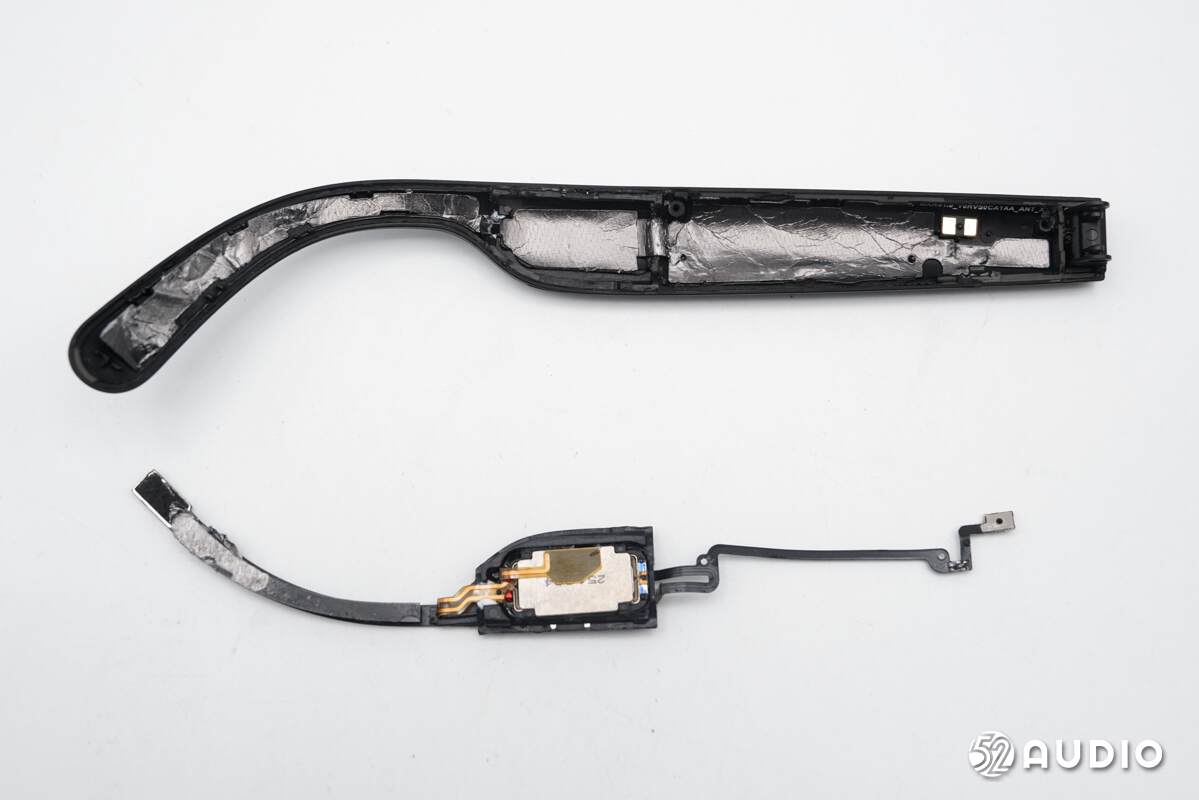
Remove the ribbon cable and its connected components from the cavity.
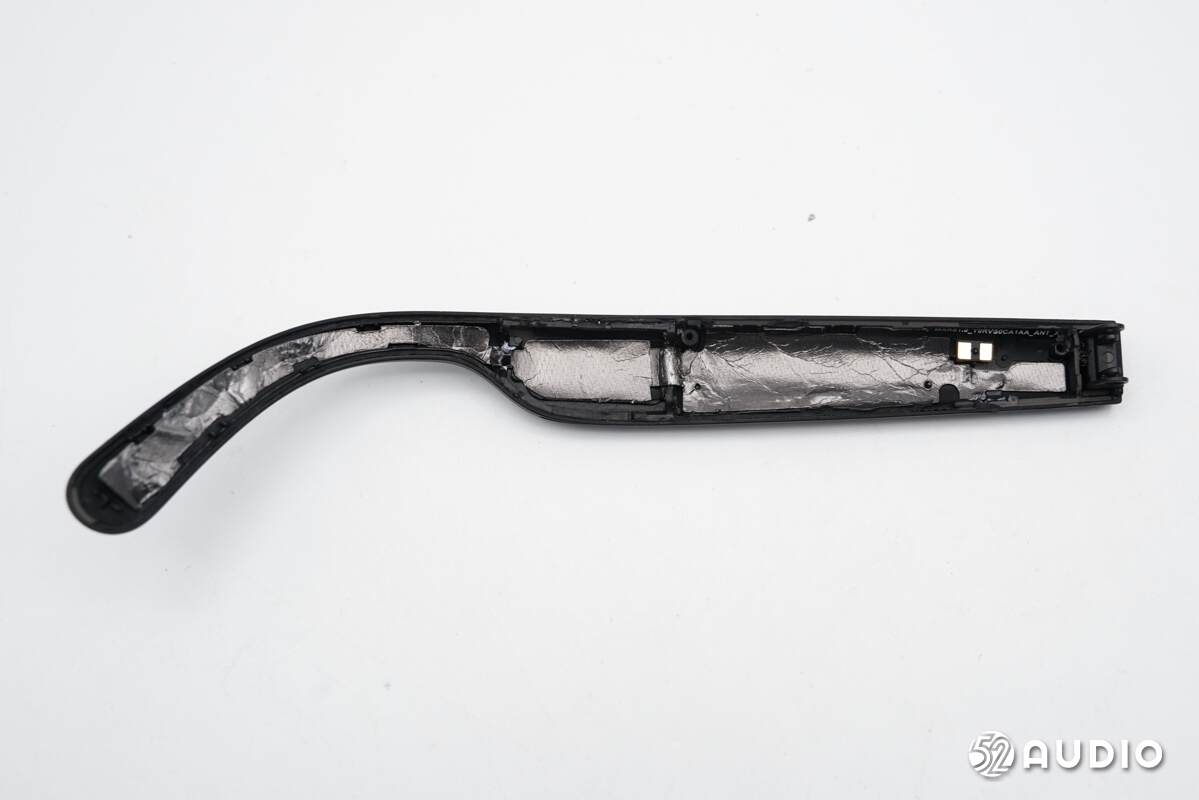
The bottom of the cavity is covered with heat-dissipation film.
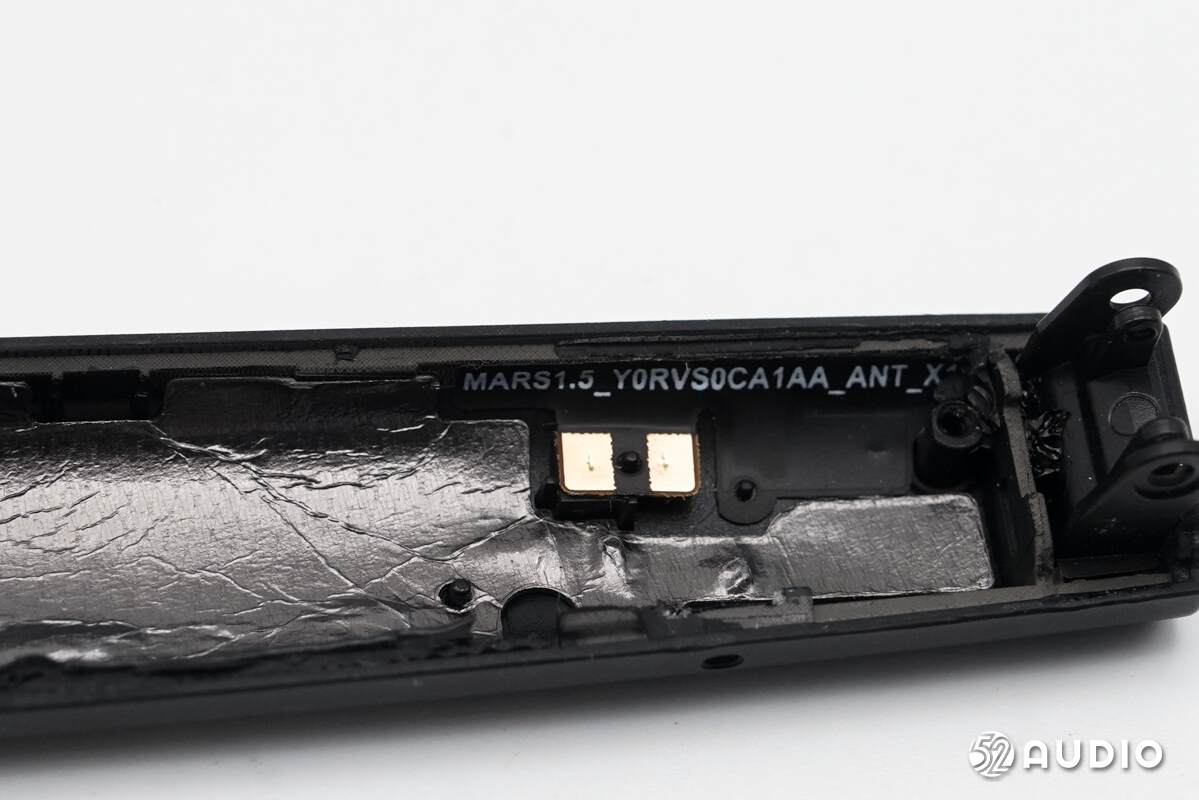
This is an FPC antenna, which connects to the mainboard through exposed copper contacts.
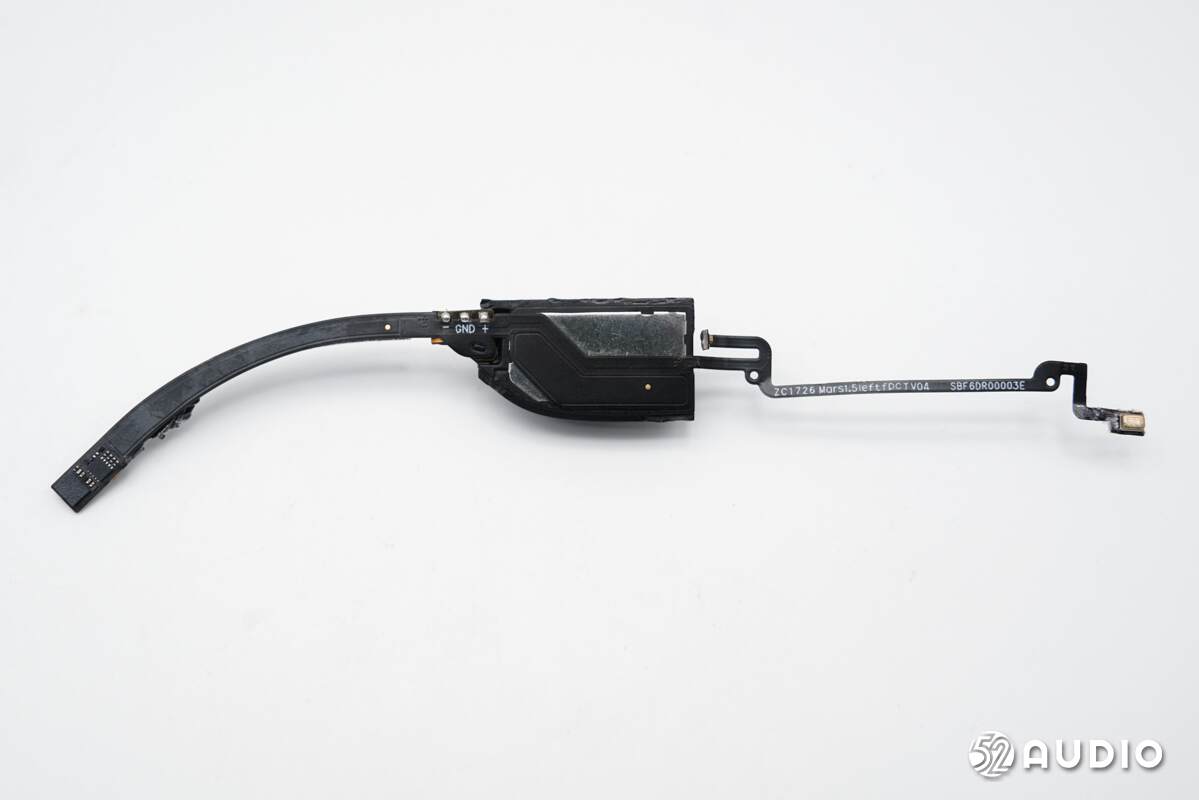
An overview of the ribbon cable circuitry inside the left temple.
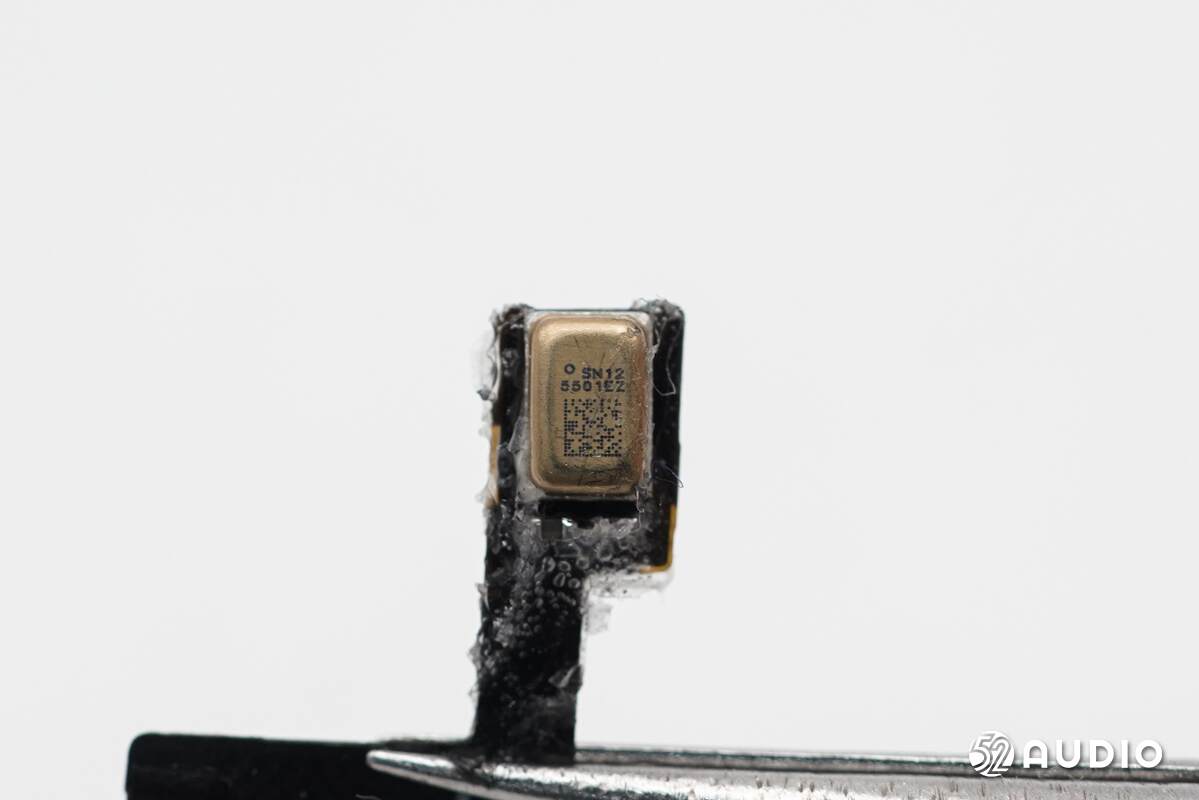
The MEMS microphone marked SN12 is used for audio capture during calls, video recording, and AI interactions.
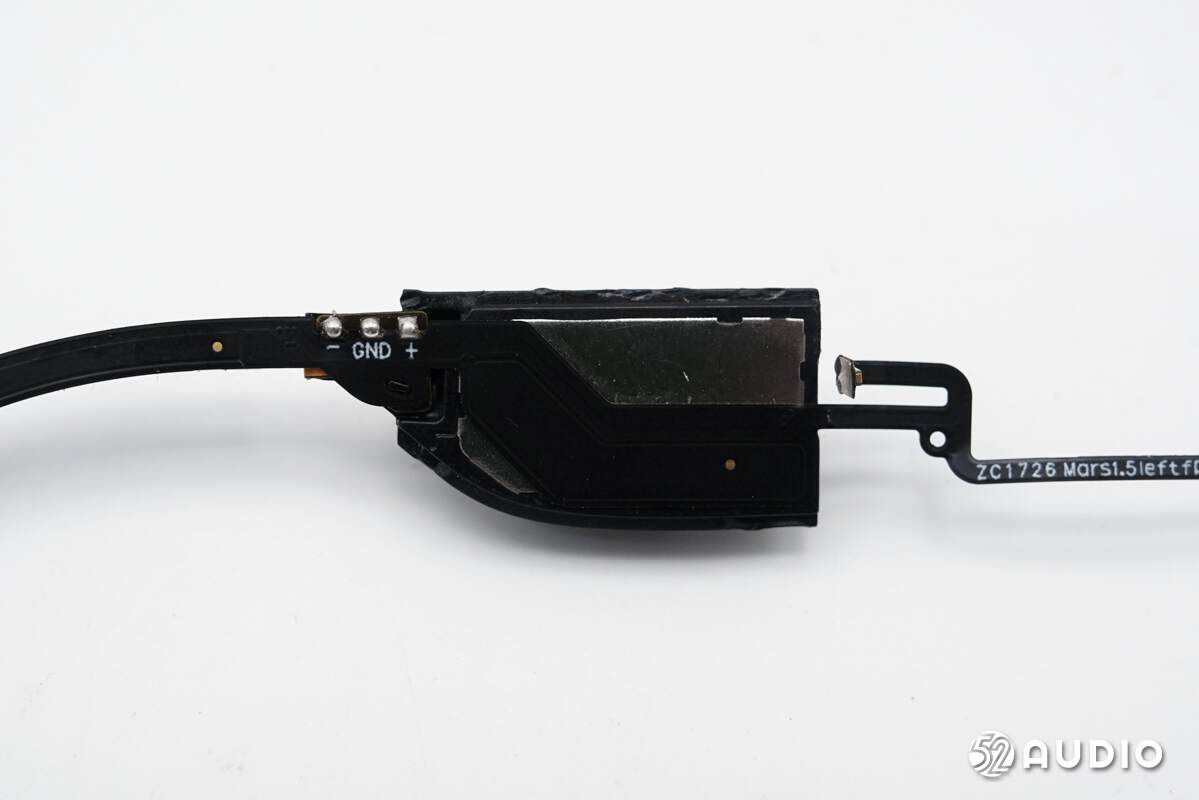
The front of the speaker module co-tuned by RayNeo and BANG & OLUFSEN.
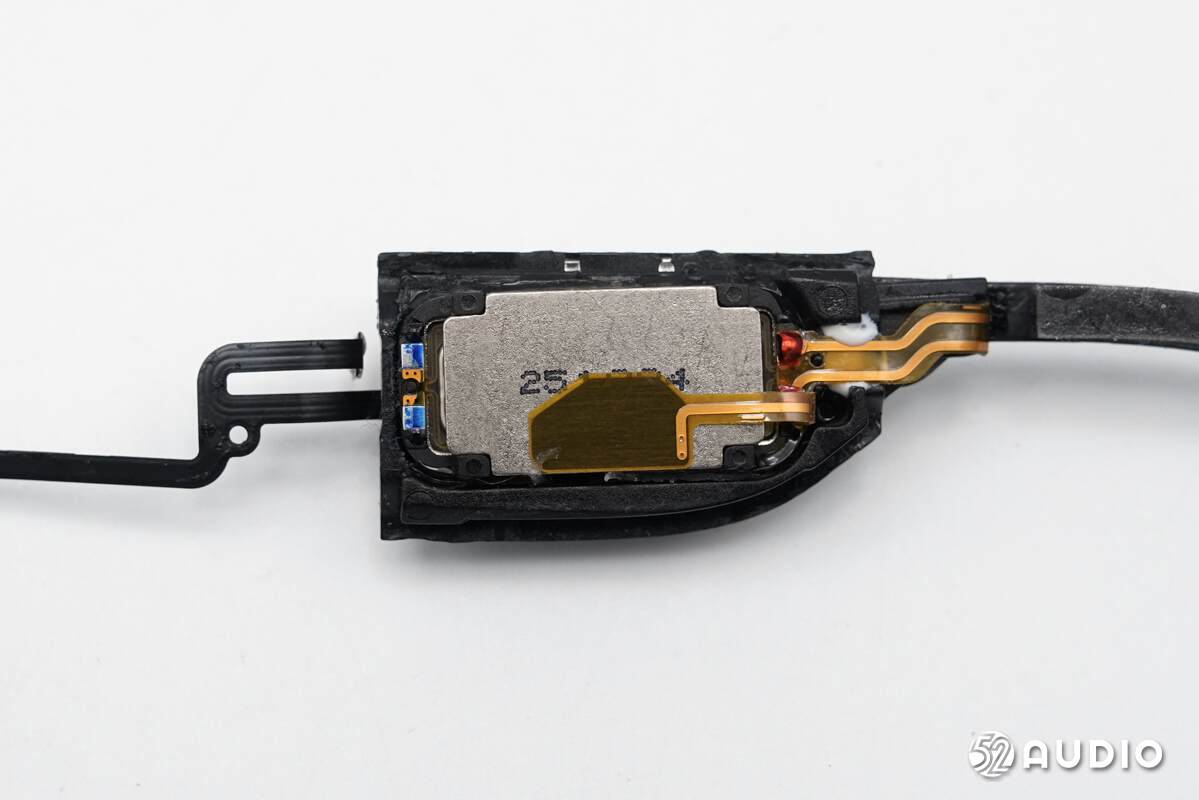
The back of the speaker module.
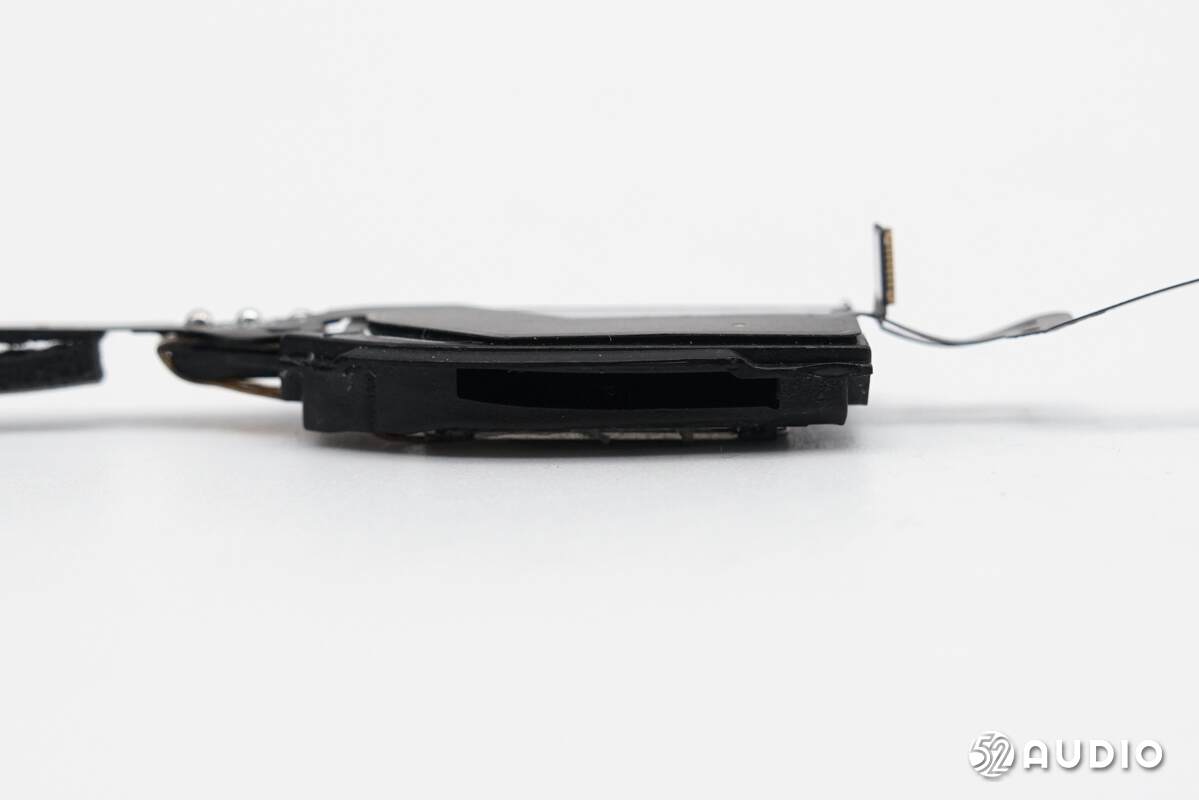
The sound outlet on the side of the speaker module is protected by a mesh.
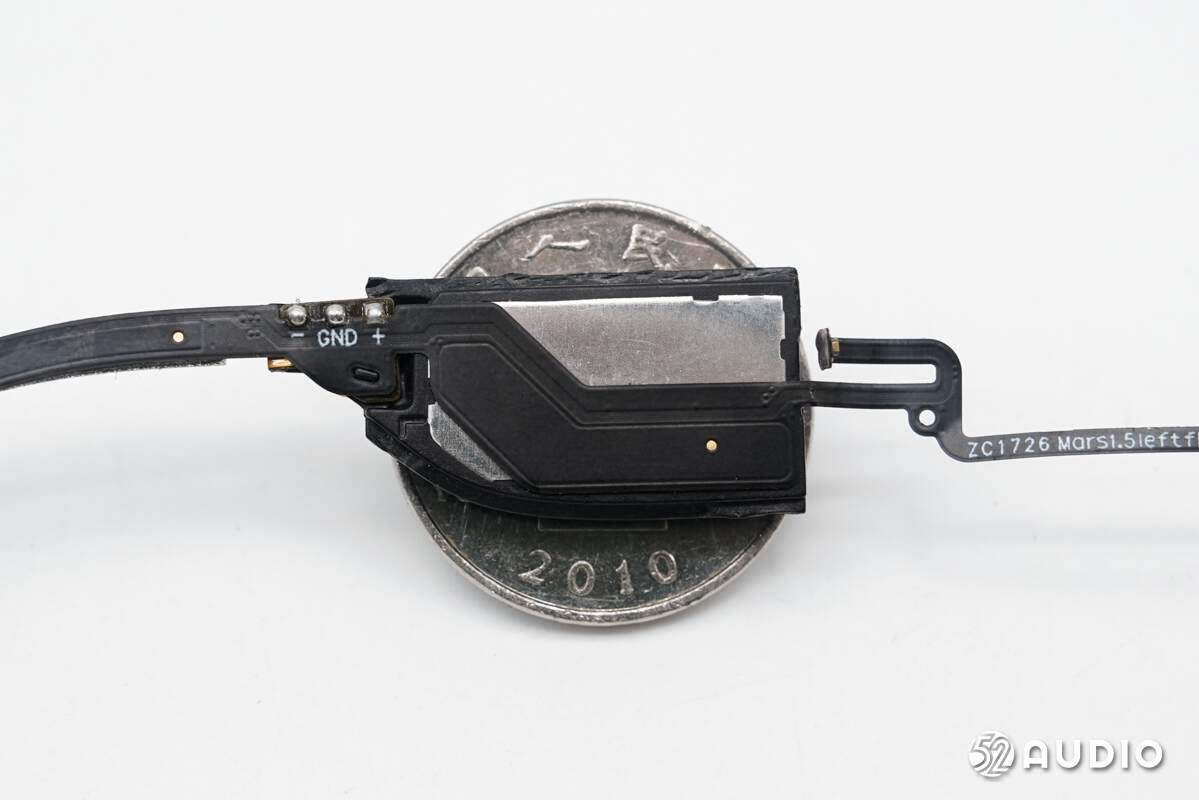
A size comparison between the speaker module and a one-yuan coin.
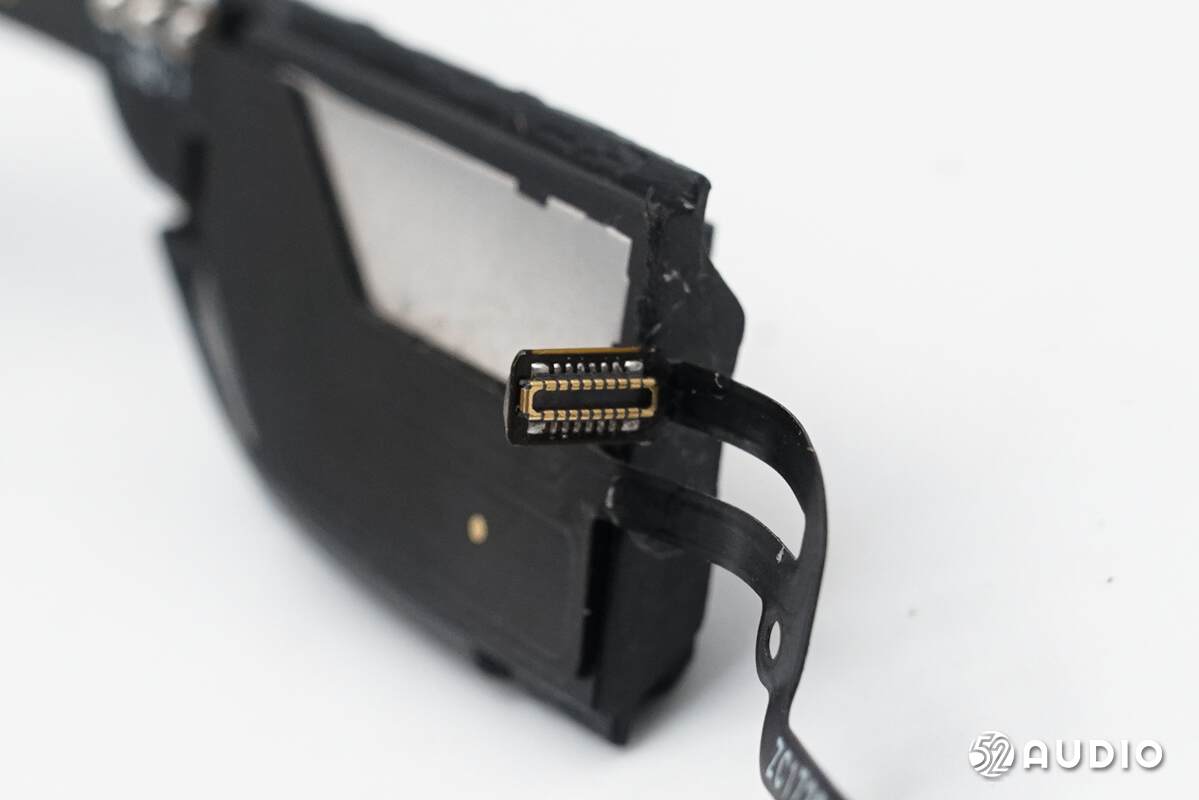
The male board-to-board (BTB) connector on the speaker ribbon cable connects to the mainboard.
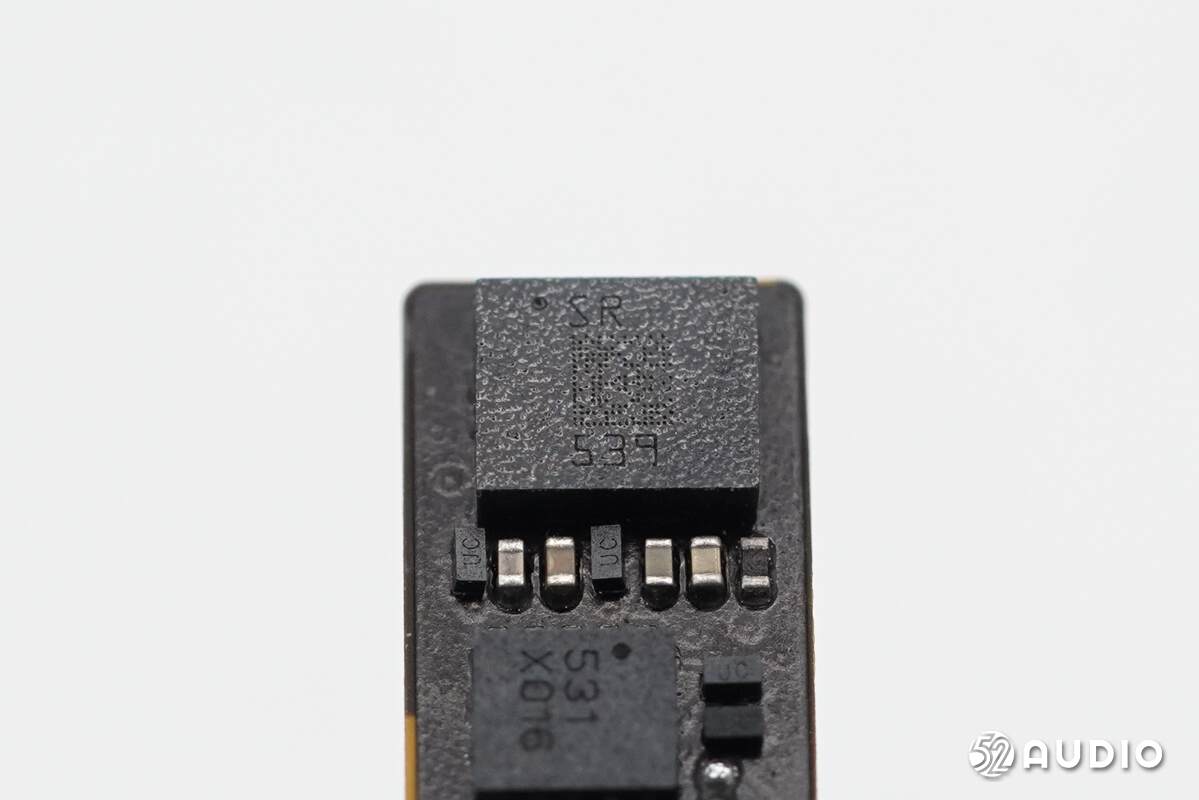
The six-axis motion sensor marked SR is used for video stabilization.
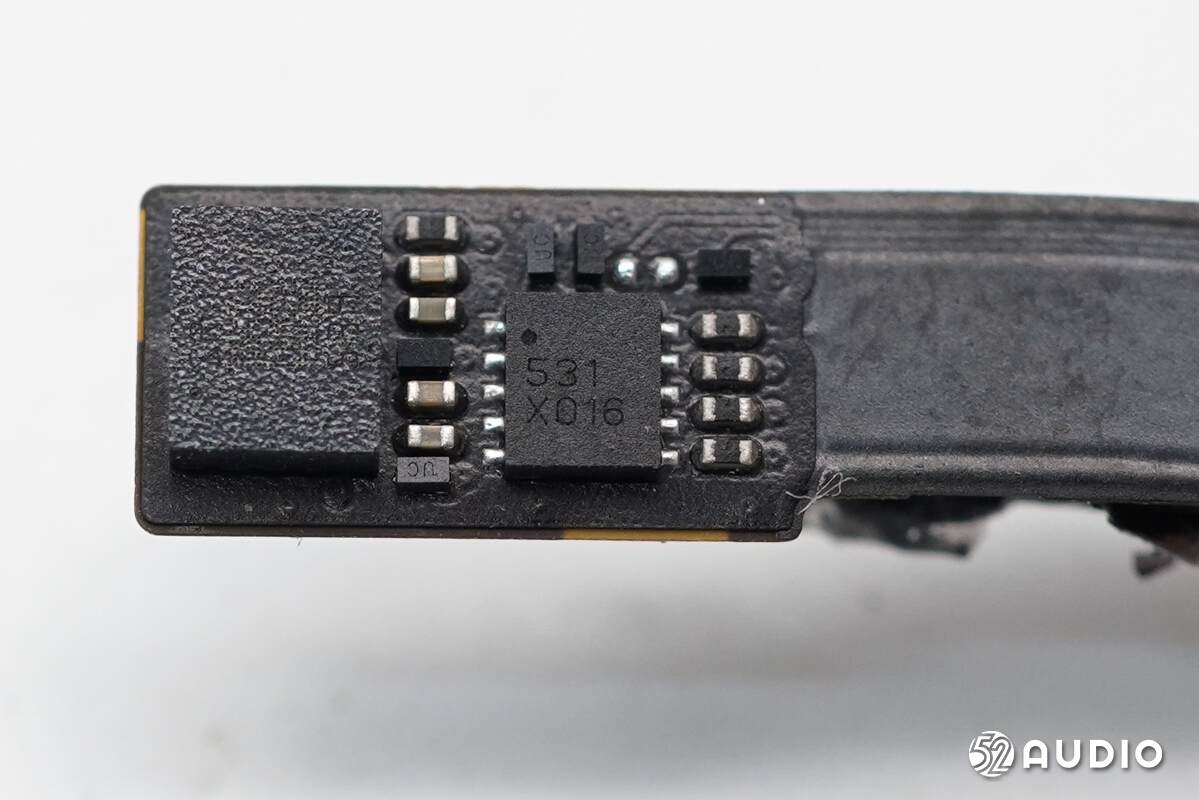
The IC marked 531 X016.
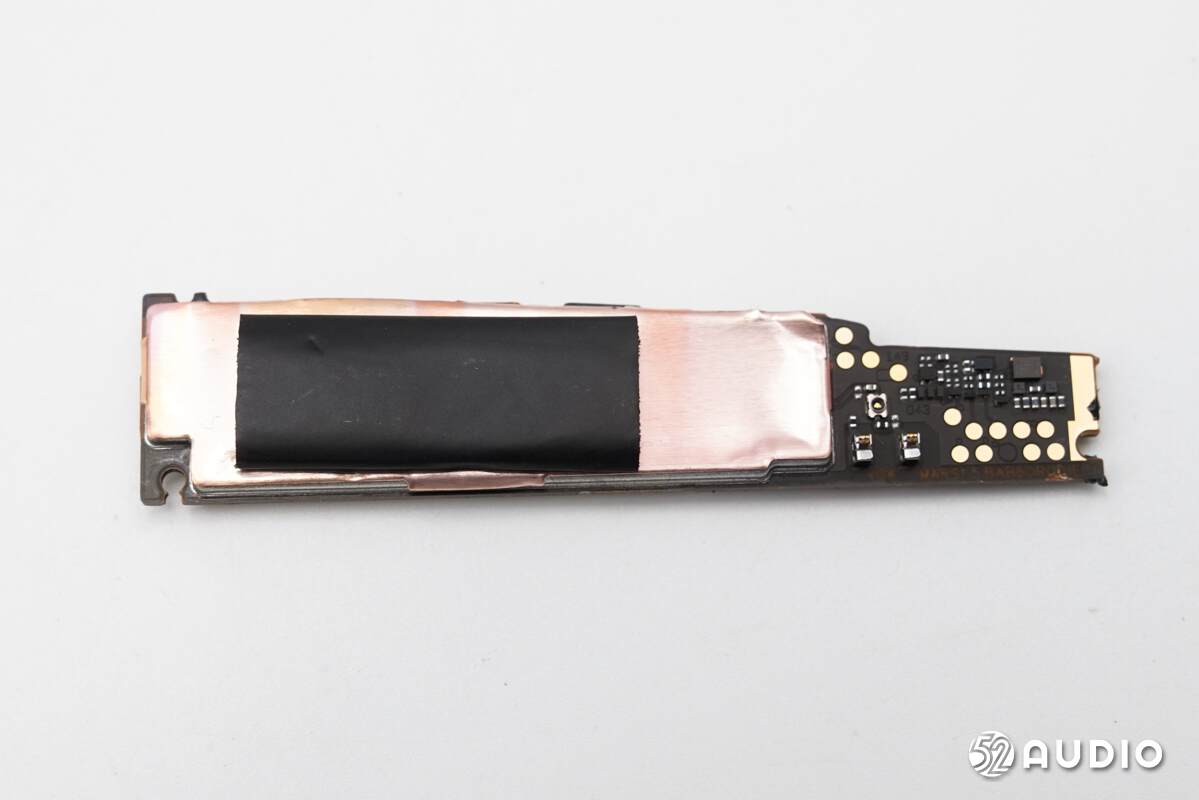
One side of the mainboard is covered with heat-dissipation copper foil.
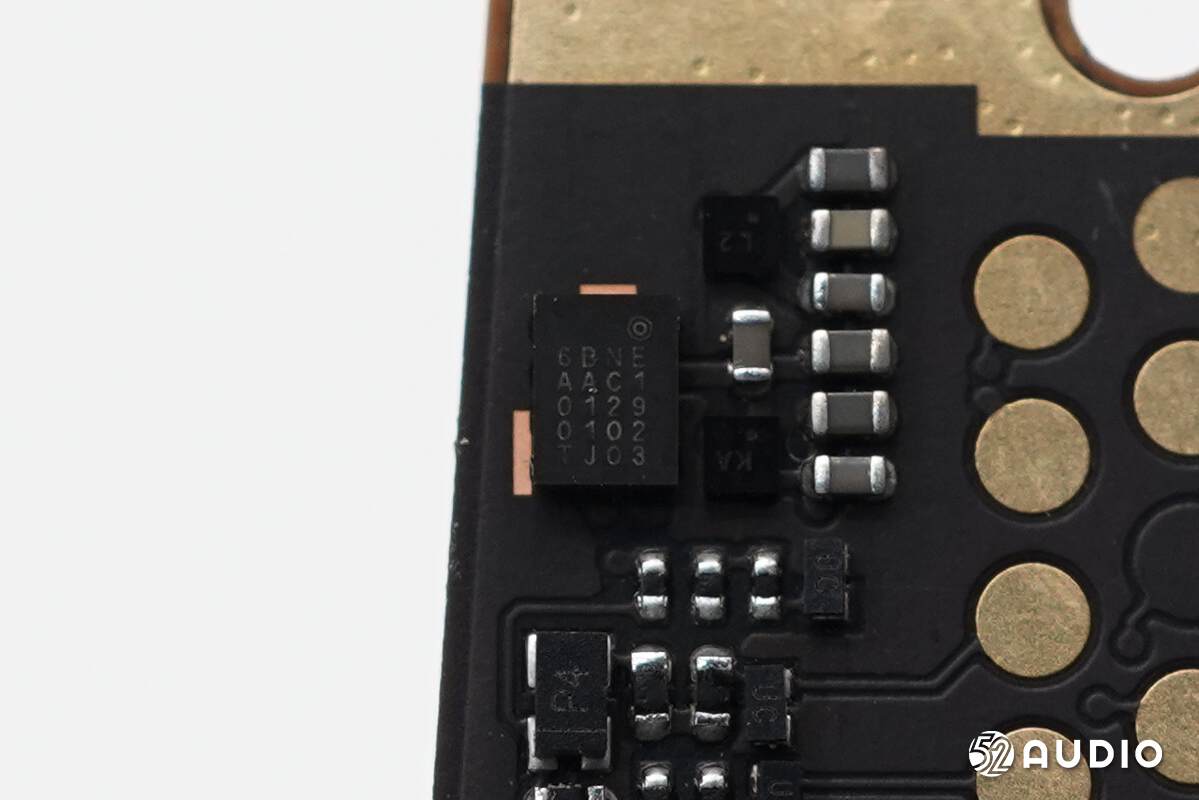
The AW21104 four-channel programmable RGBW-LED driver from Awinic is marked 6BNE AAC1.
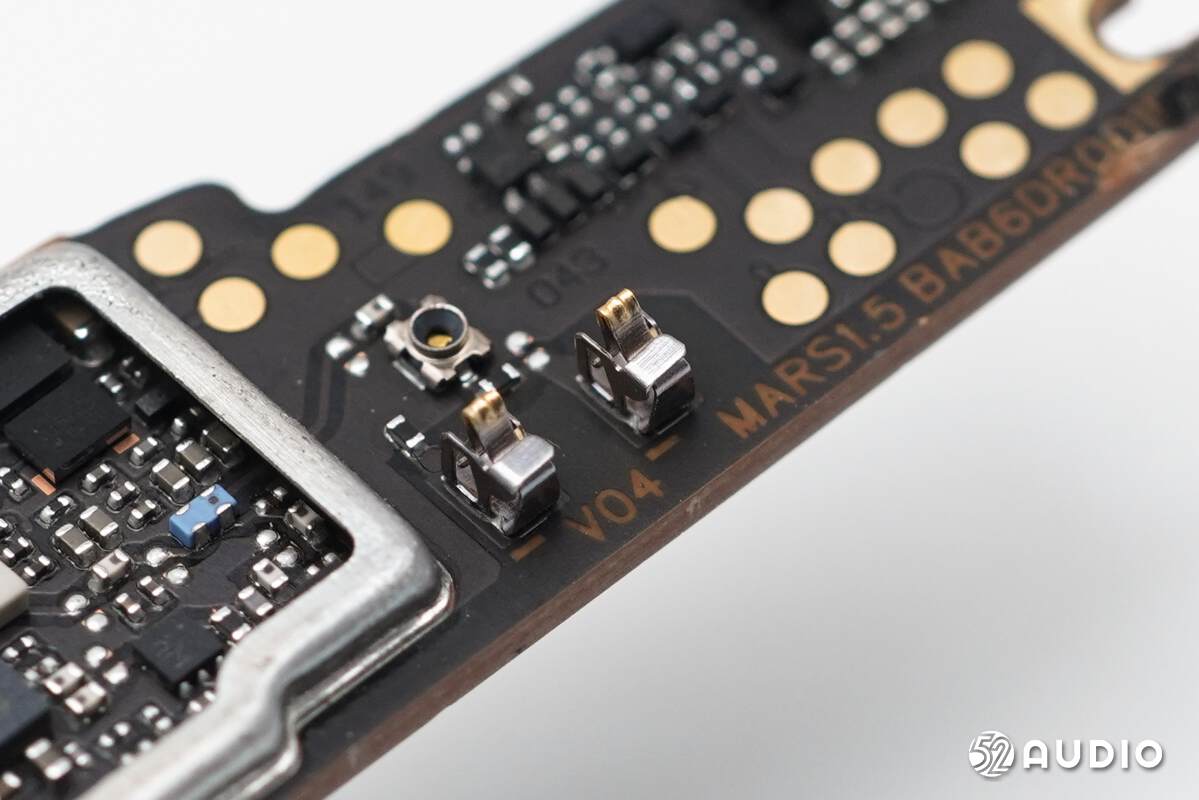
The metal spring contact for the antenna connection.
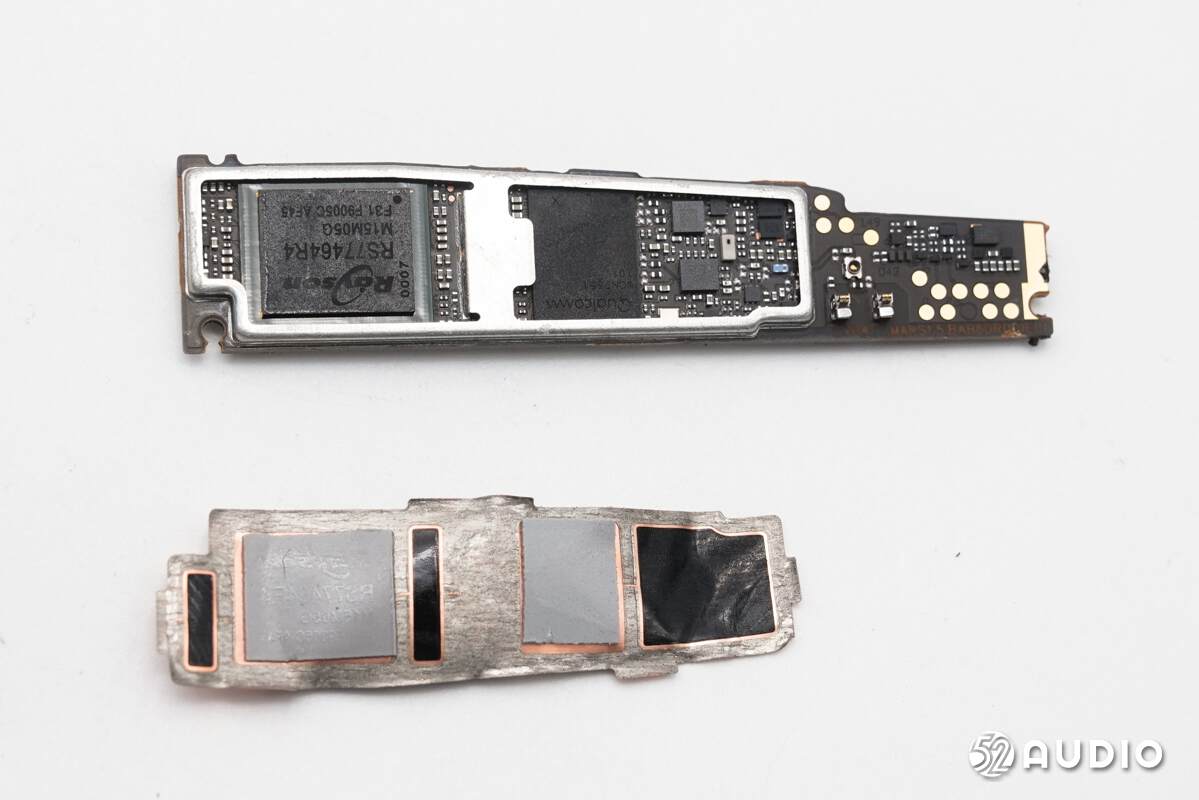
Peel back the thermal copper foil to reveal a thermal pad underneath, which helps improve heat dissipation.
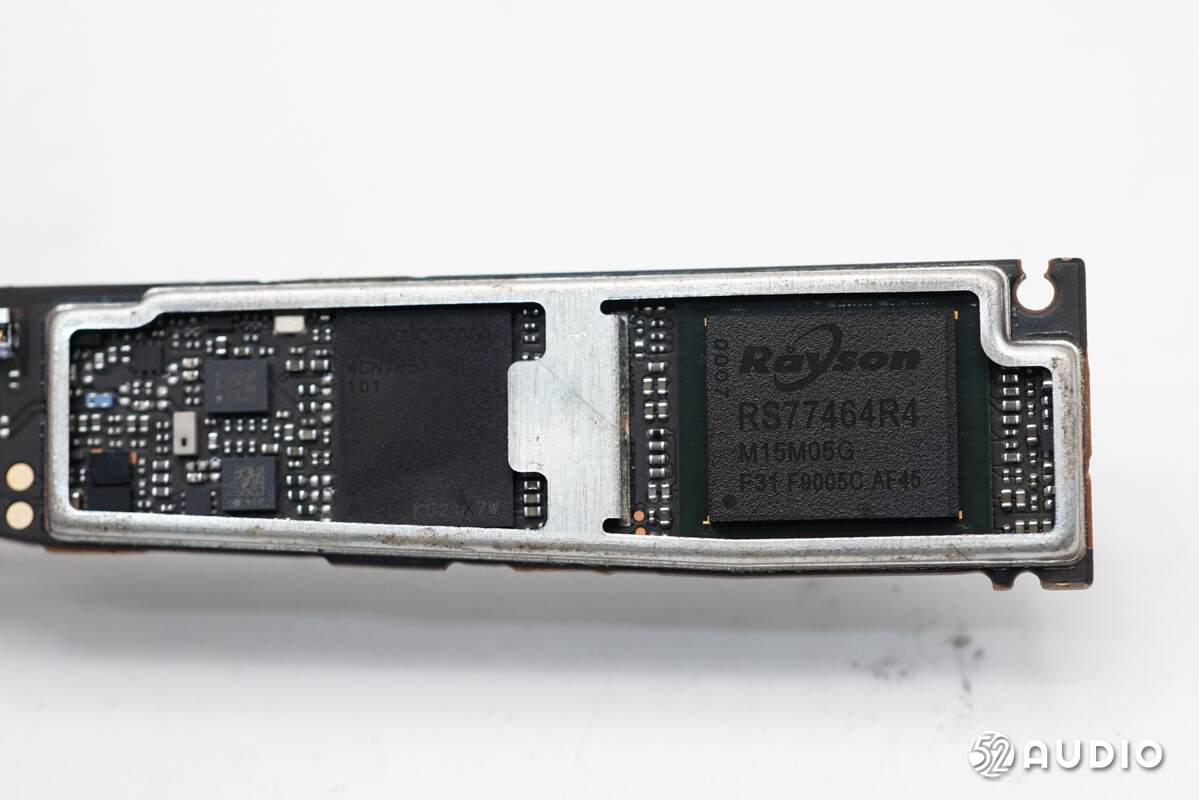
An overview of the mainboard circuitry beneath the copper foil.
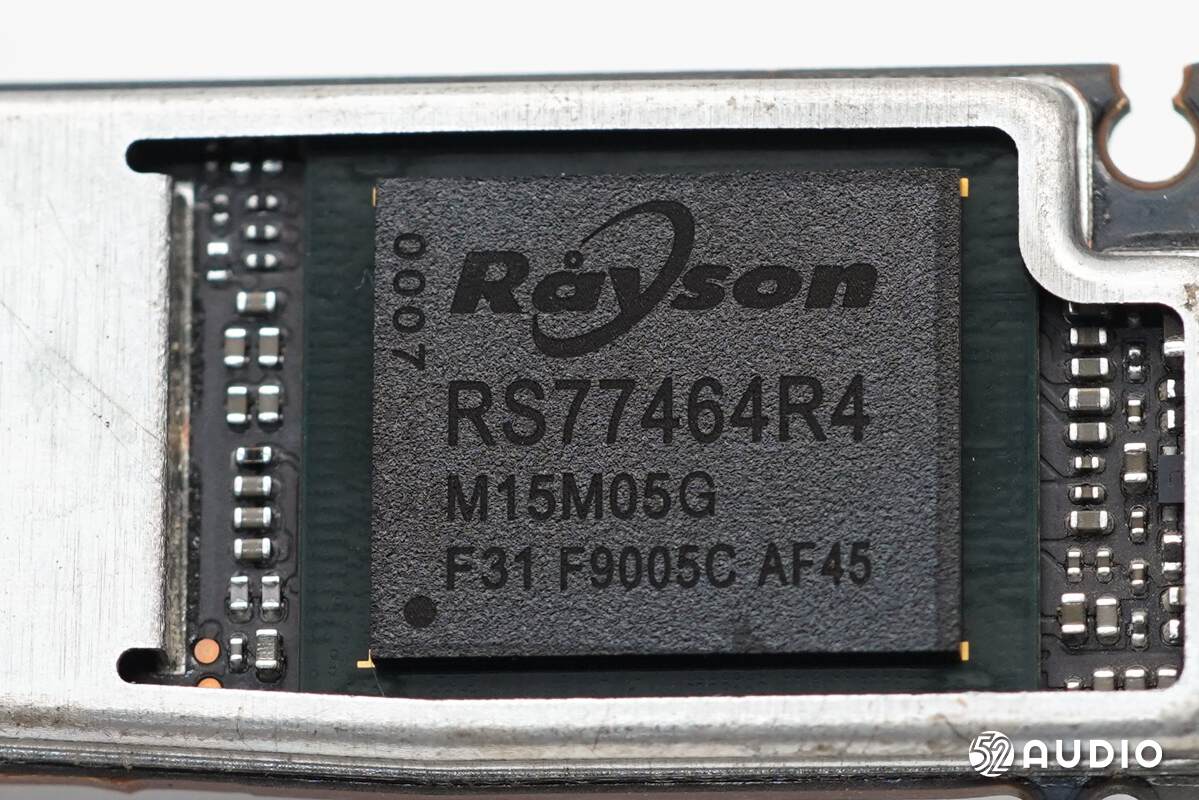
The Rayson RS77464R4 eMCP package provides 64 GB of storage. The Qualcomm Snapdragon AR1 Gen 1 platform is located underneath and handles AI and image processing.
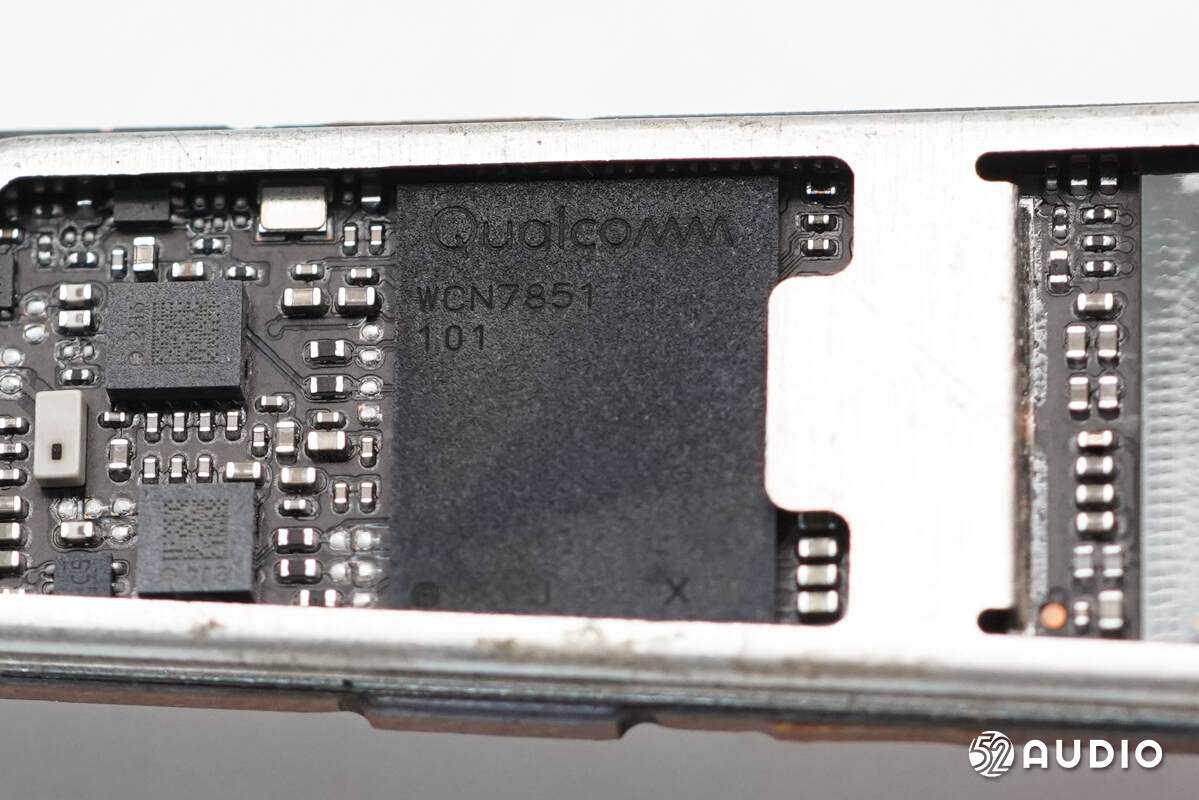
The Qualcomm WCN7851 Wi-Fi chip.
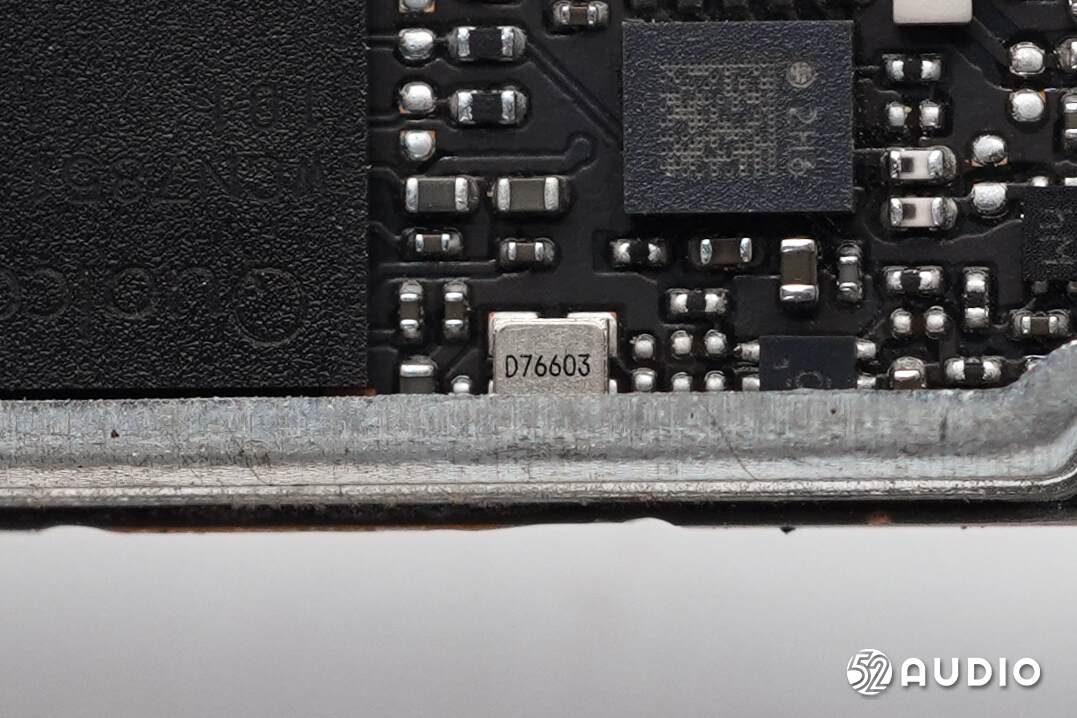
This is a crystal oscillator marked D76603, which provides the clock signal for the Wi-Fi chip.
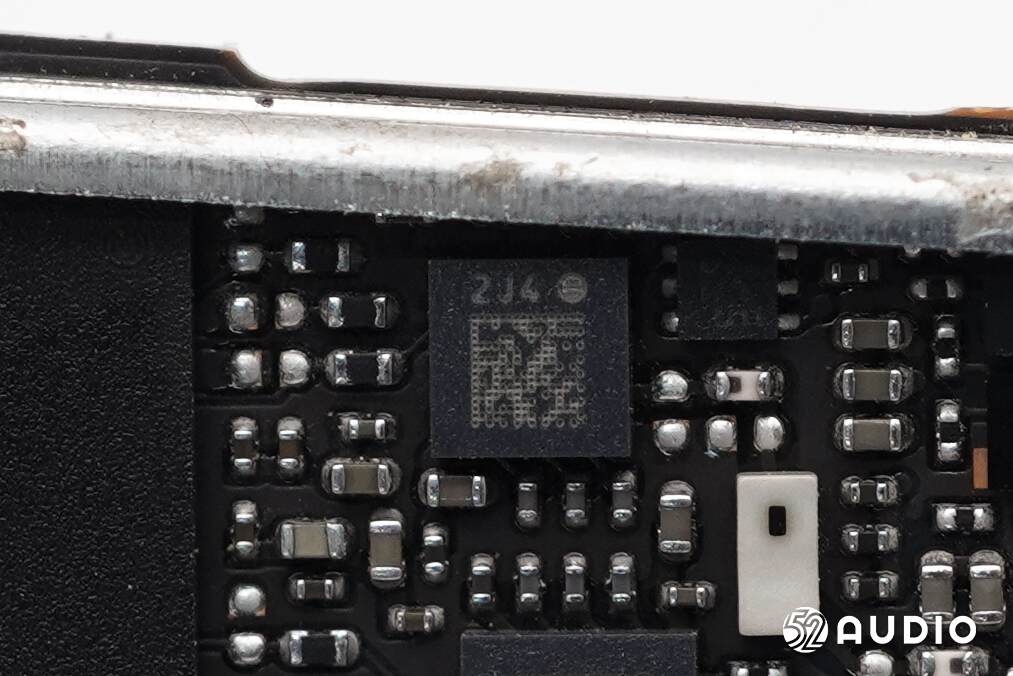
The IC marked 2J4.
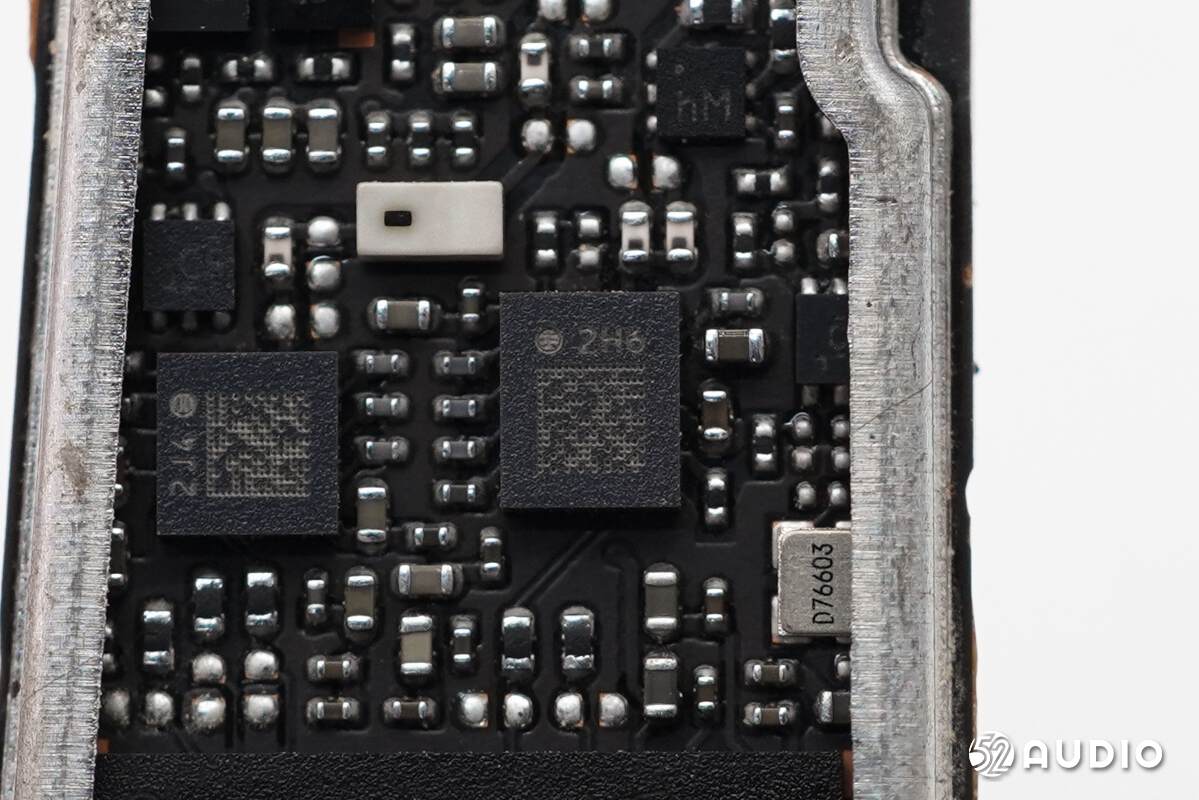
The IC marked 2H6.
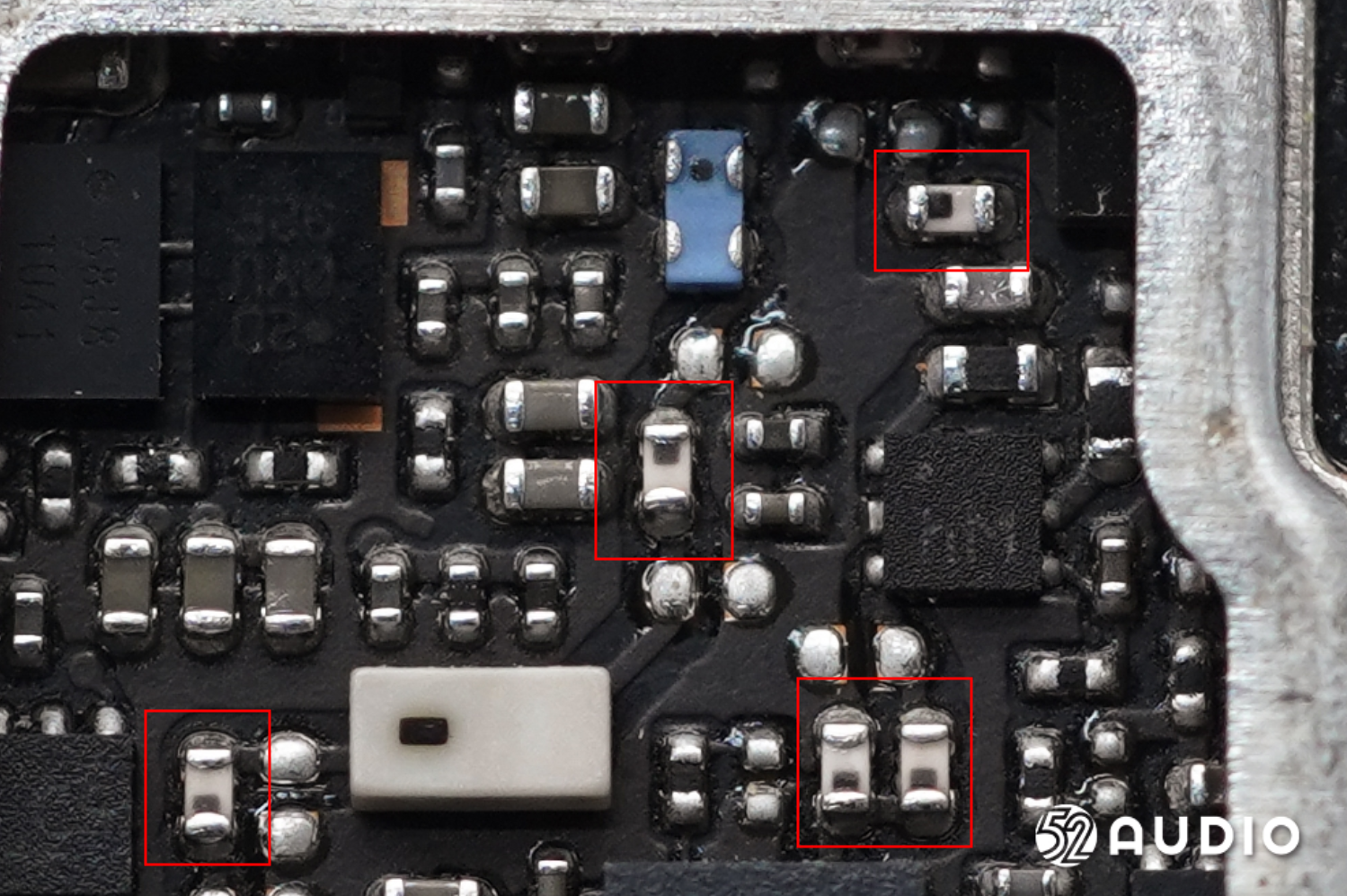
The RF circuit includes five Sunlord SDCL0603Q series multilayer ceramic inductors. With carefully designed coils and electrodes, the series achieves a high Q factor and high self-resonant frequency (SRF). Manufactured using a dry multilayer process, the inductors offer high precision and consistency to meet the demanding requirements of precision electronic components.
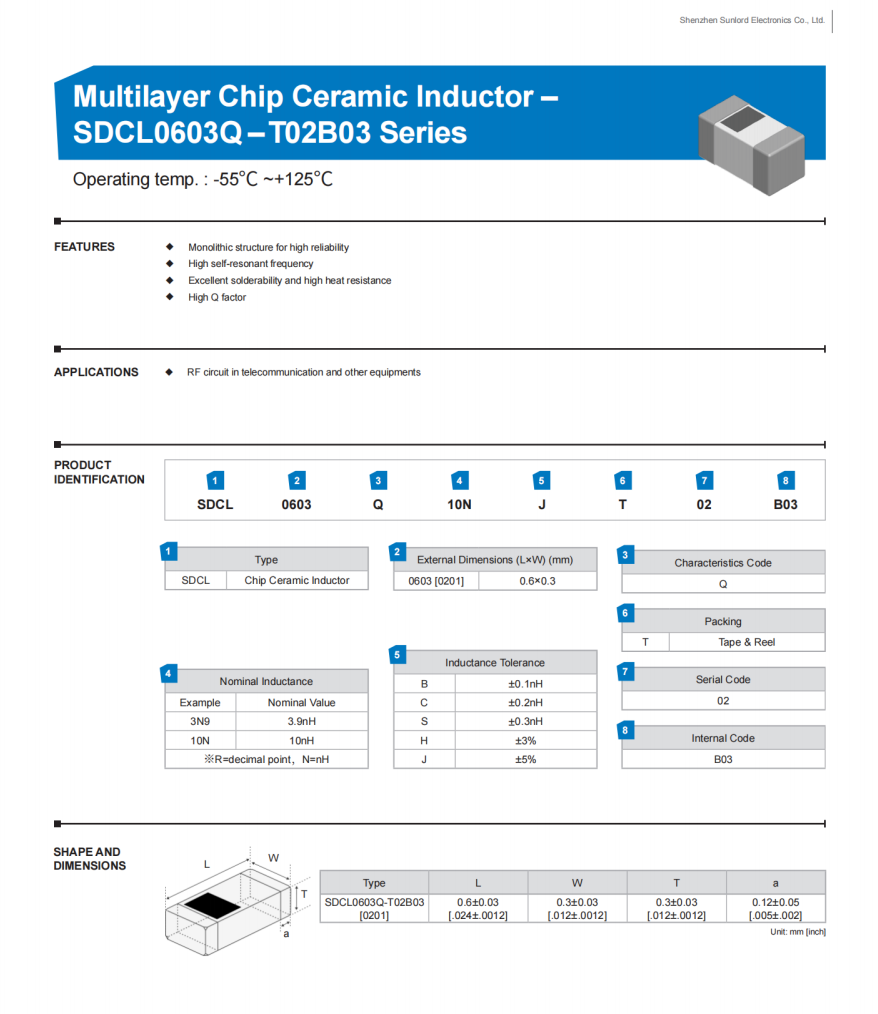
Detailed specifications for the Sunlord SDCL0603Q-T02B03 series. According to teardowns by 52 AUDIO, Sunlord inductors have been used by numerous brands, including HUAWEI, Meitan, RayNeo, Xiaomi, OPPO, vivo, Lenovo, Audio-Technica, REDMI, Edifier, iKF, Sharge, beyerdynamic, JBL, Sennheiser, UGREEN, HONOR, Baseus, QCY, Okii, XISEM, Haomuren, Amazfit, NOTHING, MECHREVO, Plaud, Razer, Philips, Looktech, EarFun, SOUNDPEATS, RoseSelsa, Rapoo, OVEVO, iTour, Jsoul, Langogo, and Tourace.
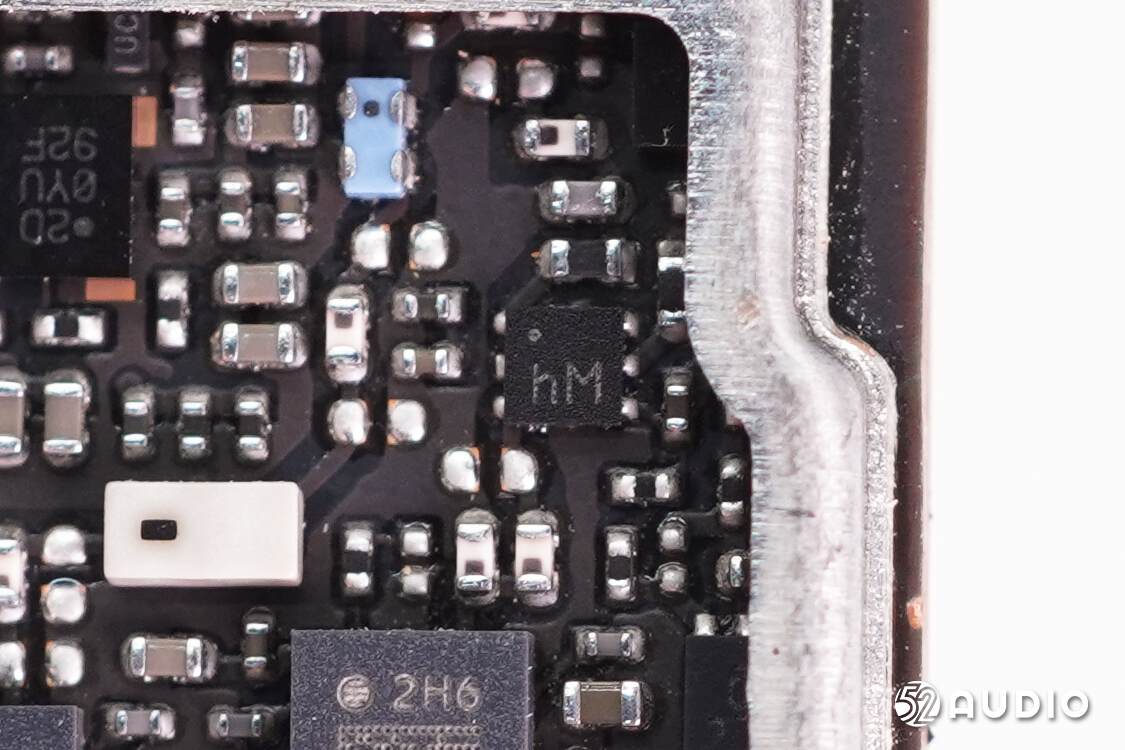
The IC marked hM.
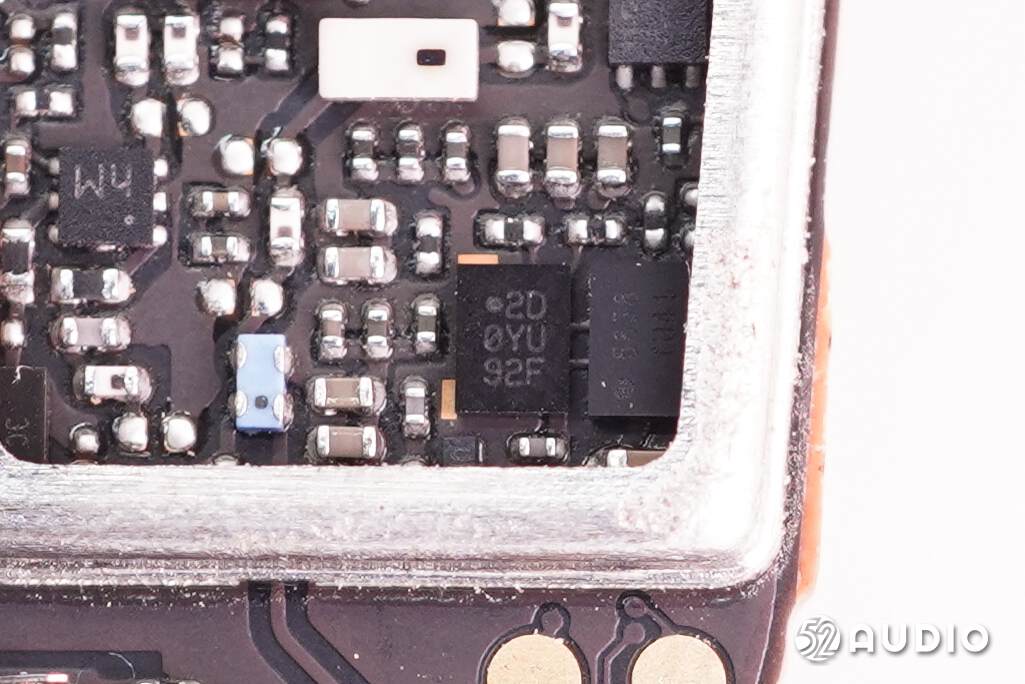
The IC marked 2D 0YU.
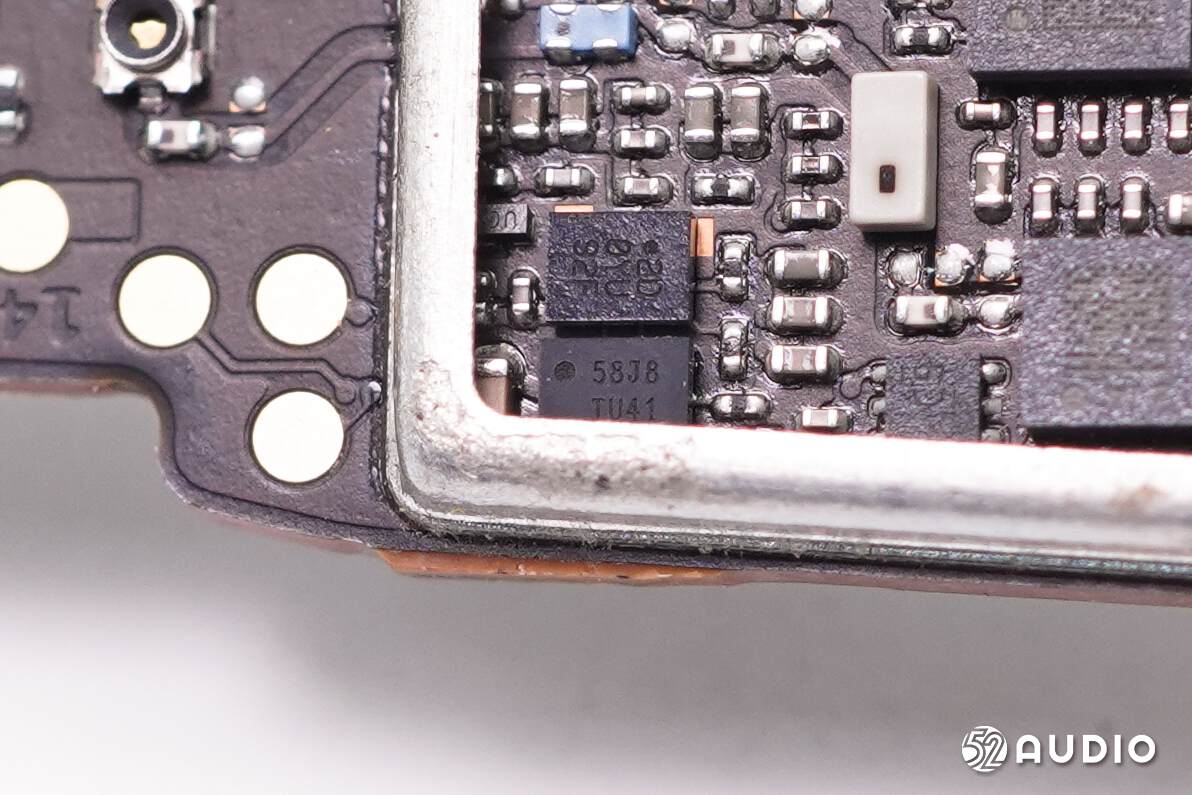
The IC marked 58J8.
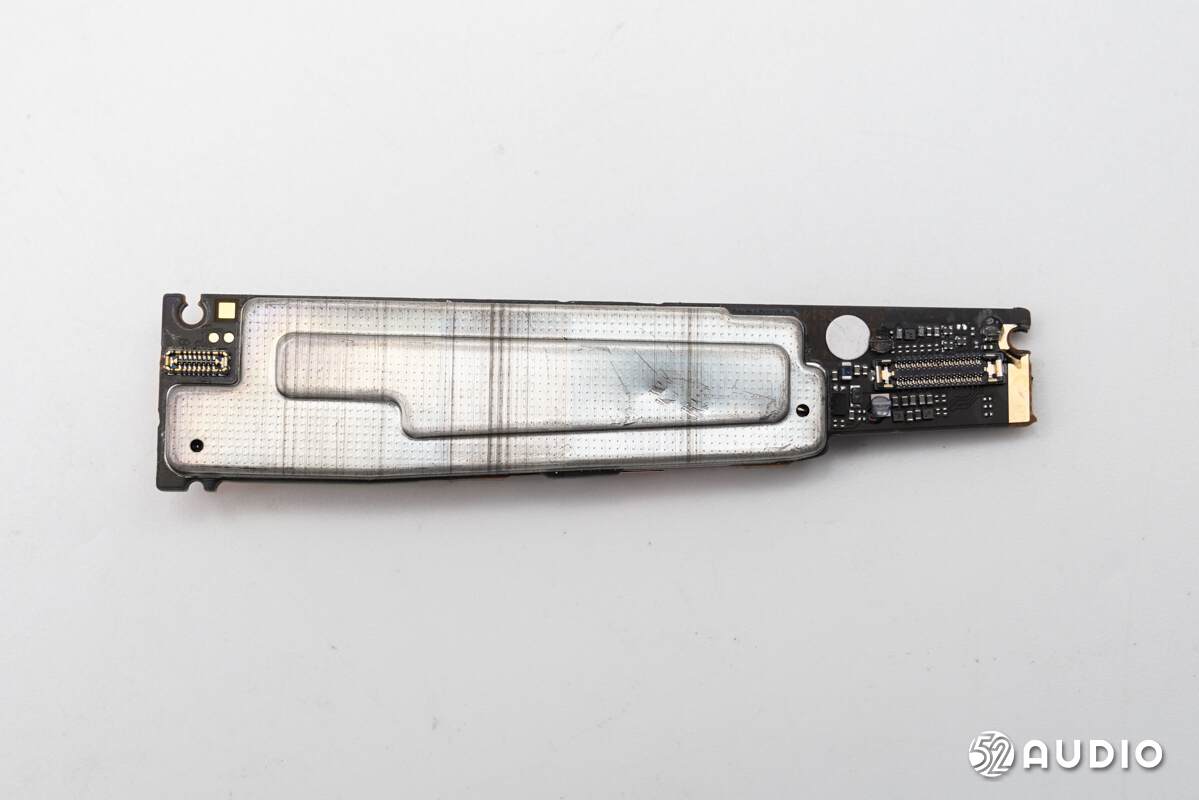
The other side of the mainboard is covered by a large shielding can.
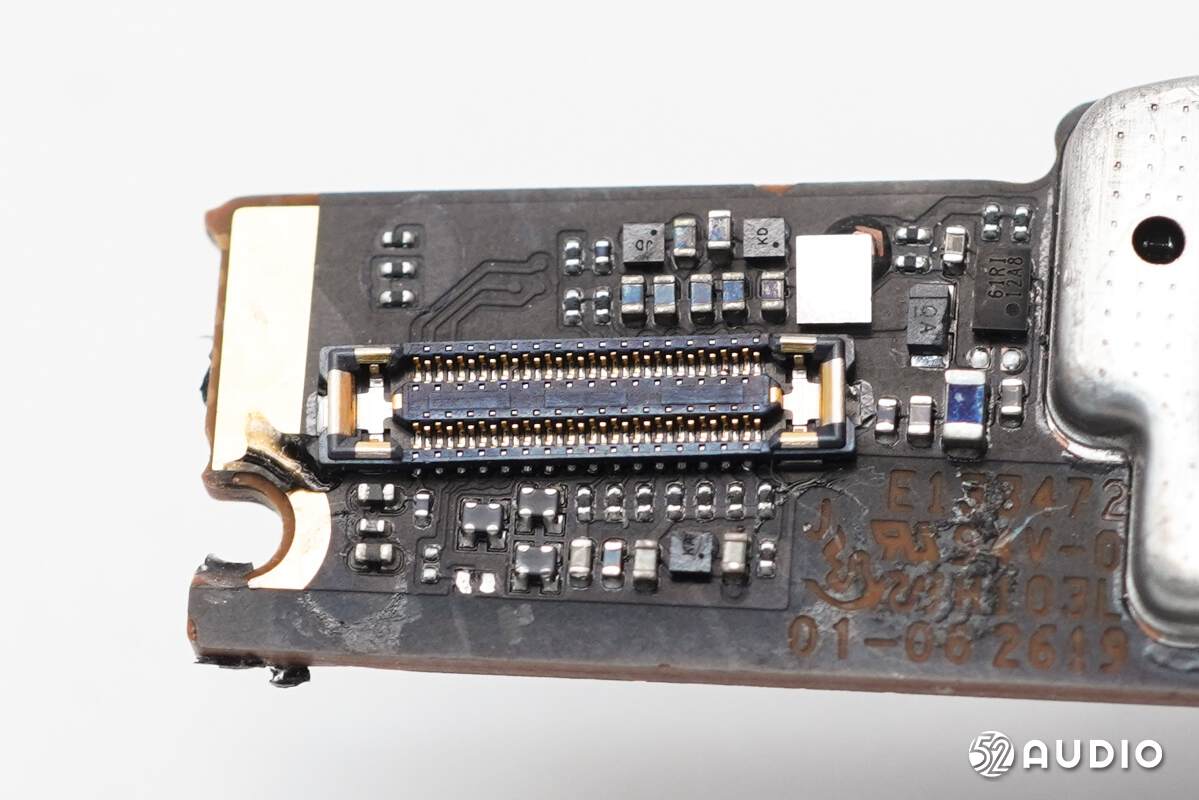
The female BTB connector for the ribbon cable inside the frame.
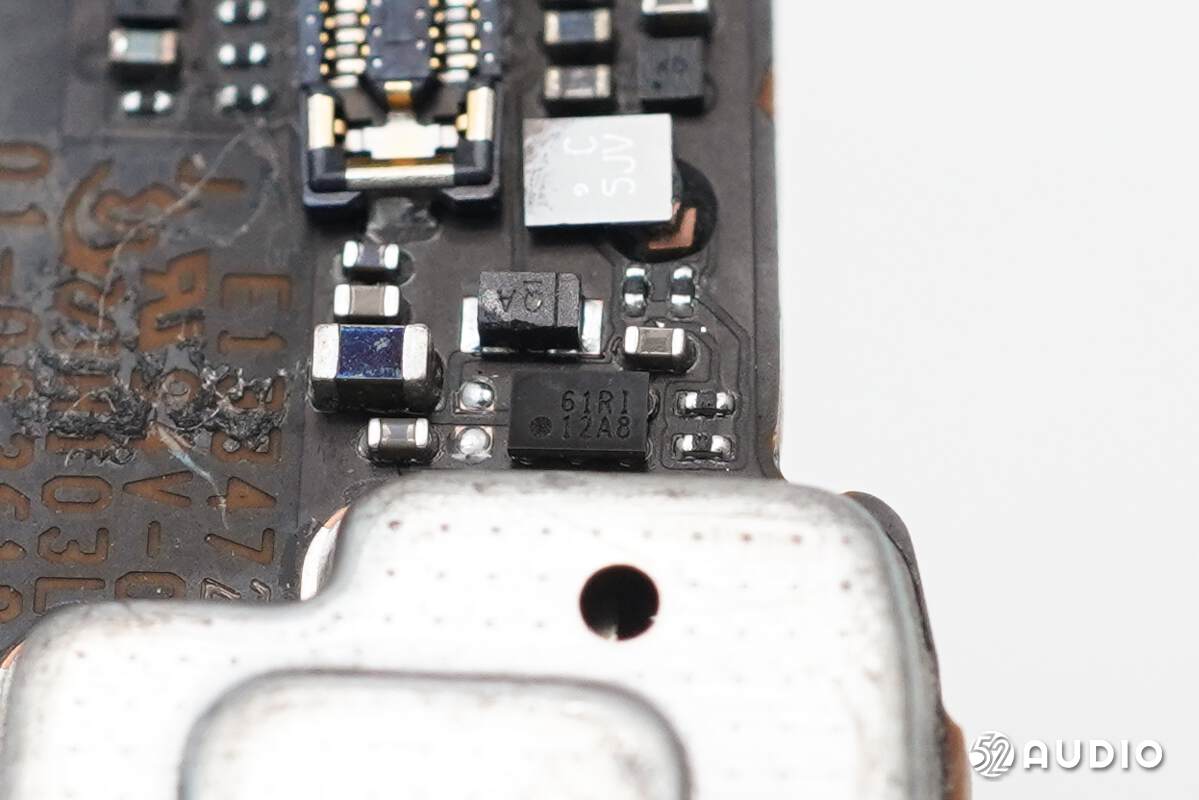
The IC marked 61RI.
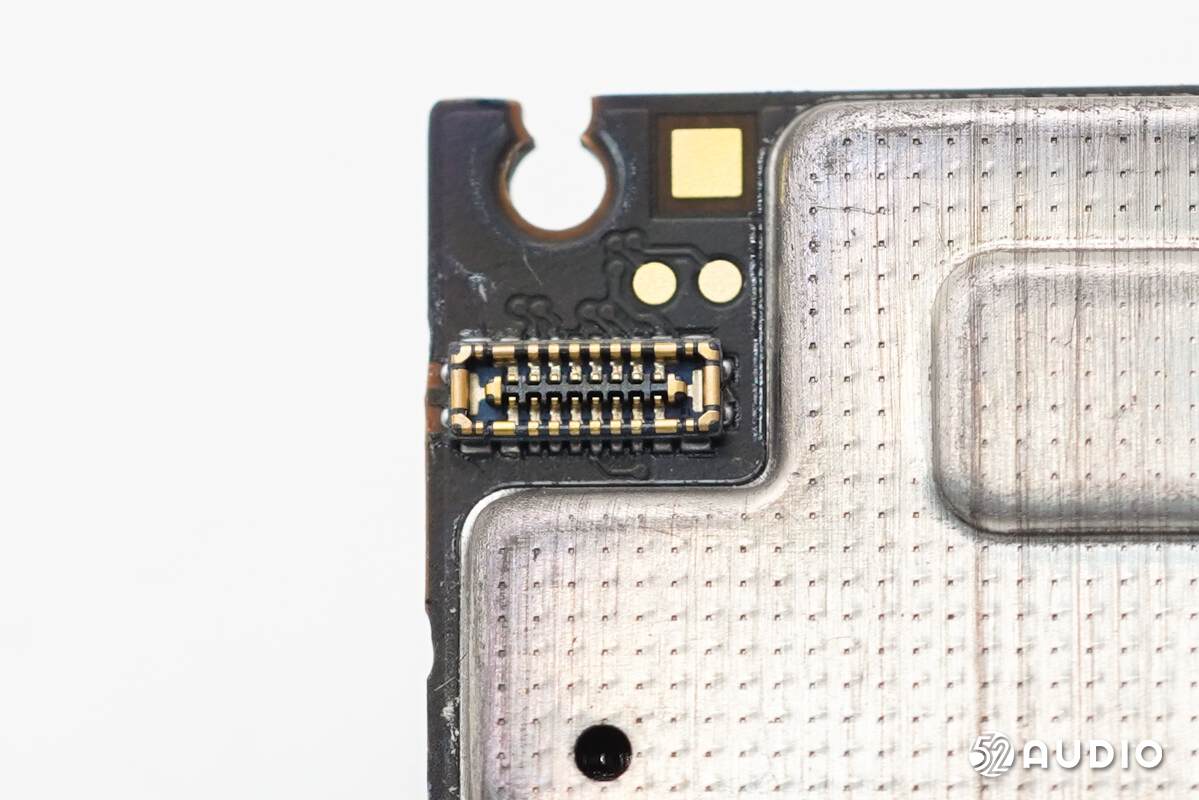
The female BTB connector for the ribbon cable inside the left temple.
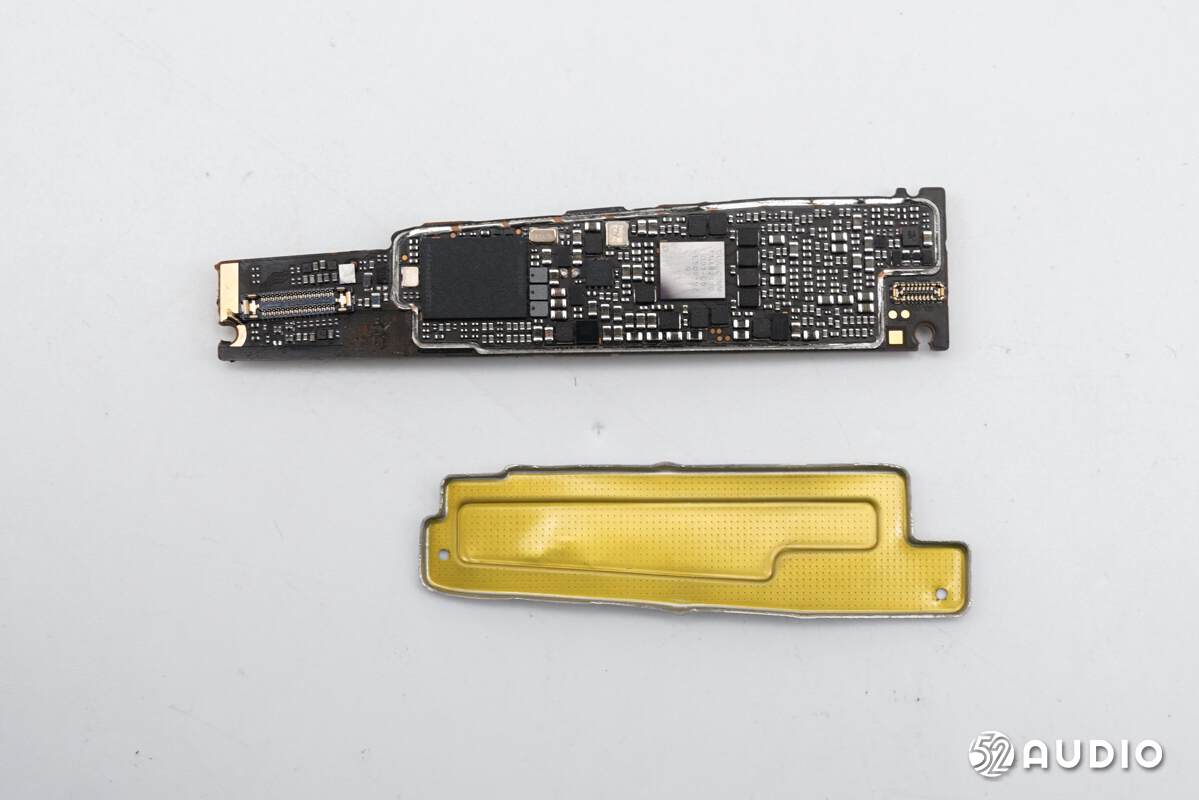
Remove the shielding can.
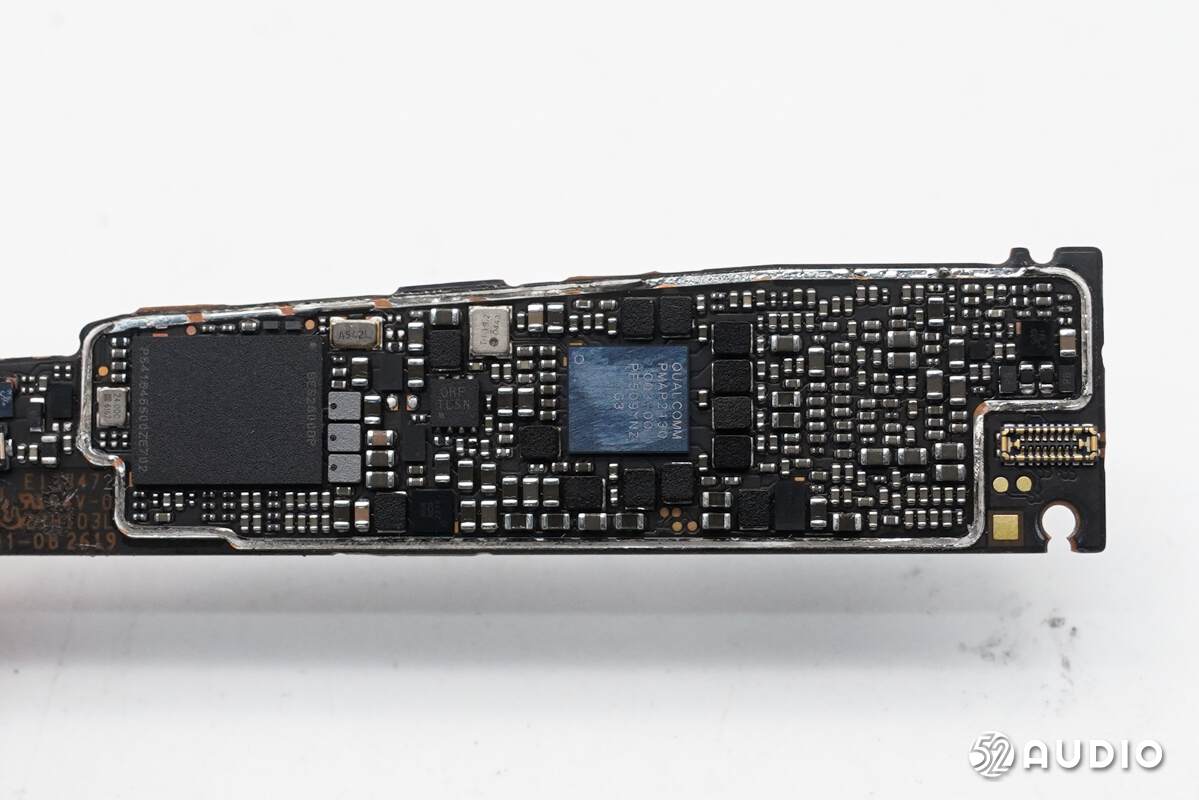
An overview of the mainboard circuitry beneath the shielding can.
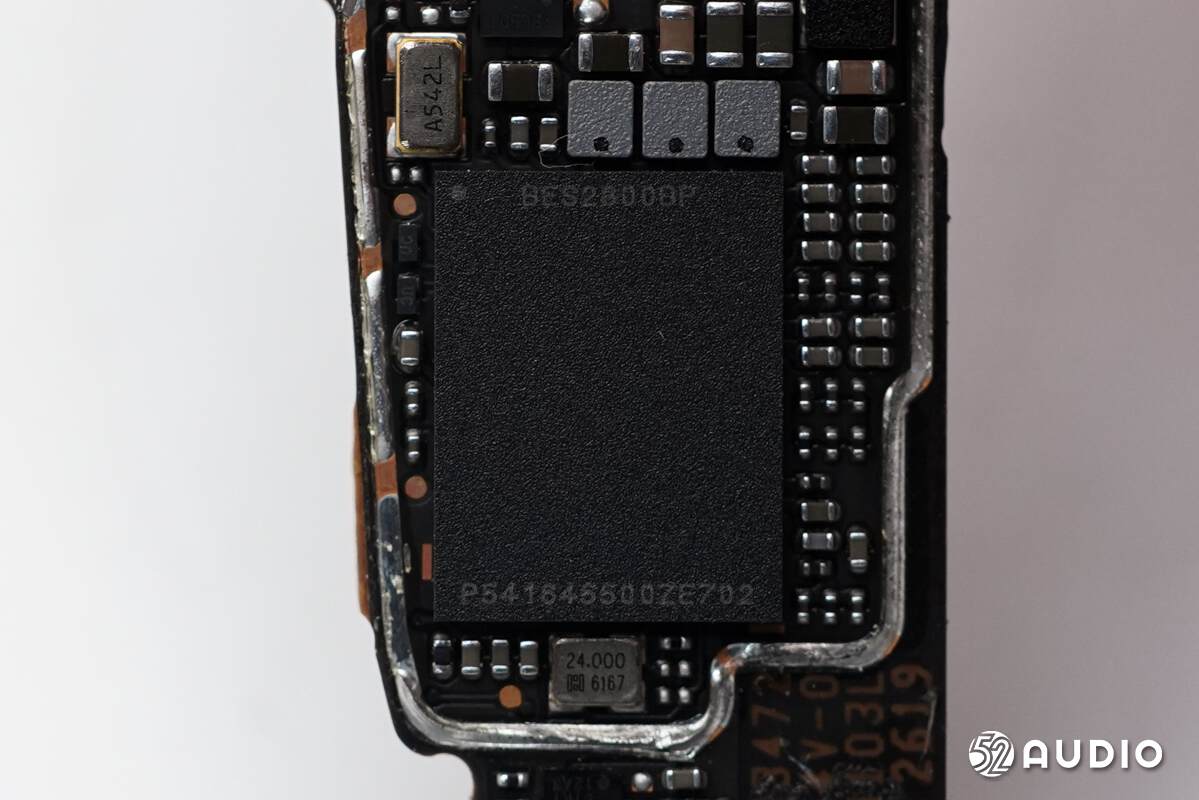
The BES2800BP from Bestechnic is an ultra-low-power, high-performance wearable SoC with integrated Bluetooth and optional Wi-Fi.
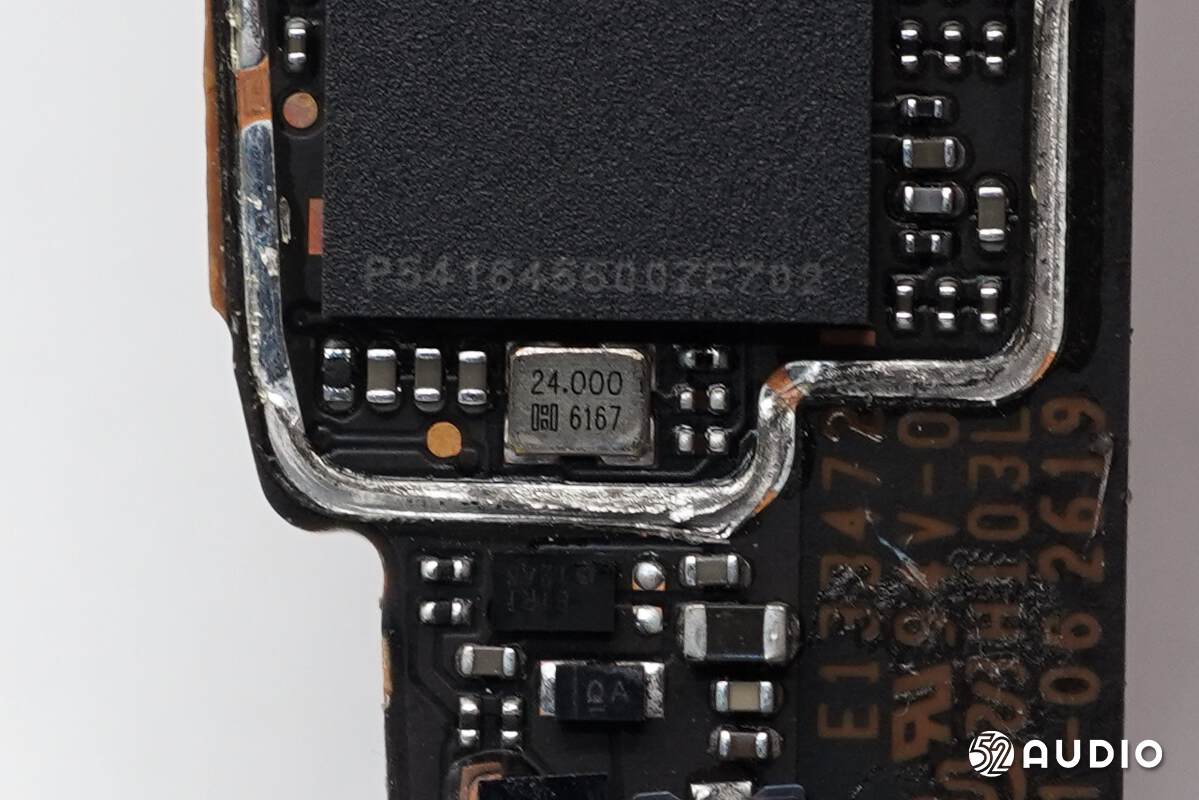
The 24.000 MHz crystal oscillator.
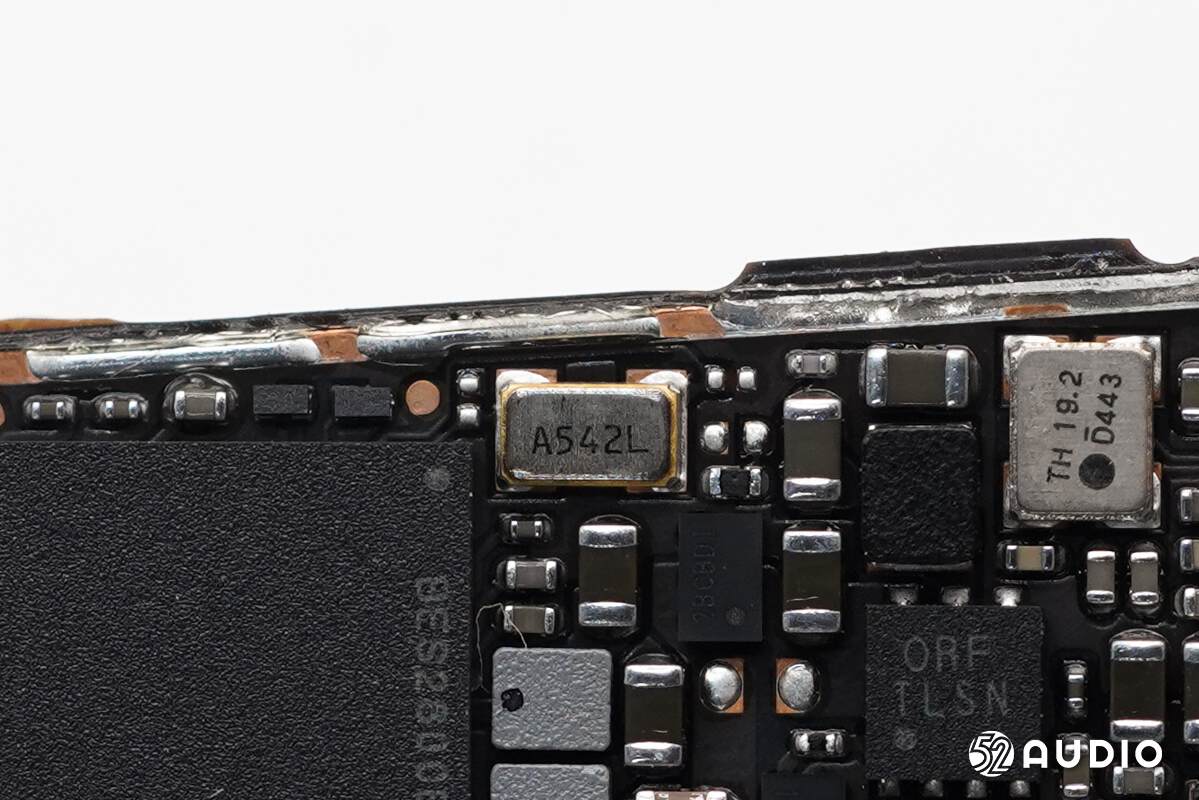
The crystal oscillator marked S542L.
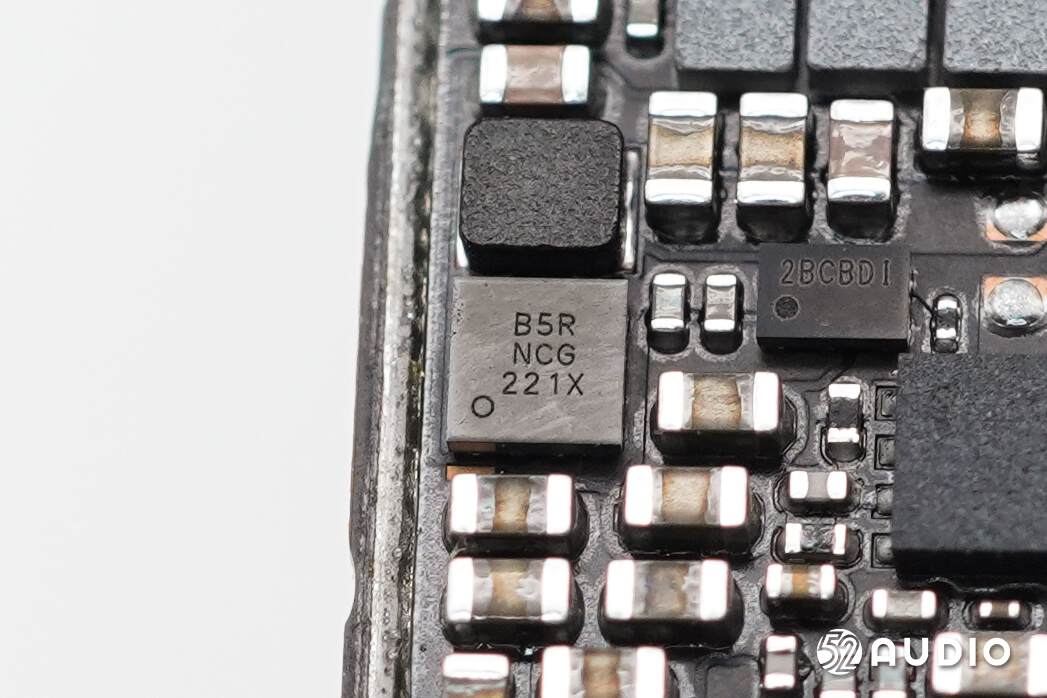
The IC marked B5R NCG.
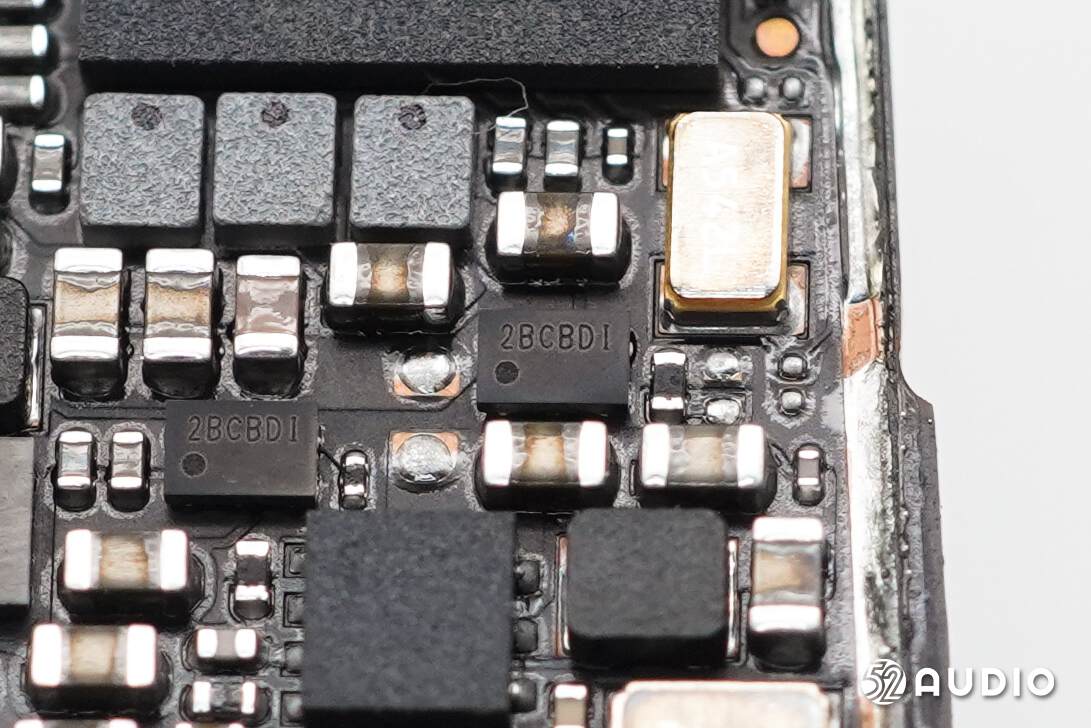
Two ICs marked 2BCNDI.
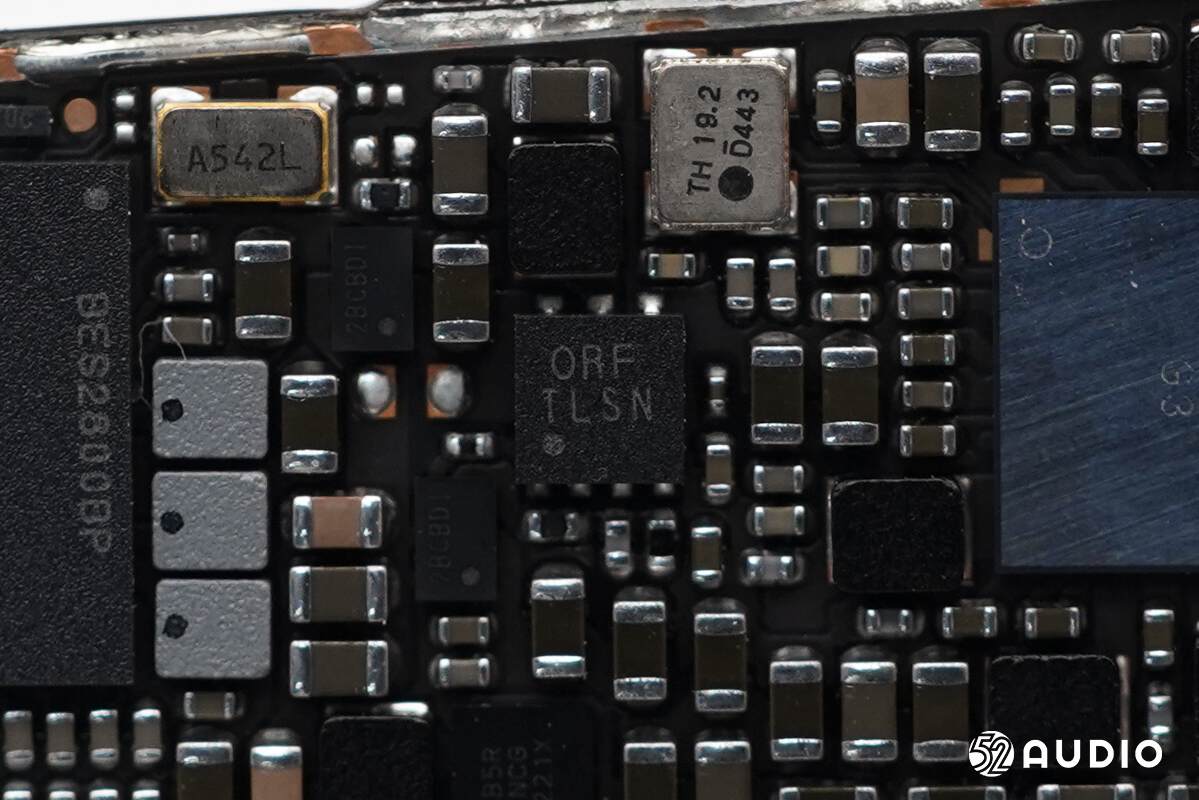
The IC marked ORF TLSN.
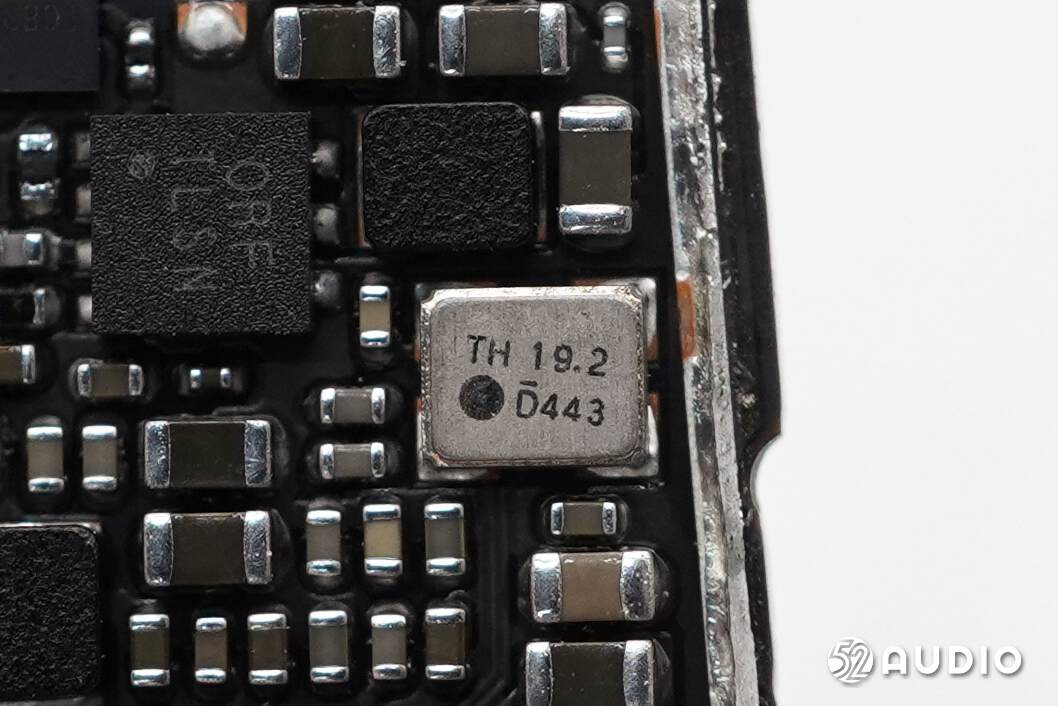
The crystal oscillator marked TH19.2.
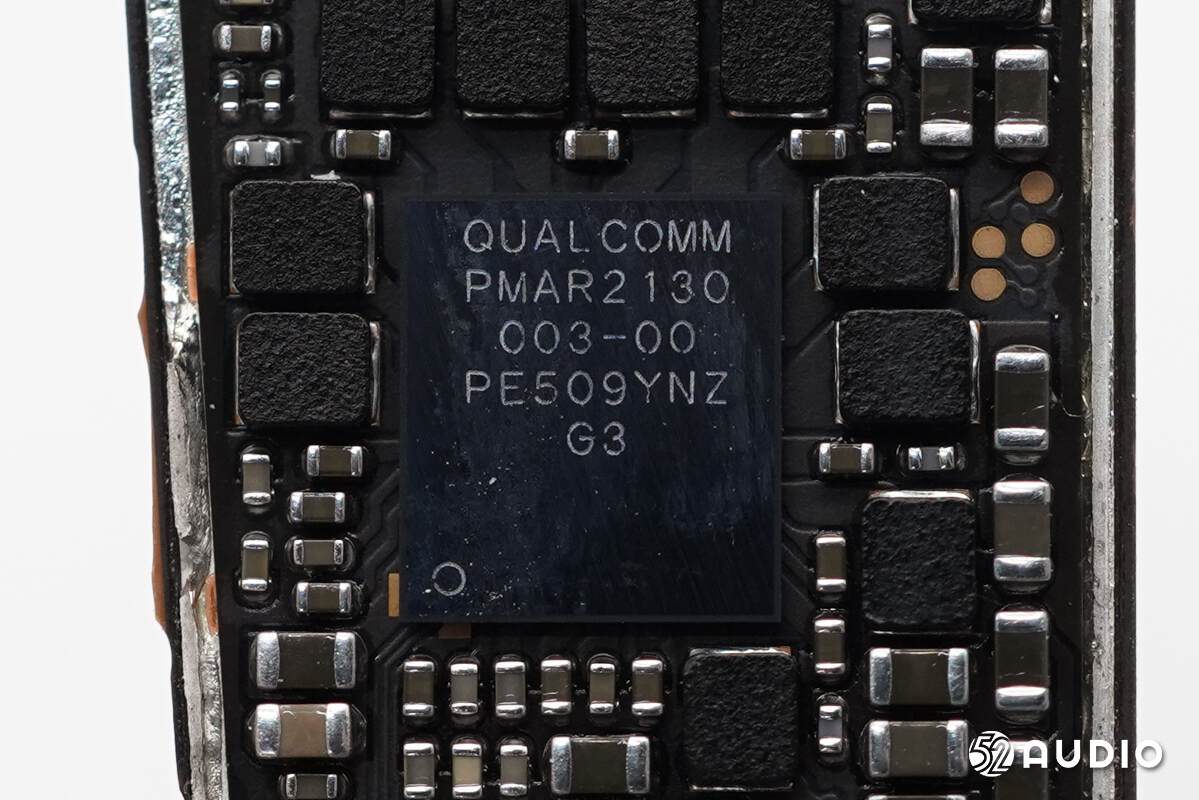
The Qualcomm PMAR2130 power management IC (PMIC).
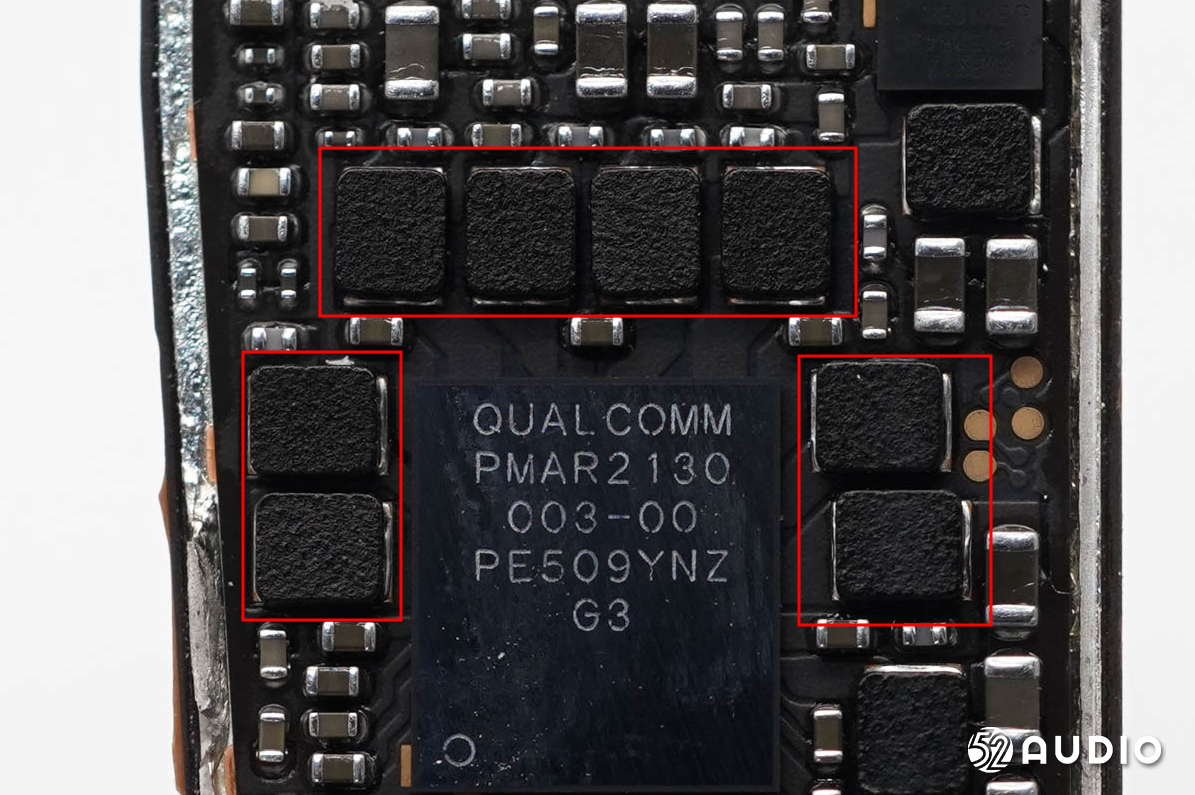
Several Sunlord MWTC series power inductors are used around the power management IC. The MWTC series uses iron-alloy material for high current handling and low losses. A black adhesive coating improves surface density, while the closed magnetic circuit minimizes magnetic leakage and interference. These characteristics make the series suitable for smartphones, tablets, laptops, AR/VR devices, portable game consoles, smart wearables, Wi-Fi modules, and other applications.
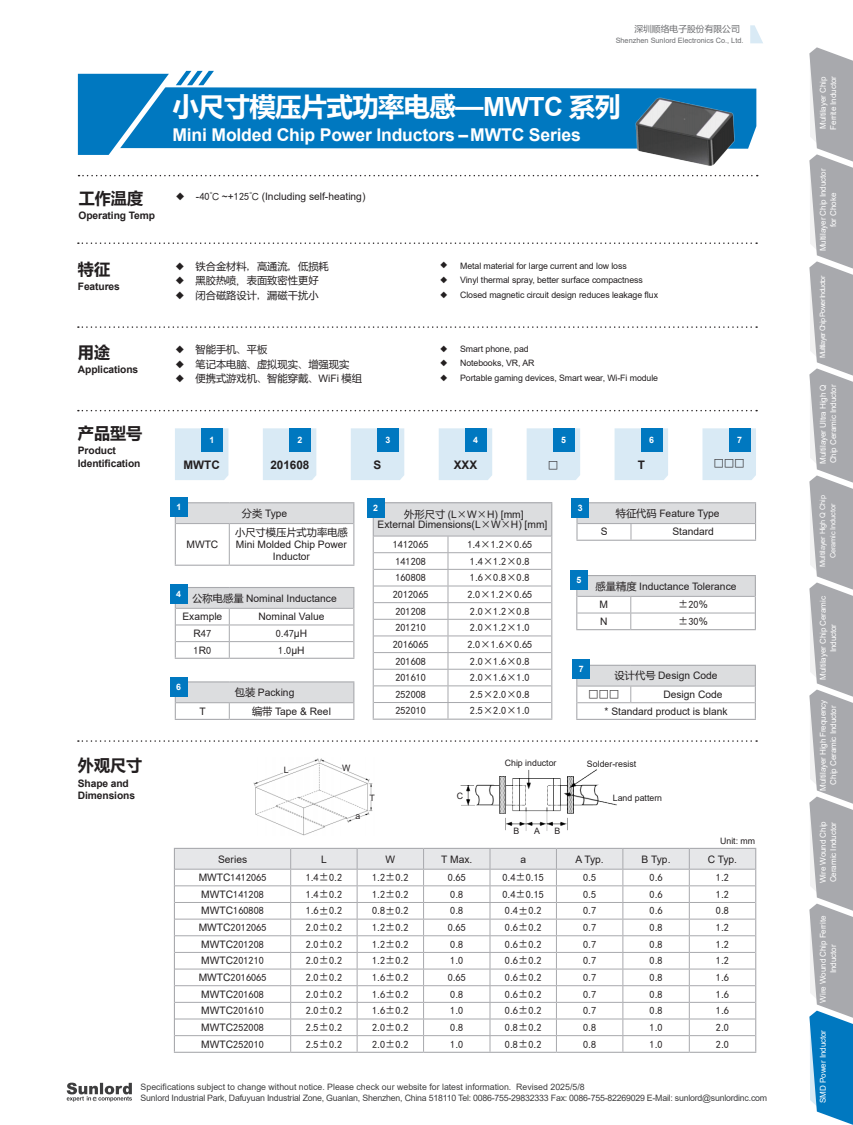
Detailed specifications for the Sunlord MWTC series.
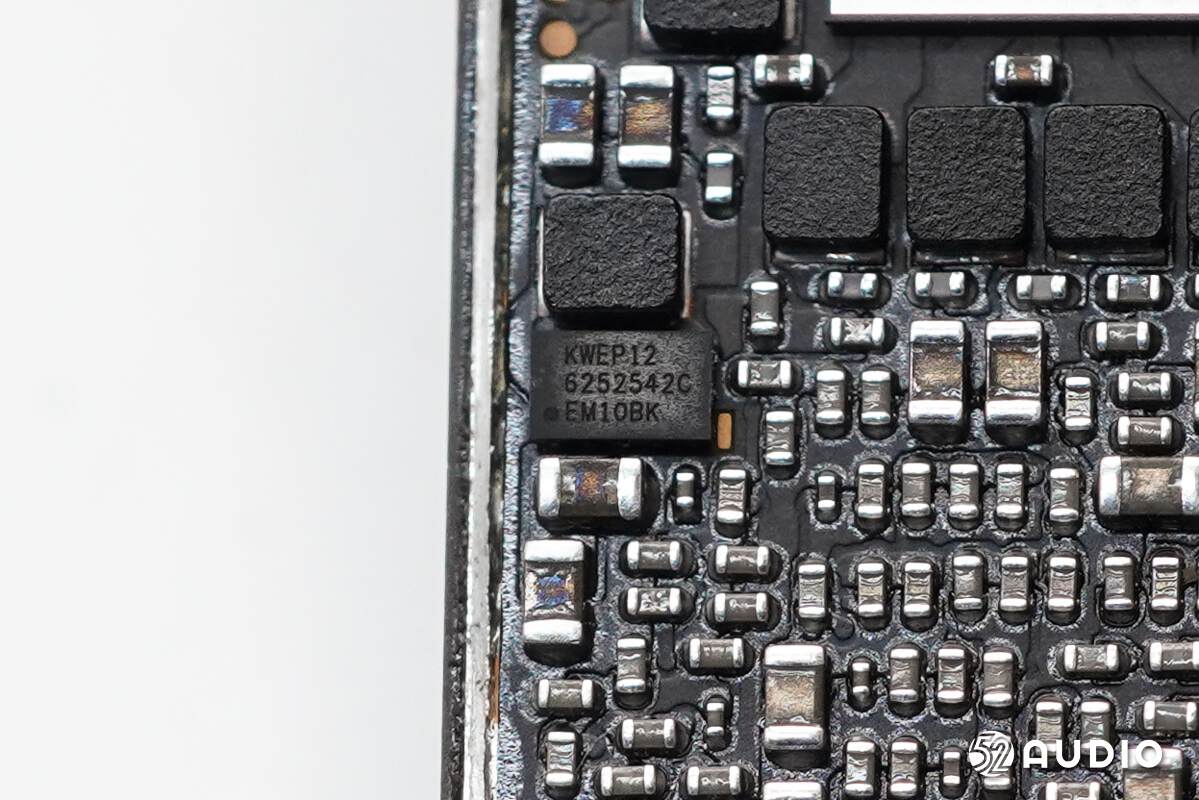
The IC marked KWEP12, with a Sunlord MWTC series power inductor nearby.
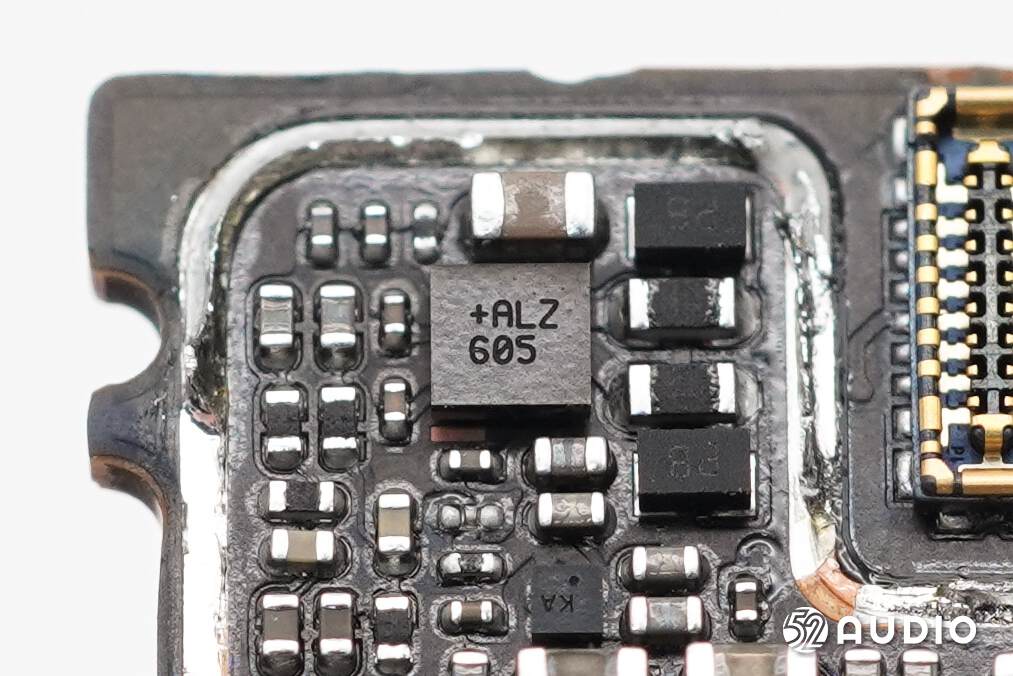
The IC marked +ALZ 605.
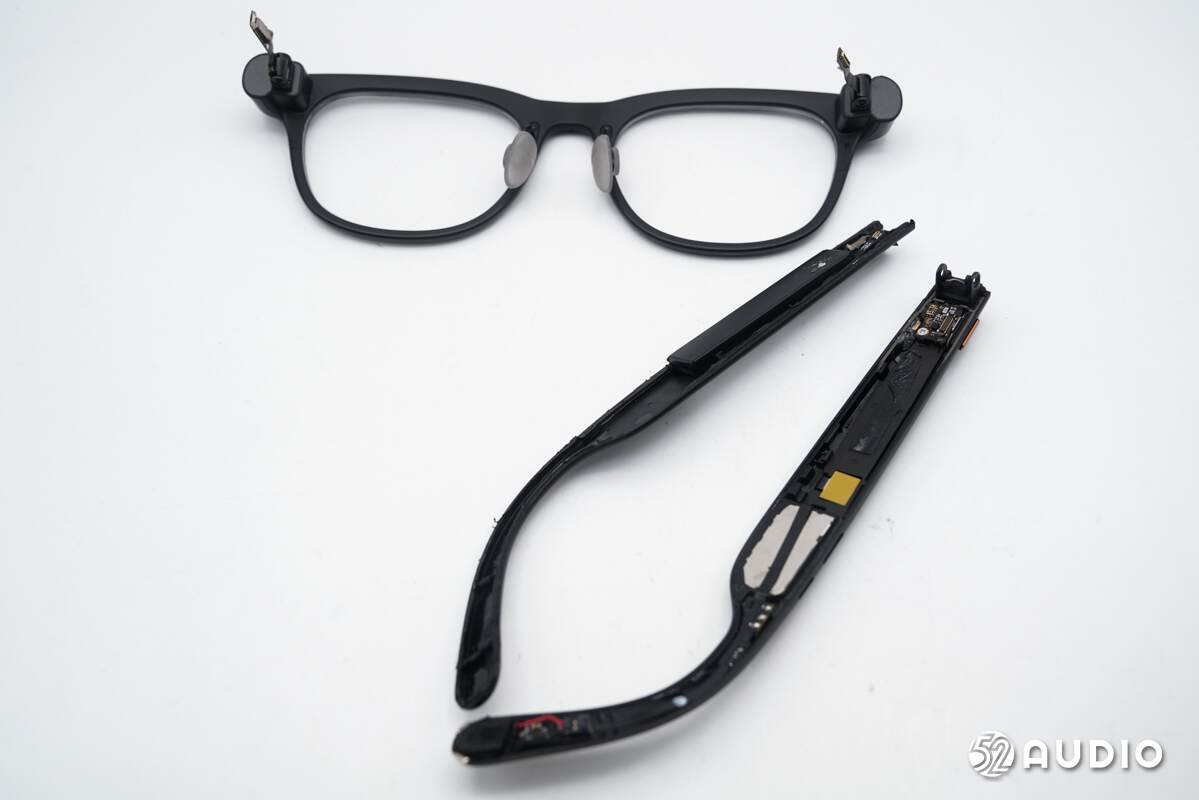
Remove the right temple.
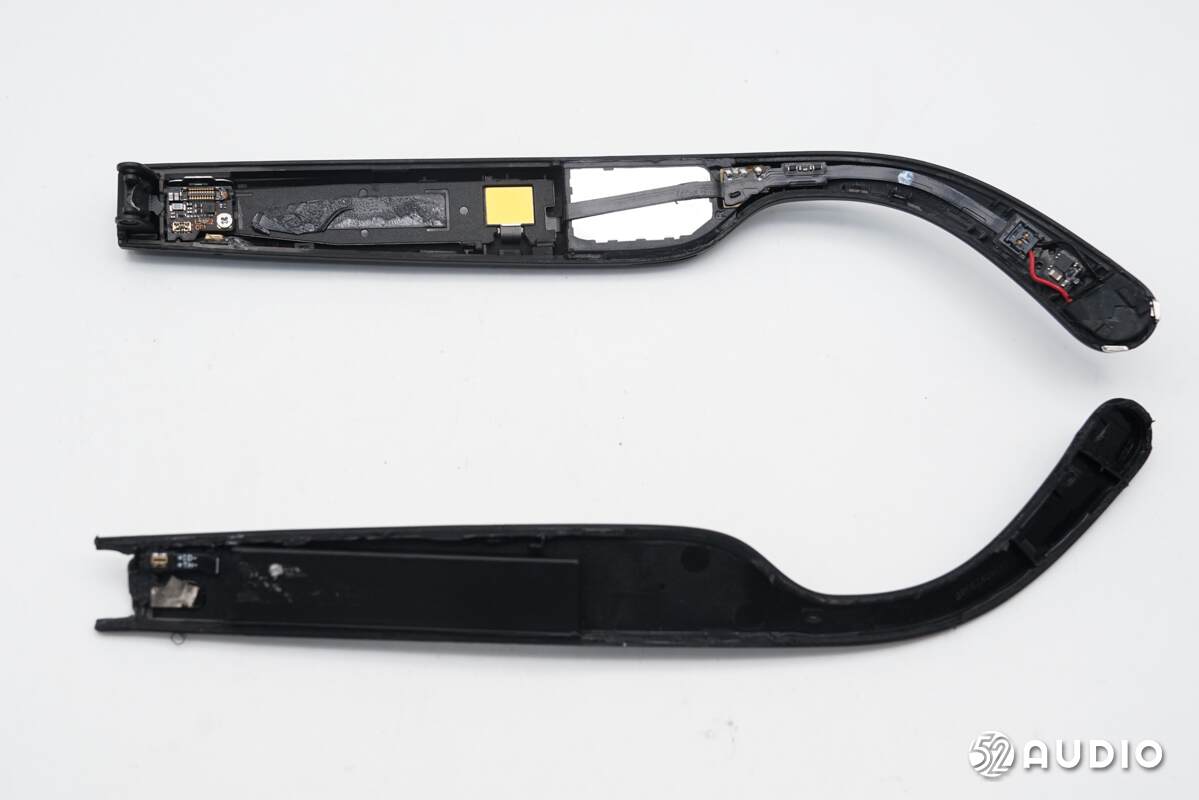
The right temple houses a PCB assembly, battery, speaker, microphone, and other components.
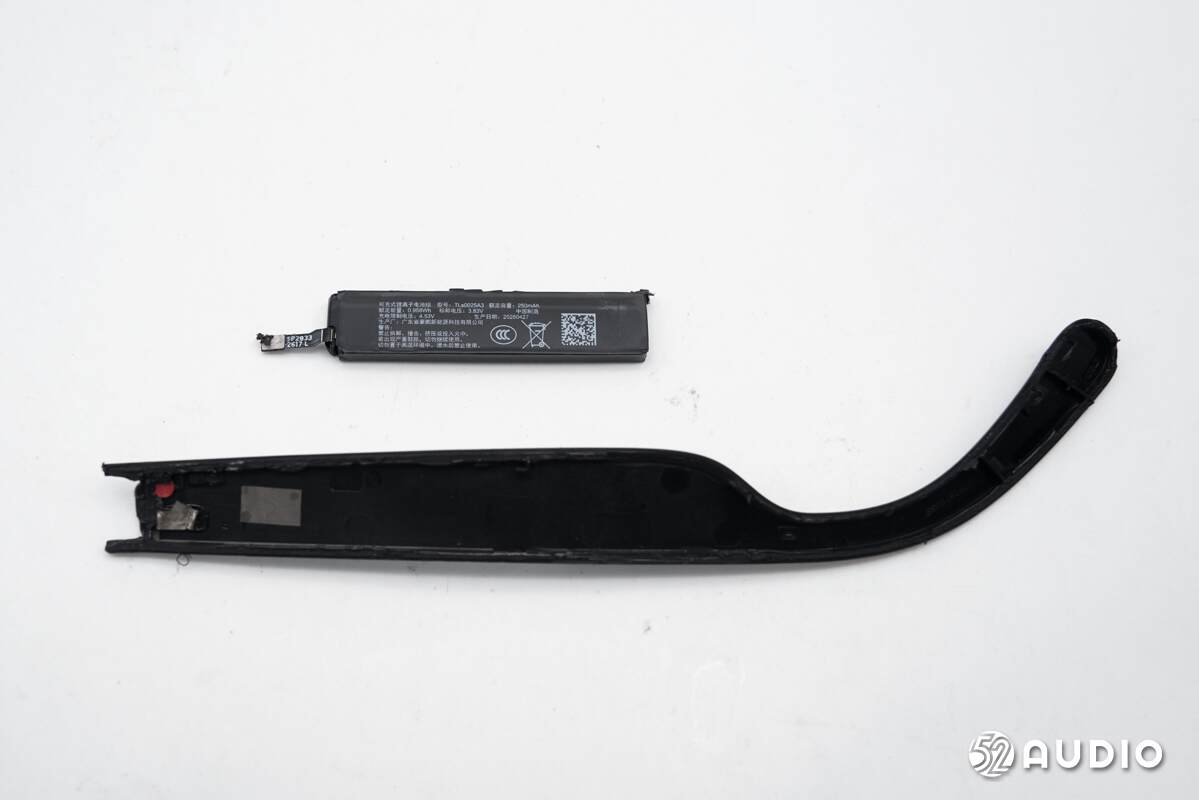
Remove the battery assembly from the cavity.
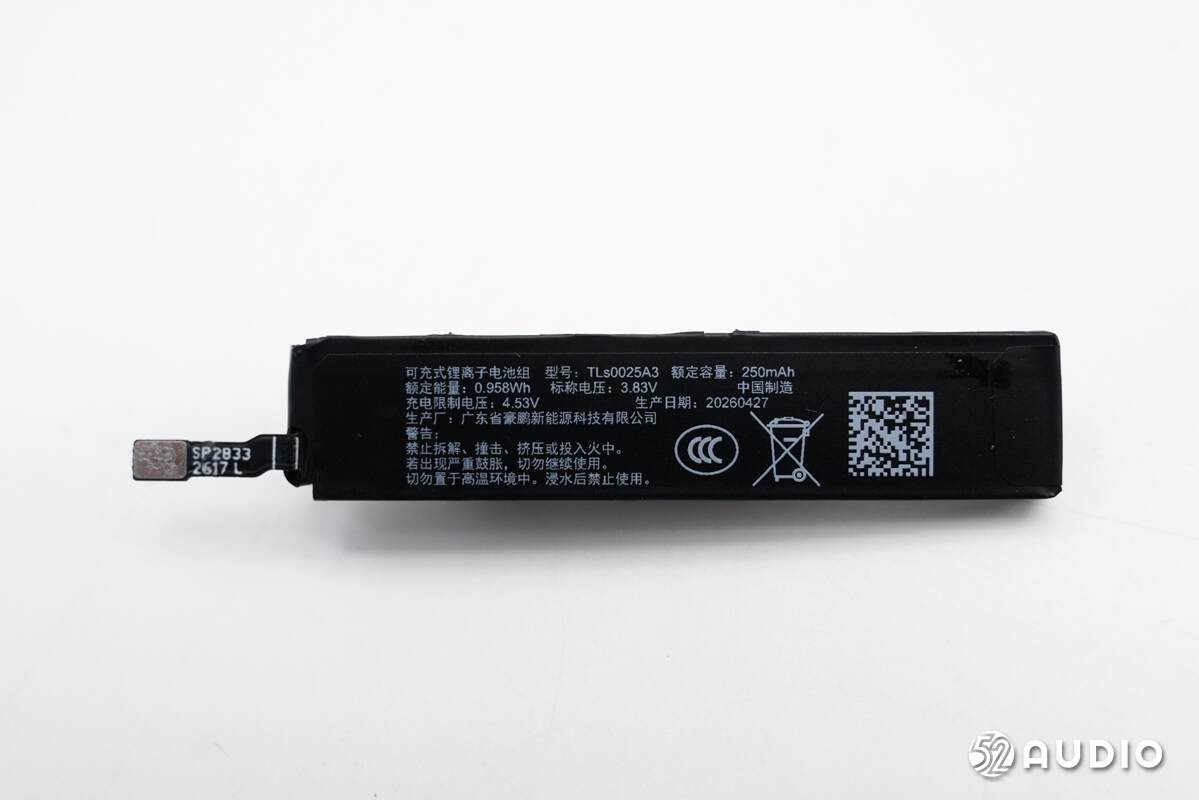
The Blue Whale semi-solid-state battery inside the glasses offers enhanced safety and improved low-temperature performance. It uses a 4.53 V high-voltage design, a 15% silicon anode, and a stacked steel-case construction. Compared with the previous generation, volumetric energy density has increased by 50% and capacity by 57%.
The battery label lists the following specifications: Model: TLs0025A3; Rated Capacity: 250 mAh; Rated Energy: 0.958 Wh; Nominal Voltage: 3.83 V; Charging Voltage Limit: 4.53 V; Manufacturer: Guangdong Highpower New Energy Technology Co., Ltd.
According to teardowns by 52 AUDIO, battery products from Highpower have been used in numerous products from well-known brands, including Li Auto, DJI, Sony, JBL, Garmin, Xiaomi, Logitech, Sennheiser, Philips, Whoop, LG, Oral-B, and Waterpik.
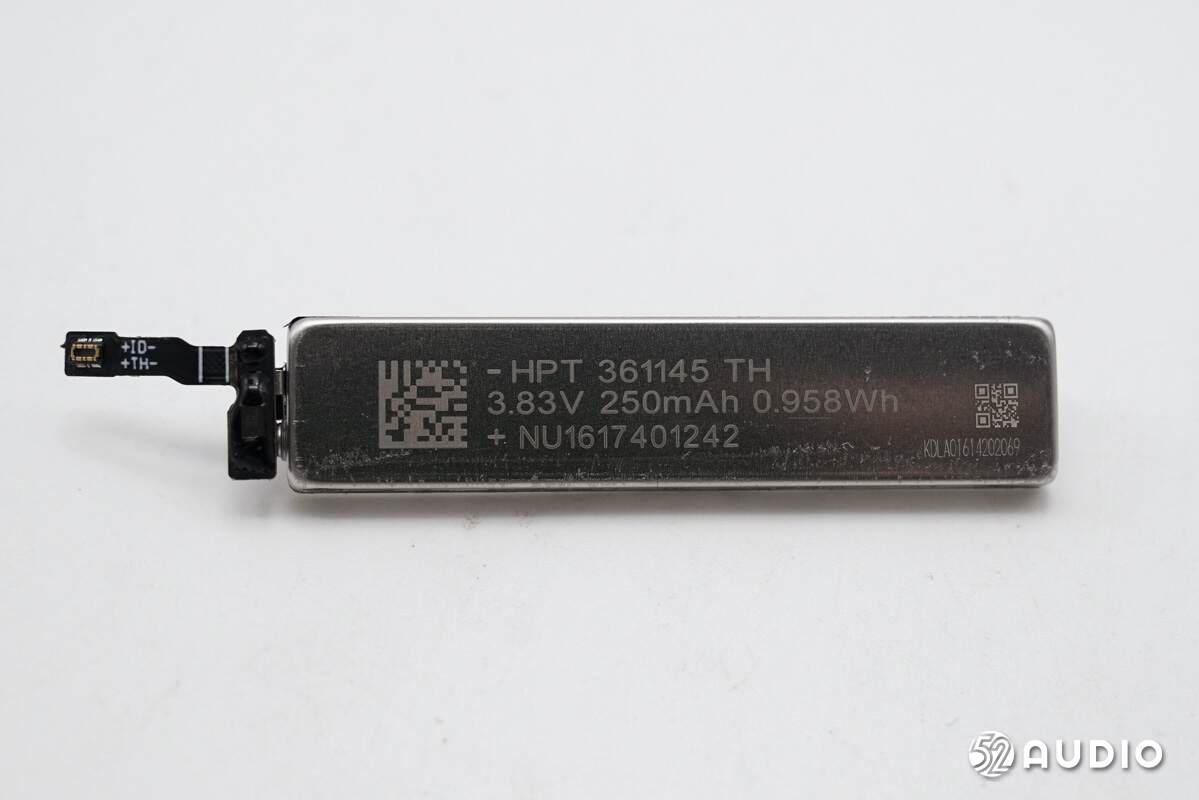
Remove the outer label to reveal a rectangular steel-case battery cell, model HPT 361145.
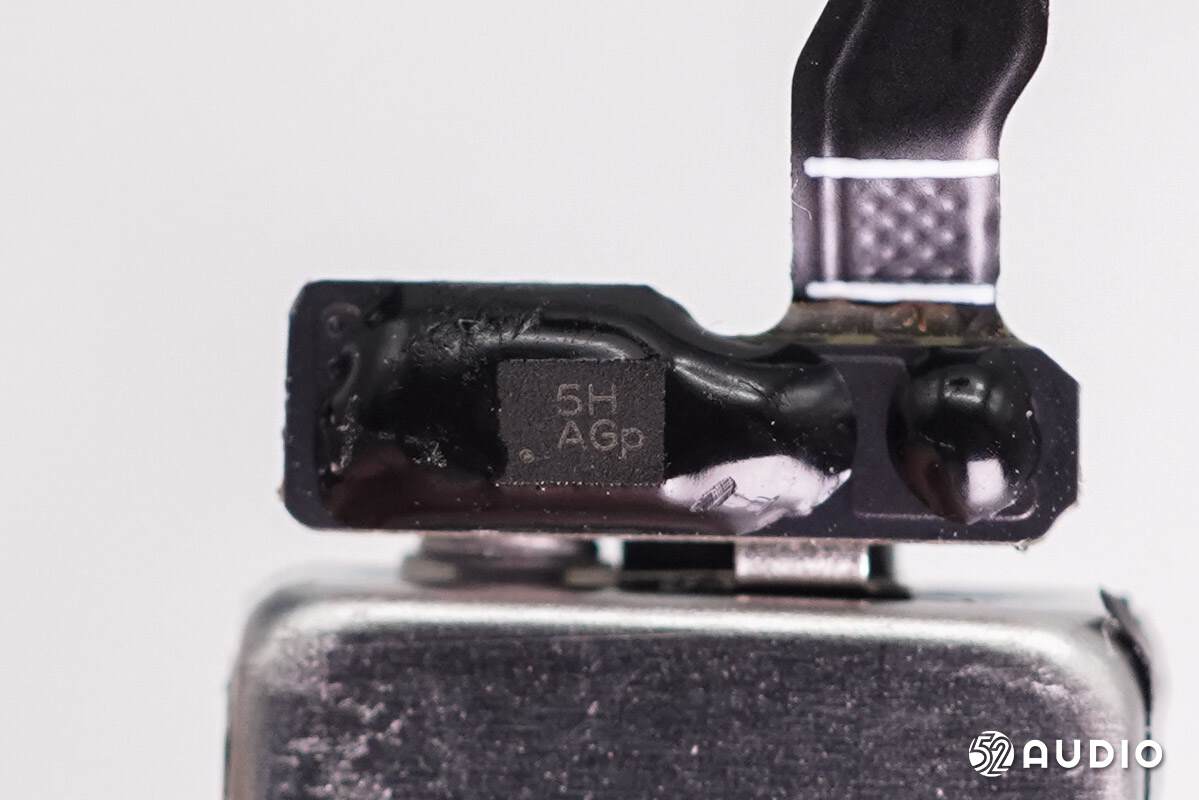
The battery protection PCB features an IC marked 5H AGp, which provides overcharge, overdischarge, and overcurrent protection.
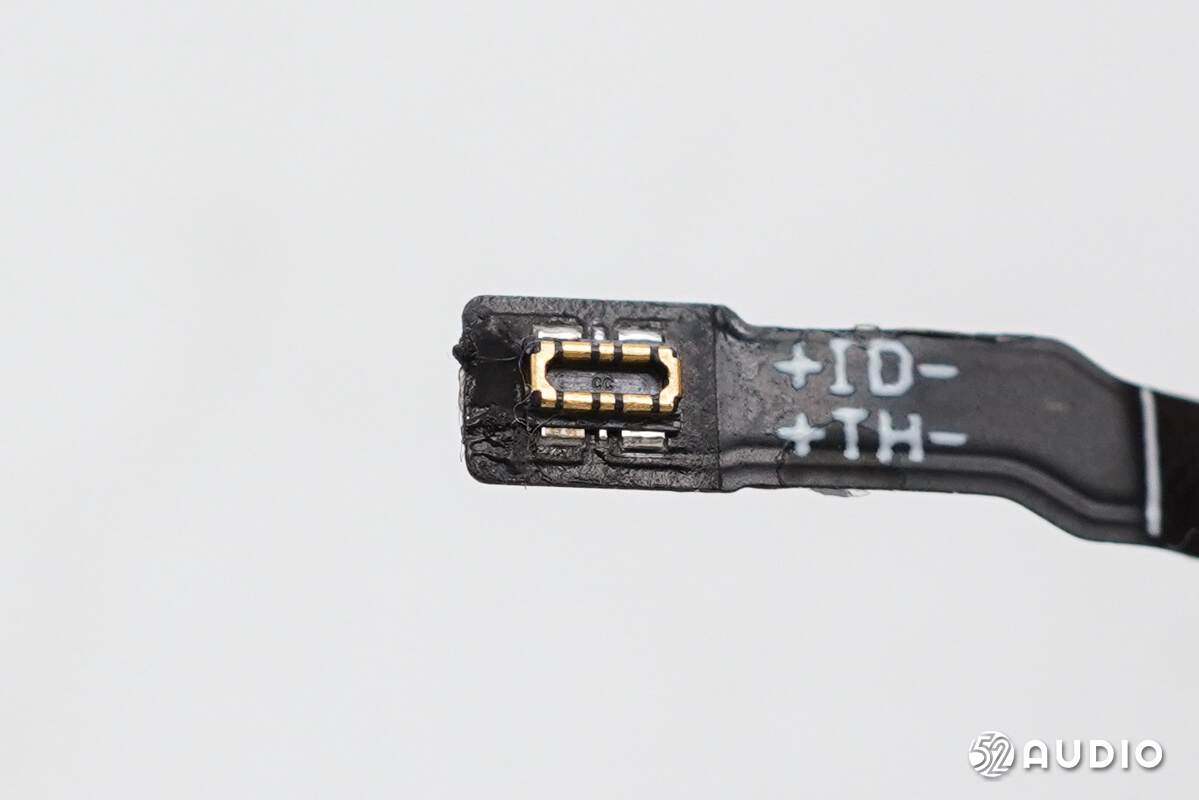
The male BTB connector connecting the battery ribbon cable to the PCB assembly.
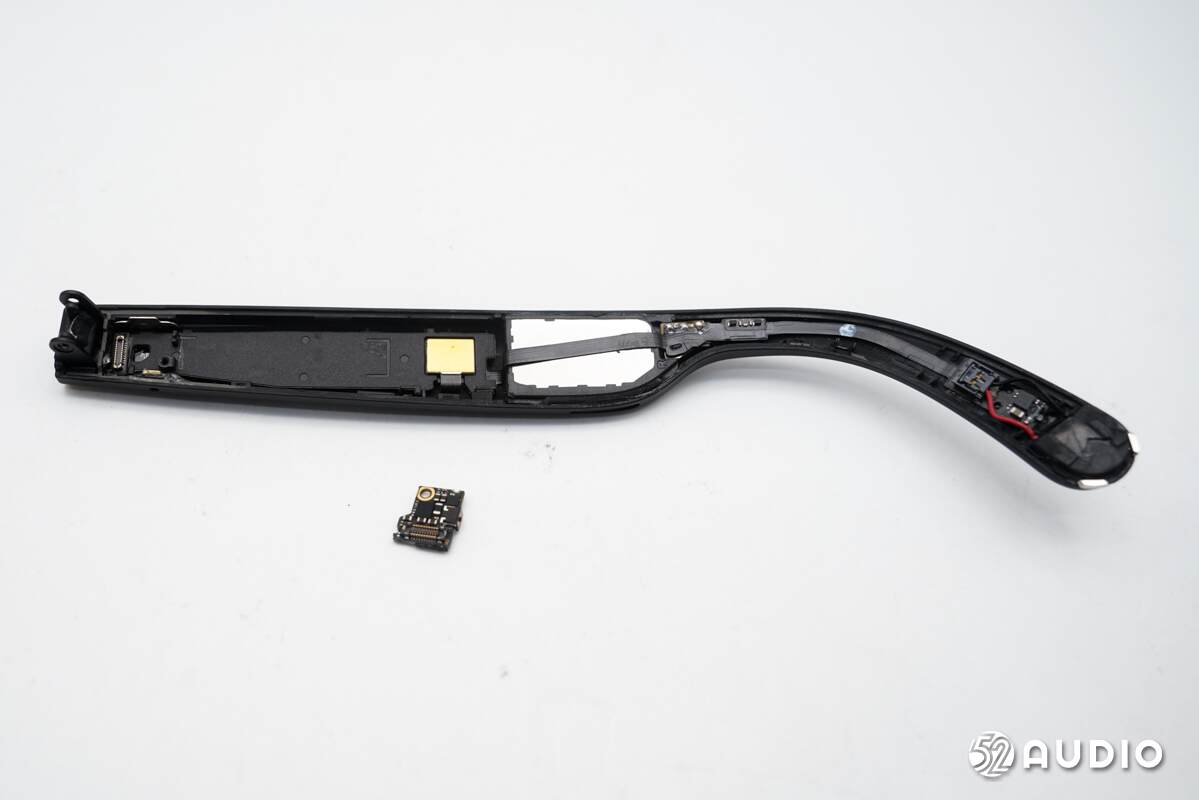
Remove the securing screws and take out the PCB assembly from the temple.
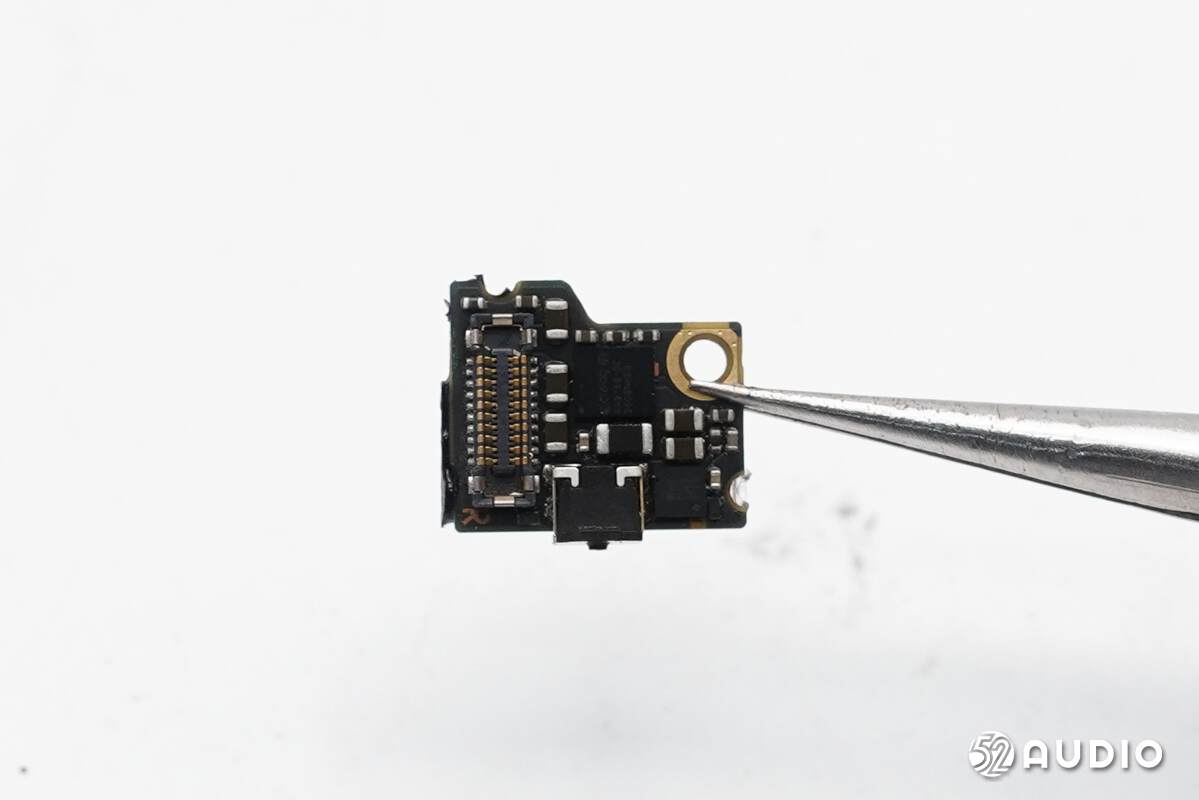
One side of the PCB assembly.
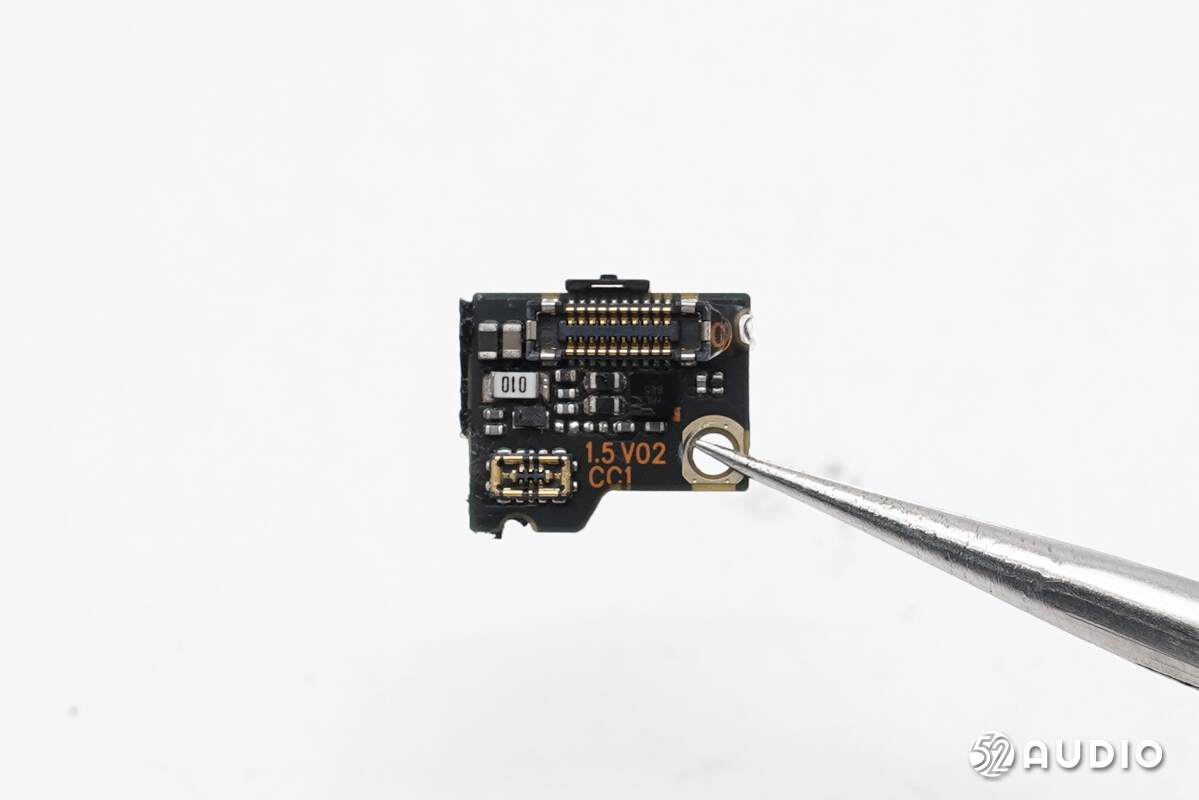
The other side of the PCB assembly.
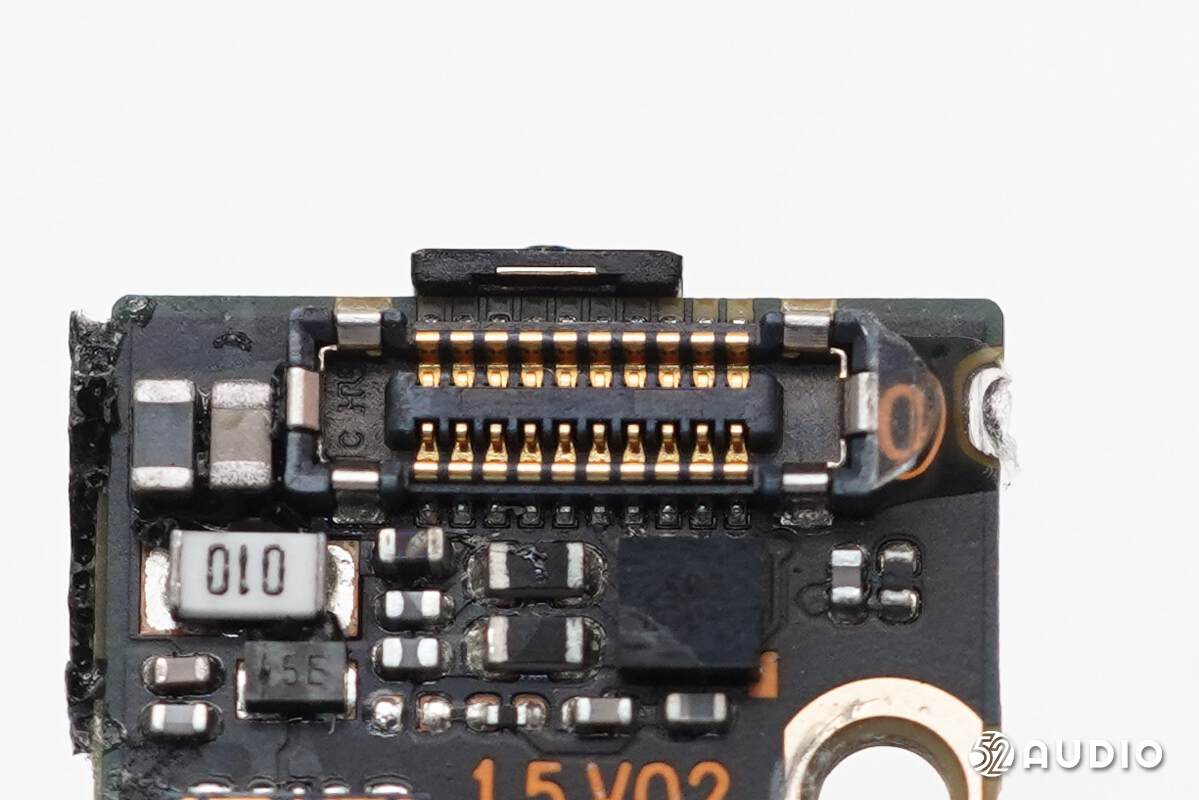
The female BTB connector linking the PCB assembly to the ribbon cable inside the frame.
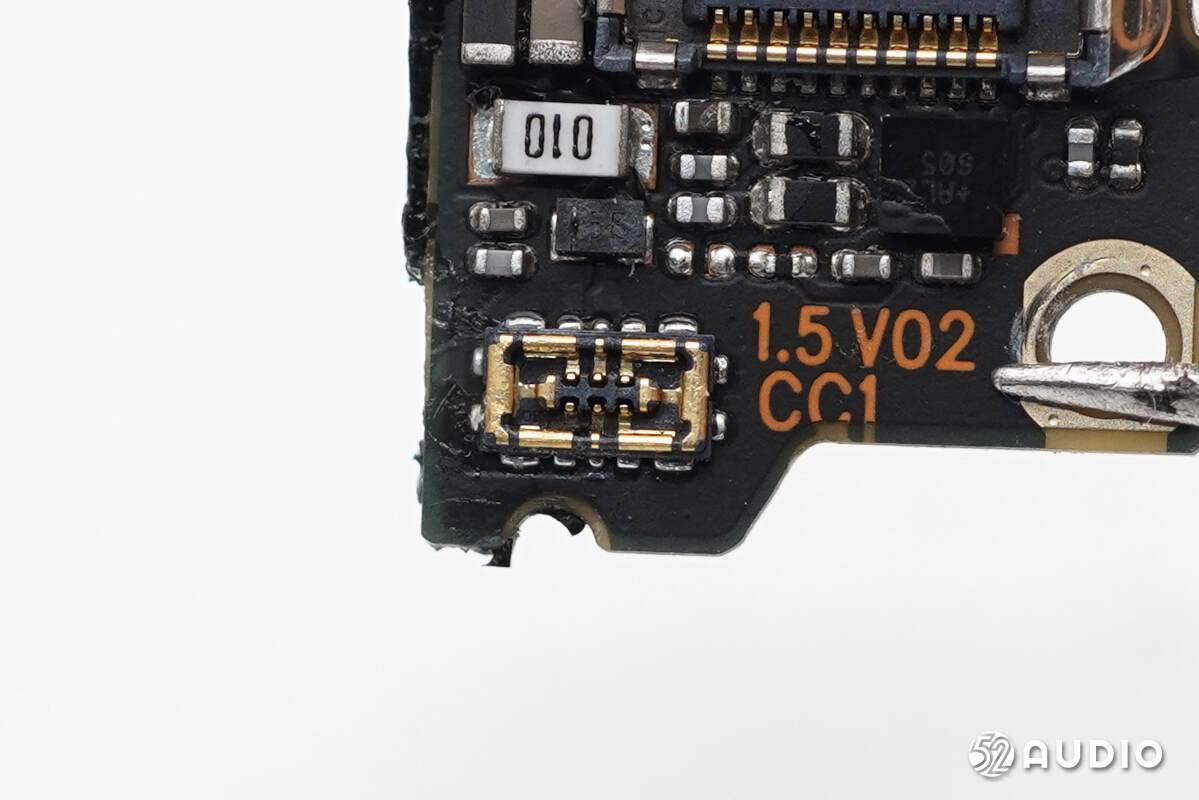
The female BTB connector linking the PCB assembly to the battery.
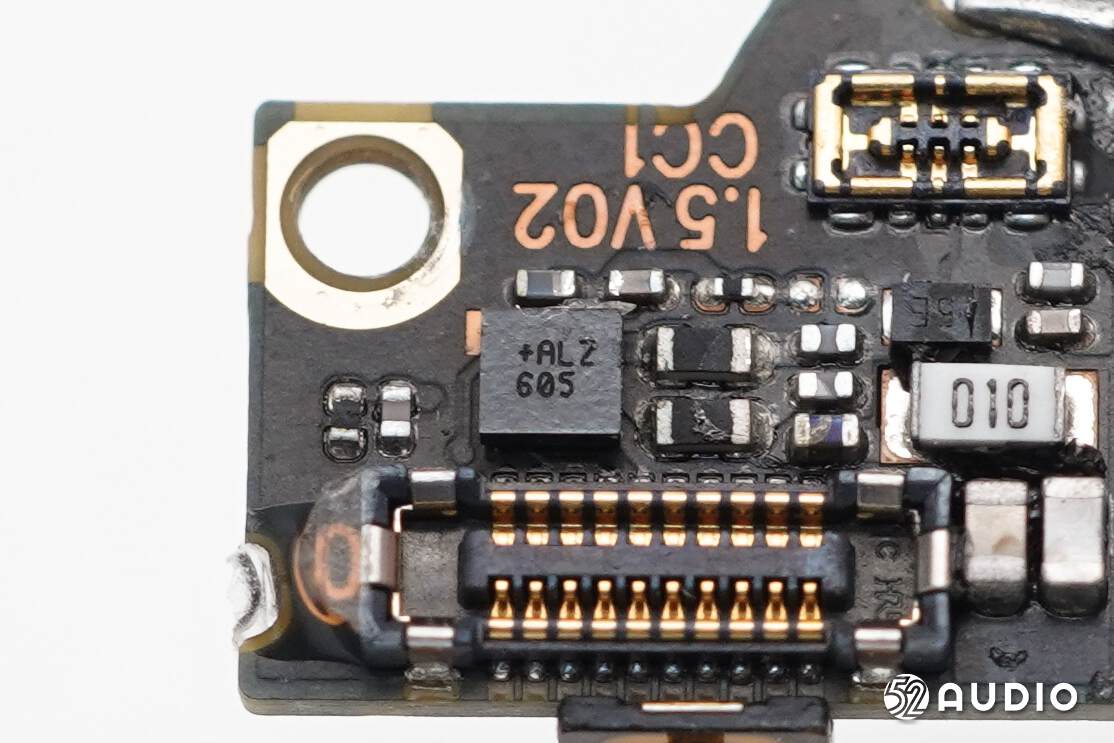
An IC marked +ALZ 605.
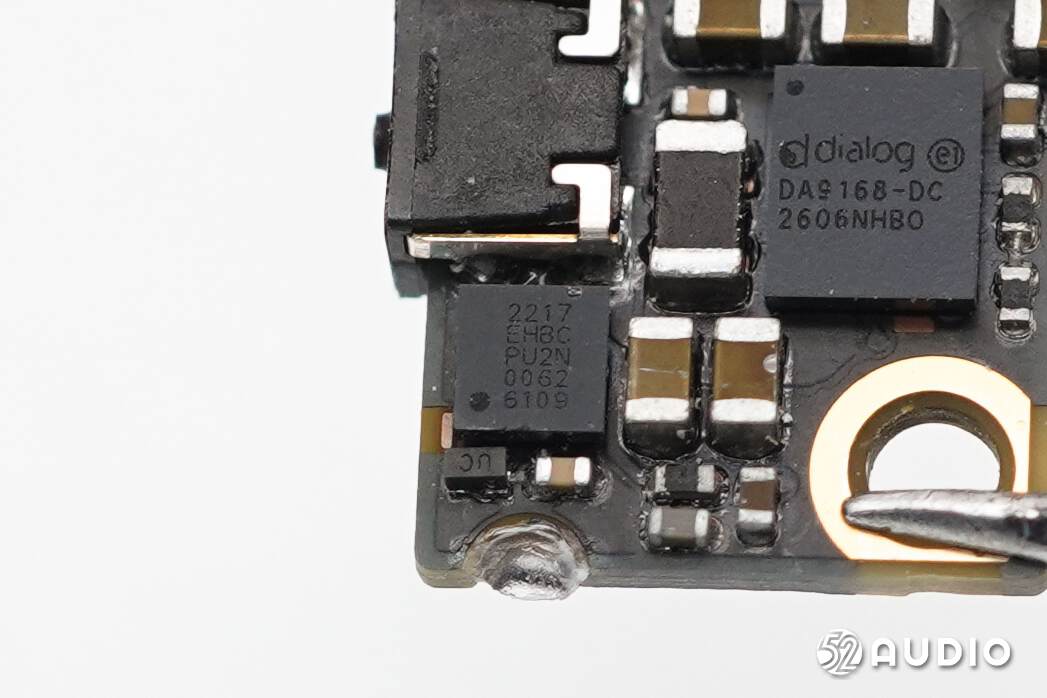
The CellWise CW2217EHBC lithium battery fuel-gauge IC.
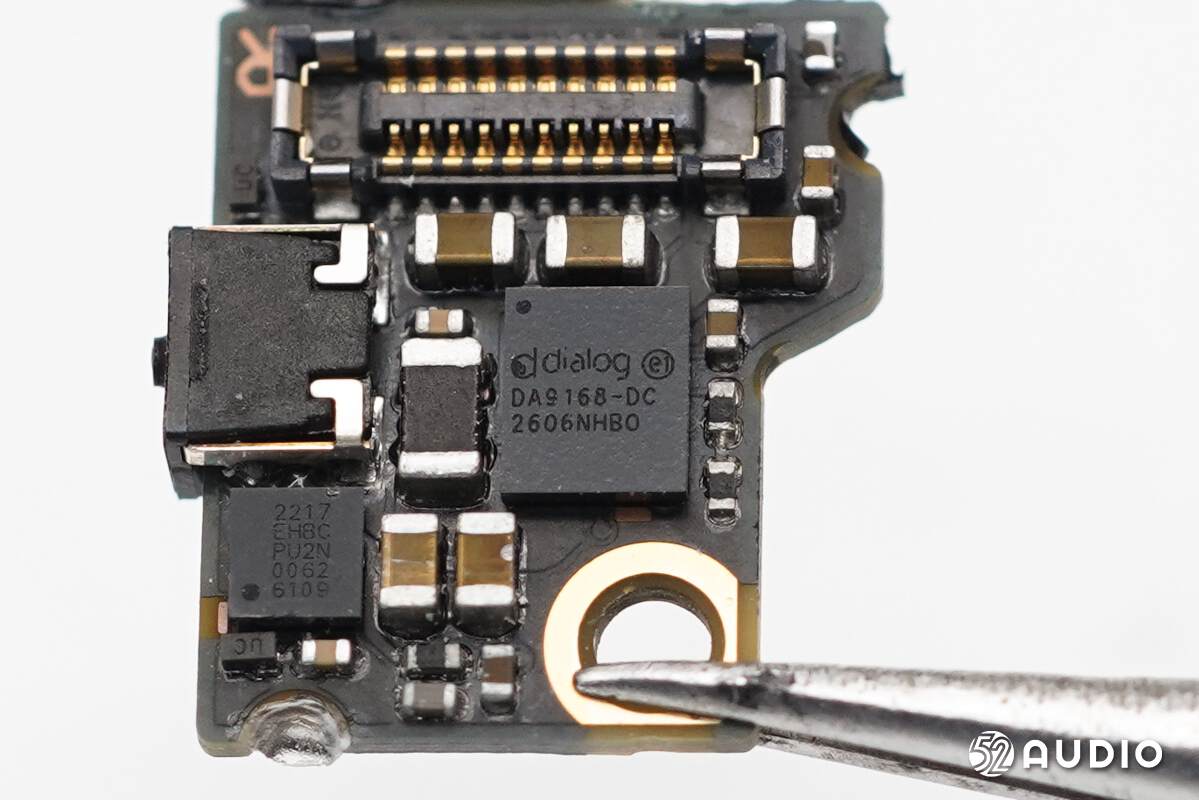
The Renesas DA9168 battery charging management IC integrates two independent LDOs and reverse boost functionality, and supports the USB On-The-Go (USB-OTG) standard. Its extremely low quiescent current and compact footprint make it well suited to space-constrained, battery-powered consumer products.
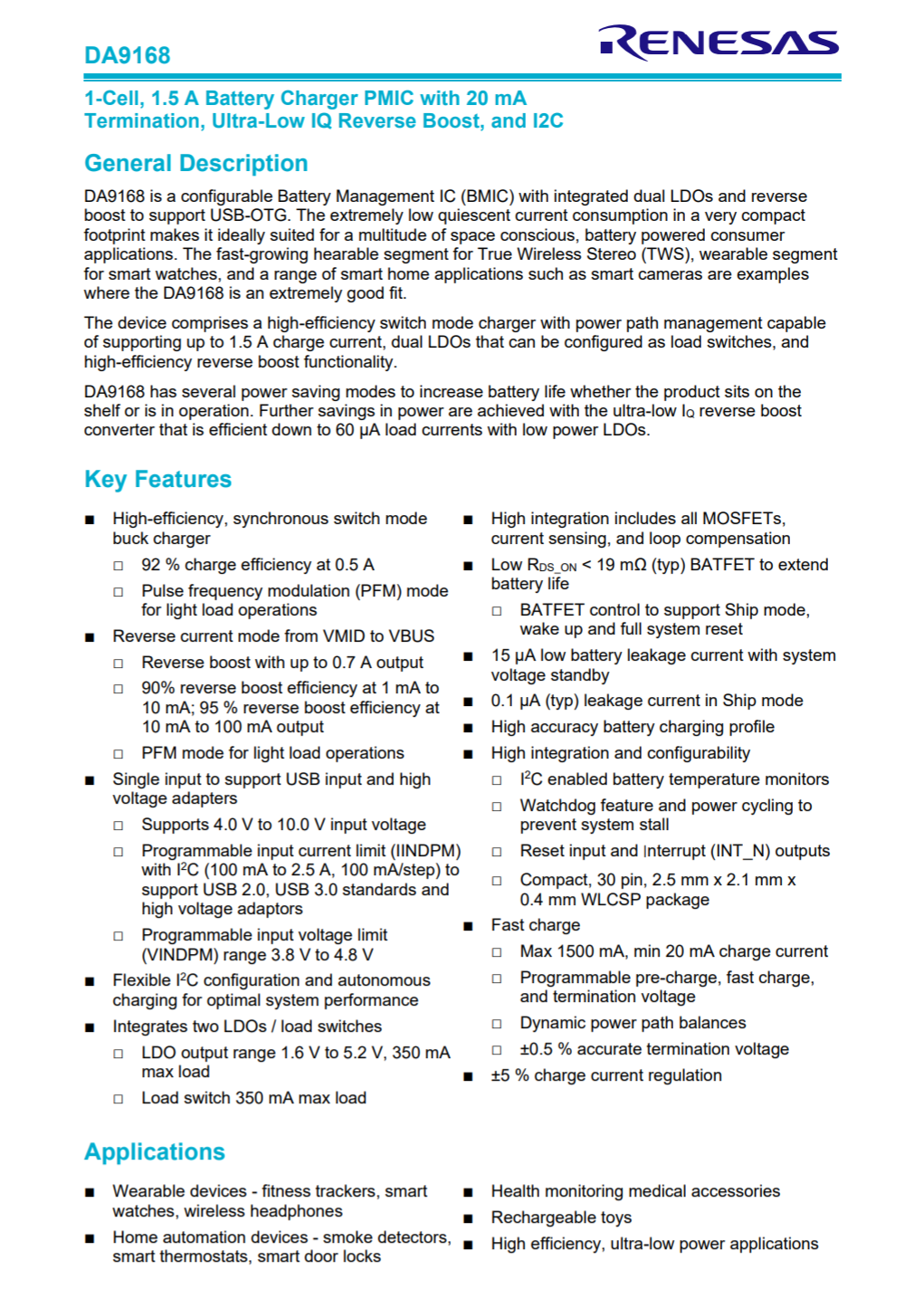
Detailed specifications for the Renesas DA9168.
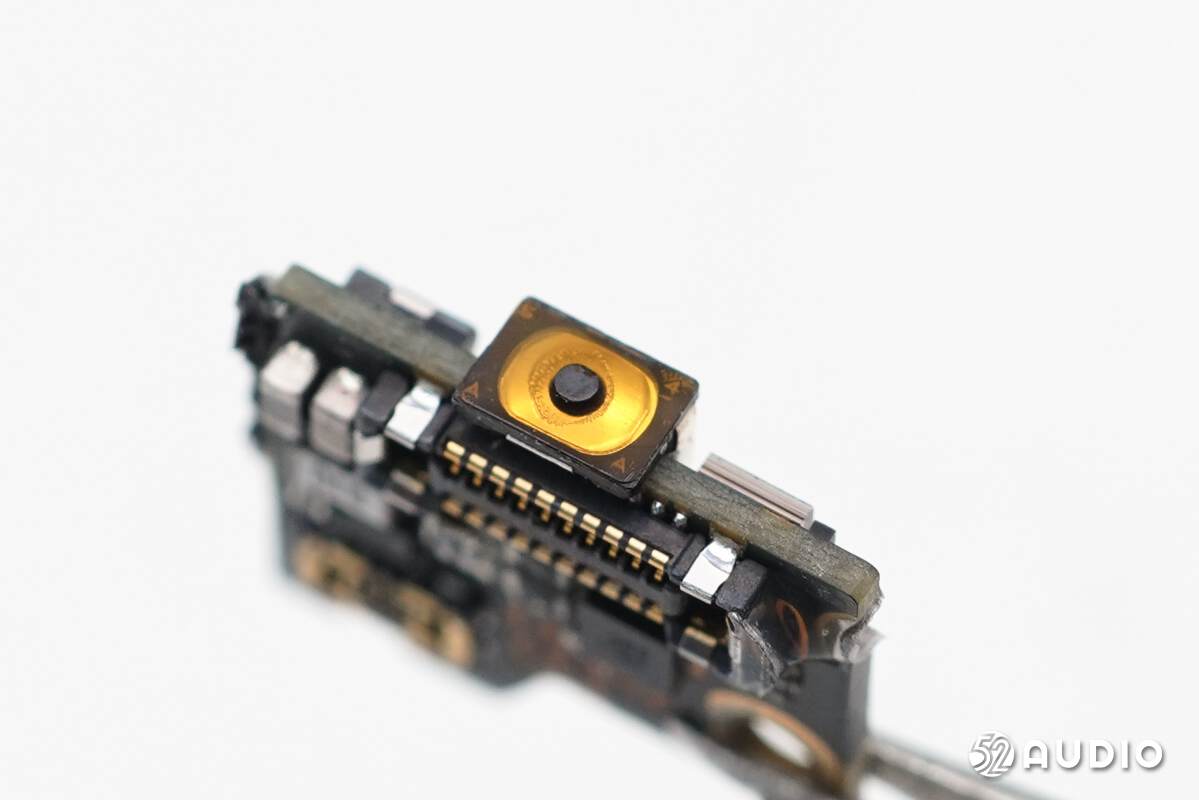
The tactile switch used for capturing photos and videos.
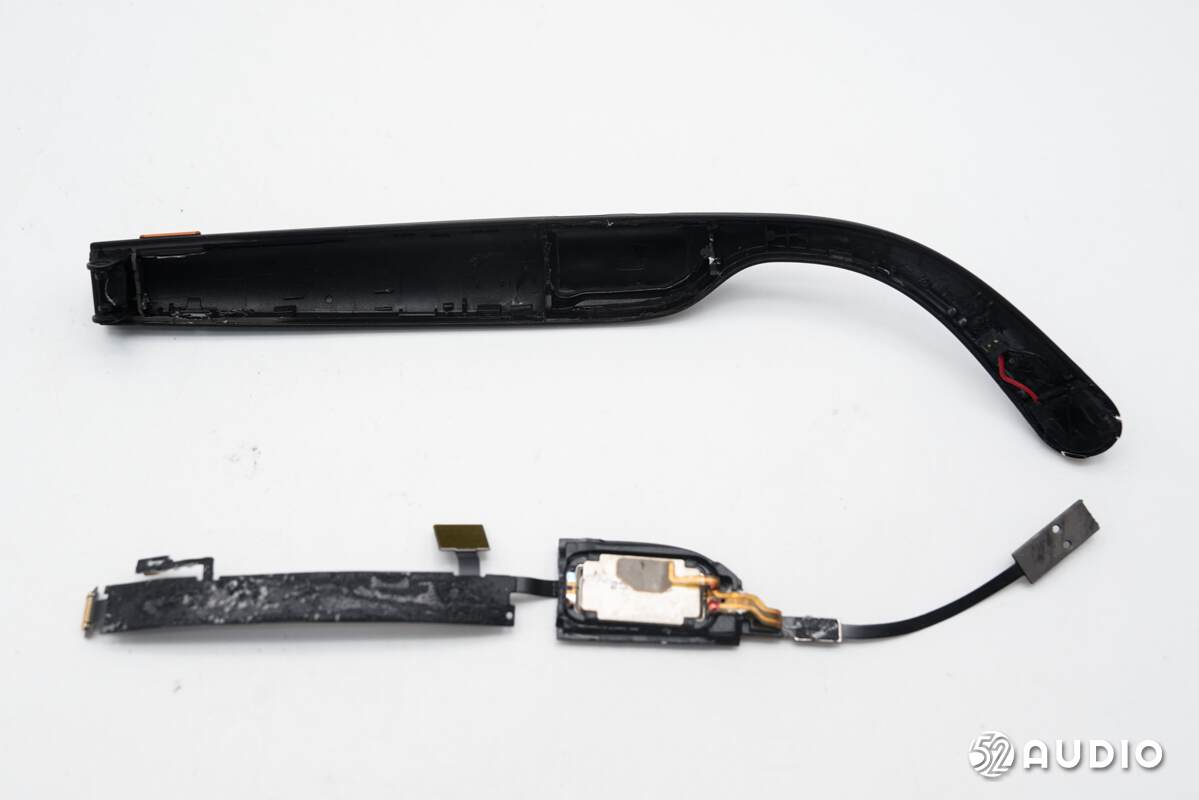
Remove the ribbon cable from the right temple.
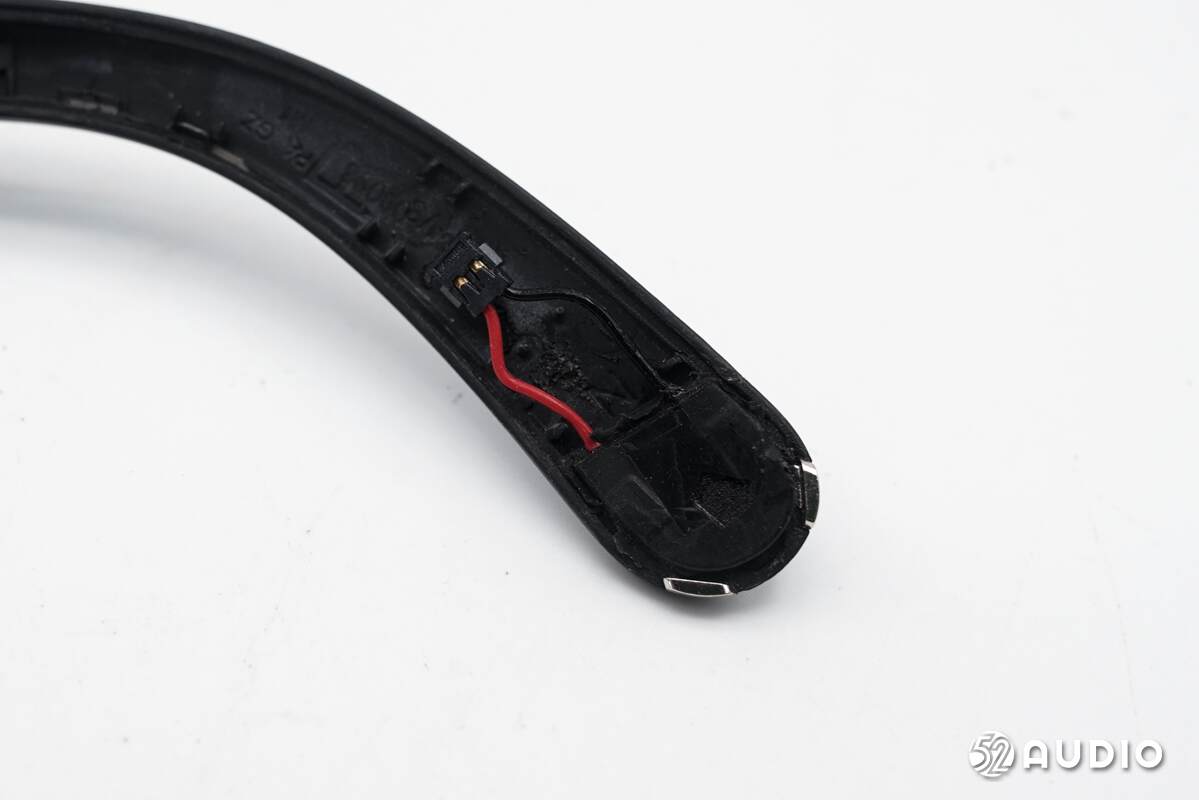
The wire connecting the charging contacts at the end of the cavity. It connects to the speaker ribbon cable through a socket.
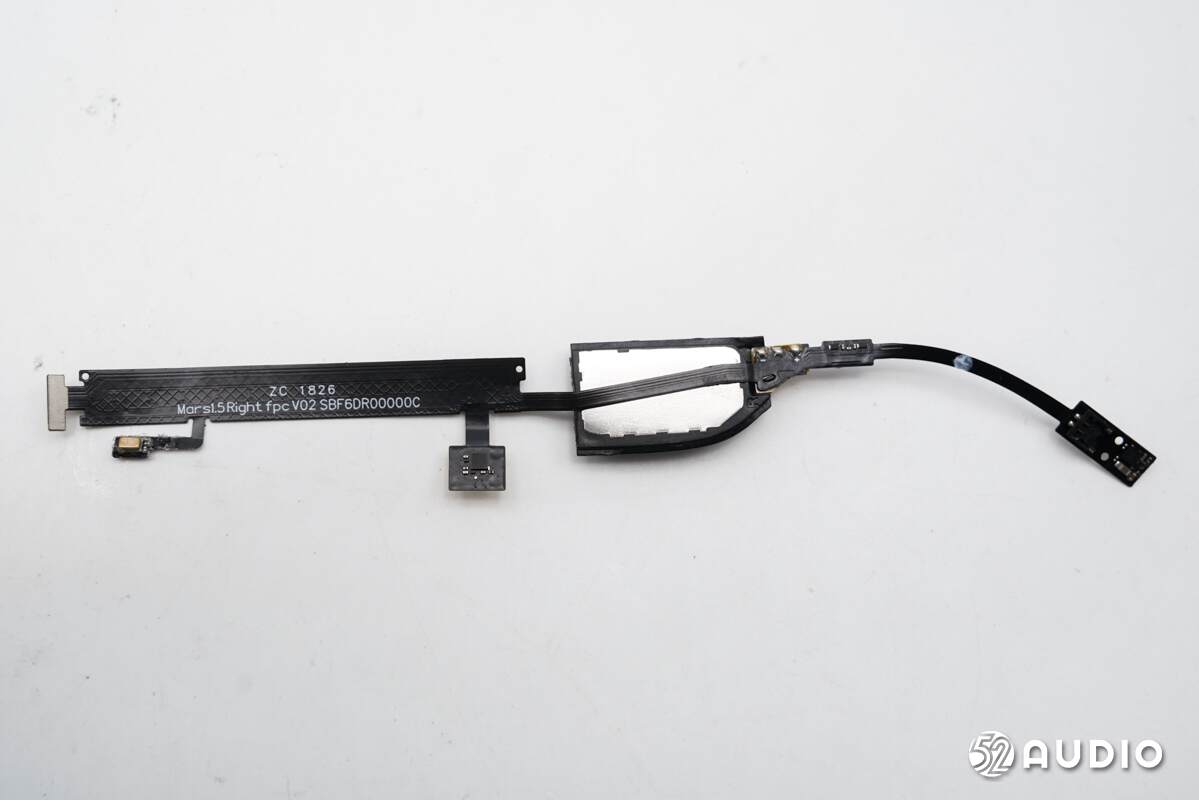
An overview of the ribbon cable circuitry inside the right temple. The speaker driver is the same as the one on the left.
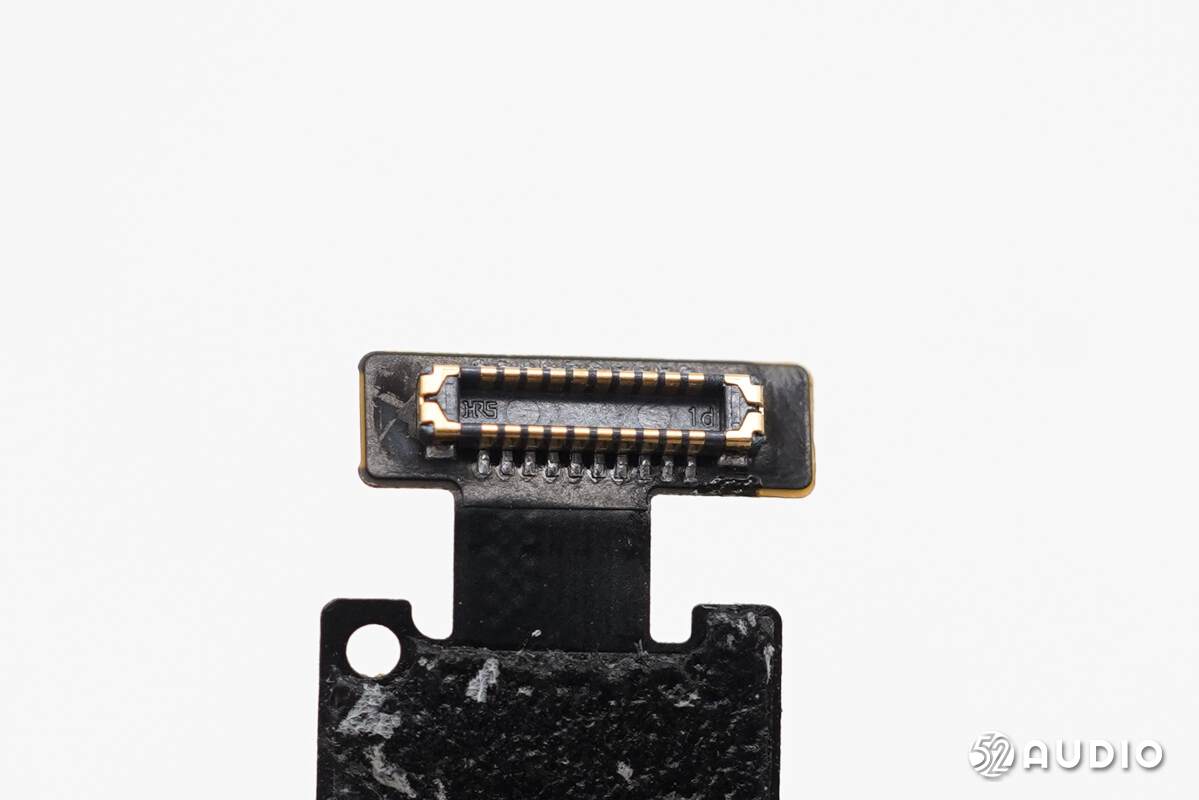
The male BTB connector connecting the ribbon cable to the PCB assembly.
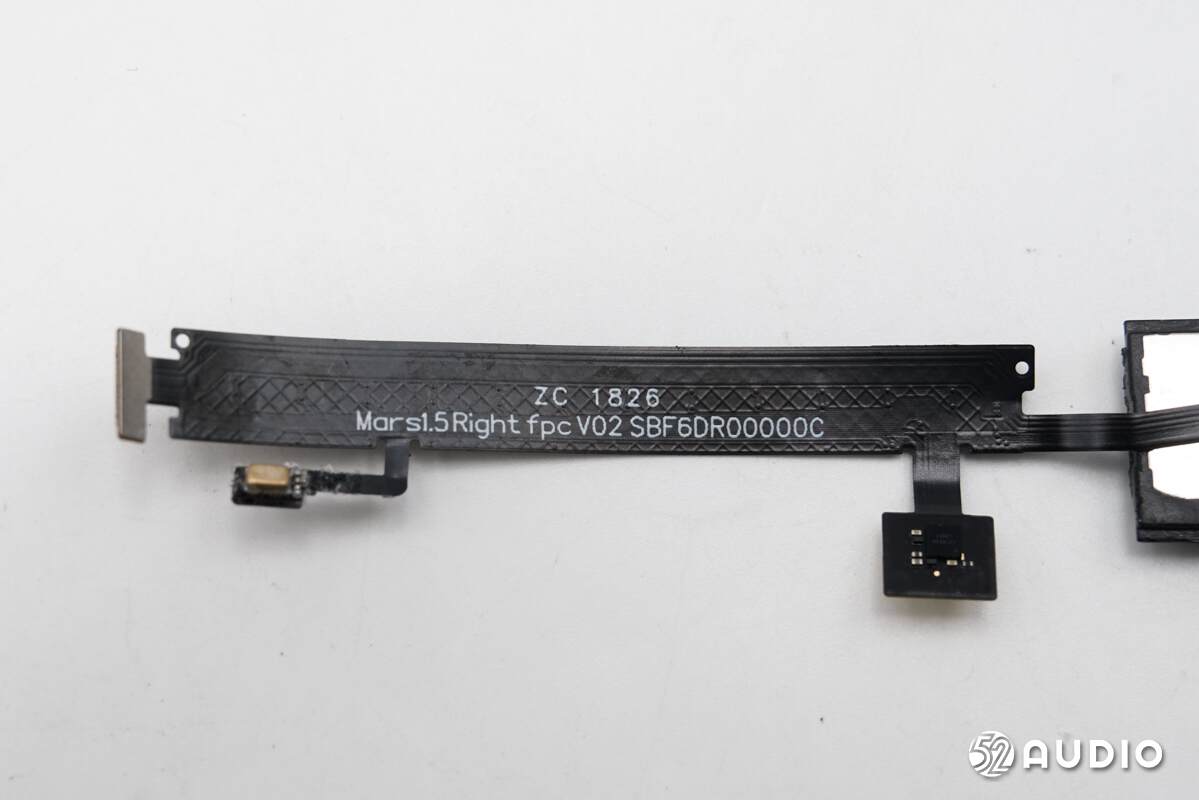
The touch detection sensor used for multimedia controls.
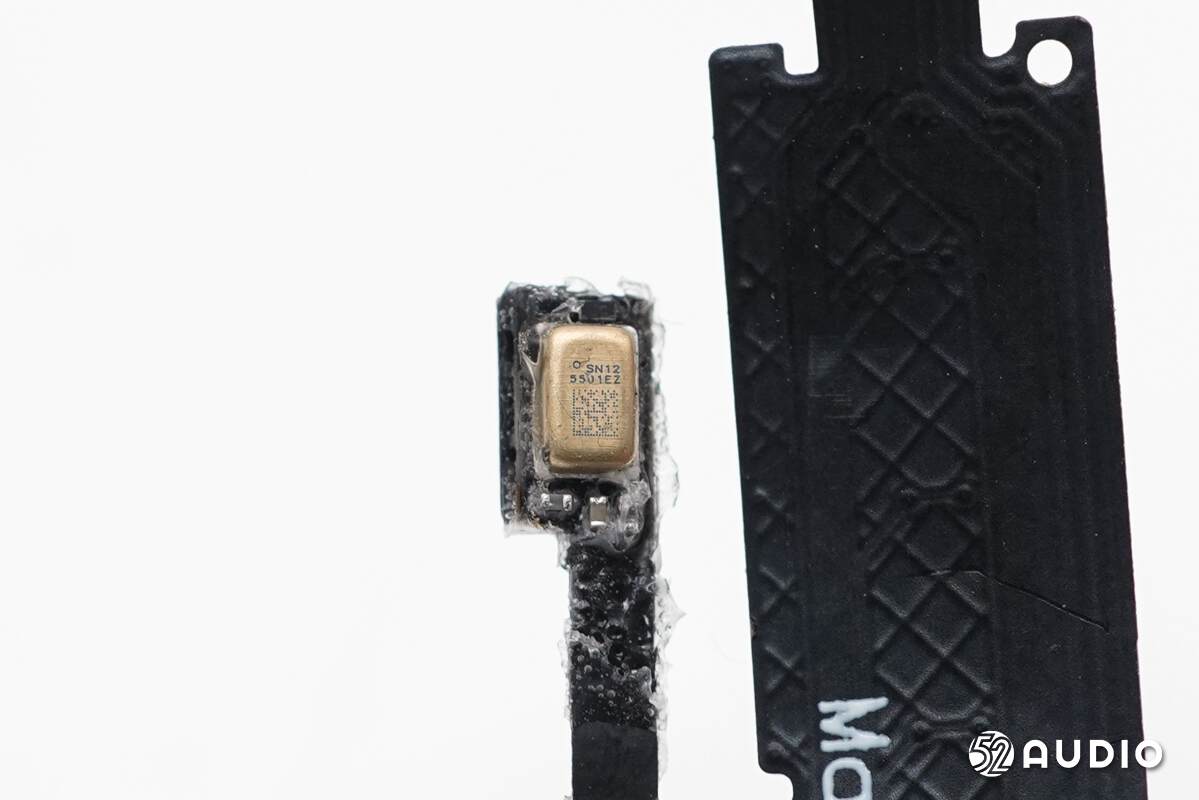
The second MEMS microphone marked SN12.
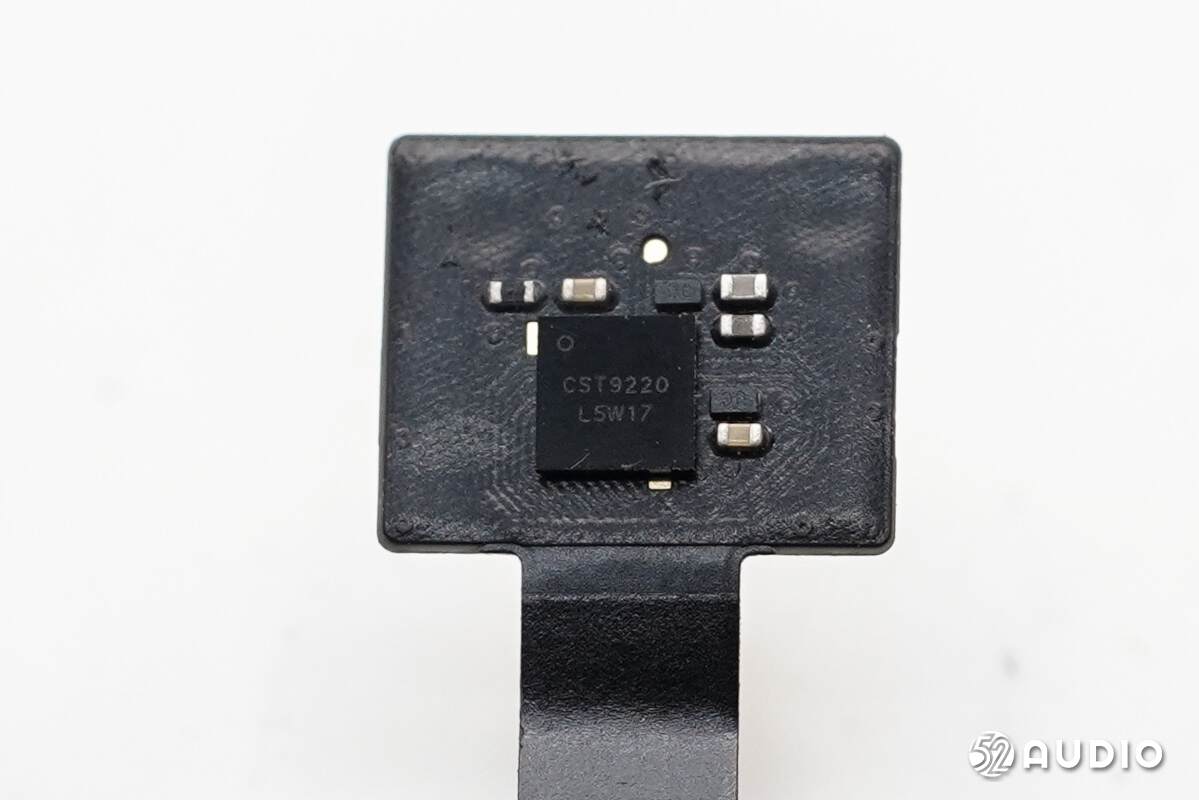
The HYNITRON CST9220 ultra-low-power multipoint touch controller supporting both self-capacitance and mutual-capacitance sensing.
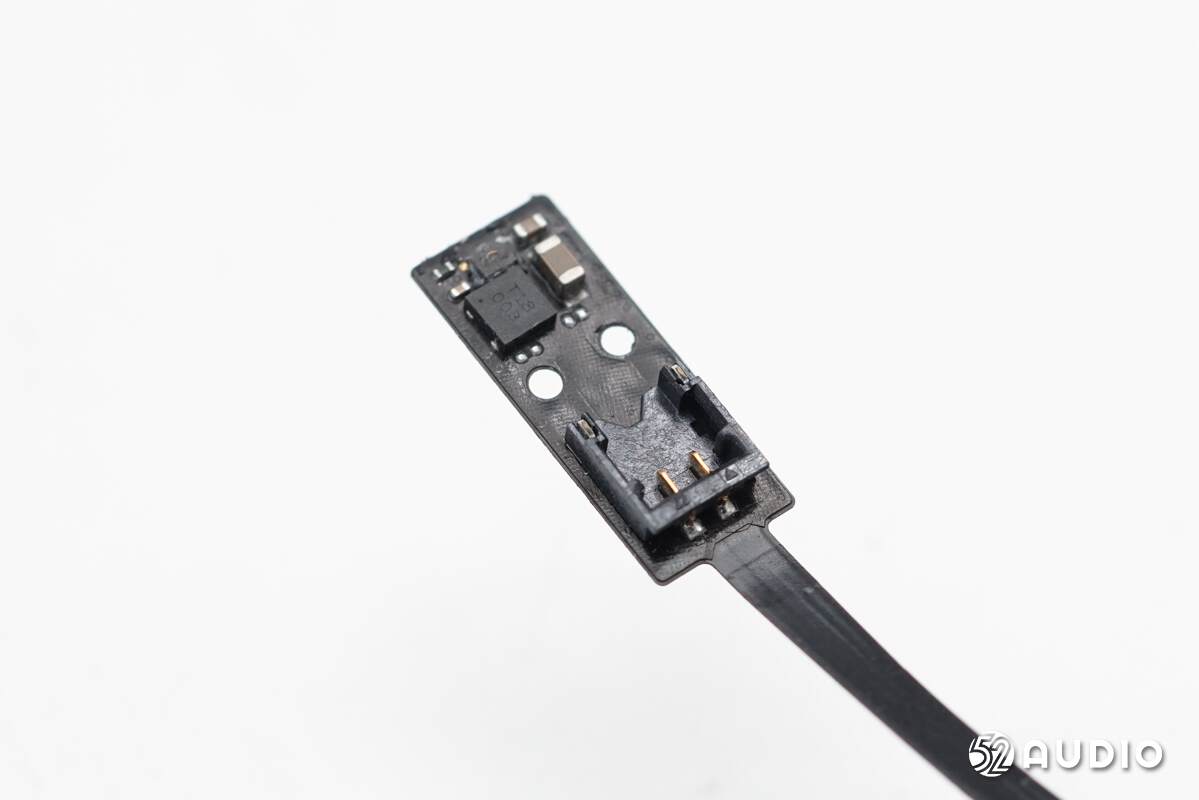
An overview of the small PCB at the end of the ribbon cable.
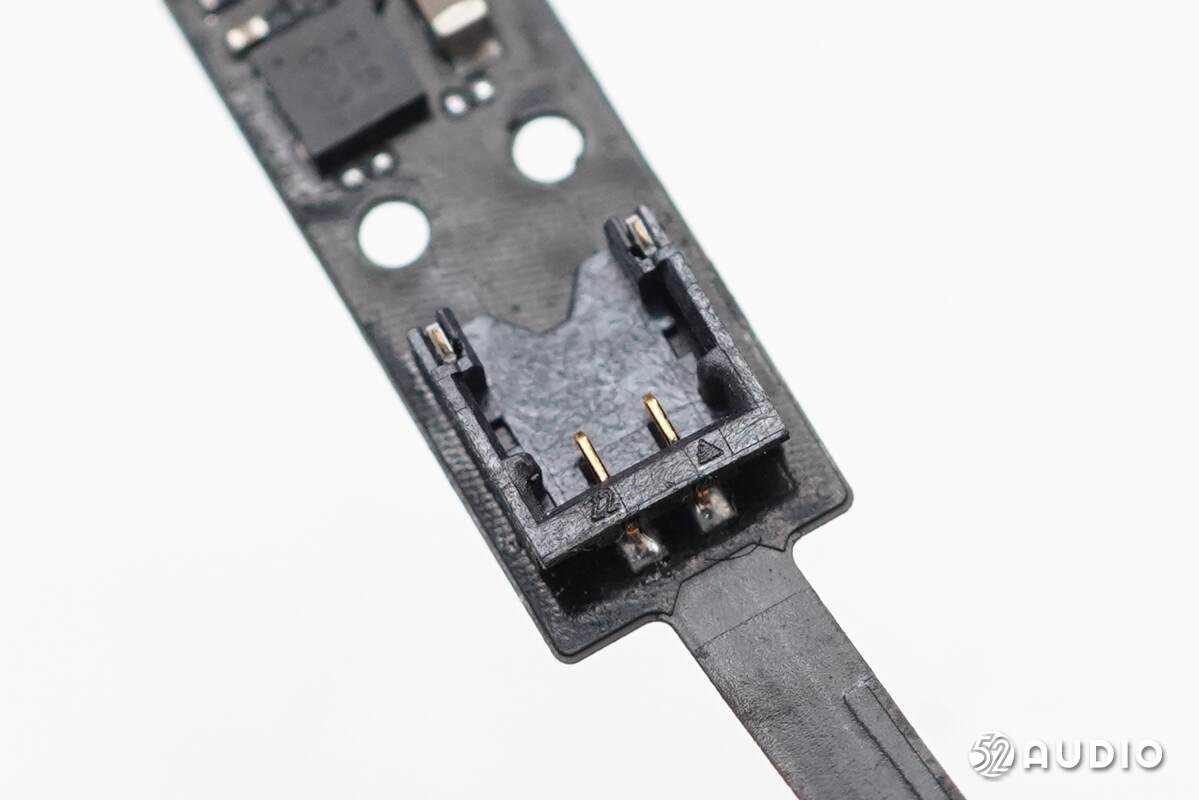
The socket connecting the wire from the charging contacts.
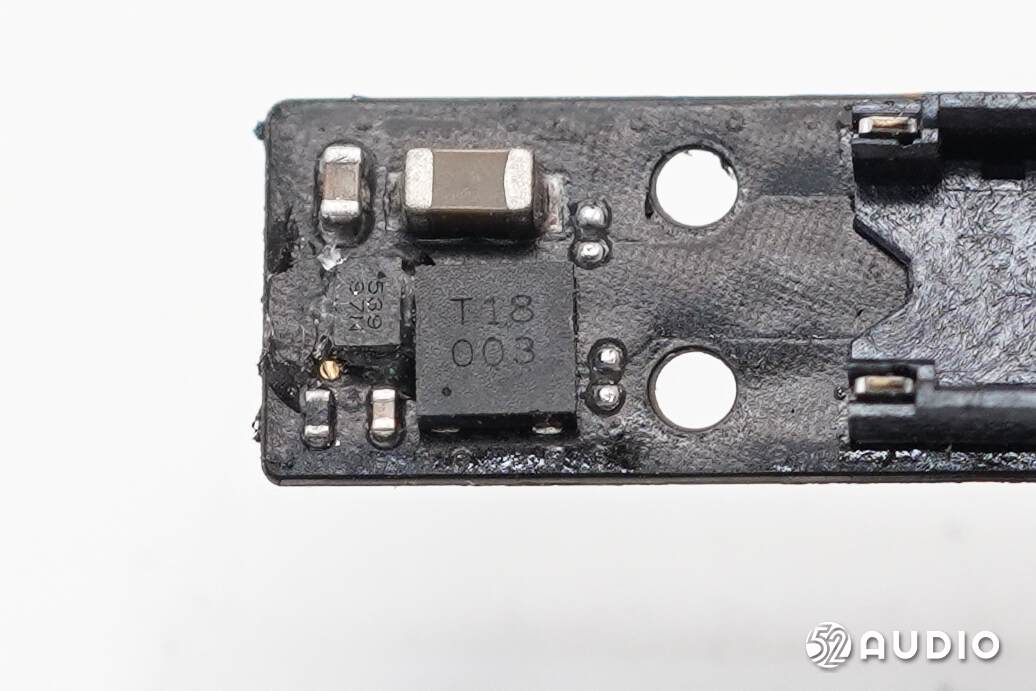
The TVS diode marked T18 provides input overvoltage protection.
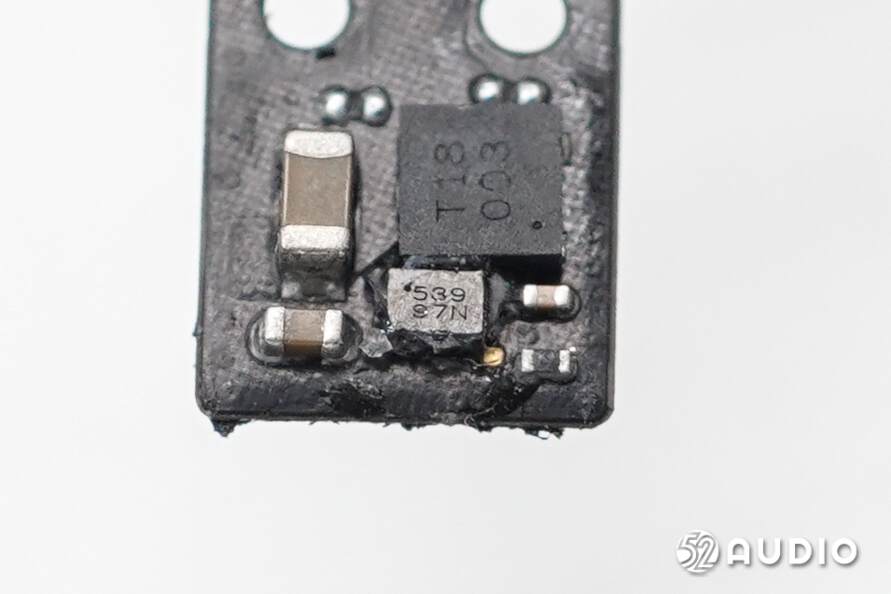
The IC marked 539.
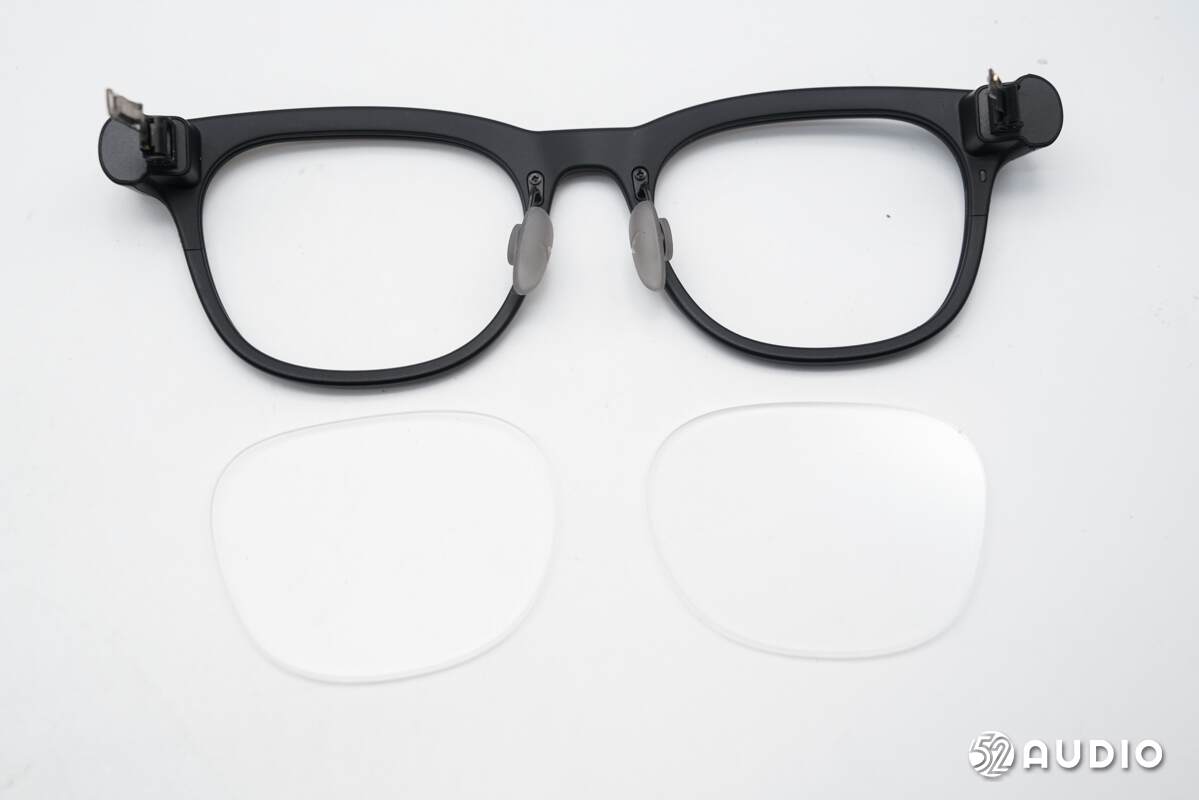
Remove the lenses.
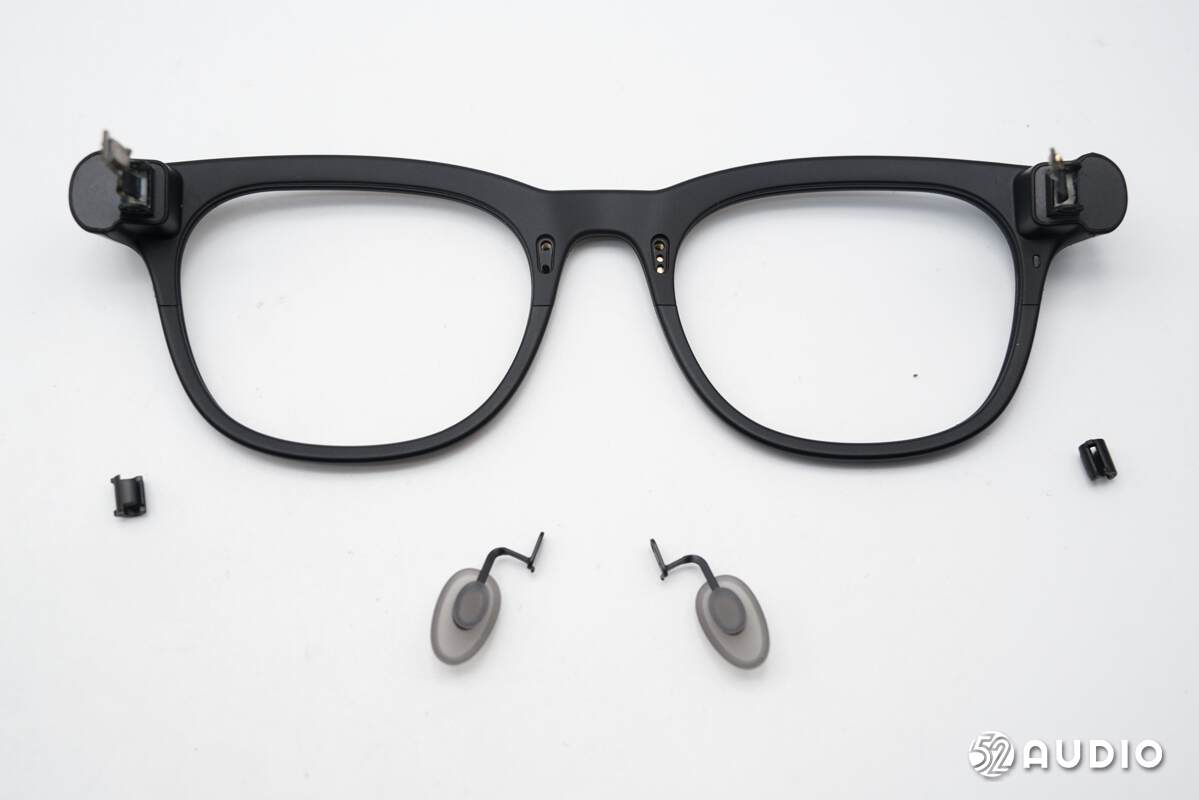
Remove the securing screws and take off the nose pads.
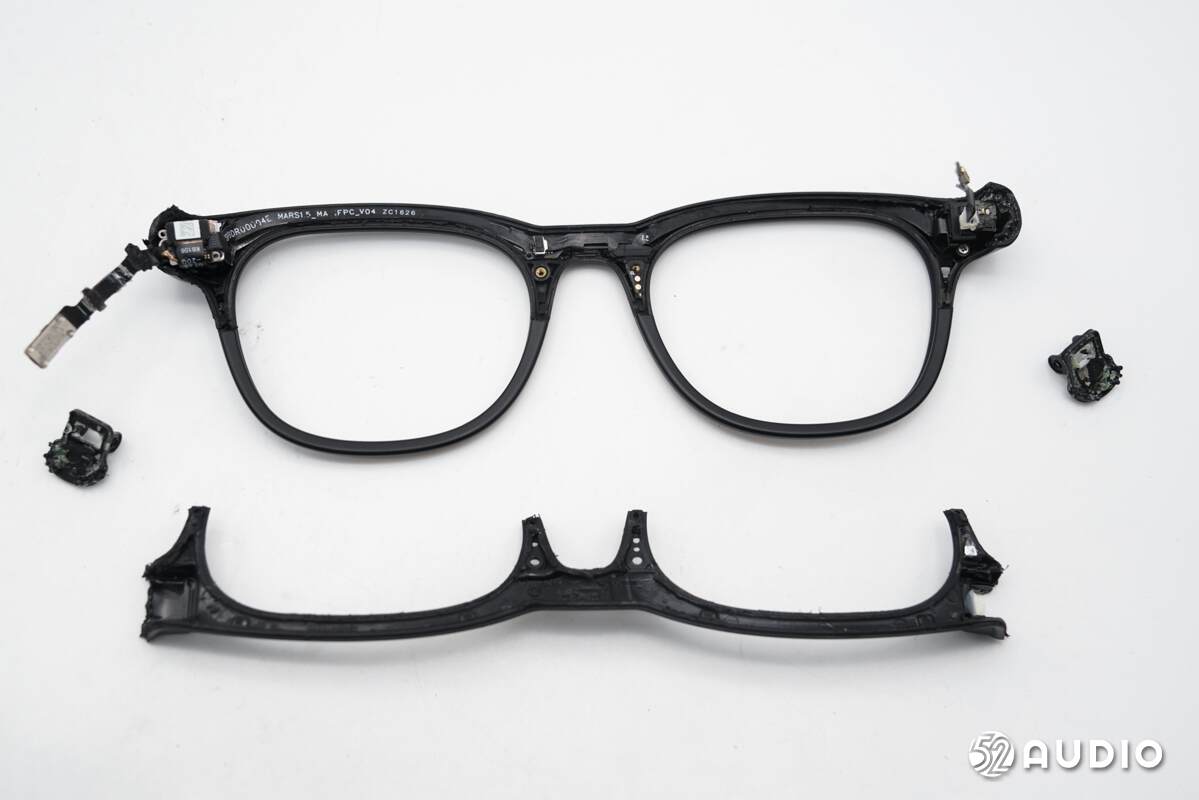
Remove the inner cover of the frame.
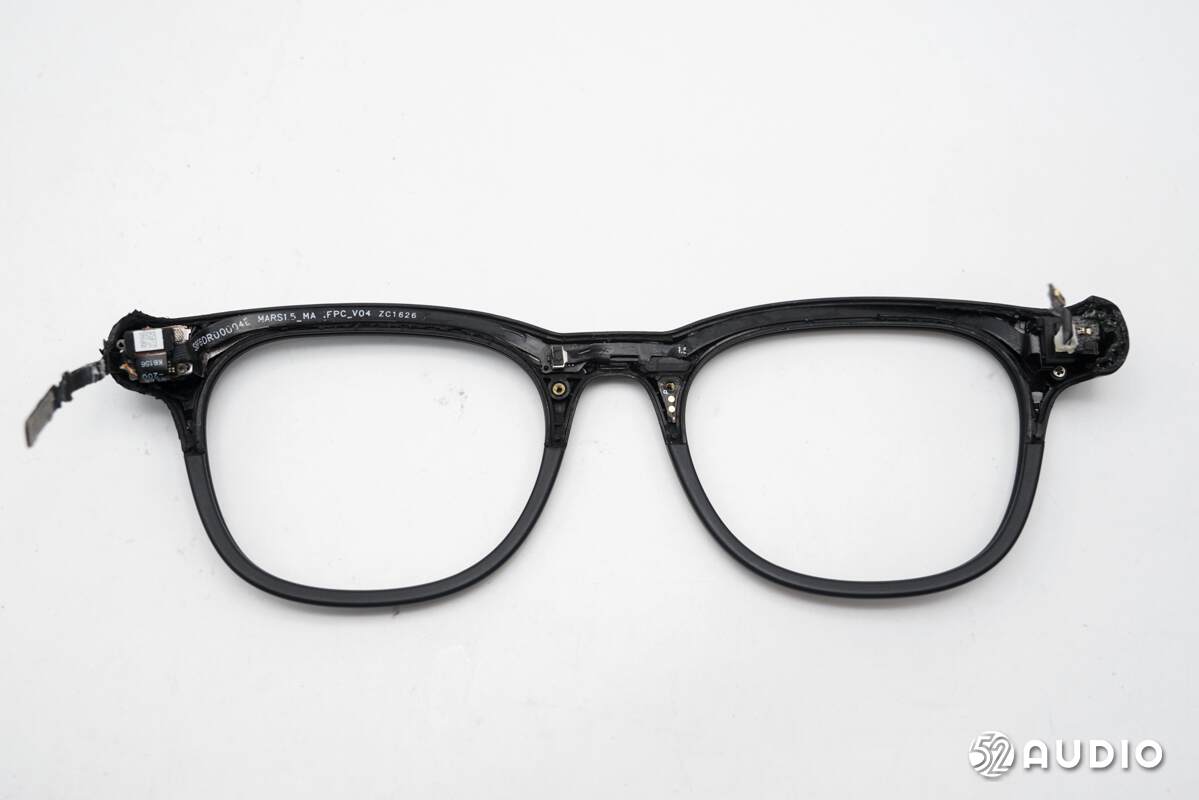
An overview of the internal structure of the frame. A single main ribbon cable connects all the components.
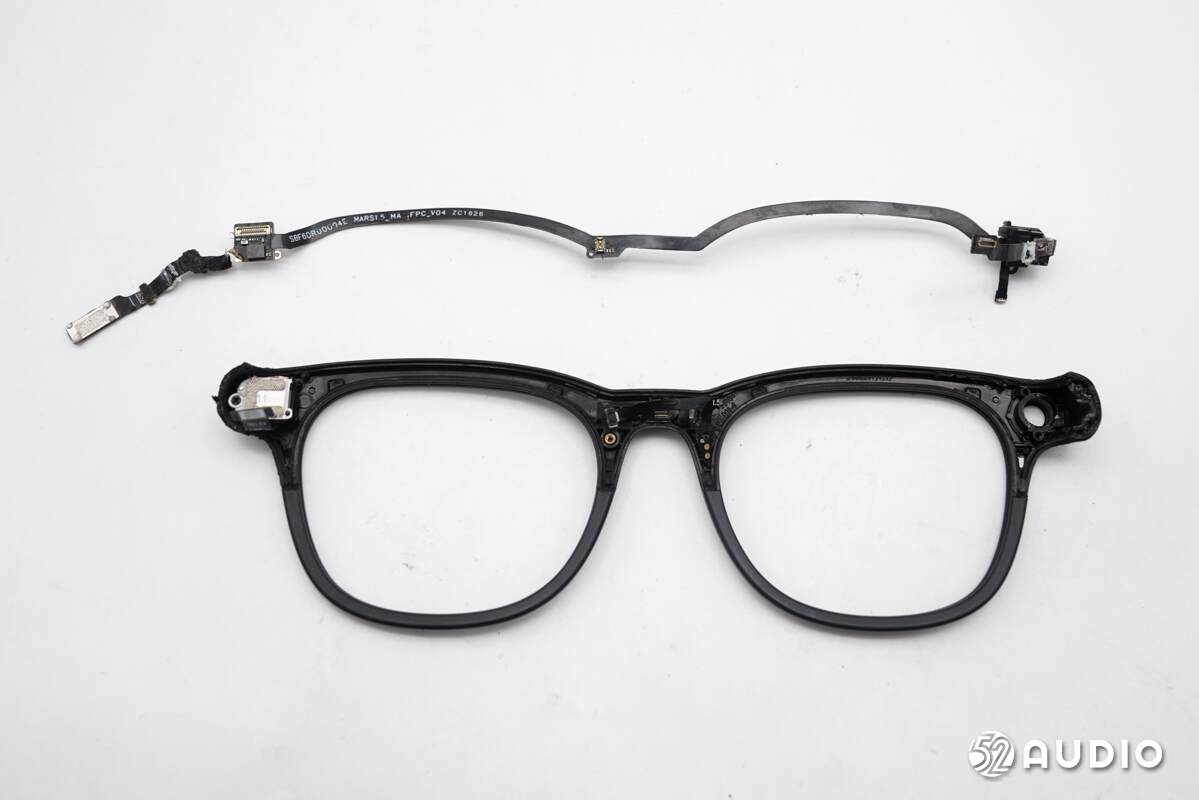
Remove the main ribbon cable from inside the frame.
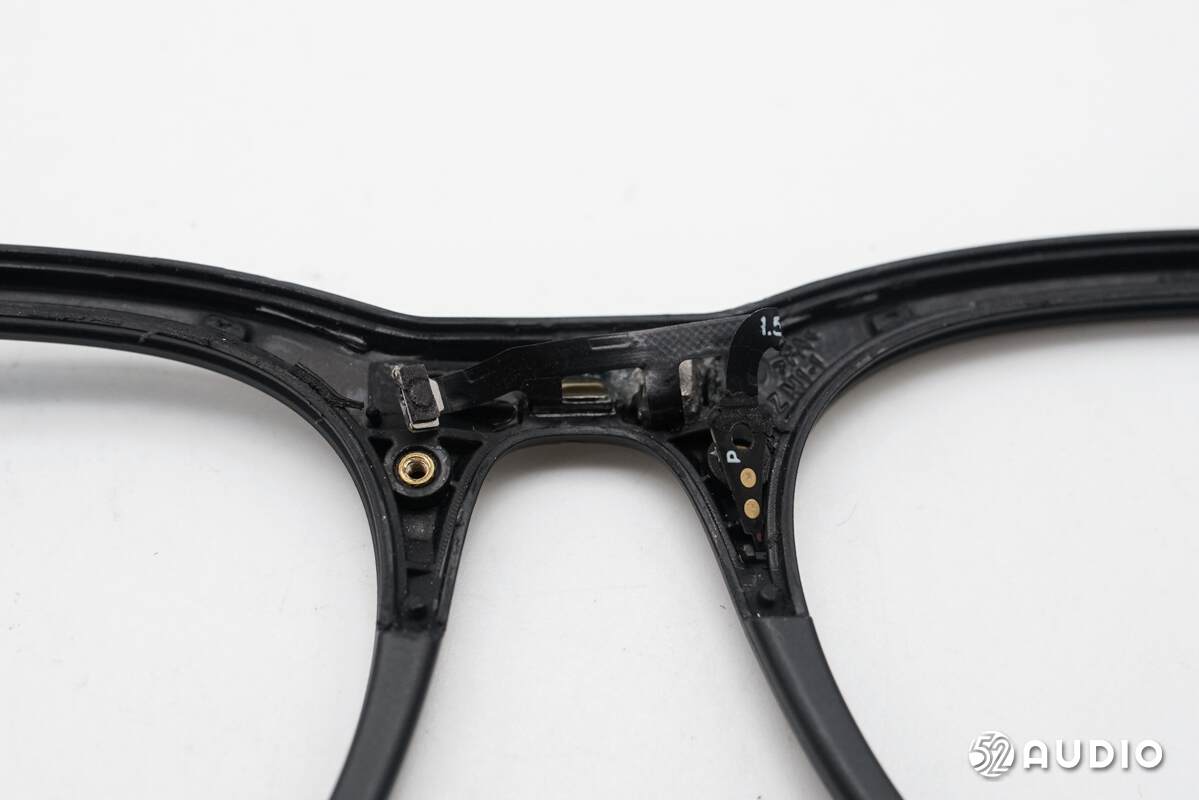
An overview of the microphone ribbon cable in the center of the frame.
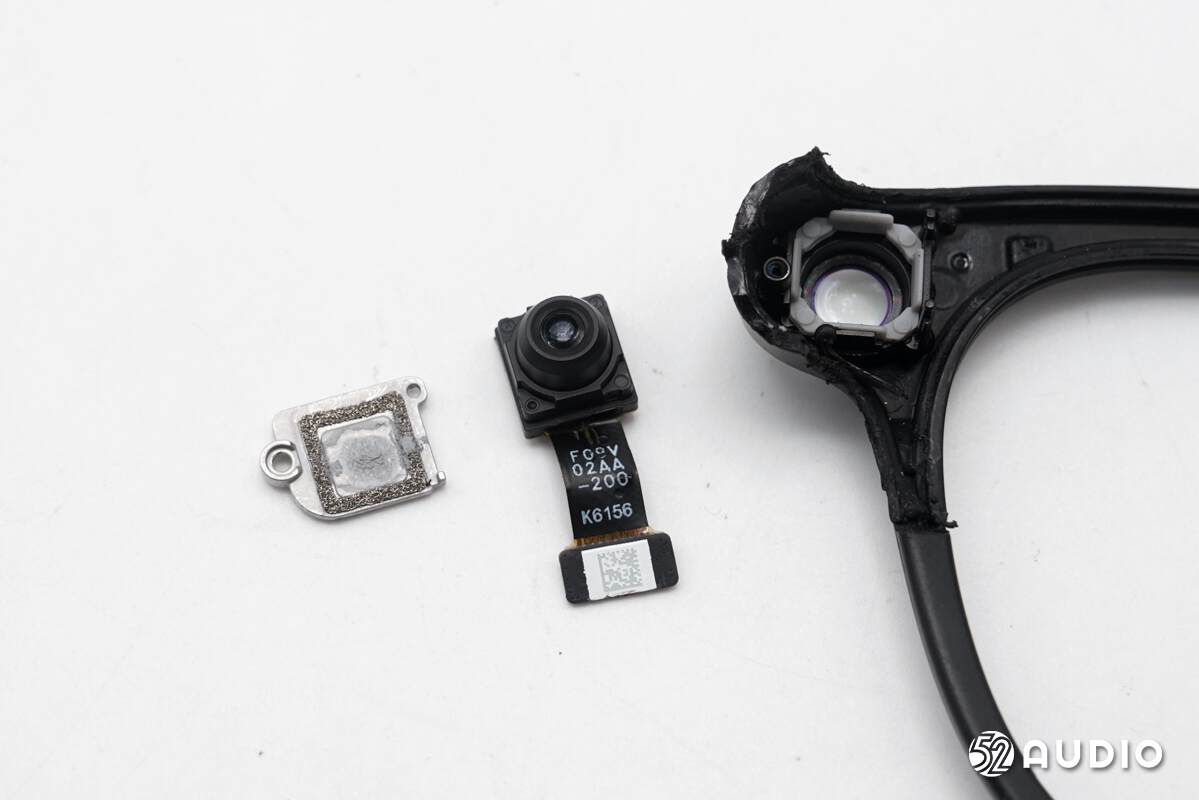
Remove the camera module from the cavity.
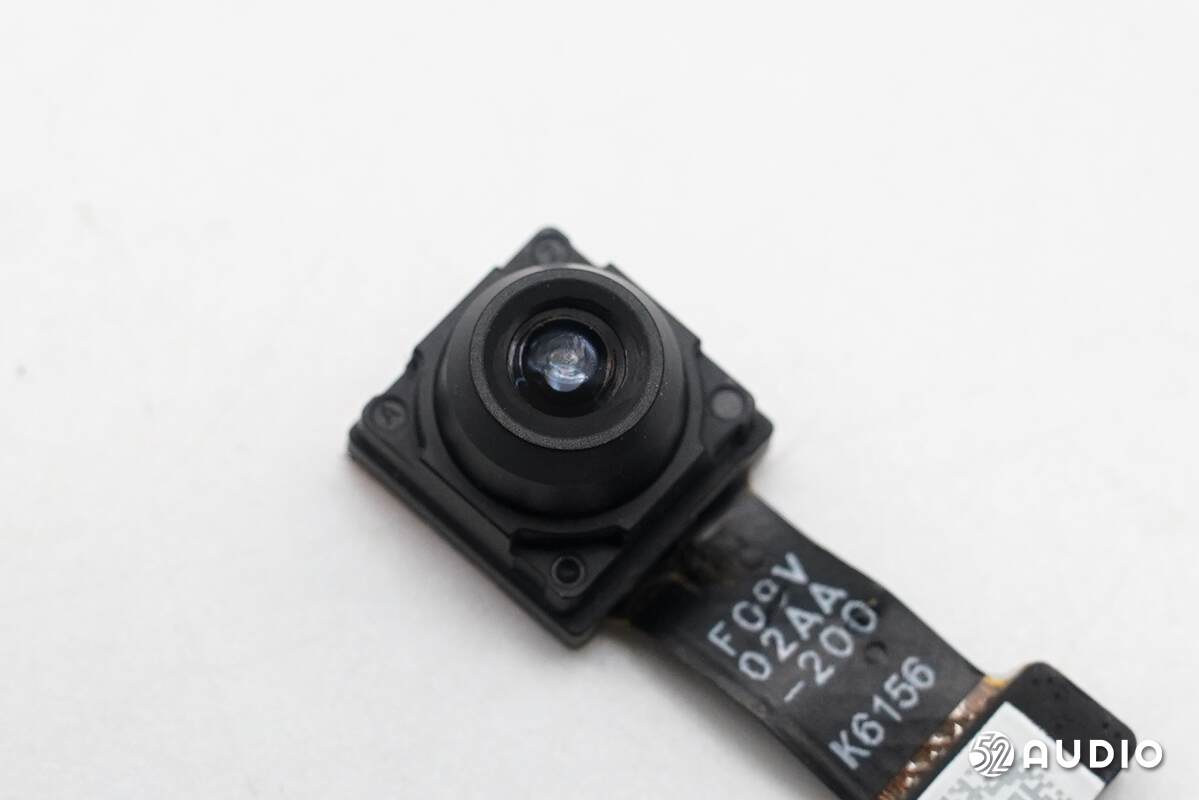
The camera module uses a new 1/2.9-inch OmniVision OG09B image sensor with a pixel area of 2.09 μm², 109% larger than that of the IMX681 commonly used in current AI glasses. Its 1:1 square sensor supports both landscape and portrait shooting. It also features a new 5P optical lens, ALC Ultra Anti-reflective Coating, and a 17 mm equivalent focal length for a wider field of view.
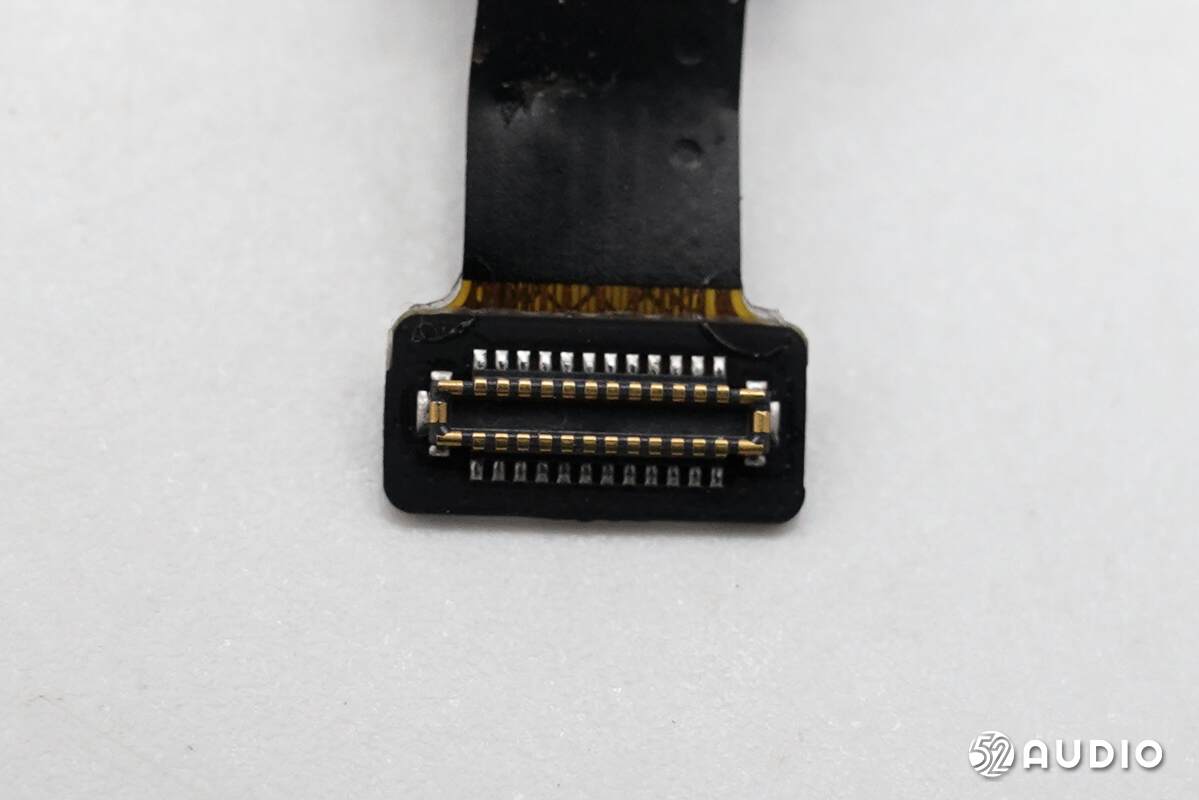
The male BTB connector linking the camera module to the main ribbon cable.
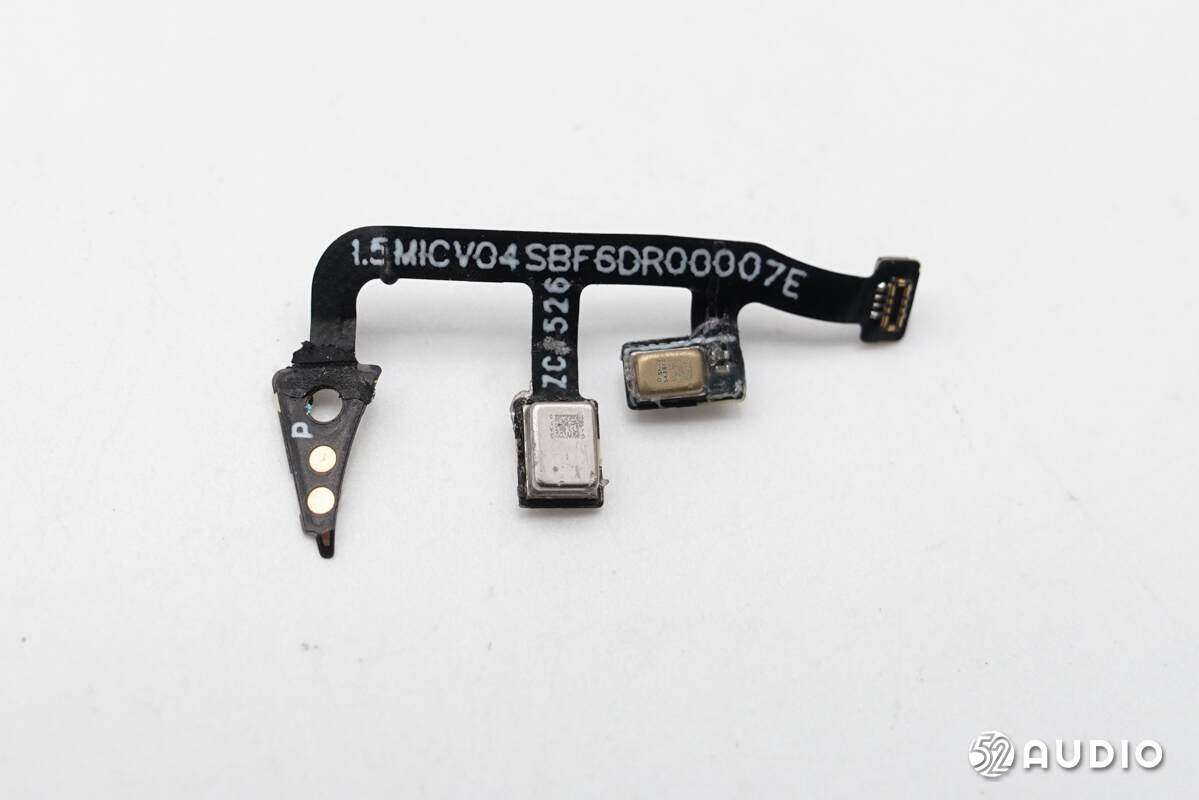
An overview of the microphone ribbon cable circuitry inside the frame.
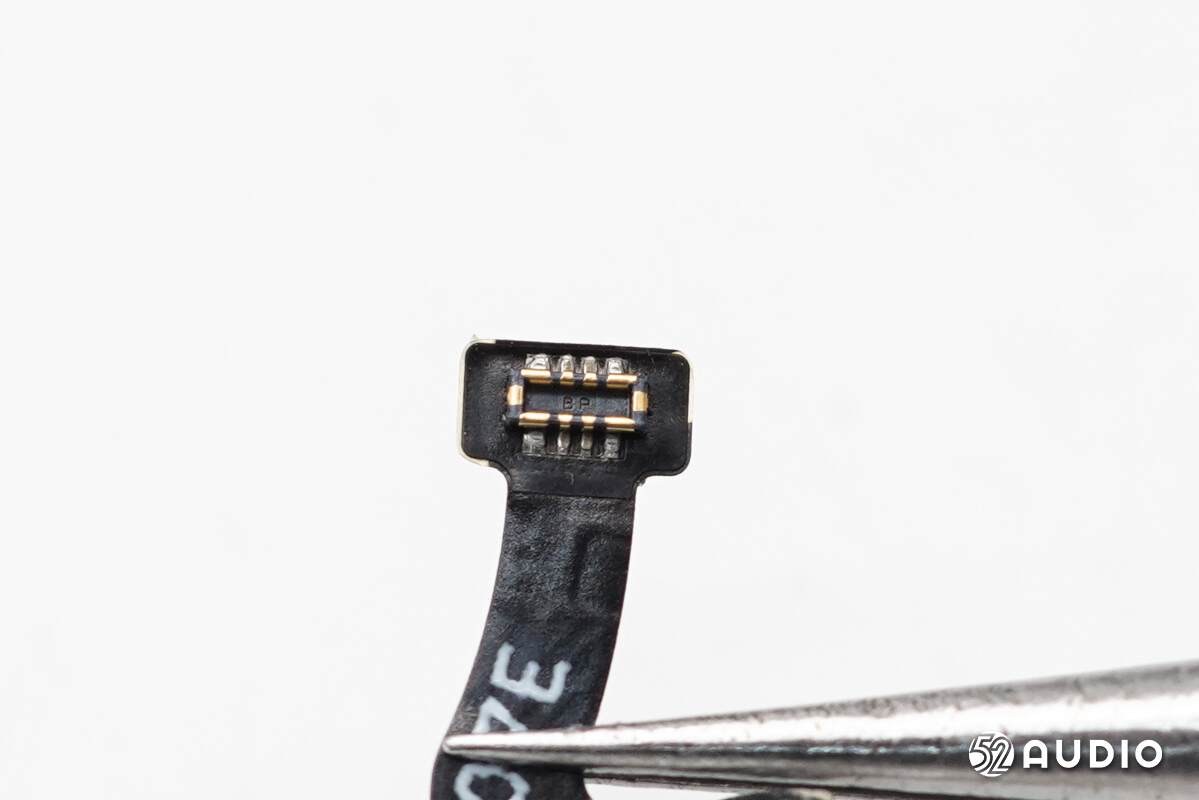
The male BTB connector linking the microphone ribbon cable to the main ribbon cable.
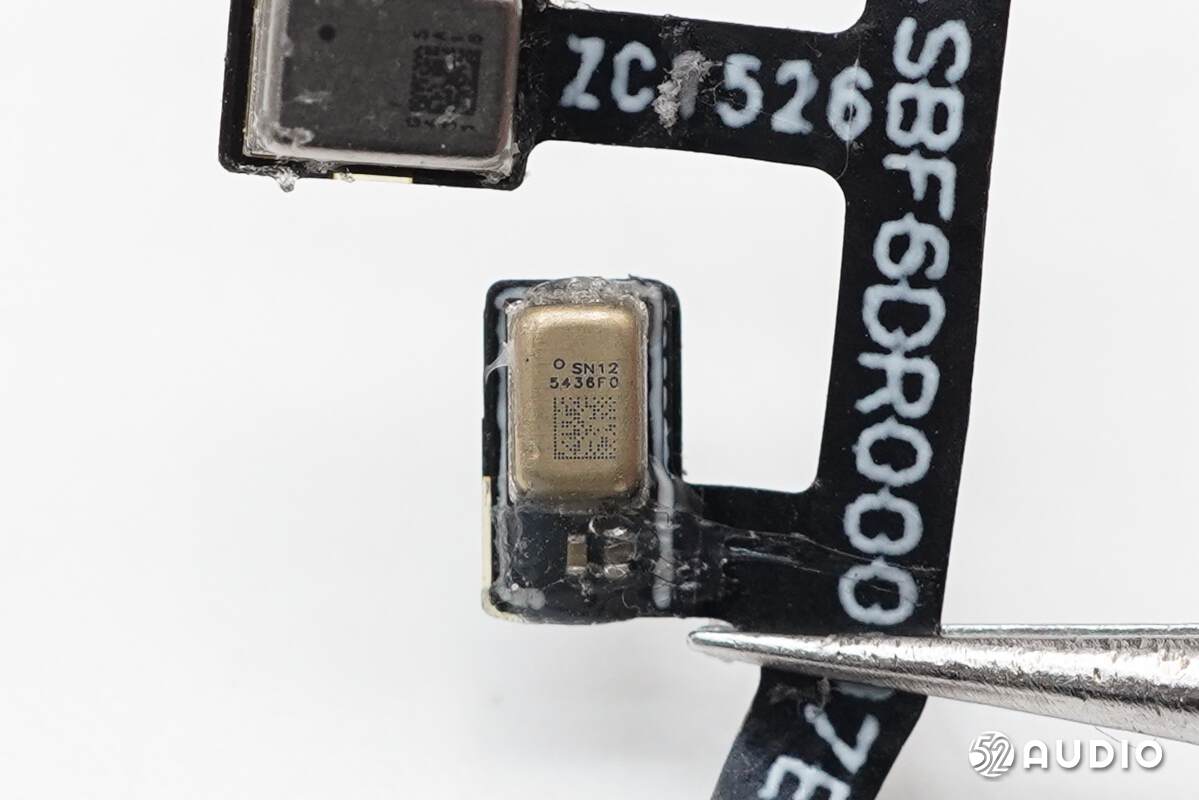
The third MEMS microphone marked SN12.
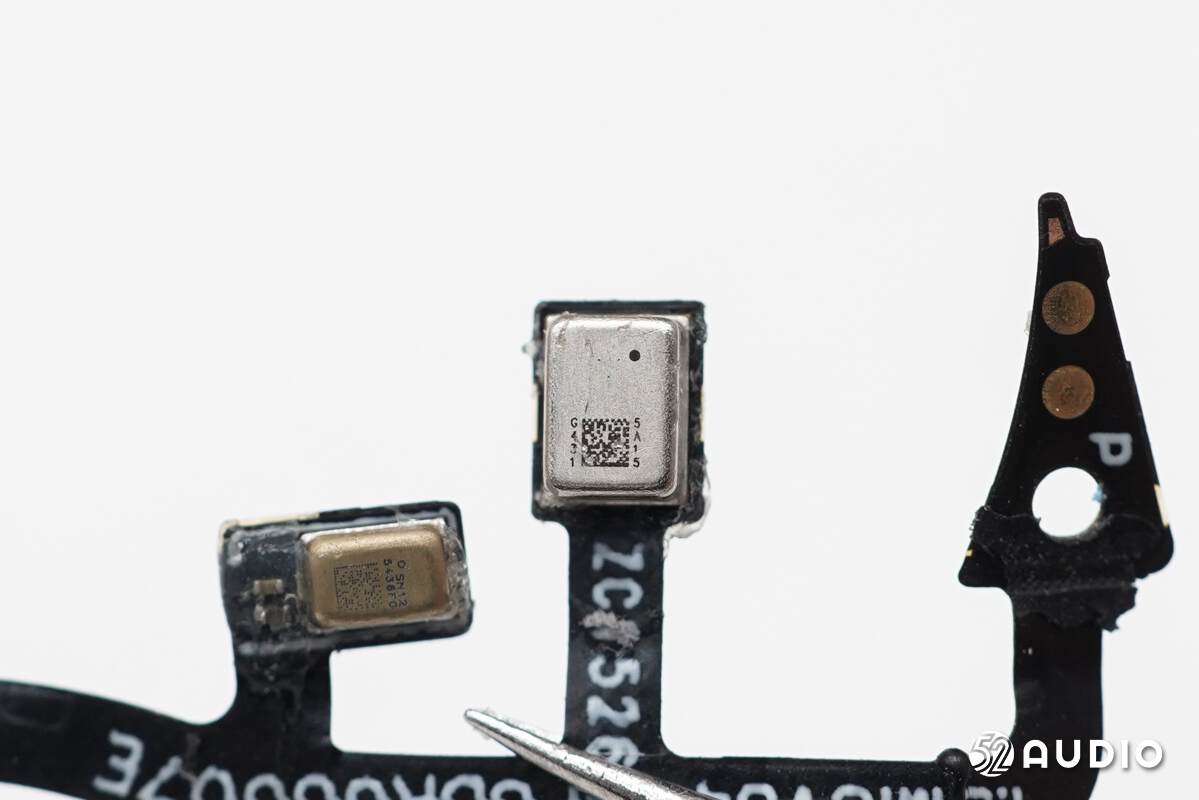
The VPU bone-conduction microphone marked G431 captures vibrations transmitted through the bones when the user speaks, enabling more accurate voice capture.
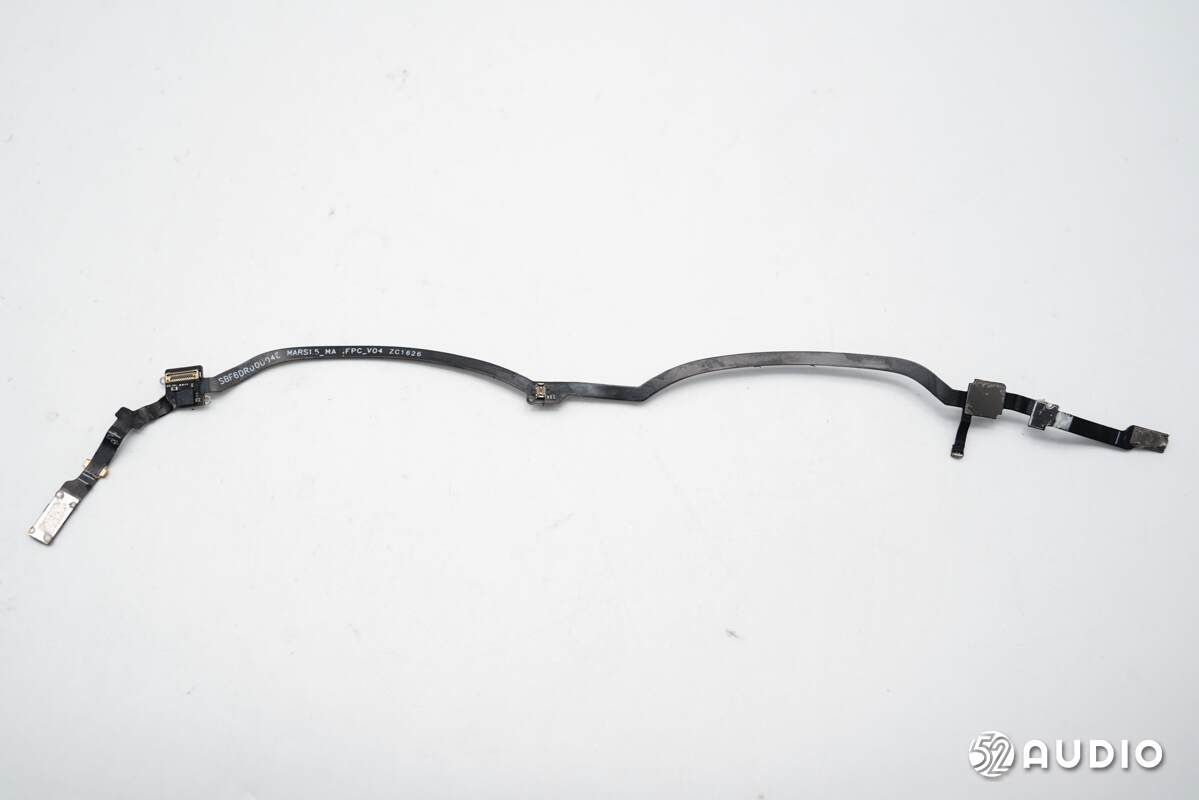
One side of the main ribbon cable circuitry inside the frame.
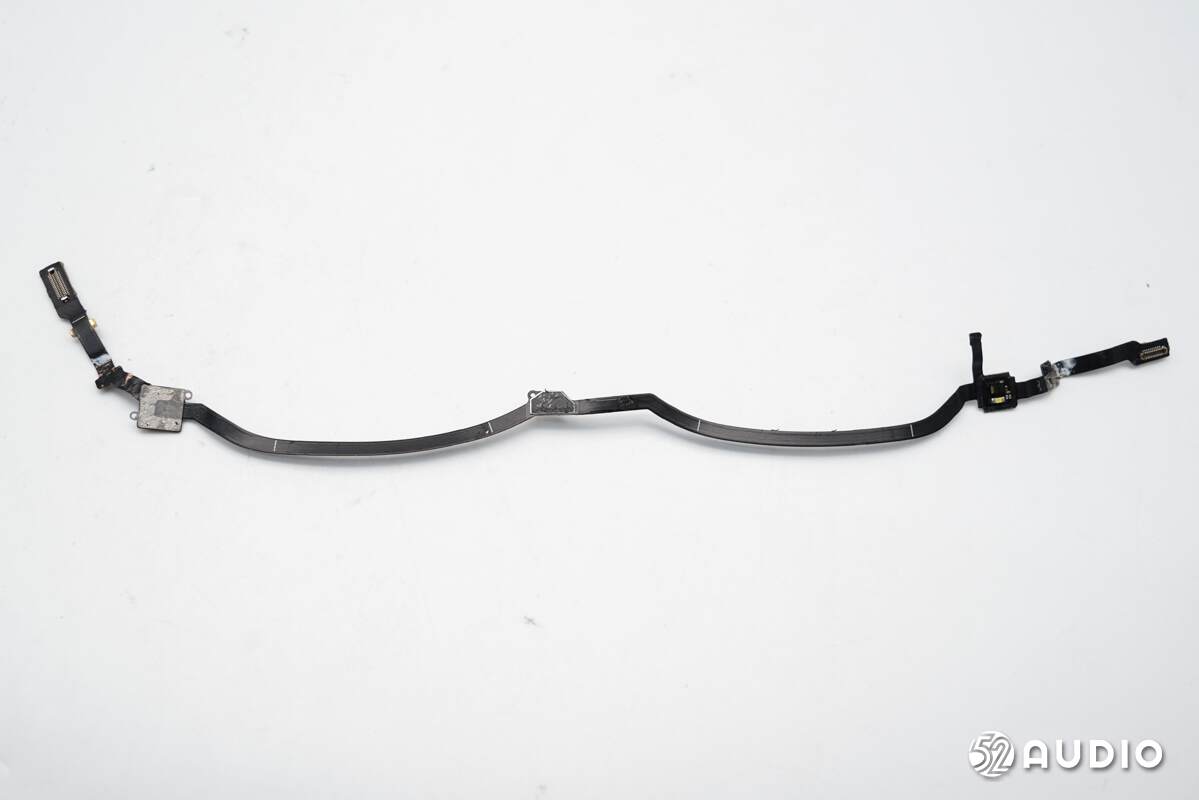
The other side of the main ribbon cable circuitry inside the frame.
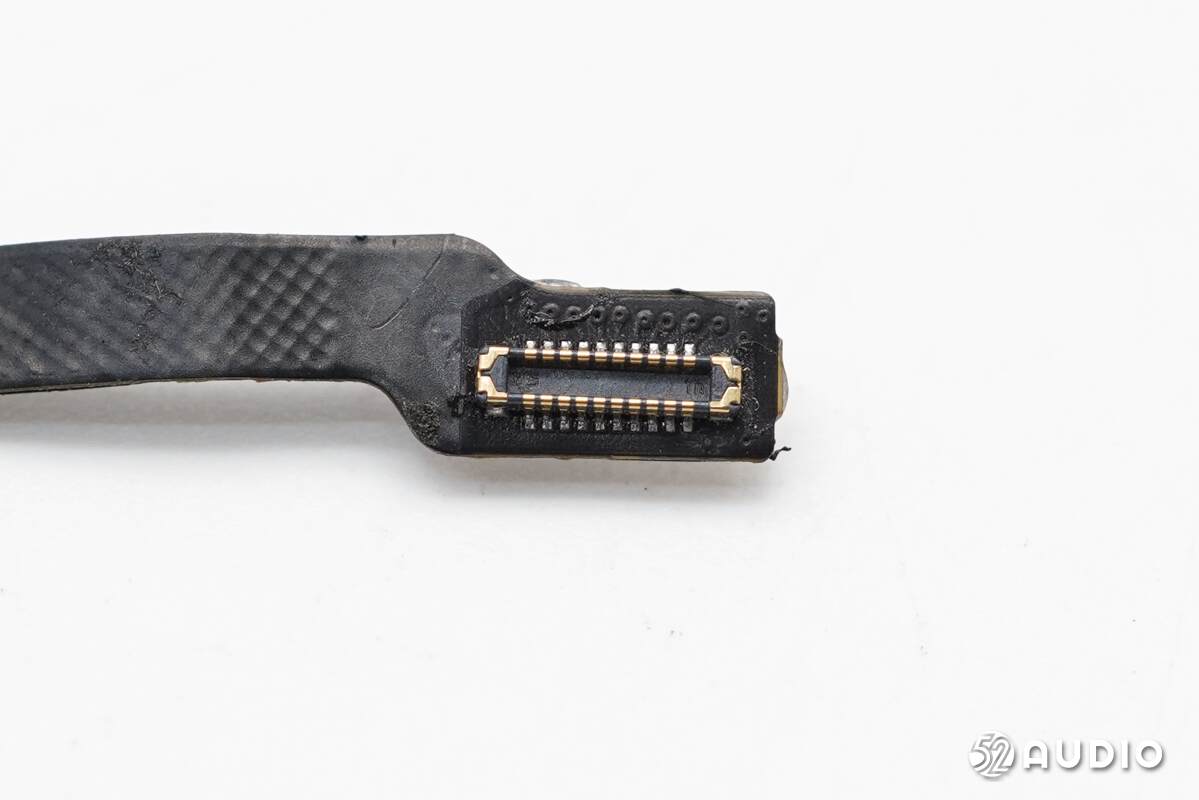
The male BTB connector linking the ribbon cable to the PCB assembly inside the right temple.
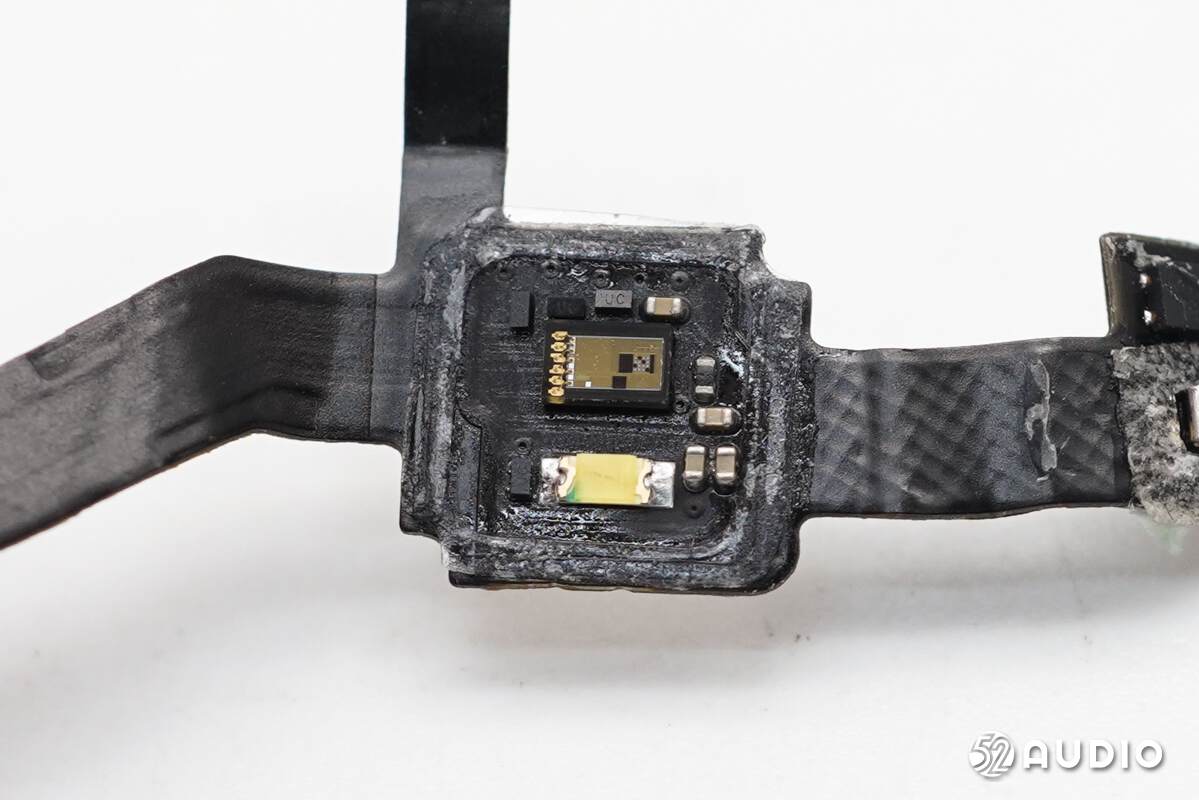
The LED indicator (bottom) informs other people of the recording status. An ambient light sensor is located above it to detect obstruction.
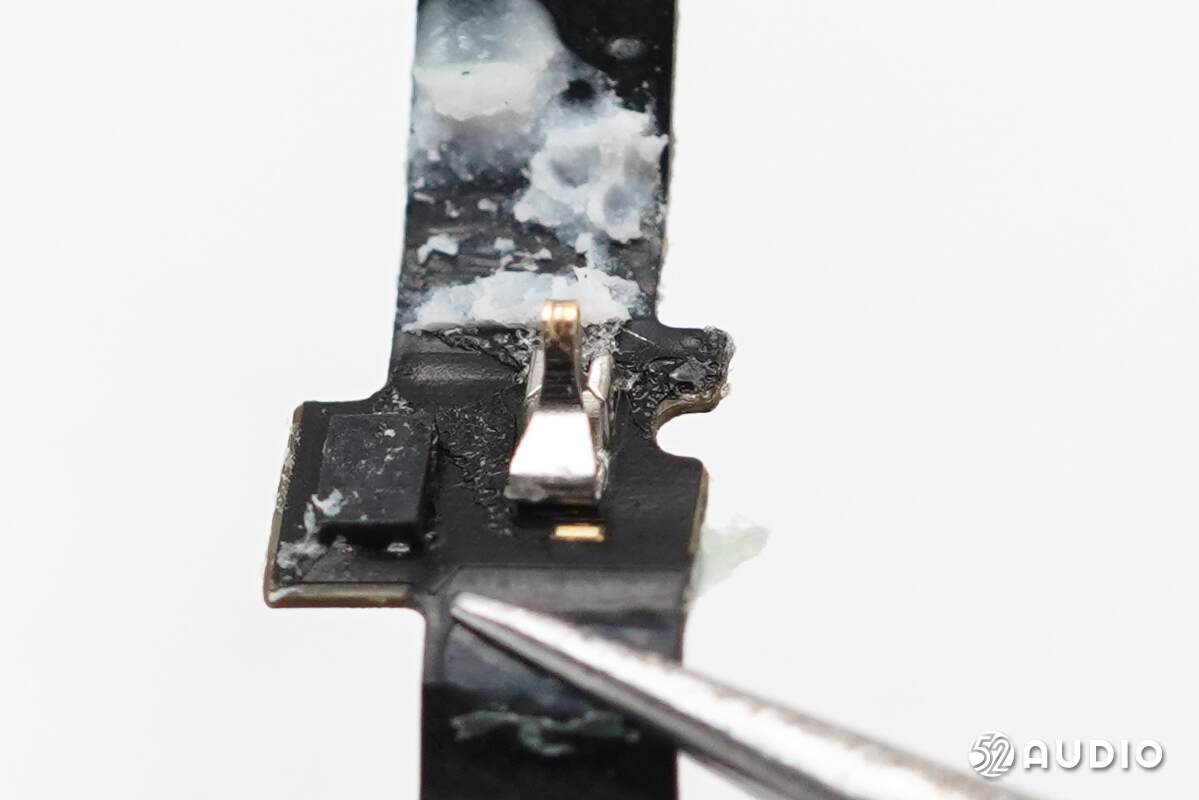
The metal spring contact at the temple connection detects whether the temple is folded or unfolded.
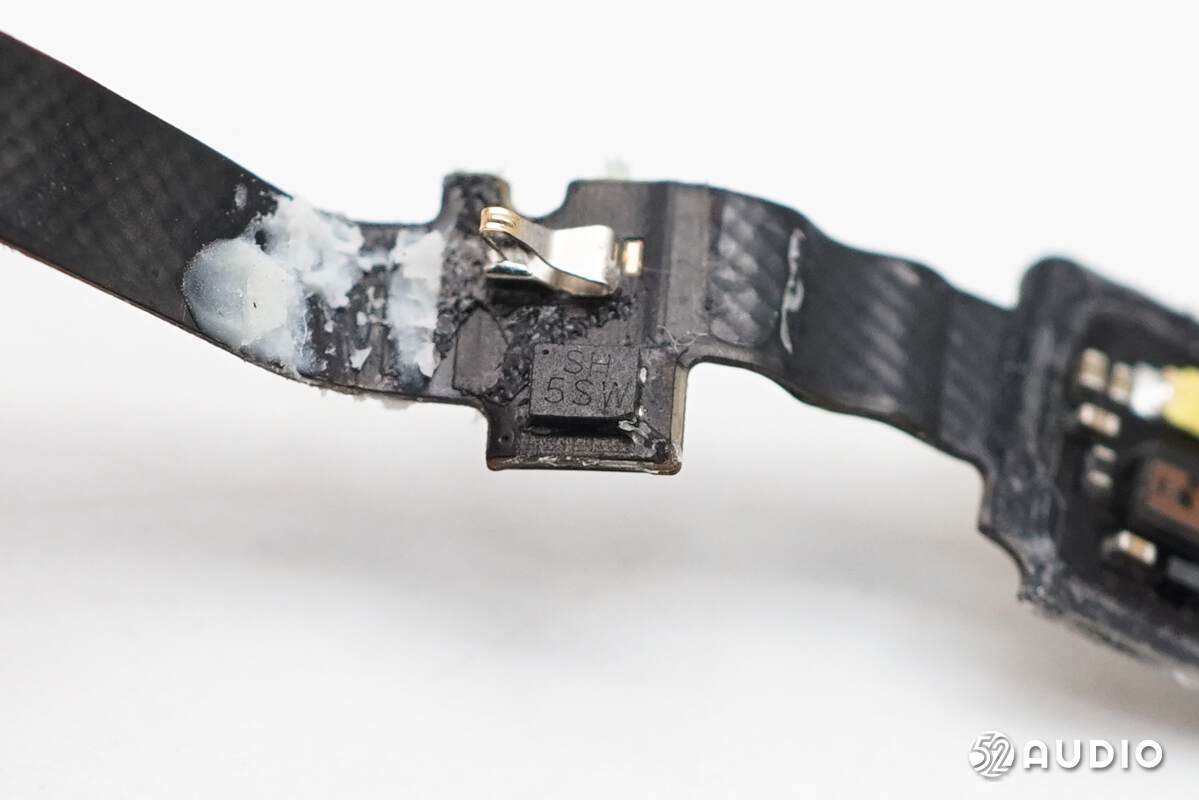
The IC marked SH 5SW.
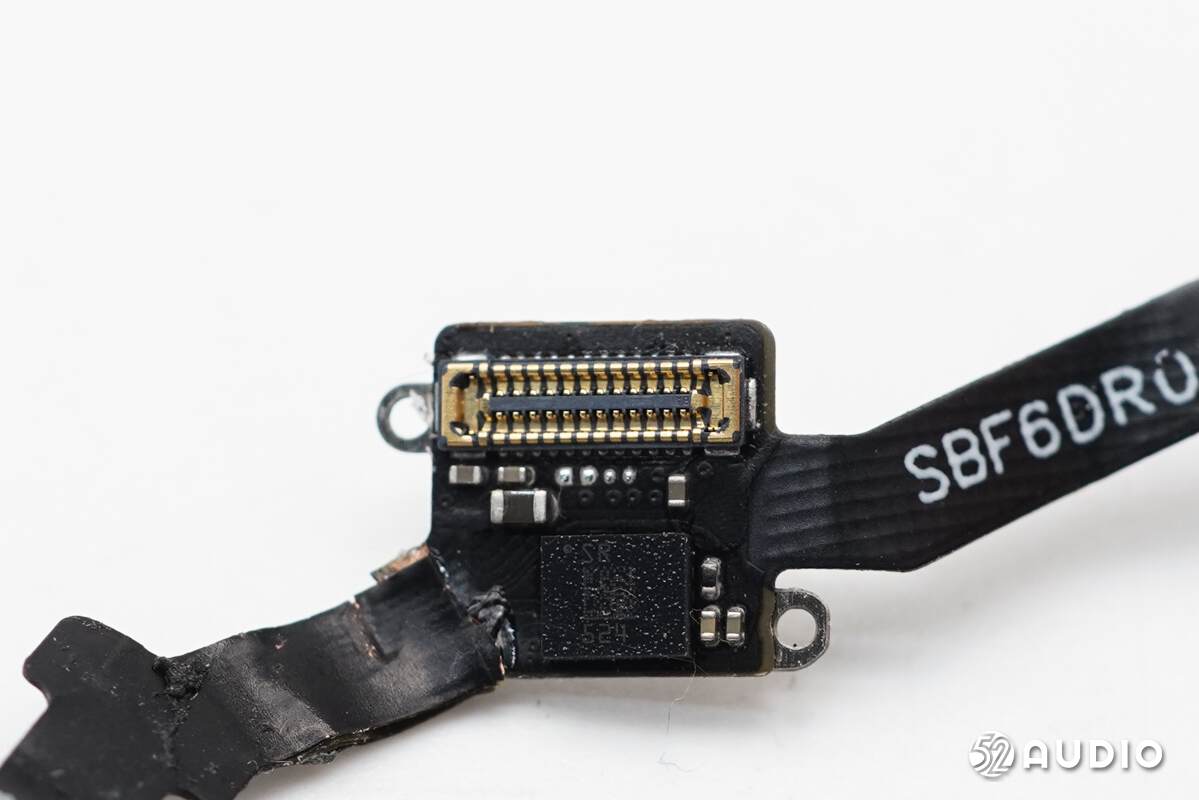
The female BTB connector for the camera module.
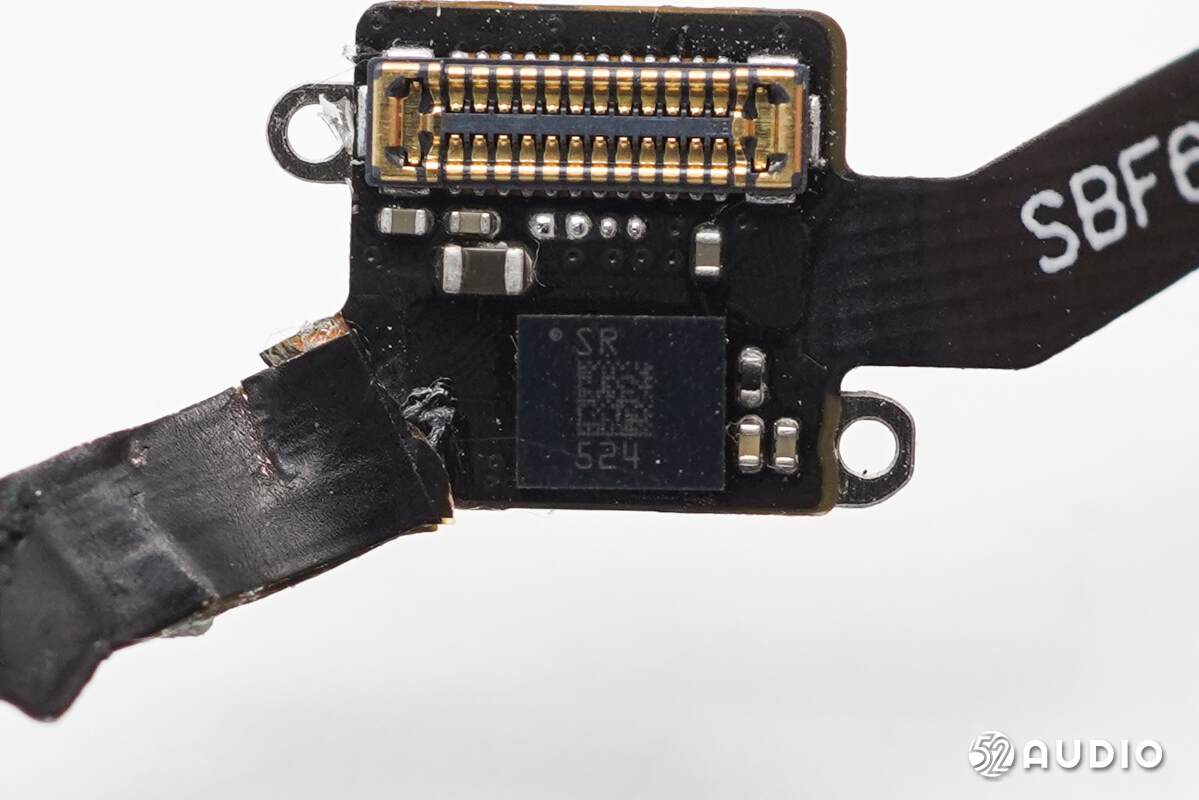
The second six-axis sensor marked SR, used for stabilization.
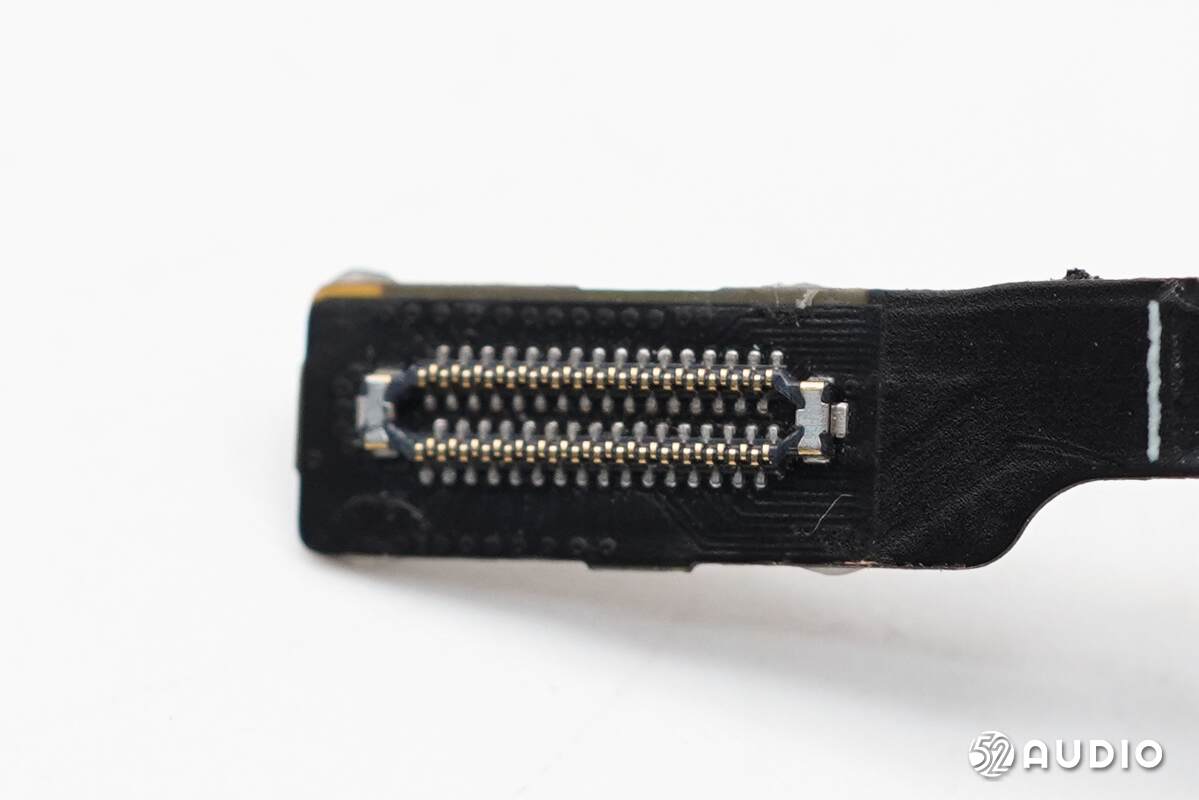
The male BTB connector linking the ribbon cable to the mainboard.
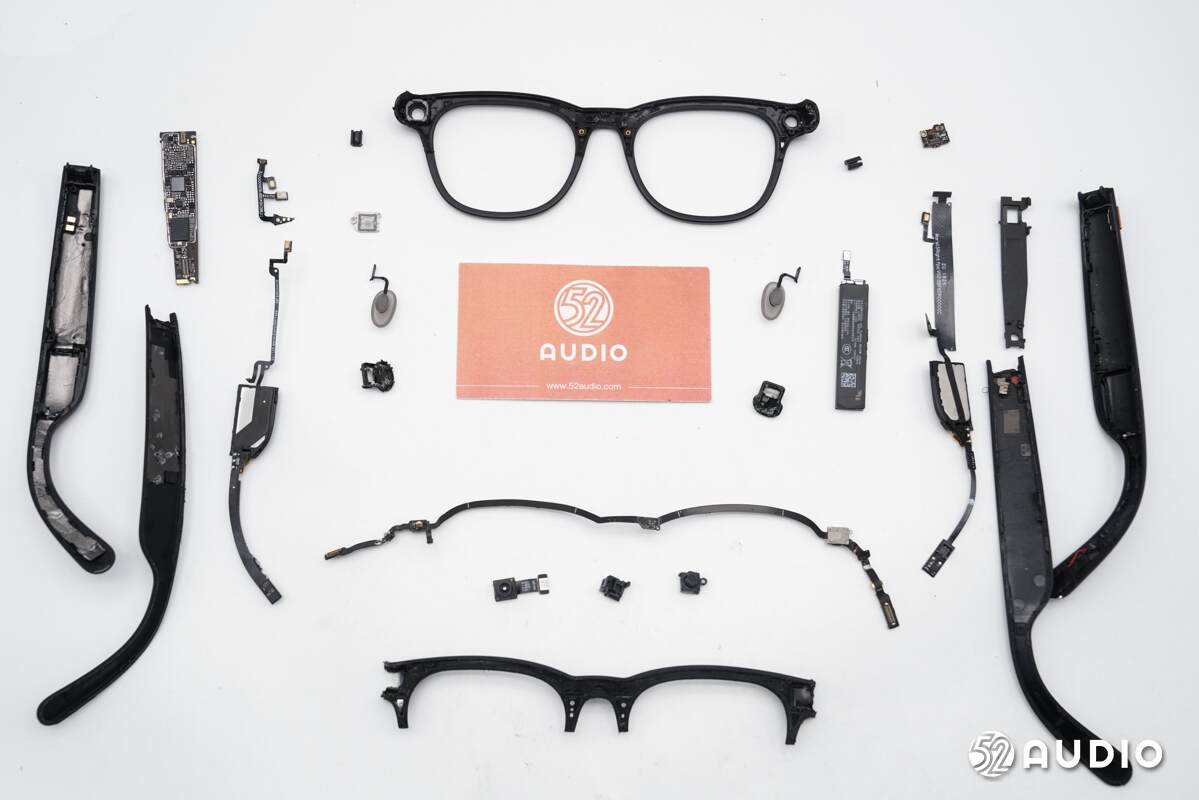
Well, those are all the components of the RayNeo V4.
Summary of 52 AUDIO
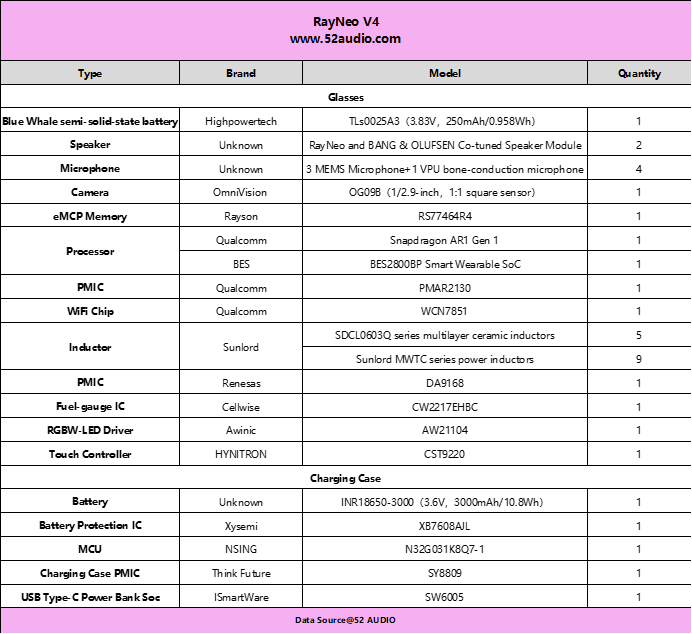
Finally, here is a list of the known components used in the RayNeo V4 for reference.
In terms of appearance, the RayNeo V4 largely retains the design of the previous-gen, with dimensions close to those of ordinary black-framed sunglasses. The lighter custom nylon construction and titanium-alloy hinges, together with an adjustable metal nose bridge and cushioned nose pads, provide a more comfortable fit over extended periods. A new sealing process at the junction between the frame and temples also improves dust and water resistance.
For the main internal components, the RayNeo V4 uses a Blue Whale semi-solid-state rectangular steel-cased battery from Highpower, rated at 3.83 V / 250 mAh, a significant increase over the previous-generation pouch cell rated at 3.87 V / 159 mAh. The camera module uses the OmniVision OG09B sensor. The glasses also feature dual speakers co-tuned by RayNeo and BANG & OLUFSEN, three MEMS microphones, and one VPU bone-conduction microphone.
The main components include the Qualcomm Snapdragon AR1 Gen 1 platform and BES2800BP wearable SoC, Rayson RS77464R4 eMCP memory, Qualcomm WCN7851 Wi-Fi chip and PMAR2130 PMIC, Sunlord SDCL0603Q series multilayer ceramic inductors and MWTC series power inductors, Renesas DA9168 battery charging management IC, CellWise CW2217EHBC fuel-gauge IC, HYNITRON CST9220 touch controller, and Awinic AW21104 RGBW-LED driver.